At a Glance
- Corn is a warm-season crop that's direct sown after your last frost date, once soil temperatures reach at least 60°F — and it needs to be planted in a block, not a row, to pollinate properly and produce full ears.
- Growing corn from seed to harvest takes about 60 to 100 days, depending on the variety, and each plant will give you 1 to 2 ears — so plan your space accordingly.
- Corn thrives with companion plants like beans and squash (the classic Three Sisters method), which improve soil fertility, suppress weeds, and make the most of every square foot.

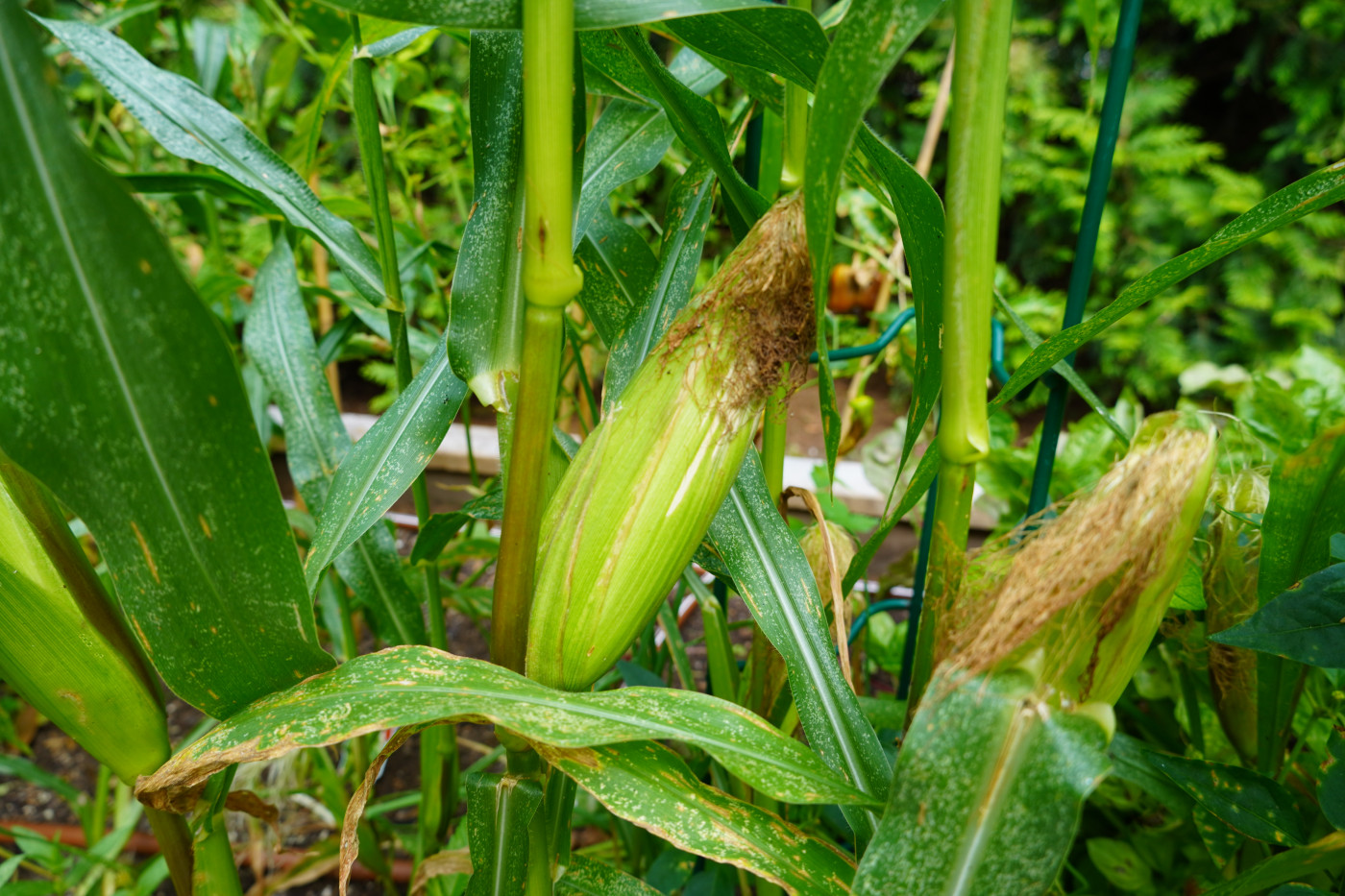
Growing Corn from Seed: The Basics
Quick Instructions: Direct sow corn seeds outdoors after your last frost date, once soil temperatures are consistently at or above 60°F. Plant in a block formation with seeds spaced 9 to 12 inches apart.
Corn is wind-pollinated, which is the single most important thing to understand about growing it successfully. Planting in a block rather than a single row ensures that pollen from the tassels at the top of each plant has plenty of nearby silks to land on. A long single row of corn is a recipe for disappointment — you'll get tassels, you'll get silks, and you'll pull back the husk to find a half-empty cob.
Is Corn the Right Crop for Your Kitchen Garden?
Let's be honest about something before we go any further, because this is the kind of thing that saves you a lot of frustration later.
Corn is not a small-space crop. Each plant produces just 1 to 2 ears; it grows 6 to 8 feet tall, and it needs a block formation to pollinate properly, which means you need meaningful square footage before corn makes practical sense.
If you're working with one or two small raised beds, your space will serve you far better with tomatoes, cucumbers, beans, or leafy greens that produce abundantly relative to the space they take up.
That said, if you have the space, then homegrown sweet corn is genuinely one of the most delightful things you'll ever pull from your garden. The flavor difference between corn picked and eaten within the hour versus corn that traveled days to reach the grocery store is almost startling. It's worth growing. You just need to go in with your eyes open about what it asks of you. Corn has needs!
If you're a Gardenary student working through the Kitchen Garden Academy Course, think of corn as a graduate-level crop — something to add once you've got a season or two under your belt and you're ready to dedicate space to something a little more demanding and a lot more exciting.
When to Plant Corn from Seed
Corn is a warm-season crop with zero tolerance for frost. Getting your timing right is the difference between a thriving stand of corn and seeds that rot in cold soil before they ever sprout.
Soil Temperature Matters More Than Calendar Date
The most important number to know is 60°F — the minimum soil temperature for corn seed germination. Below that, seeds will sit in the ground and struggle. At 65 to 70°F, germination is much more reliable. At 75°F and above, corn practically leaps out of the ground.
Use a simple soil thermometer to check before you plant. Your last frost date is a useful starting point, but soil temperature is your real signal.
Planting Windows by Region
These are general guidelines — always confirm with your specific last frost date:
- Deep South (Texas, Louisiana, Florida, Georgia, Alabama) — Direct sow: March to April. Second planting possible in July for fall harvest.
- Southeast and Mid-Atlantic (Tennessee, Virginia, North Carolina, Maryland) — Direct sow: late April to May.
- Midwest and Great Plains (Illinois, Iowa, Kansas, Missouri, Nebraska) — Direct sow: mid-May to early June.
- Northeast (New York, Pennsylvania, New England) — Direct sow: late May to early June.
- Mountain West and Upper Midwest (Colorado, Minnesota, Montana, Wyoming) — Direct sow: late May to June. Choose short-season varieties (under 75 days).
- Pacific Northwest (Oregon, Washington) — Direct sow: May to early June. Warm the soil with black plastic mulch first if needed.
- California and Southwest — Direct sow: March to May (coastal and valley areas). Avoid planting in peak summer heat in desert regions.
Important: These are rough estimates based on regional averages. Always verify with your specific last frost date before planting.

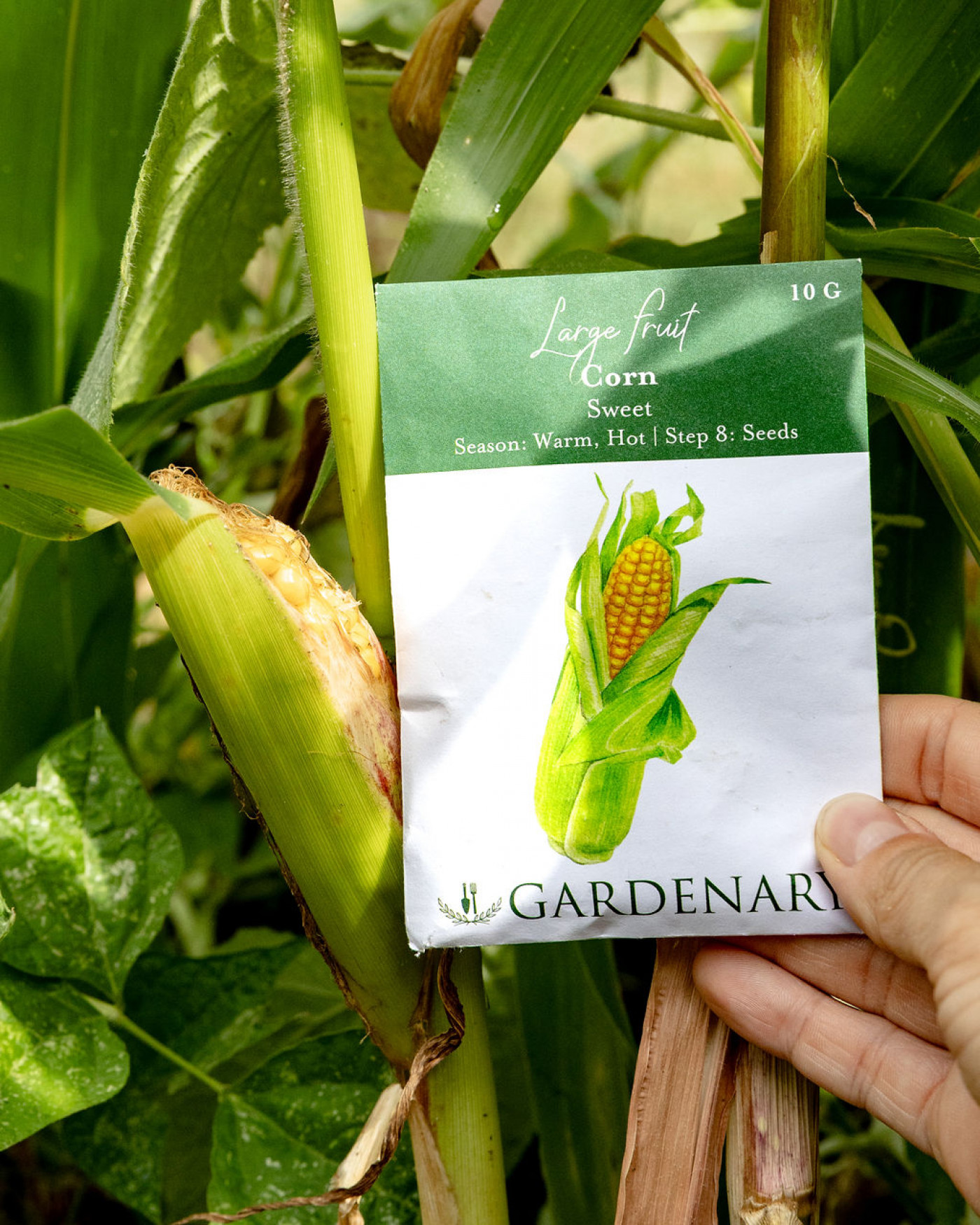
How to Plant Corn from Seed
What You Need Before You Plant
- Seed variety suited to your region and season length (more on this below)
- Rich, well-amended soil with plenty of compost worked in
- A dedicated block planting area — minimum 4 rows wide, ideally more
- Soil thermometer to confirm temps are at or above 60°F
Step-by-Step: Direct Sowing Corn Seeds
- Prepare your soil. Work 3 to 4 inches of compost into the planting area to a depth of at least 8 to 10 inches. Corn is a heavy feeder and needs nutrient-rich soil from the start.
- Lay out your block. Map out your planting area in a grid. Rows should be 18 to 24 inches apart, with planting holes spaced every 9 to 12 inches within each row.
- Plant 2 seeds per hole. Sow seeds 1 to 1.5 inches deep. Planting two seeds per hole gives you a backup in case one fails to germinate.
- Water in well. Give the entire planting area a thorough watering immediately after sowing. Keep soil consistently moist until germination — usually 7 to 14 days.
- Thin to one plant per spot. Once seedlings reach 3 to 4 inches tall, thin to the strongest plant per hole by snipping the weaker seedling at soil level. Don't pull — you'll disturb the roots of the plant you're keeping.
- Succession plant if desired. For a longer harvest window, sow a second block 2 to 3 weeks after the first. Keep different varieties well separated to prevent cross-pollination.
Choosing the Right Corn Variety
Not all corn is created equal. Here's a quick breakdown:
- Sweet corn — the classic homegrown choice. Varieties like Honey Select, Peaches and Cream, and Silver Queen are beloved for flavor and reliability.
- Super sweet varieties — higher sugar content, slower to lose sweetness after harvest. Good for gardeners who can't cook immediately after picking.
- Short-season varieties — essential for northern and mountain gardeners. Look for varieties under 70 to 75 days to maturity. Earlivee and Butter and Sugar are reliable options.
- Heirloom varieties — beautiful options like Painted Mountain or Bloody Butcher add color and history to the garden, though they're often grown for drying rather than fresh eating.

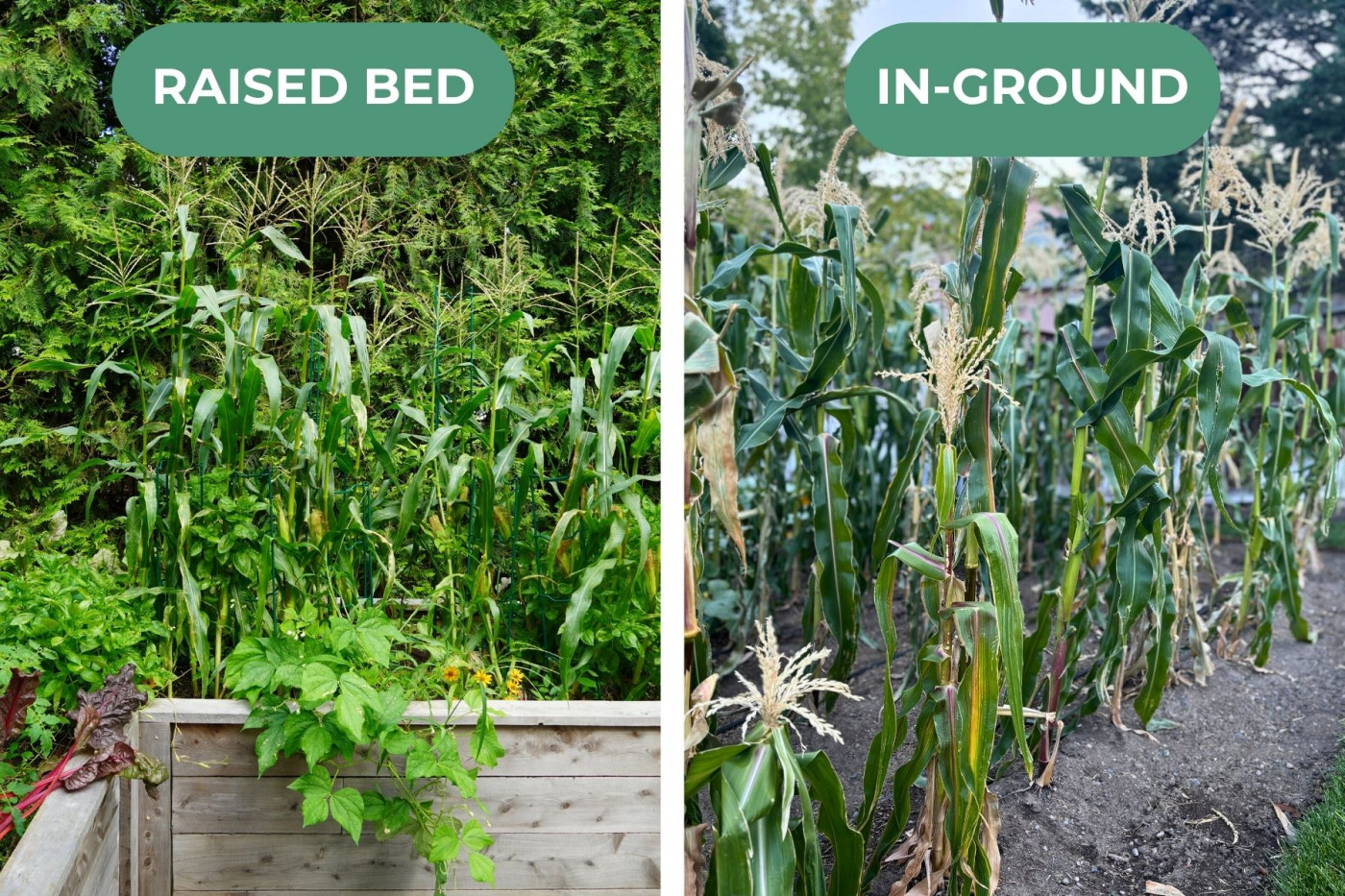
Raised Beds vs. Growing Corn in the Ground
This is one of the most common questions about growing corn, and the honest answer is: both work, but they each come with trade-offs worth knowing.
Growing Corn in Raised Beds
Raised beds offer excellent drainage, warmer soil temperatures (which corn loves), and a head start on the season. If your raised beds are large enough, corn can absolutely thrive in them.
The catch: most raised beds simply aren't big enough to support the block planting formation corn needs. A 4x8 raised bed gives you two short rows of corn — not enough for reliable pollination. You'd need at least a 4x4 block, and ideally larger.
Raised beds work well for corn when:
- You have multiple large beds that you can dedicate to a single corn planting
- You can arrange two or more adjacent beds to create a wide block
- Your beds are at least 12 inches deep to accommodate corn's substantial root system
- You're growing a compact or shorter variety suited to intensive planting
Tips for raised bed corn:
- Space plants 9 inches apart in a true grid formation to maximize your block density
- Amend heavily with compost before planting — corn depletes soil quickly
- Water consistently and deeply, as raised beds dry out faster than in-ground gardens
- Use the Three Sisters companion planting method (more below) to make every square foot count
Growing Corn In the Ground
In-ground growing is where corn really comes into its own. You have essentially unlimited space to create a proper block, soil moisture tends to be more consistent, and the corn's deep root system can really stretch out.
In-ground growing works best when:
- You have a dedicated garden area with good sun exposure (8 or more hours daily)
- Your native soil is amended with compost and drains reasonably well
- You can commit a meaningful section of the garden — at least 100 square feet — to corn
- You're practicing crop rotation and not planting corn in the same spot year after year
The trade-off: in-ground beds often have more weed pressure, slower soil warming in spring, and potentially more pest activity. Companion planting and consistent mulching go a long way toward managing both.

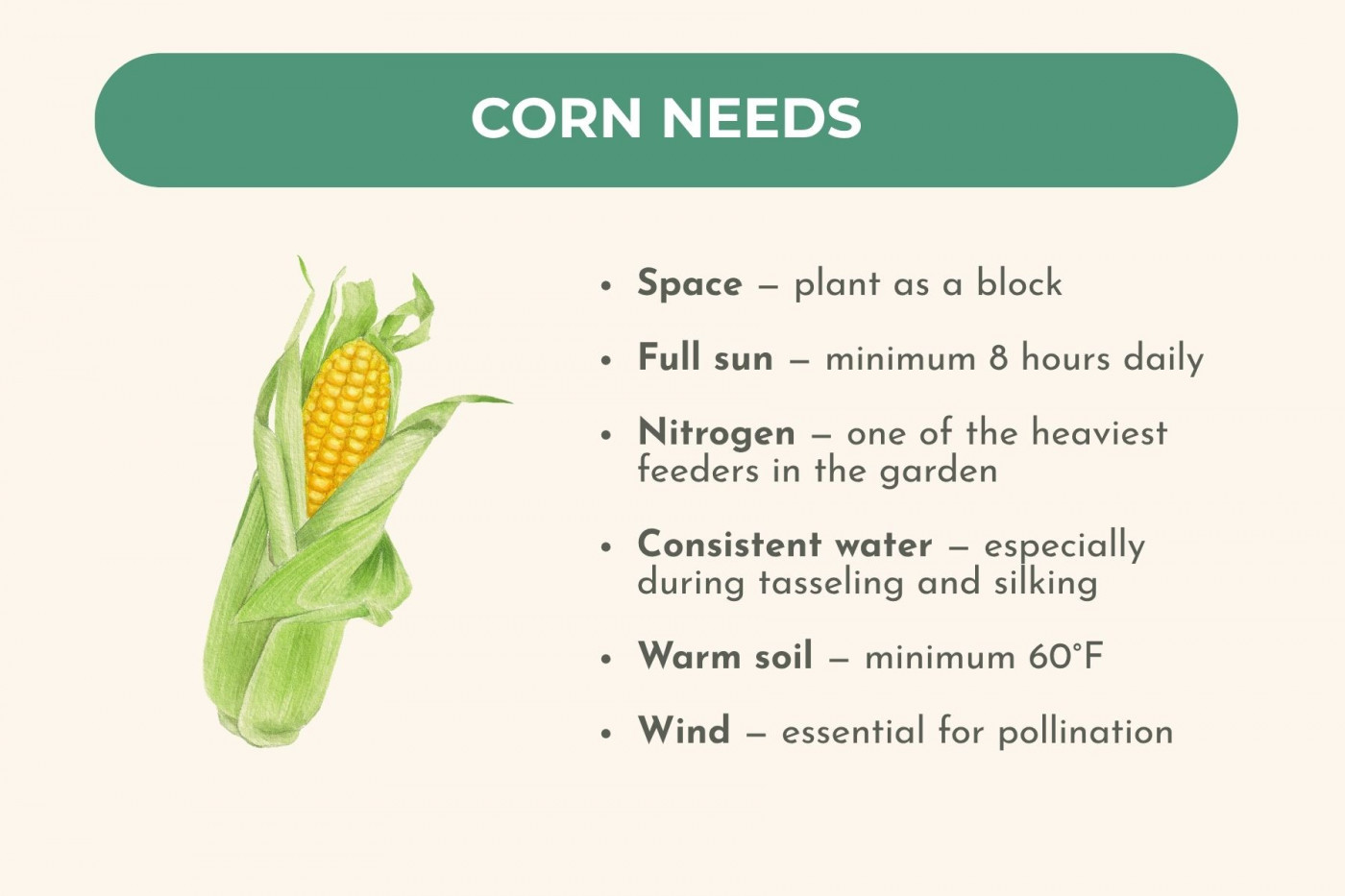
How to Tend Corn Through the Growing Season
Once your corn is in the soil and growing, your main jobs are watering, feeding, and watching for a few key things.
Watering
Aim for at least 1 inch of water per week, more during hot weather. Water at the base of the plant, not overhead.
Corn needs consistent moisture, especially during two critical windows:
- Germination through establishment — keep soil evenly moist until plants are 6 to 8 inches tall
- Tasseling and silking — this is the most water-critical stage. Drought stress during pollination directly reduces ear fill and leads to patchy, incomplete cobs. Water deeply and consistently during this window.
Fertilizing
Corn earns its reputation as a heavy feeder. Here's how to keep up with its appetite organically:
- At planting: work in generous compost plus an organic fertilizer with higher nitrogen
- When plants reach knee height: side-dress each plant with a nitrogen-rich organic fertilizer like blood meal or feather meal to support the rapid growth phase
- At tasseling: switch to a fertilizer with higher phosphorus to support pollination and ear development
Learn How to Plan and Build Beautiful Raised Beds
Follow a simple process to build a raised bed that makes construction straightforward — even if you’re not “handy.”
How Long Does Corn Take to Grow?
Corn takes 60 to 100 days from direct sowing to harvest, depending on the variety:
- Early season varieties: 60 to 75 days — ideal for short-season climates
- Mid-season varieties: 75 to 85 days — the sweet spot for most home gardeners
- Late season varieties: 85 to 100+ days — the longest and often most flavorful, for climates with a long warm season
How to Harvest Corn and Enjoy It
How to Know When Corn Is Ready to Harvest
Timing your corn harvest is an art, and getting it right is the difference between corn that tastes like candy and corn that tastes like cardboard.
Look for these signs that ears are ready:
- Silks have turned brown and dry at the tips — green or pale silks mean it's too early
- Ears feel full and firm when you run your hand along the outside of the husk
- Kernels pass the thumbnail test — pull back a small section of husk and pierce a kernel with your thumbnail. Milky juice means perfect ripeness. Clear juice means it needs more time. No juice means it's past peak.
Corn waits for no one. Once it's ready, harvest within a day or two for peak flavor.
How to Harvest
Grip the ear firmly at its base, bend it downward sharply, and twist. It should snap cleanly from the stalk. Most plants will produce a second, smaller ear lower on the stalk — leave it to continue developing after you harvest the first.
From Garden to Table
The sugar in sweet corn begins converting to starch the moment it's picked. For the best possible flavor:
- Cook or eat within hours of harvest if at all possible — this is the whole reason to grow your own
- Boil for 3 to 5 minutes in unsalted water (salt toughens the kernels)
- Grill in the husk for a smoky, caramelized flavor that store-bought corn simply can't replicate
- Cut kernels from the cob and add to salads, salsas, tacos, pasta, or frittatas
- Blanch and freeze extra ears or kernels within a day of harvest to preserve sweetness for months

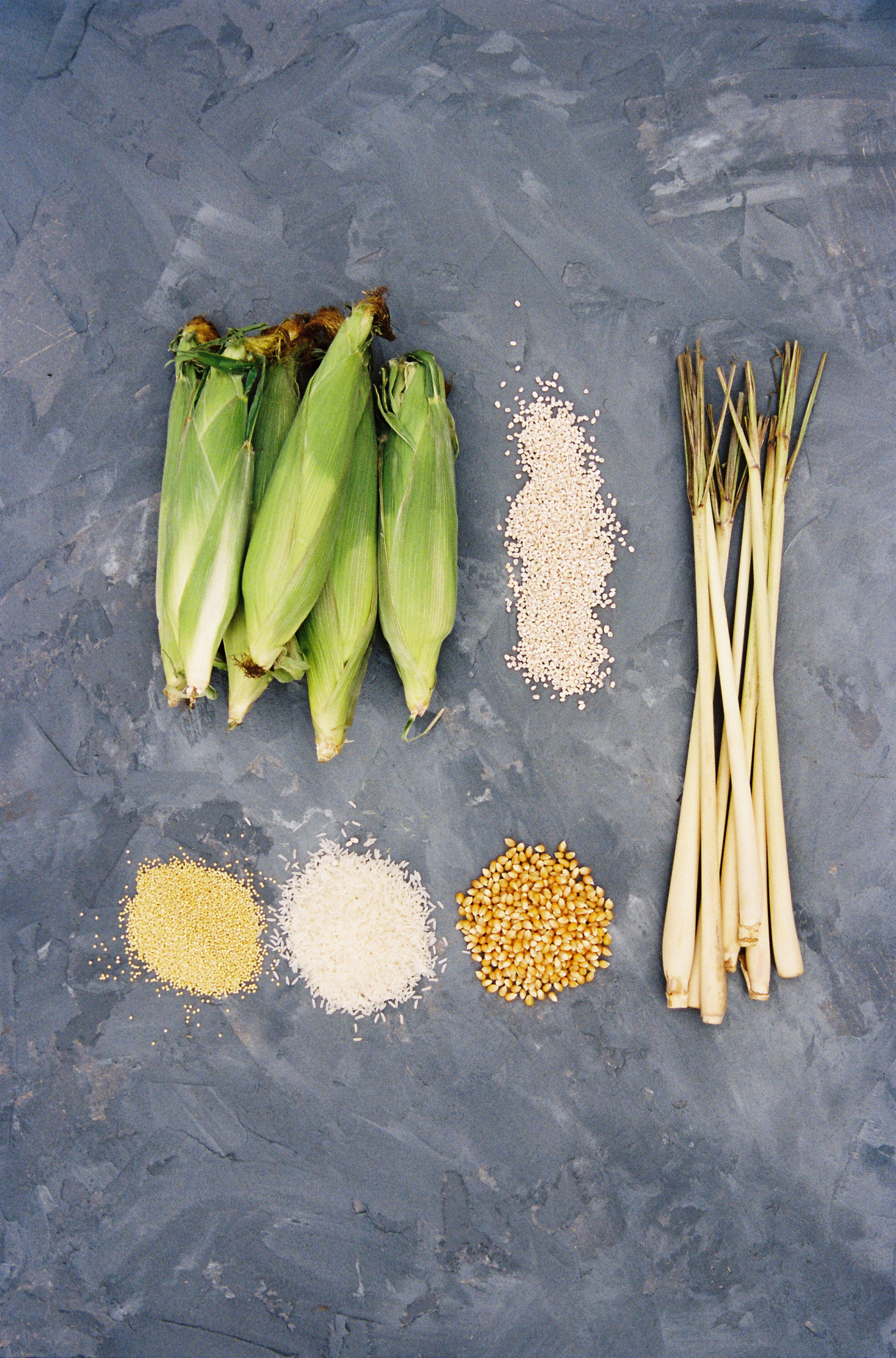
Corn's Surprising Family Tree
Corn might look like a vegetable standing tall in your garden, but botanically speaking, it's a grass. Sweet corn belongs to the Poaceae family — the grass family — which happens to be one of the most important plant families in all of human history. If you've eaten today, you've almost certainly eaten something from it.
The Poaceae family is responsible for feeding the world in more ways than most people realize. A few of its most notable members:
- Corn (Zea mays) — the star of your kitchen garden
- Rice — the staple grain for more than half the world's population
- Millet — one of the oldest cultivated grains on earth
- Sorghum — a drought-tolerant grain used across Africa and Asia
- Lemongrass — the aromatic culinary herb that shares more DNA with your corn than you'd ever guess
- Wheat, oats, and barley — the foundations of bread, beer, and breakfast around the world
Common Corn Growing Mistakes to Avoid
- Planting in a single row. We've said it before and we'll say it again — the block is everything. A single row will produce little to nothing due to poor pollination.
- Planting too early. Cold soil leads to poor germination and slow, stressed plants. Wait for 60°F soil temperature, not just the last frost date.
- Skipping fertilizer mid-season. Corn depletes soil rapidly. Side-dressing at knee height is not optional if you want full, flavorful ears.
- Harvesting too late. Once silks are brown and dry, move quickly. Corn at peak ripeness has a very short window.
- Growing only one variety in too small a space. Small plantings pollinate poorly. If space is limited, grow one variety in the largest block you can manage rather than two small blocks of different varieties.
Frequently Asked Questions About Growing Corn from Seed
Can you grow corn from seed directly in the garden? Yes — corn should always be direct sown. Unlike many vegetables, corn does not transplant well and performs significantly better when seeded directly into the ground where it will grow to maturity. Wait until soil temperatures reach 60°F before sowing.
How deep do you plant corn seeds? Plant corn seeds 1 to 1.5 inches deep. In warmer soil (above 70°F), you can plant as deep as 2 inches to access more consistent moisture. In cool soil, shallower planting (1 inch) helps seeds reach warmth more quickly.
How many corn plants do I need for a good harvest? For reliable pollination and a meaningful harvest, plant a minimum block of 16 plants (a 4x4 grid). For a family of four with corn as a regular summer side dish, aim for 40 to 60 plants. Remember: each plant produces 1 to 2 ears.
Why is my corn not producing full ears? Incomplete ear fill — where kernels are missing or patchy on the cob — is almost always a pollination problem. This happens when corn is planted in rows rather than blocks, when plants are too far apart, or when drought stress occurs during the silking and tasseling stage. Review your block formation and watering consistency.
Can you grow sweet corn in raised beds? Yes, with the right setup. You need beds large enough to accommodate a proper block formation — at least a 4x4 planting area — and beds at least 12 inches deep. Amend heavily with compost and plan to water more frequently than you would with in-ground corn.
What is the best organic fertilizer for corn? For the vegetative growth stage, nitrogen-rich organic fertilizers like blood meal, feather meal, or fish emulsion work well. As plants move into tasseling and ear development, transition to a balanced organic fertilizer with good phosphorus levels. Earthworm castings and compost are excellent slow-release base amendments throughout the season.
When is corn ready to pick? Corn is ready to harvest approximately 60 to 100 days after planting, depending on variety. Look for brown, dry silks, full firm ears, and confirm with the thumbnail test — a pierced kernel should release milky juice at peak ripeness.
Does corn need a lot of sun? Yes. Corn needs a minimum of 8 hours of direct sunlight daily, and more is better. It's one of the most sun-hungry crops in the kitchen garden. Don't plant it anywhere it will be shaded by taller structures or trees.
How do you prevent corn earworm organically? The most effective organic control for corn earworm is applying a few drops of mineral oil or Bt (Bacillus thuringiensis) directly into the silk of each ear just after pollination begins. Planting early in the season can also help you get ahead of peak earworm activity. Keeping beneficial insects in the garden through companion planting — particularly dill and marigolds — provides natural predation.
Stop Spraying. Start Gardening Smarter.
Organic Pest Control Made Simple
No harsh sprays. No endless guessing. Just a thriving, abundant garden that practically protects itself. With the Organic Pest Control Method, you’ll learn Nicole Burke's exact steps to grow naturally and confidently, season after season.
Sources
- "Growing Sweet Corn in a Home Garden" — https://extension.umd.edu/resource/growing-sweet-corn-home-garden
- "Corn Earworms: Identification, Damage, and Control" — https://www.almanac.com/pest/corn-earworms