
Join Thousands of Gardeners On the VIP List
Free perks, just for email subscribers:
- 15% Off Your First Order
- Gardening Videos & Articles
- Early Access to Sales
Sign up, check your inbox, then shop with your code.


Quick Take: You can turn one basil plant into many by rooting cuttings in fresh water. It takes less than two weeks, costs nothing, and works with almost any basil variety.
At a Glance
- Most types of basil are easy to grow from seed, but you can also create new basil plants by rooting cuttings.
- It takes about 10 to 14 days for cuttings to form new roots in fresh water.
- Once roots form, transplant to a pot with organic potting mix, keep well watered, and your new basil plant will be ready to harvest within a few weeks.
By Nicole Johnsey Burke: Founder of Gardenary and Author of Kitchen Garden Revival
Can You Propagate Basil?
In other words, can you turn one basil plant into 20? Absolutely!
Propagating herbs is something I call plant magic because it's so easy and you end up with free plants. Now, you can follow these steps with cuttings from any type of basil to create new plants, but I'm going to focus on African blue basil. The reason is because most basil varieties—like Thai basil and sweet basil—are extremely easy to start from seed. African blue basil plants, however, are sterile (they're hybrids), so true African blue basil seeds do not exist.
That means you can only create more African blue basil plants by rooting cuttings. Fortunately, African blue basil is one of the easiest herbs to propagate.
If you're ready to perform some plant magic with your basil, gather your supplies and let's get started.
Supplies to Propagate Basil
You'll need the following:
- Organic basil from the grocery store or garden
- A glass of fresh water
- Some pruners or some really sharp scissors
- A shallow cup
- A small container filled with potting mix (needed later)


Steps to Propagate Basil
Step 1: Select the Best Basil Stems to Root
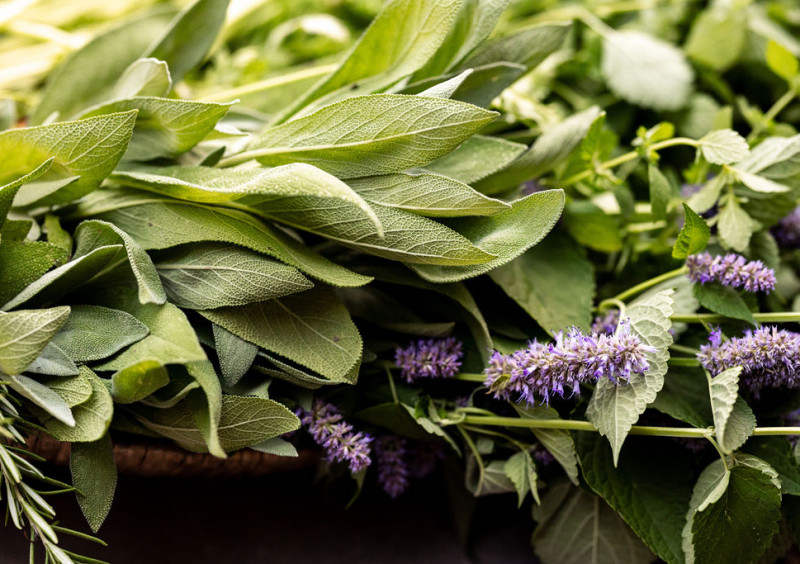
Buy a single bunch of organic basil from the grocery store before following these simple steps, or take some fresh cuttings from healthy African blue basil plants in the garden. Cuttings should be about 4 inches (10 cm) long.
Select the best stems to turn into plants by sorting through your bunch and finding the healthiest, freshest-looking leaves.
Get the complete Herb Garden Guide


Step 2: Prepare the Stems for Propagation
Clear the stems by removing the lower leaves on the bottom inch or so of the cuttings. This will allow the plant to focus on growing roots. Using clean pruners or sharp scissors, cut the stem at a bit of an angle.
Your stem may look a little bare now, but don't worry. It'll grow new leaves soon.


Step 3: Place Basil Cuttings in Water
Put trimmed and cleaned cuttings in a glass of fresh water. You want to make sure the leaves are hanging out all nice and dry at the top, but that the stem is nicely submerged since that’s where the roots will emerge.
Place your glass near a spot with filtered sunlight, somewhere that doesn't get too hot or cold.
Keep the cuttings in the water for 10 to 14 days, replacing the water every two to three days.
Remove molded or yellowing leaves and monitor the cuttings as they root.


Step 4: Prepare a Container to Grow Basil
Once you observe the formation of roots, prepare a 6"- to 12"-wide pot with organic potting mix. (Learn more about the best containers and soil mix for growing herbs in our free online herb growing guide.)
Water the mix thoroughly before transplanting.
Step 5: Transplant and Grow
Dig a hole the depth of the cutting and at least twice the width of the cutting. I like to use a dibber, but you could also use a chopstick to make a little hole.
Place the cutting into the new pot and water in well.
Ensure the re-potted cutting stays well-watered by watering every two to three days. Keep in a spot with filtered light without extreme temps.
Baby your new plants for the next couple of weeks as they adjust to life in soil instead of water.


Monitor your basil plants as they settle in, and enjoy your summer herbs through the entire winter season! In the spring, you can move your basil plants outside to a semi-shaded area once the threat of frost has passed.
The best part is, you can keep taking cuttings from your plants and propagating them all over again.
Fresh new basil plants for your garden or windowsill are really that easy. I’m so excited for you to grow this delicious herb in your space and have that freshly harvested taste all year long.
If you're planning to upgrade to a raised bed and move your basil outside once it's established, our cedar raised beds give herbs exactly the drainage and depth they need to thrive.
Love the Look of a Gardenary Garden? Start With the Beds.
Handmade cedar kits that skip the sawing, measuring, and hammering
- A raised bed for every space, with 39 size options
- Three heights to fit your planting needs
- Handmade in the USA from premium, untreated cedar
- Built for long-term durability and productivity
Frequently Asked Questions About Propagating Basil
How long does it take basil cuttings to root in water?
Most basil cuttings form visible roots within 10 to 14 days in fresh water. Change the water every two to three days to keep it clean and remove any yellowing leaves as you go.
What kind of water should I use to propagate basil?
Fresh tap water works fine. The key is to change it every two to three days so it stays clean and oxygenated. Make sure only the stem is submerged — leaves sitting in water will rot.
Can I propagate basil from grocery store basil?
Yes — a bunch of organic basil from the grocery store works perfectly. Select the healthiest, freshest-looking stems, trim the ends at an angle, remove the lower leaves, and place in water. Organic basil tends to root more reliably than conventionally grown bunches.
When can I move propagated basil outside?
Wait until all threats of frost have passed and nighttime temperatures are consistently above 50 degrees F. Basil is extremely cold-sensitive — even a light frost will kill it. Move plants outside gradually, starting in a semi-shaded spot to help them adjust.

