
At a Glance
- Trellising cucumbers keeps fruit clean, improves airflow to prevent disease, and makes harvesting dramatically easier.
- The most popular methods include A-frame trellises, panel or flat trellises, cattle panels, and string or twine systems, but my absolute favorite is an arch trellis.
- Most cucumber varieties are natural climbers and will grab onto almost any vertical structure you give them — your main job is just showing them where to go.
How Do You Trellis Cucumbers? Here's the Simple Answer
To trellis cucumbers, all you need to do is attach a vertical structure near your cucumber plants, and as they grow, you guide the vines upward and let them climb. Luckily, with proper setup, the plants do most of the work themselves.
The structure can be a purchased arch trellis or panel trellis, a DIY cattle panel, a simple wooden frame with twine strung between the posts, or even a sturdy fence. Cucumbers are enthusiastic climbers with little tendrils that grab onto almost anything, so once you give them something to reach for, they usually take it.
The real question isn't whether you should trellis your cucumbers. You absolutely should. The question is which method works best for your space, your budget, and, honestly, how much energy you want to put into building things on a Saturday morning.

What Happens When You Don't Trellis Cucumbers (Ask Me How I Know)
If you let cucumbers sprawl along the ground, a few things happen — none of them are great.
The vines take over whatever space they're near, which sounds charming until they've swallowed your pepper plants and are making a move on the basil. The fruit sits on the soil and tends to rot on the underside or get nibbled by pests before you even notice it's there.
Airflow through the plant drops significantly, which creates the damp, humid conditions that fungal diseases like powdery mildew absolutely love. And harvesting becomes a treasure hunt through a pile of leaves where cucumbers are hiding and quietly becoming yellow and soft.
Trellising solves all of this at once. It's one of those garden decisions that feels like a small thing and turns out to be a very big thing. Once you go trellis - you never go back.
Start your dream garden. Watch the free class!

The Benefits of Trellising Cucumbers
Before getting into the how, here's a quick summary of why you should grow cucumbers on a trellis.
- Cleaner fruit. Cucumbers hanging vertically stay straighter, develop better color, and don't have soil contact that leads to soft spots and rot.
- Better airflow. Vertical growing opens up the canopy, reduces humidity around the leaves, and significantly cuts down on fungal disease.
- Easier harvesting. You can see every cucumber on the vine without digging through a ground-level tangle. You'll catch them at the right size instead of finding monster cucumbers you somehow missed for two weeks.
- More space efficiency. A trellised cucumber takes up a fraction of the horizontal garden space compared to a sprawling one. More room for everything else you want to grow.
- Healthier plants overall. Good airflow, less soil contact, and better sun exposure add up to stronger plants that produce longer into the season.


How to Trellis Cucumbers: The 4 Best Methods
There's no single right way to trellis cucumbers. The best method is the one that fits your garden setup, your budget, and how much effort you want to put into construction. Here are the four most practical options, starting with a personal favorite.
Method 1: The Arch Trellis (My Favorite)
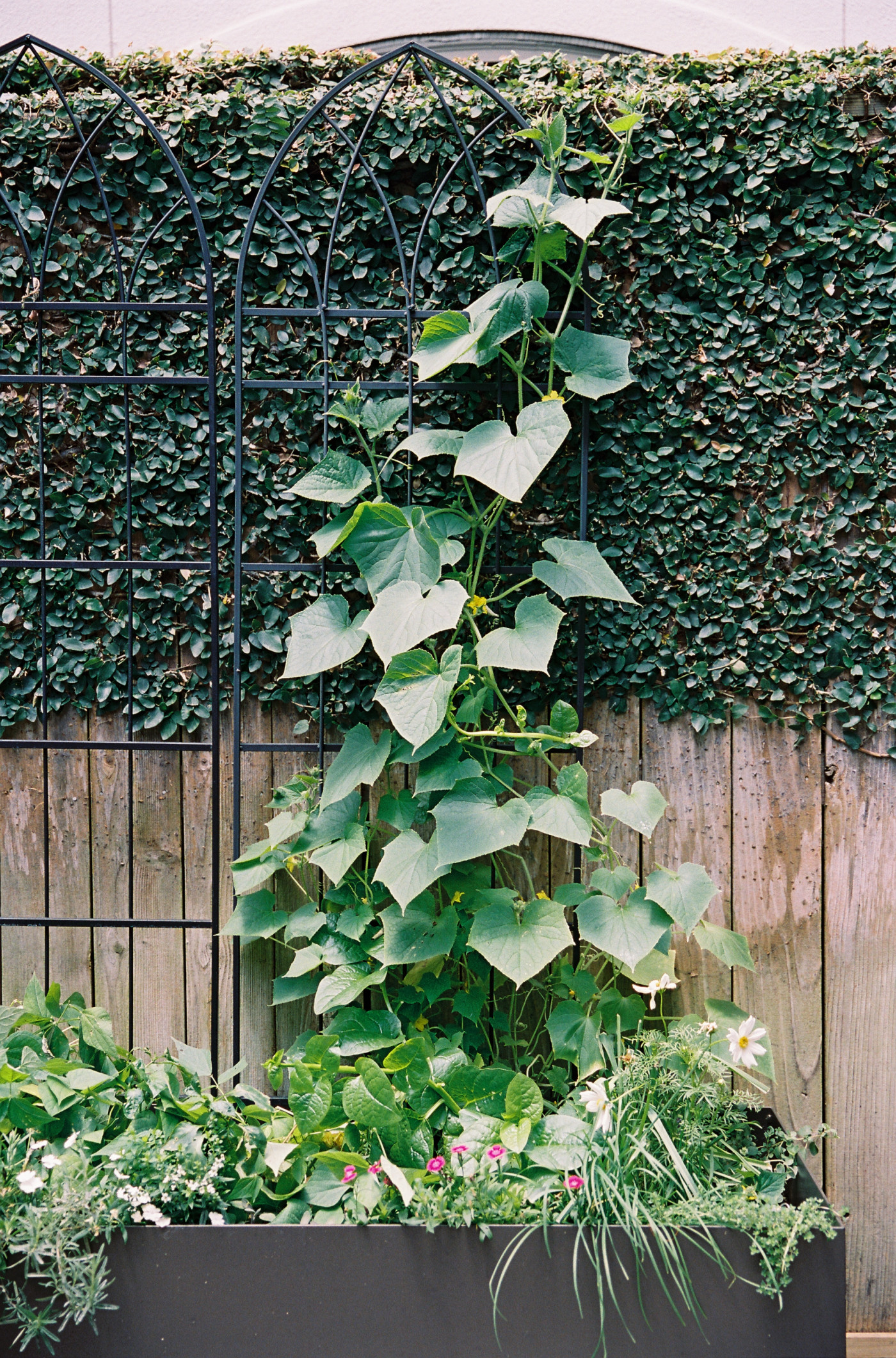
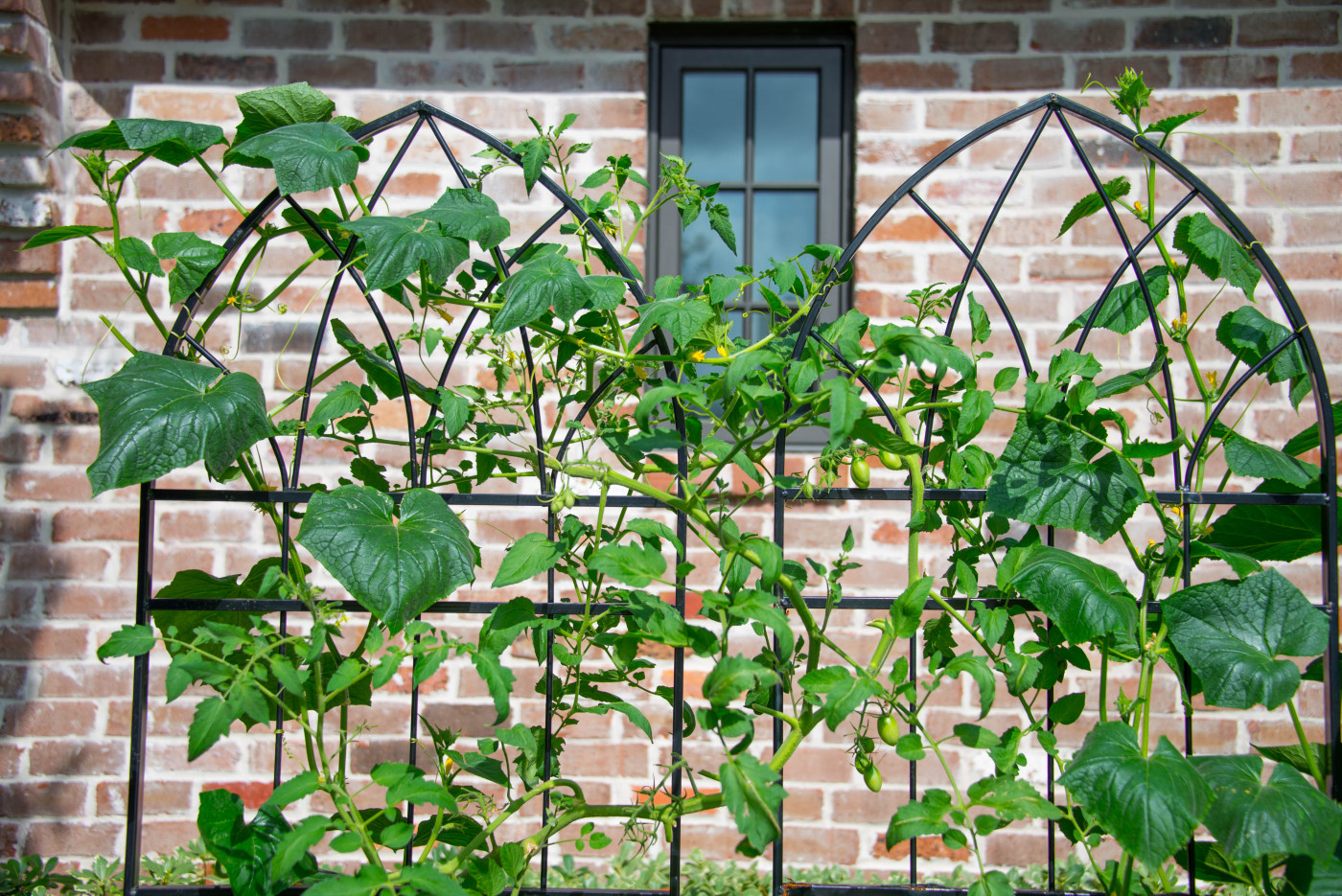
If you want one trellis that does everything beautifully, this is it. An arch trellis is sturdy enough to handle a full season of heavy cucumber vines, gorgeous enough to become the focal point of your entire kitchen garden, and practical enough that you'll wonder how you ever gardened without one. (Plus, they're fun to walk through.)
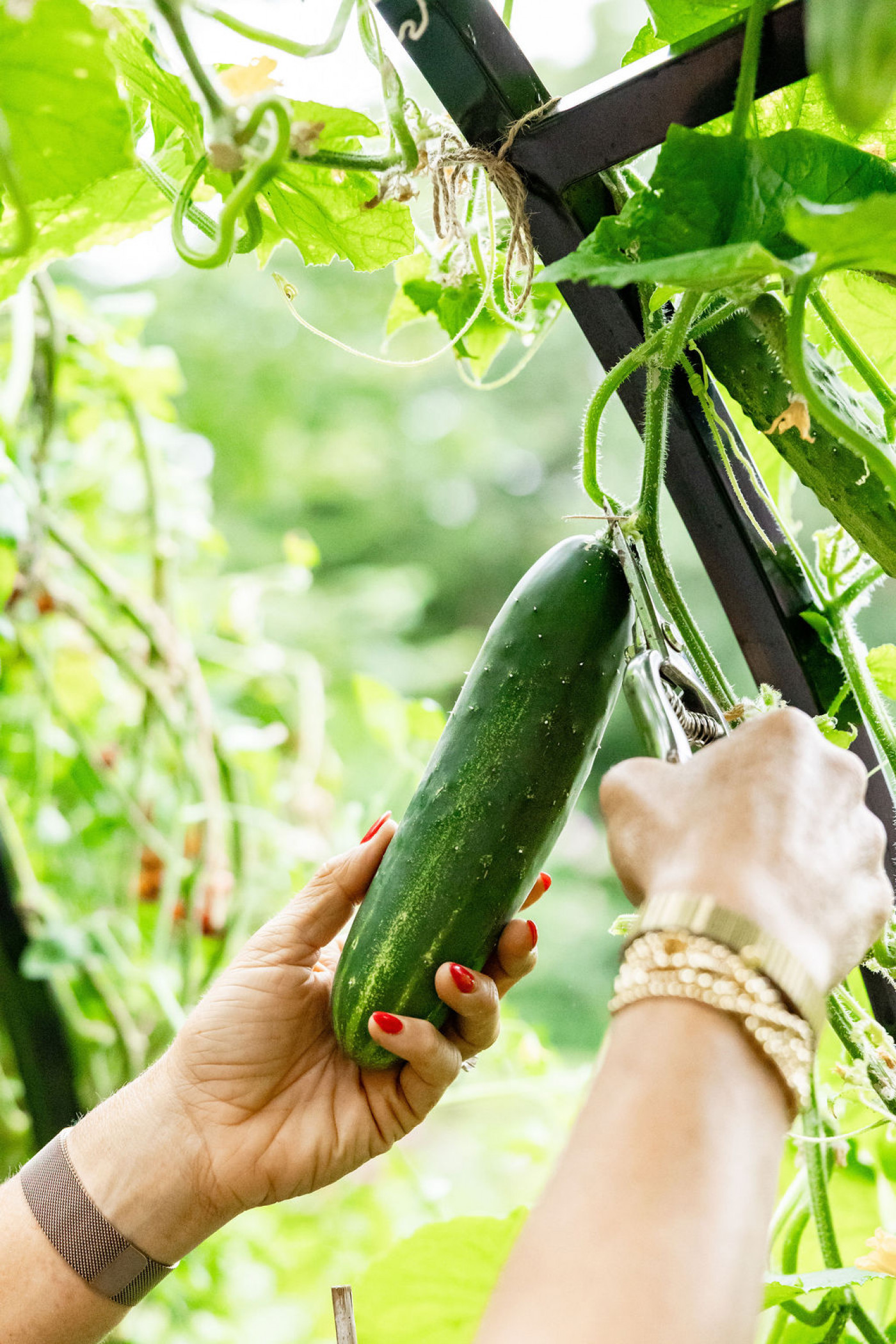
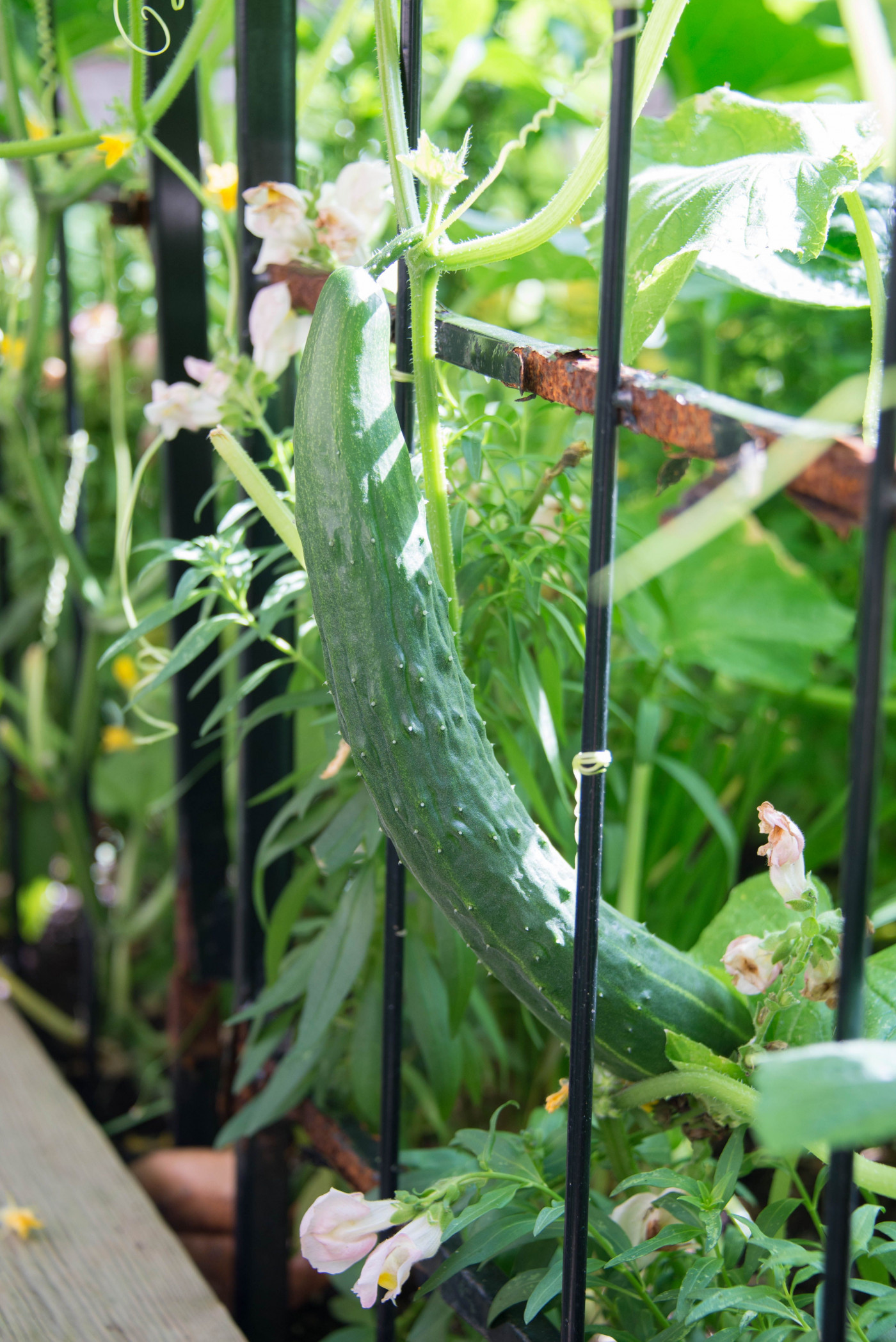
Cucumbers planted at the base of an arch trellis climb up and over the arch, hanging their fruit down through the interior, where it's incredibly easy to spot and harvest. No digging through leaves, no mystery cucumbers hiding on the ground. Just beautiful, accessible fruit hanging right there waiting for you. I simply harvest while standing under the arch.
How to set it up:
- Set up your arch trellis and install it in your garden — Gardenary carries arch trellises that are designed to be long-lasting, sturdy, and look stunning in a kitchen garden.
- Plant cucumbers at both base ends of the arch, about 6 to 12 inches apart.
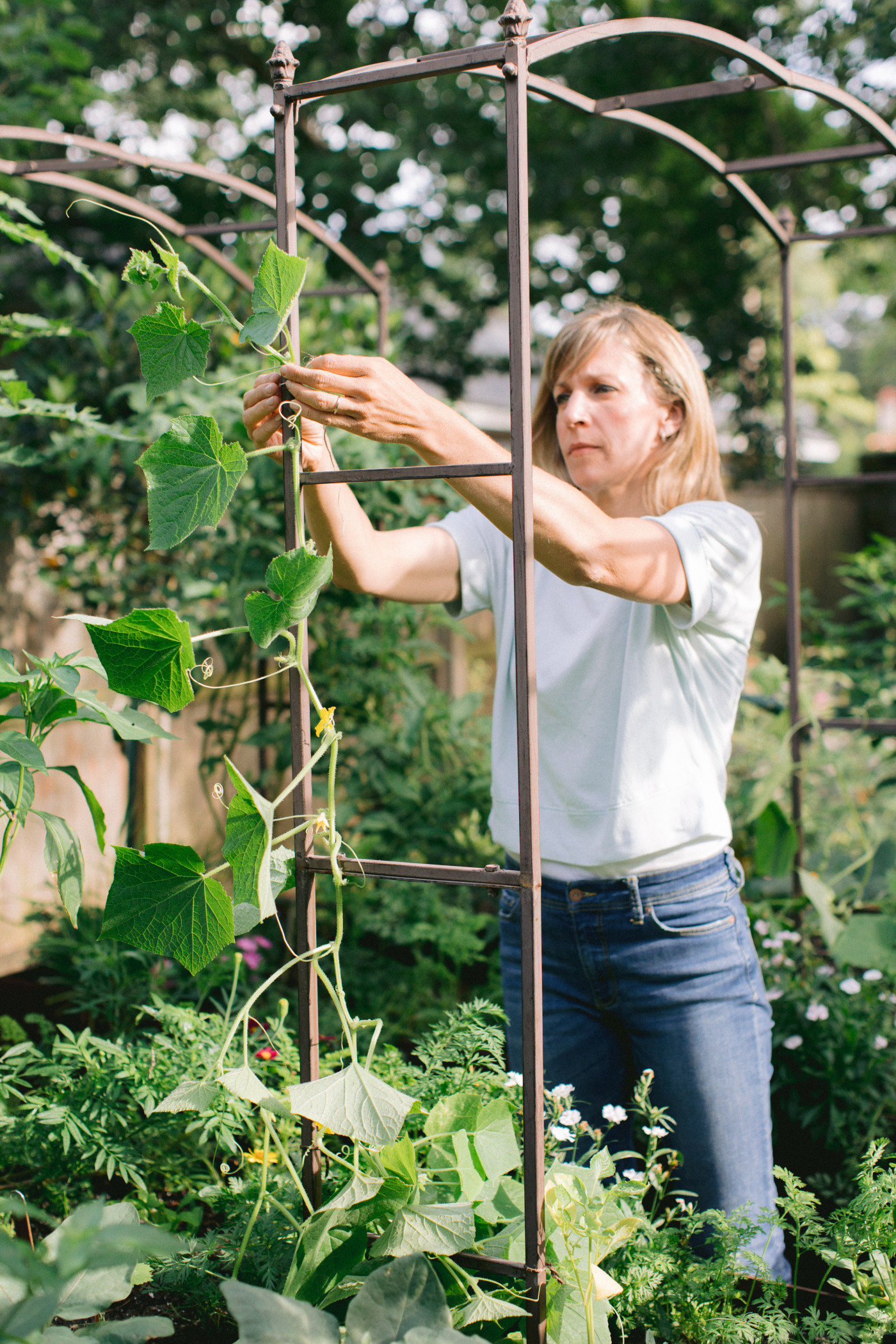
- Guide early growth onto the structure. Use string, twine, or gardening velcro to guide it and let the tendrils take over from there.
The finished product is honestly gorgeous. Cucumbers hanging down through a green archway look like something straight out of a garden magazine — and it functions just as beautifully as it looks. Once you grow cucumbers on an arch, it's very hard to go back.
Tip: Cucumbers have little tendrils that work like hands on monkey bars — they'll grab onto the trellis and pull themselves up as they grow. Sometimes, though, the leader vine can't find a good spot to grab and will just hang in midair. When that happens, the vine may stop growing or curl back down around itself, and neither situation is good for your harvest. Once a week, grab some twine and scissors, cut a few inches of twine, and loosely tie the top of the vine to the trellis to point it in the right direction. Cucumbers are fragile, so be gentle — but that small weekly habit keeps your vines climbing and your harvest coming all season long.
The Iconic Nicole Arch Trellis
Bring the classic Gardenary look to your own kitchen garden with this exclusive arch trellis, designed after the stunning arch in Nicole Burke’s personal garden. This trellis combines beauty, strength, and simplicity—shipping directly to your door and assembling without tools.
Method 2: A Panel Trellis
This is the most straightforward option and a genuinely great starting point if you're new to trellising. A flat panel trellis — metal, wood, or bamboo — gets anchored into the ground at the end of your cucumber row, and your cucumbers climb straight up it.
How to set it up:
- Choose a trellis panel at least 5 to 6 feet tall. Cucumbers are ambitious growers and will reach the top of anything shorter by midsummer.
- Anchor it securely in the ground or attach it directly to your raised bed walls. Cucumbers loaded with fruit get heavier than you'd expect.
- Plant cucumbers at the base, about 6 to 12 inches apart.
- Once vines are a few inches long, gently guide the first few tendrils toward the trellis and tie them on. After that, they'll find it themselves — just check in weekly and tie up any vines that are hanging in midair without a monkey bar to grab onto.
Tip: Position your trellis on the northern side of your garden bed so it doesn't cast shade on shorter plants growing nearby.
Modern Panel Trellis
This modern trellis is perfect for doubling your growing space in narrow beds or border gardens. You could also use a panel trellis in the middle of a wide bed that you can access from both sides. It will accommodate pole beans, cucumbers, tomatoes, sugar snap peas—really anything that wants to climb.
Method 3: The A-Frame Trellis
An A-frame trellis is essentially two trellis panels leaned together at the top to form a tent shape, with cucumbers planted on both sides. It's a beautiful tent-like structure that doubles your growing surface and creates a shady little tunnel underneath that's perfect for lettuce or herbs that appreciate some afternoon protection from the sun.
How to set it up:
- Lean two trellis panels together at an angle and secure them at the top with zip ties, twine, or a purpose-built connector.
- Anchor the bottom of each panel so the structure doesn't splay outward as it gets heavy with vines.
- Plant cucumbers along both sides at the base.
- Guide initial growth toward the trellis, do your weekly vine check, and let the tendrils handle the rest.
Method 4: String or Twine System (Budget-Friendly Option)
The string method is low-cost, easy to set up, and surprisingly effective. Two sturdy posts go into the ground at either end of your cucumber row, with horizontal lengths of twine stretched between them every 8 to 10 inches to create a simple grid your cucumbers can weave their way up through.
How to set it up:
- Drive two wooden or metal stakes at least 12 inches into the ground at each end of your cucumber row, leaving 5 to 6 feet of post above ground.
- Run twine horizontally between the posts, starting about 8 inches from the ground, continuing up every 8 to 10 inches.
- Add a few vertical lengths of twine for extra stability and more grab points for tendrils.
- Plant cucumbers at the base and guide early vines onto the lowest horizontal string.

Common Cucumber Trellising Mistakes to Avoid
Even with the best setup, a few small missteps can make the whole system less effective. Here's what to watch for:
- Planting too close together. Even on a trellis, cucumbers need space. Overcrowding reduces airflow and puts plants in direct competition. Aim for 6 to 12 inches between plants.
- Waiting too long to introduce the trellis. Set your trellis up before or at planting time, not after your cucumber vines are already a tangled mess on the ground. Untangling established vines without breaking them is not a fun afternoon.
- Using a trellis that's too short. Cucumbers can easily reach 6 feet and beyond. A 4-foot trellis will be overwhelmed by midsummer.
- Not securing the trellis well enough. A top-heavy trellis loaded with cucumber vines and fruit will fall over in a good wind if it's not properly anchored. Take the extra five minutes to secure it well at the start.
- Forgetting to harvest regularly. This one isn't about the trellis, but it matters. Leaving large cucumbers on the vine signals the plant to slow down production. Check your trellis every day or two and harvest consistently to keep the plant producing all season.

Which Cucumber Trellis Method Is Right for You?
Here's a quick guide to help you choose:
- New to trellising or want something simple: Go with a panel trellis. Set it up in ten minutes and move on with your day.
- Want to maximize space and grow underneath: Try an arch trellis. It's efficient, beautiful, and gives you bonus growing real estate in the shaded tunnel below.
- Working with a tight budget: String and twine will get the job done and cost almost nothing.
There's genuinely no wrong answer here.
Any vertical support is better than no vertical support, and your cucumbers are going to be delighted no matter which one you choose.

Frequently Asked Questions About Trellising Cucumbers
Do all cucumber varieties need a trellis? Not all, but most benefit from one. Vining cucumber varieties — which includes most slicing and pickling types — are natural climbers and do significantly better with vertical support. Bush cucumber varieties are more compact and can grow without a trellis, though even they appreciate a little support to keep fruit off the ground. Check your seed packet or plant tag: if it says "vining," plan to trellis it.
How tall should a cucumber trellis be? At least 5 to 6 feet tall. Cucumber vines are enthusiastic growers and will reach the top of anything shorter by midsummer. If you're working with a particularly vigorous variety, taller is always better. You can always train vines horizontally along the top once they run out of vertical room.
When should I start training cucumbers onto the trellis? As soon as the vines are a few inches long and have their first set of tendrils, start gently guiding them toward the trellis. The earlier you introduce them to the structure, the easier it is. Trying to redirect established vines that have already started sprawling is doable, but it's a much more patient process.
How do I attach cucumber vines to a trellis? Loosely. Soft garden twine, fabric plant ties, or even torn strips of old t-shirt work well. Tie the vine to the trellis at a node — the point where a leaf meets the stem — rather than around bare stem. Always leave a little slack so the tie doesn't cut into the vine as it grows. Once the tendrils find the trellis, they'll do most of the attaching themselves.
Can I trellis cucumbers in a raised bed? Absolutely, and raised beds are actually one of the best setups for trellised cucumbers. You can attach trellis panels directly to the sides of the raised bed frame for a very secure, clean look. Just position the trellis on the north side of the bed so it doesn't shade shorter plants growing nearby.
How far apart should cucumbers be planted on a trellis? Space cucumber plants 6 to 12 inches apart along the base of the trellis. Closer spacing maximizes production in a small space, but make sure you're not sacrificing airflow. Good air circulation through the canopy is one of the main benefits of trellising in the first place, so don't crowd them to the point of defeating the purpose.

One Last Encouragement Before You Trellis
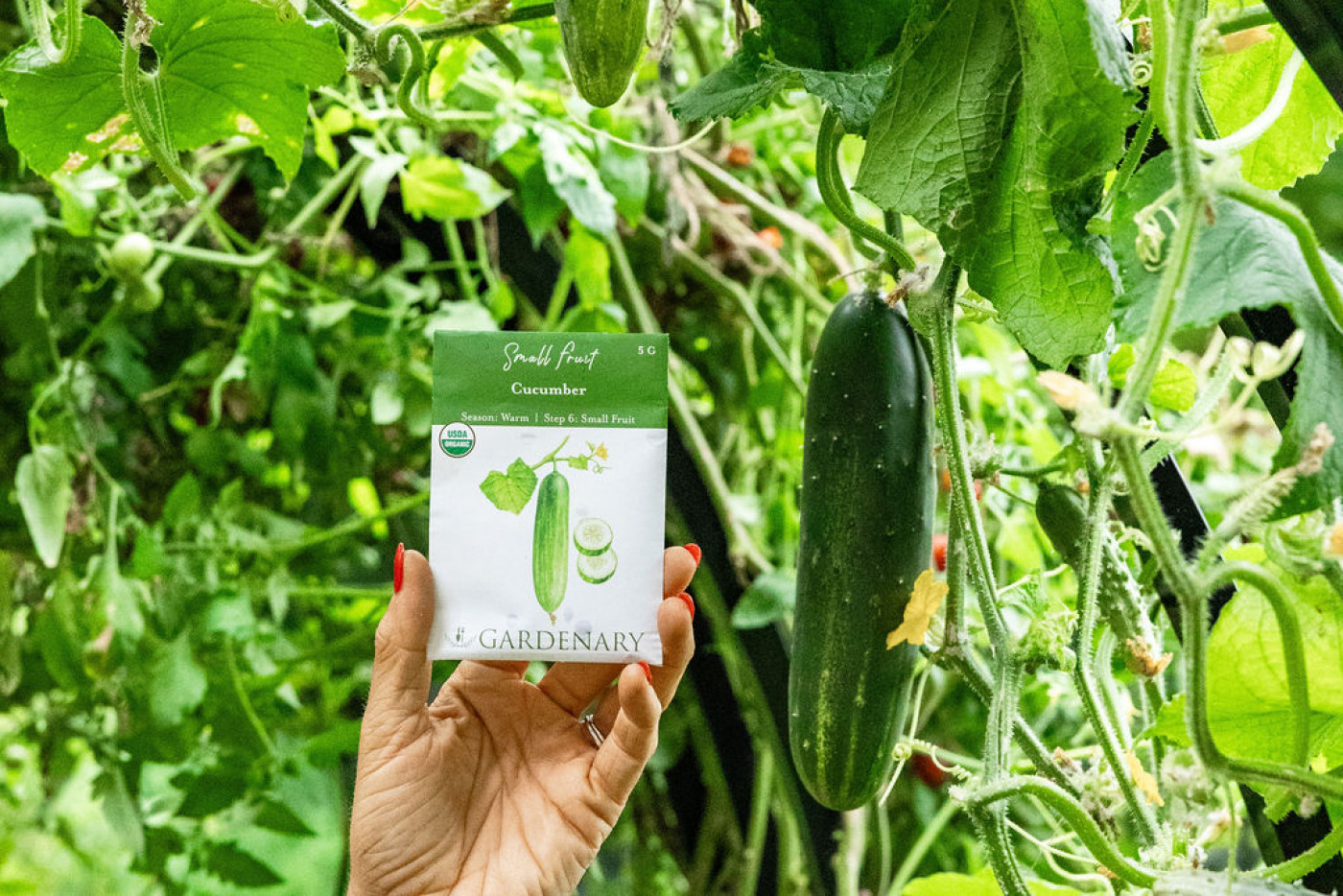
If you've been growing cucumbers on the ground and wondering why the season always feels a little disappointing, this is probably the missing piece. Trellising is one of those changes that makes you feel like a completely different gardener — not because you've done anything complicated, but because you've just given your plants what they were always trying to do anyway.
Cucumbers want to climb. Give them something to climb on and get out of the way. The harvest will speak for itself.
Learn How to Plan and Build Beautiful Raised Beds
Follow a simple process to build a raised bed that makes construction straightforward — even if you’re not “handy.”
More About Cucumbers
Sources
"Growing Cucumbers Vertically" — https://extension.umn.edu/vegetables/growing-cucumbers
"Cucumber Production Guide" — https://extension.psu.edu/cucumber-production
"Trellising Vegetables" — https://www.almanac.com/plant/cucumbers