
At a Glance
- What raised bed edging is and why it elevates the look of your garden
- The best edging materials for a clean, low-maintenance garden
- Step-by-step guidance for installing edging
Raised Bed Edging Makes a Visual and Functional Impact
When I first started building raised beds, I thought edging was optional. I figured if the bed looked good and the soil was contained, I was done. But over time, I realized that raised bed edging is one of those small decisions that shape the entire garden experience.
Once I decided to start edging my space, my gardens went from amateur hour to professional and clean almost overnight.
Edging defines your space. It outlines the scene like a frame on a canvas. Aesthetically, this brings the garden together visually.
Functionally, it keeps grass from creeping in and mulch or gravel from washing out. So, it plays a multipurpose role in the garden.
If you’re new to raised bed gardening, this guide will walk you through everything you need to know about raised bed edging in a clear, simple way.

What Is Raised Bed Edging?
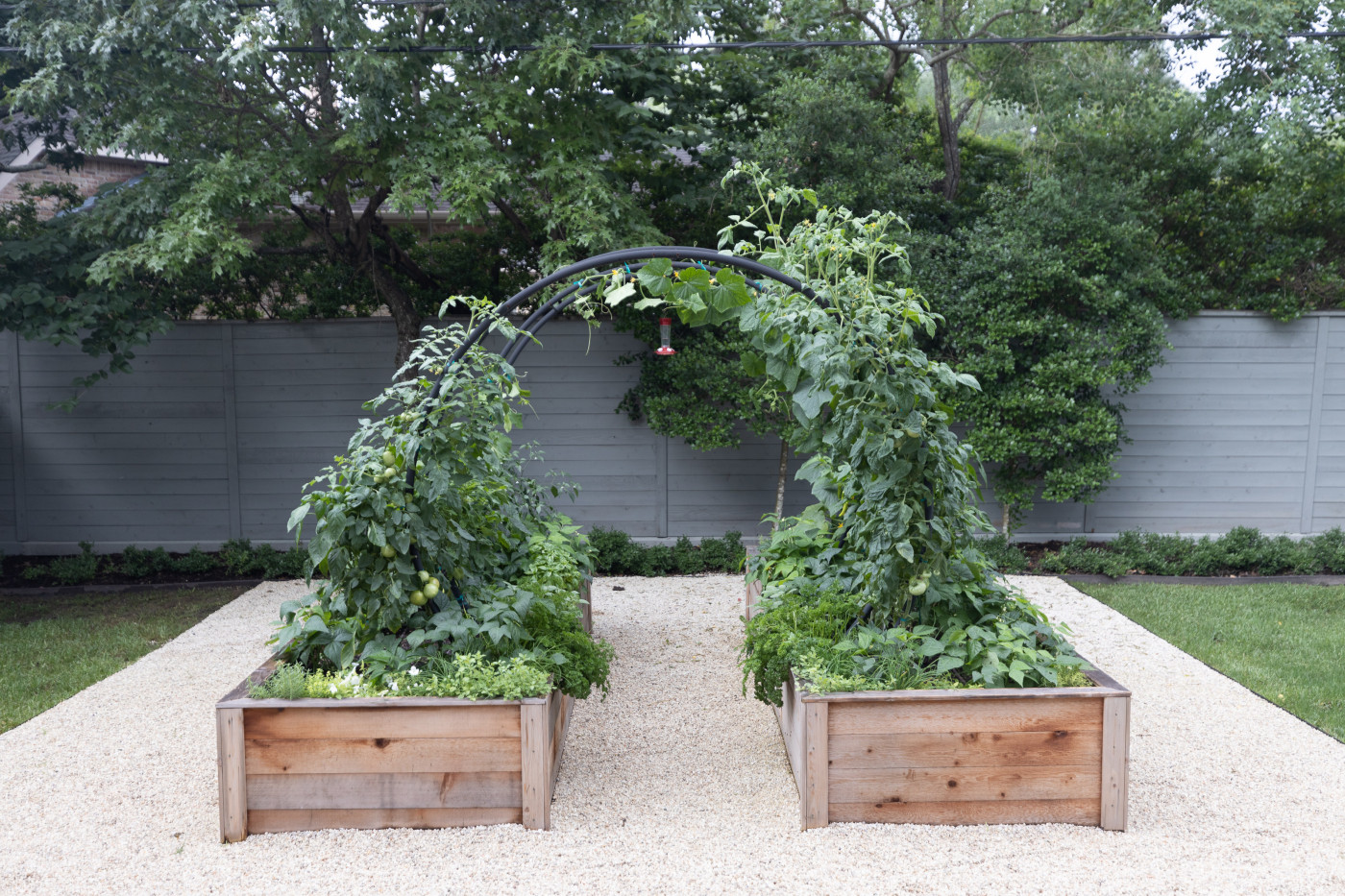
Raised bed edging refers to the material placed around the outside of your raised bed to create a clean boundary between two elements.
Use edging between:
- Lawn and garden
- Walkway and bed
- Gravel and soil
- Mulched paths and grass
Think of it as a frame around your garden. It doesn’t just improve appearance. It protects your work.
For beginners, edging helps prevent two of the most common frustrations:
- Grass creeping into your beds
- Soil or gravel spilling into the grass

Join Thousands of Gardeners On the VIP List
Free perks, just for email subscribers:
- 15% Off Your First Order
- Gardening Videos & Articles
- Early Access to Sales
Sign up, check your inbox, then shop with your code.
CLAIM YOUR 15% OFF BELOW
Why Gardeners Should Use Raised Bed Edging
No matter how long you’ve been gardening, clean boundaries change everything. Raised bed edging creates definition. It separates lawn from gardening space, pathways from soil, and structure from chaos. That definition doesn’t just make the garden look finished. It protects the time and energy you’ve invested in building healthy beds.
Benefits of raised bed edging:
- Reduces maintenance
- Defines growing zones
- Prevents erosion
- Improves drainage control
- Makes mowing easier
Types of Edging

The Best Raised Bed Edging Materials
When you’re choosing raised bed edging, you’re really choosing how your garden will function long term. The right material defines your space, protects your soil, and reduces maintenance season after season. The best choice depends on your style, your budget, and how permanent you want the structure to feel.
Let’s walk through the most practical and commonly used options.
Metal Edging
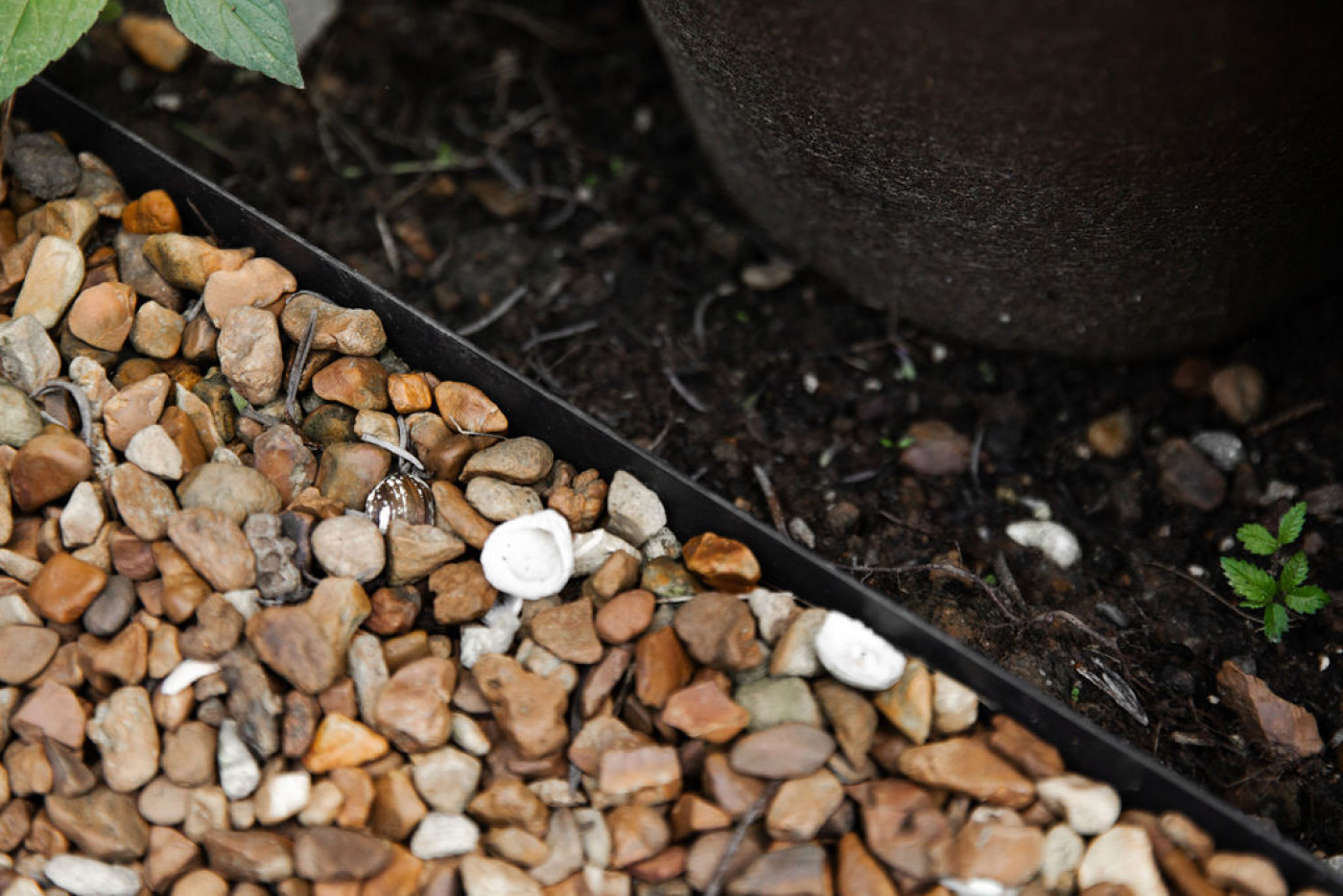
This is one of the most common options. Metal edging creates a clean, modern line around raised beds. Thin strips of steel or aluminum are installed vertically into the soil, forming a subtle but durable boundary. If you like crisp lines and a minimalist aesthetic, this option feels polished and intentional.
I use metal edging frequently in my garden installations.
Pros of metal edging:
- Durable and long-lasting
- Easy to mow against
- Visually clean and structured
The main consideration is cost. It can be more expensive upfront, and installation takes time. When installed properly, though, it’s one of the lowest-maintenance solutions available.

Stone or Brick Edging
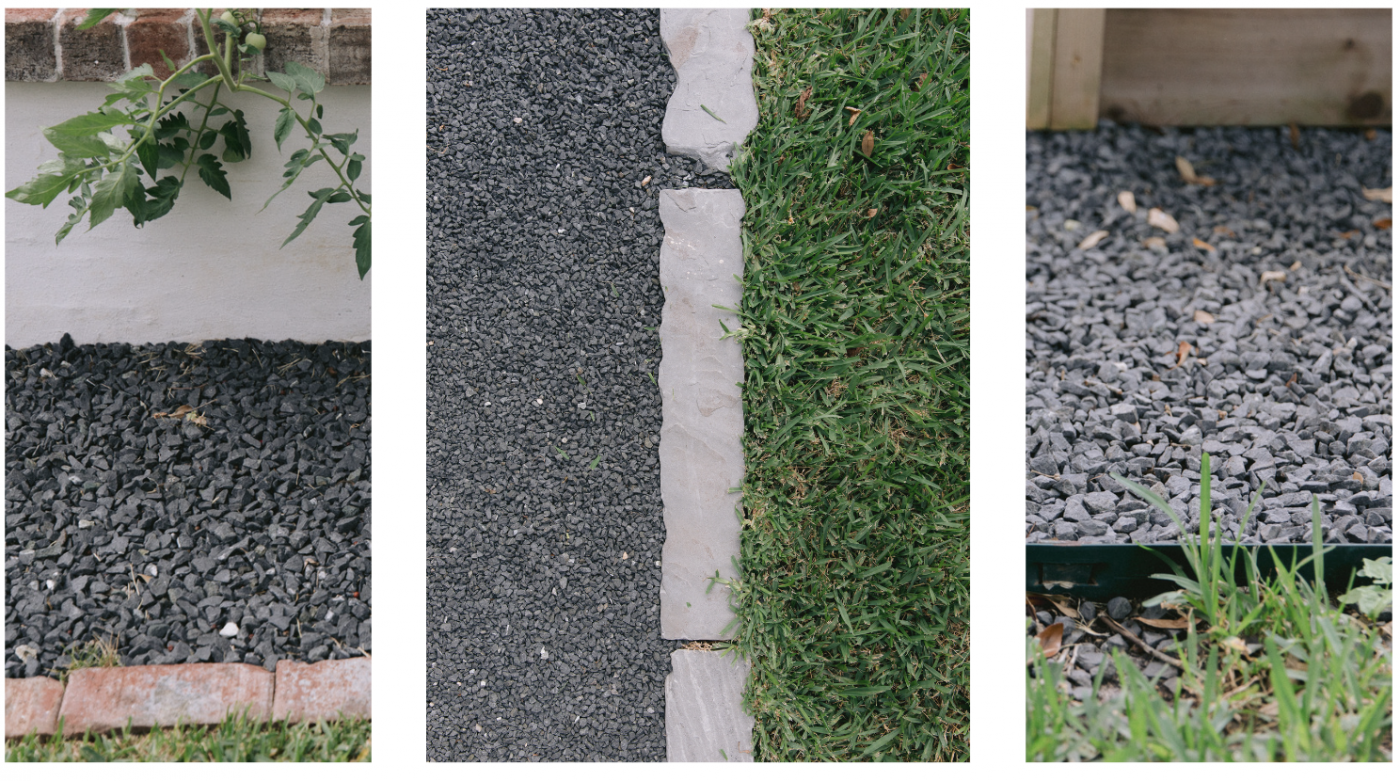
Stone and brick edging add weight and permanence to a garden. This option feels timeless, especially in cottage-style or traditional kitchen gardens. Natural stone blends beautifully into organic landscapes and ages gracefully over time.
Pros of stone or brick edging:
- Extremely durable
- Visually substantial
- Long-lasting
It does require more physical effort to install (rocks are heavier than they look!), but once it’s in place, it rarely needs attention.

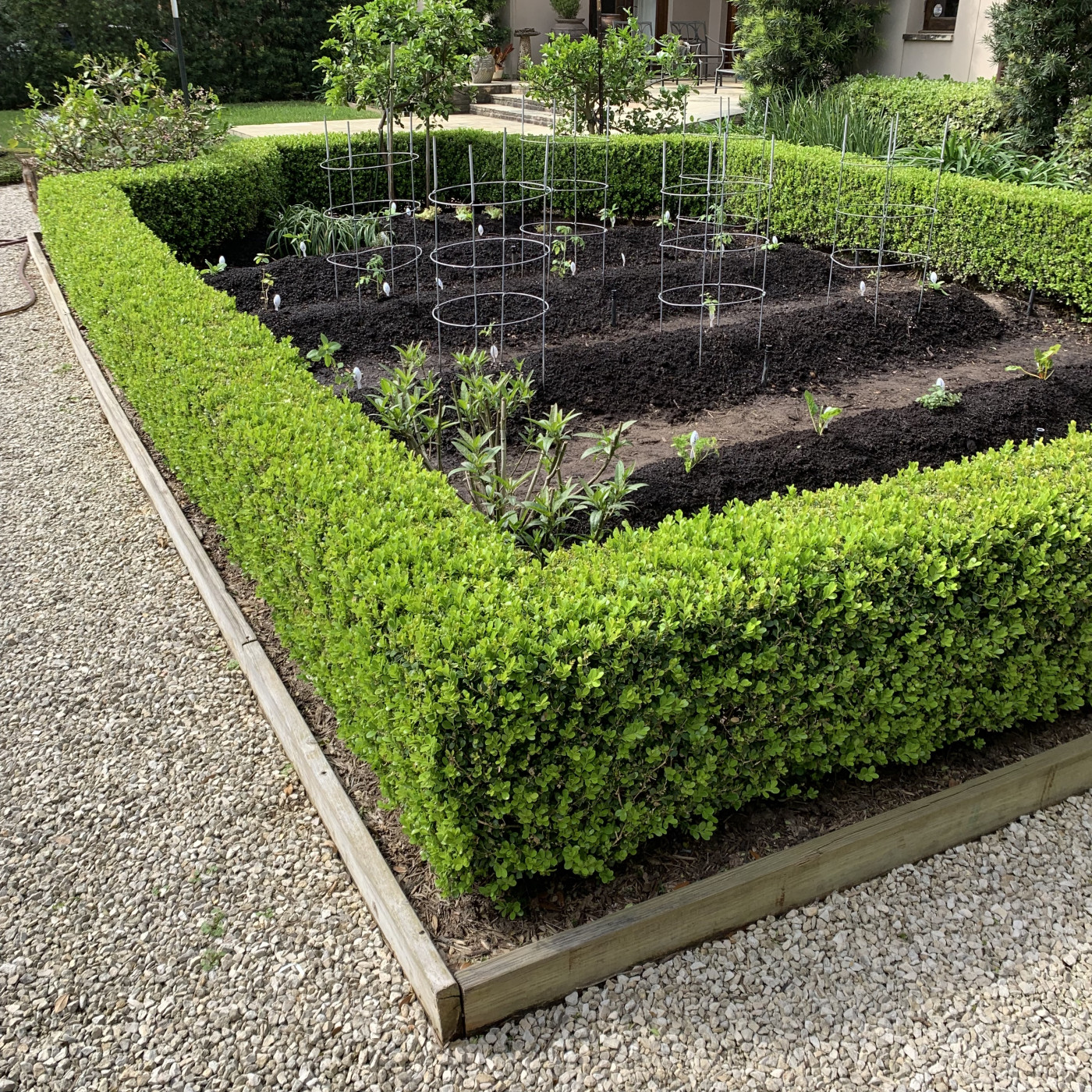
Wood Edging
Wood edging, especially untreated cedar or other rot-resistant lumber, pairs beautifully with wooden raised beds. It creates continuity and warmth in the garden and is relatively straightforward to install.
Pros of wood edging:
- A natural, cohesive look
- Moderate durability
- Accessibility for DIY installation
But over time, wood will break down, especially in humid climates. That’s normal. If you choose this option, always use natural, untreated wood. Avoid pressure-treated lumber or chemically treated materials in food-growing spaces.
Gravel Borders
A gravel border involves digging a shallow trench around your raised bed and filling it with gravel. This option is simple, practical, and excellent for drainage.
Pros of gravel:
- Improve drainage
- Reduce mud around beds
- Help define pathways
Natural Edge with Compost Mulch
In some gardens, especially smaller ones, you may not need an edging material at all. A cleanly defined trench edge, combined with heavy compost mulching, can create a soft yet effective boundary.
This approach requires more maintenance. You’ll need to redefine the edge periodically while tending to the lawn and monitor grass encroachment. But in low-pressure lawn environments, it can look elegant and natural. This is the easiest option, but not the lowest maintenance.
What to Avoid
In the spirit of building a healthy ecosystem, not all edging materials are equal. I avoid anything that compromises soil health or breaks down quickly.
Materials to steer clear of include:
- Plastic landscape edging that cracks and warps
- Chemical-treated lumber
- Rubber edging made from unknown materials
- Synthetic weed barriers that suffocate soil life
Installation & Tips

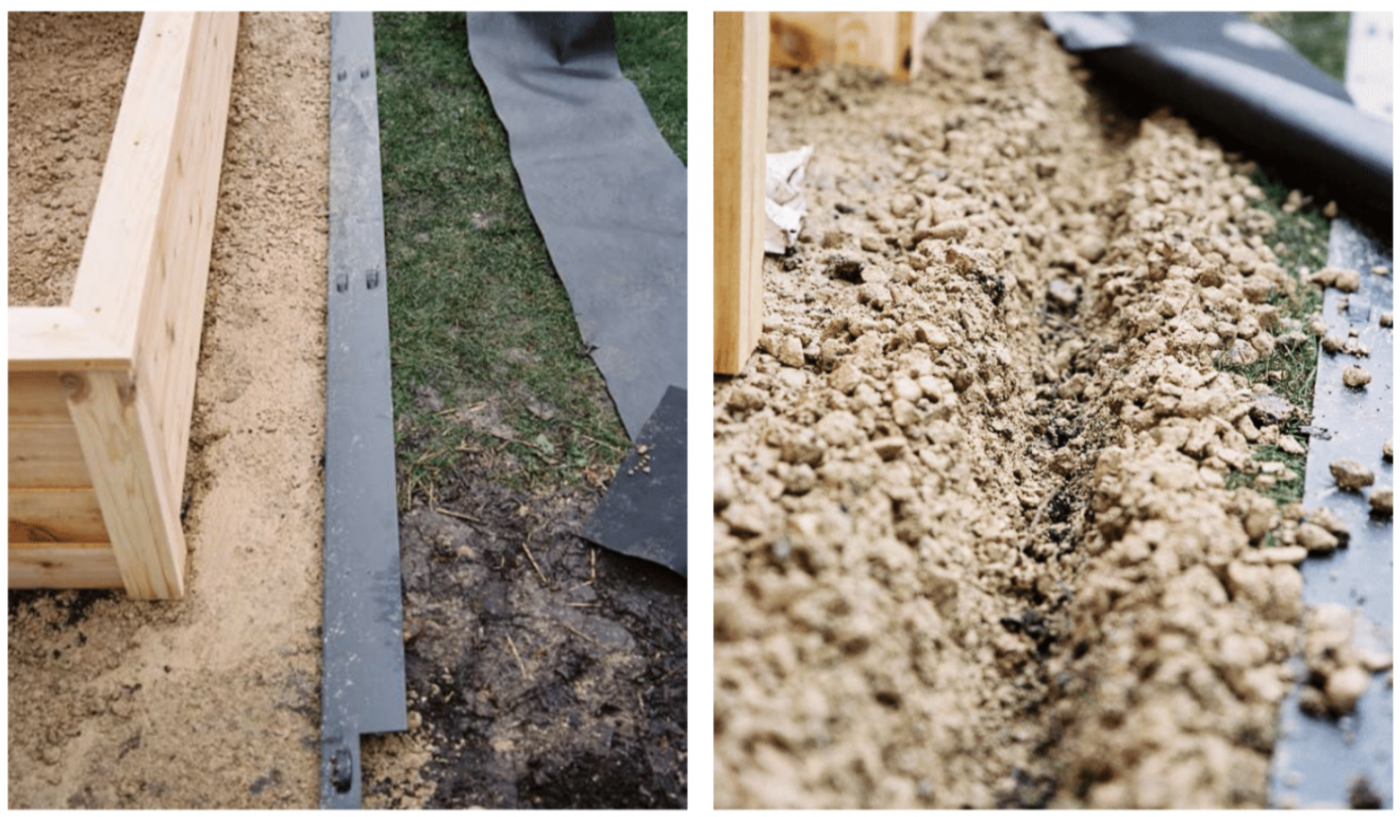
How to Install Raised Bed Edging
Installing raised bed edging is simpler than most people expect. The key is to take your time with the layout.
Start by defining your line. I like to use stakes and string to outline the border before digging, but you can even use a garden hose or an old rope.
Stand back. Look at it from multiple angles. Make sure it feels right before you commit.
Next, dig a shallow trench about 2 to 4 inches (5 to 10 cm) deep, depending on your material. This trench stabilizes the edging and prevents grass roots from sneaking underneath.
Set your edging firmly into place. Make sure it sits level and that there are no gaps at corners or seams. Once positioned, you can fill the area with gravel, soil, mulch, or whatever your garden plan entails.
Raised Bed Edging for Weed Prevention
One of the biggest frustrations in any garden is creeping grass. Raised bed edging acts as a barrier, blocking lawn roots from invading your growing space. It also creates a clear mow line, making lawn maintenance easier and more precise.
Edging prevents weeds by:
- Blocking creeping grass runners
- Separating pathways from planting soil
- Reducing soil erosion into walkways

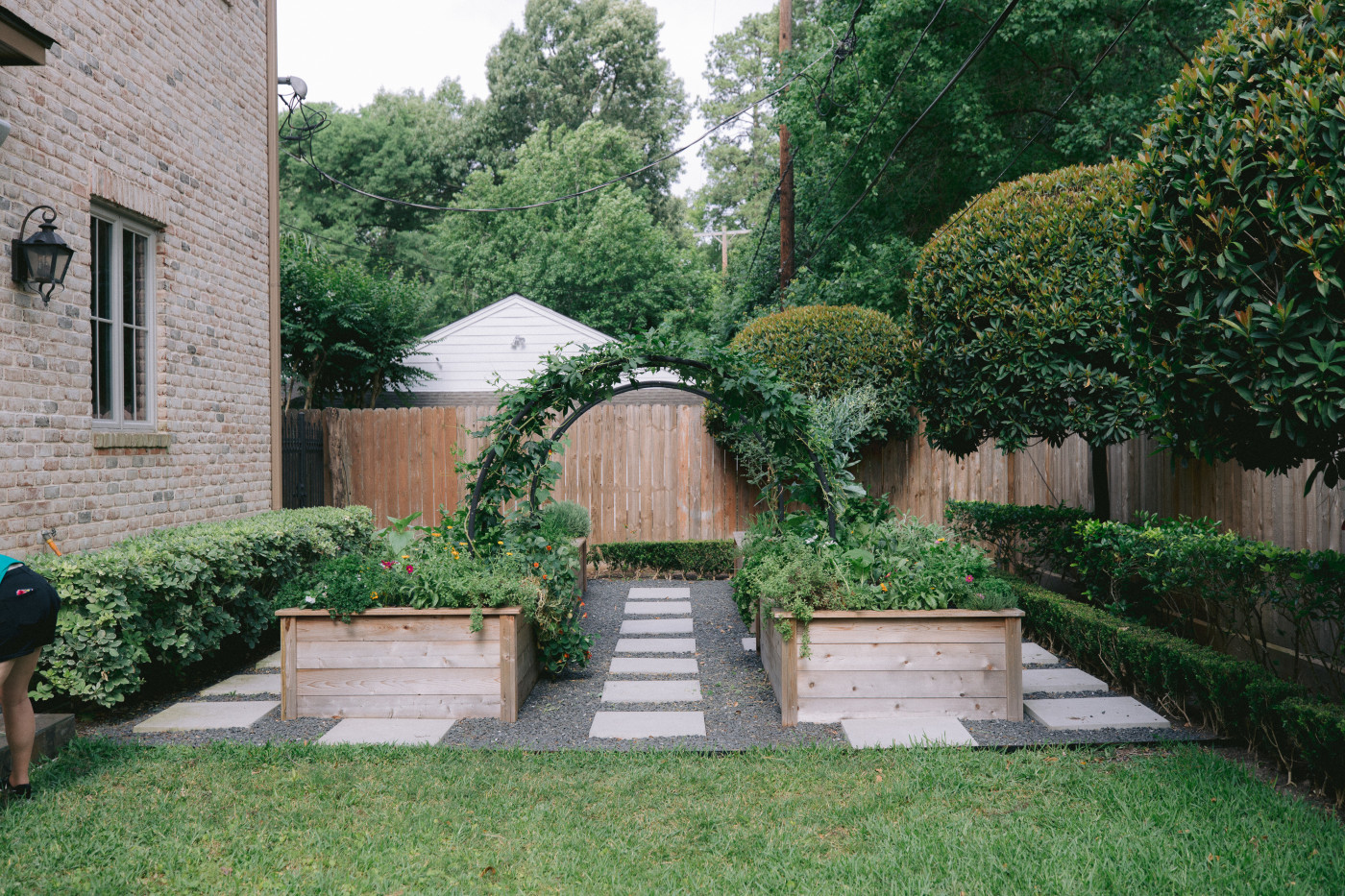
Matching Raised Bed Edging to Garden Style
Edging influences your garden's personality more than you might expect.
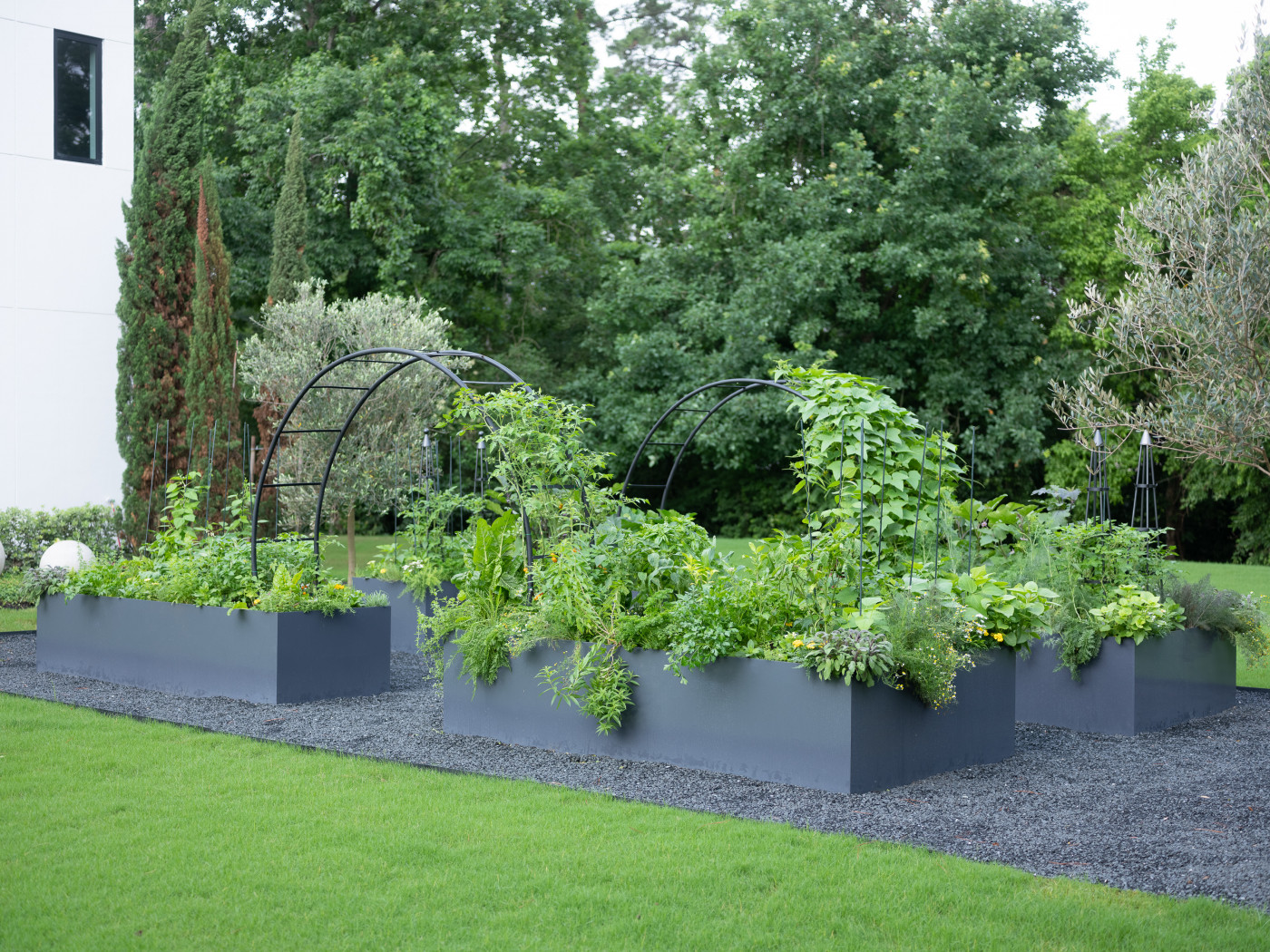
A modern garden often pairs beautifully with metal edging, clean gravel paths, and straight lines. A cottage-style garden leans into stone or brick with gentle curves and layered plantings. A rustic kitchen garden feels cohesive with cedar edging and compost-mulched pathways.
The right choice is the one that fits both your aesthetic and your maintenance capacity.
Bringing It All Together
Raised bed edging may seem like a small design choice, but it shapes the entire experience of your garden. When your beds are framed well, everything feels well-designed. Maintenance becomes simpler. Soil stays where it belongs. Plants grow in clearly defined spaces.
Start with one material. Define your lines clearly.
A clean edge supports healthy soil, protects your growing space, and reduces the small frustrations that can wear you down over time. Make the decision once, install it well, and then move on to what really matters — growing food, tending plants, and enjoying the process.
Join Thousands of Gardeners On the VIP List
Free perks, just for email subscribers:
- 15% Off Your First Order
- Gardening Videos & Articles
- Early Access to Sales
Sign up, check your inbox, then shop with your code.
CLAIM YOUR 15% OFF BELOW