
At a Glance
- Eggplant is particularly vulnerable to aphids, flea beetles, spider mites, and whiteflies. The right companion plants act as a natural defense system against all of them.
- The best eggplant companions include herbs, flowers, and vegetables that deter pests, attract beneficial insects, improve soil fertility, and make the most of your garden space.
- Companion planting is one of the simplest, most effective ways to reduce pest pressure organically — and it starts with just knowing what to plant next to what.
I've planted eggplant in raised bed gardens from Houston to Chicago to Nashville, which means in hot climates, cold climates, and everything in between. Over the years of building gardens for clients and teaching thousands of students through Gardenary, I've tested a lot of companion planting combinations firsthand.
The ten plants on this list are the ones that have proven themselves in real gardens, in real conditions, over and over again.
Eggplant is a big, productive plant, but it has its vulnerabilities. Flea beetles love it. Aphids find it irresistible. And if you've ever pulled back the leaves to find a party of pests you didn't invite, you know the frustration.
The right neighbors make all the difference. These ten companion plants are the ones I suggest every time.

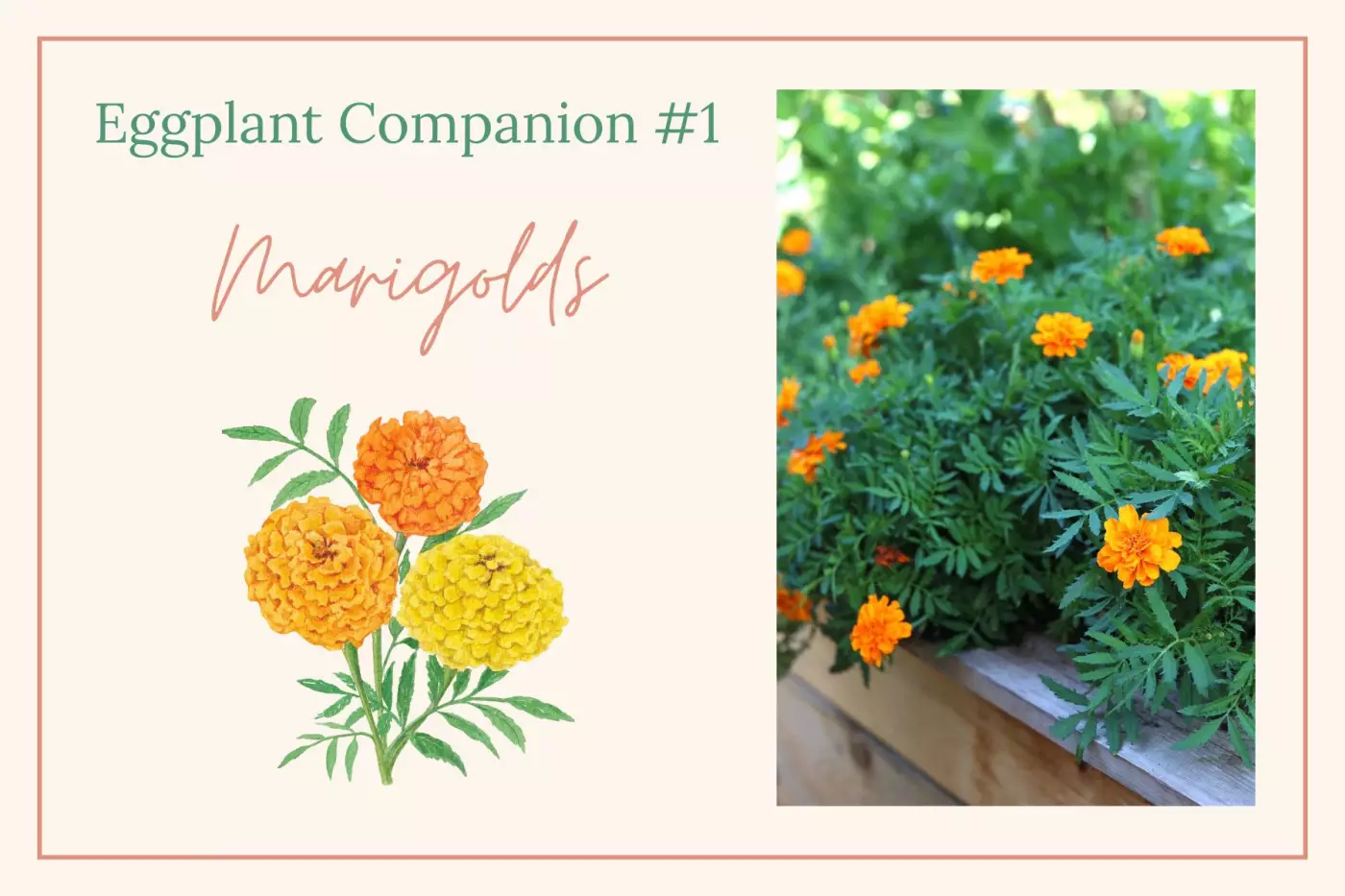
1. Marigolds
If I could only plant one companion flower in the entire kitchen garden, marigolds would be in serious consideration for the top spot. For eggplant specifically, they're almost essential.
Why Marigolds Work So Well with Eggplant
- Repel nematodes — French marigolds (Tagetes patula) release a compound from their roots called alpha-terthienyl that actively suppresses root-knot nematodes, which can devastate eggplant crops
- Deter aphids and whiteflies — the spicy, pungent scent that marigolds put off confuses and repels two of eggplant's most persistent pests
- Attract beneficial insects — marigolds bring ladybugs, lacewings, and parasitic wasps into the garden, all of which prey on the soft-bodied insects that target eggplant
Plant marigolds along the border of your eggplant bed or tuck them directly between plants. They bloom continuously, look beautiful, and work hard the entire season.

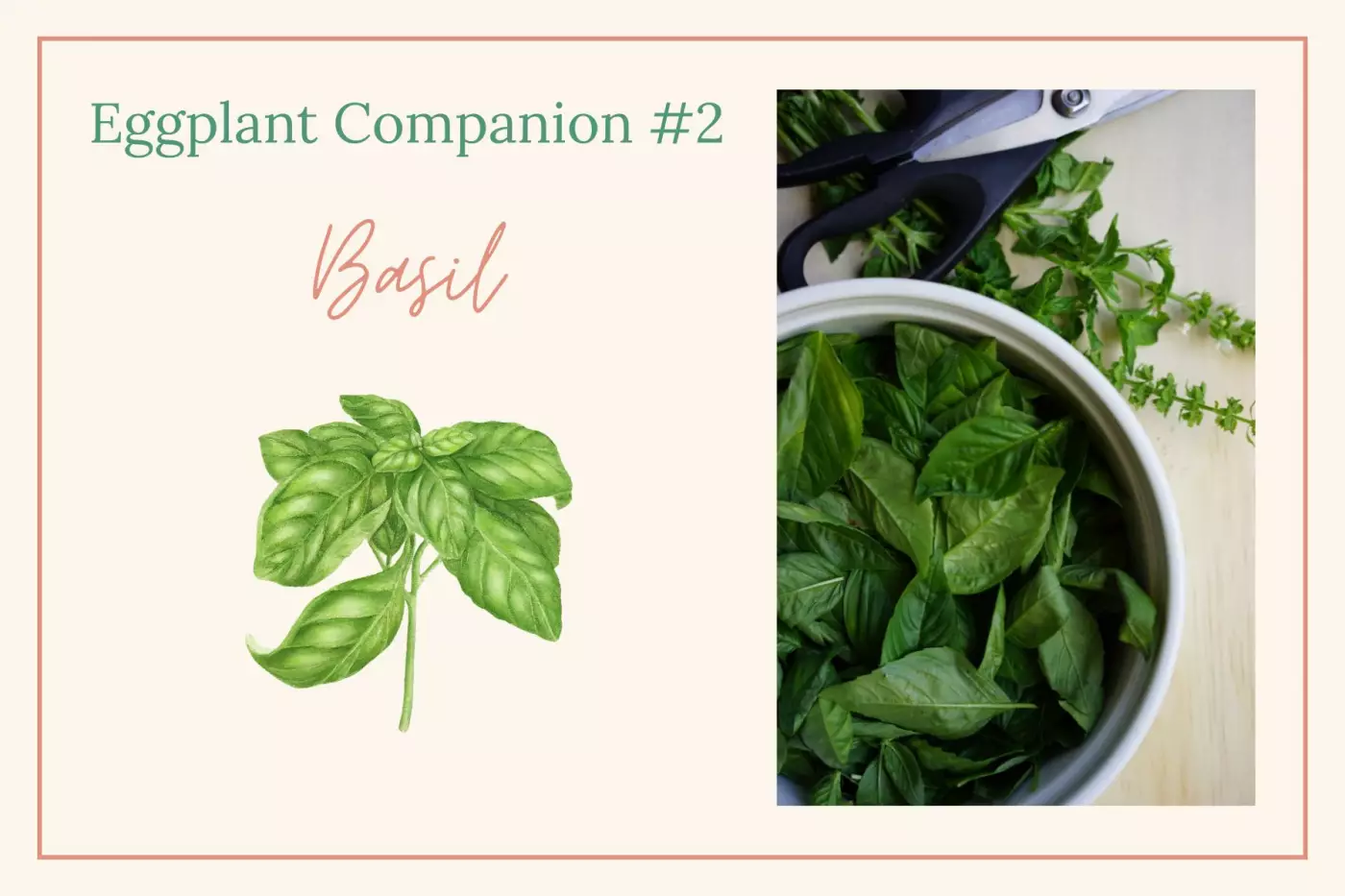
2. Basil
Basil and eggplant are one of those pairings that make sense in the kitchen and in the garden. They love the same growing conditions — heat, full sun, consistent moisture — and they genuinely benefit each other.
Why Basil Works So Well with Eggplant
- Repels aphids and whiteflies — basil's aromatic oils confuse and deter the insects that find eggplant most appetizing
- Attracts pollinators — when basil flowers, bees arrive in force. Better pollination means a better eggplant harvest.
- Some evidence suggests flavor enhancement — anecdotally and in traditional gardening practice, basil planted near eggplant is said to improve the flavor of the fruit. Whether or not science has fully caught up to that one, I'm always happy to have fresh basil nearby.
Plant basil around the base of eggplant or in the spaces between plants. Pinch off any flower buds to keep the basil producing leaves.

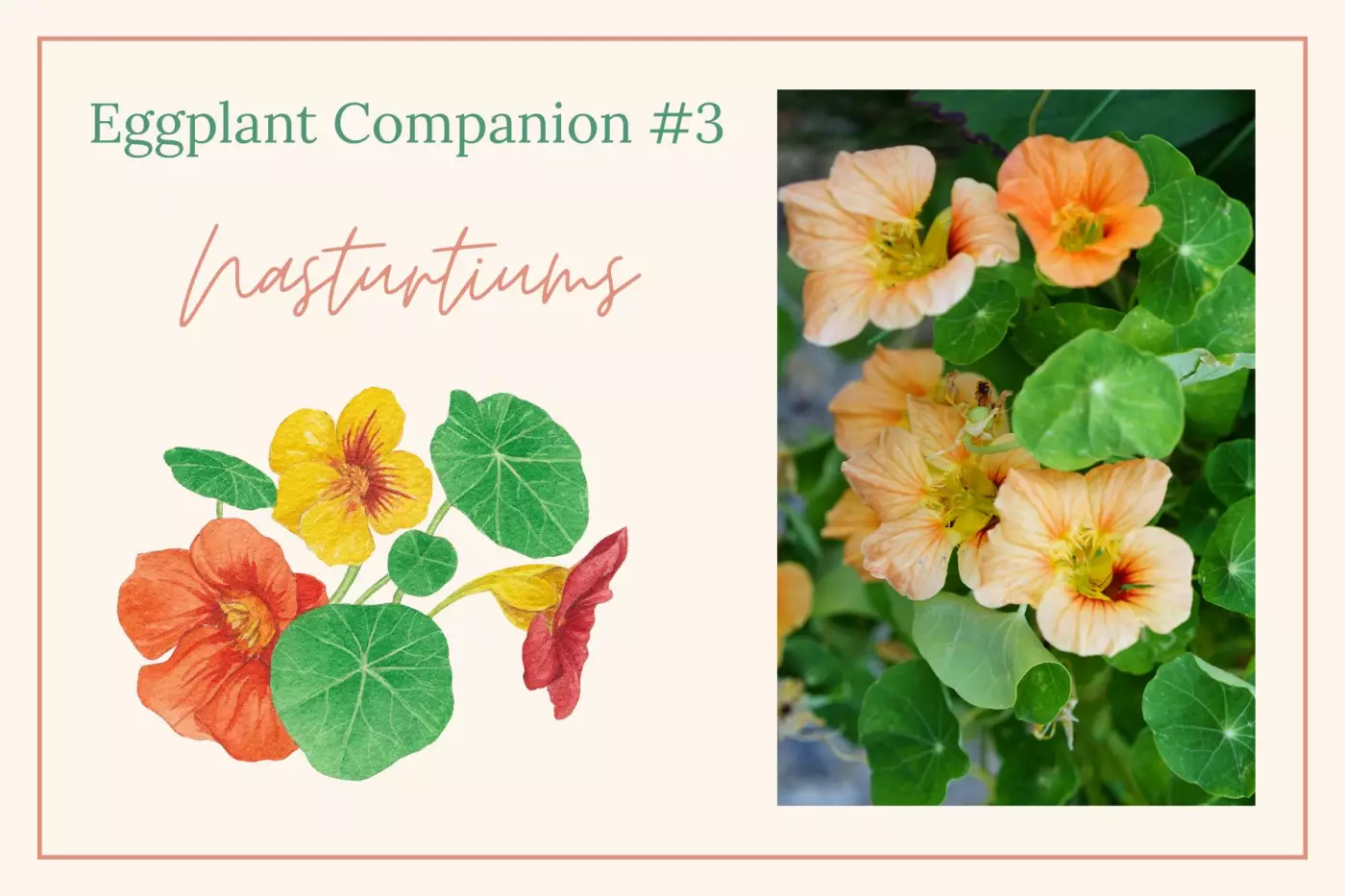
3. Nasturtiums
Nasturtiums are one of my absolute favorite companion plants in the kitchen garden. They're a common trap crop, which means they lure common pests away from your prized eggplant.
Why Nasturtiums Work So Well with Eggplant
- Trap crop for aphids — aphids prefer nasturtiums to almost everything else in the garden. Plant them nearby and aphids flock to the nasturtiums, leaving your eggplant alone. It's companion planting working exactly as it should.
- Ground cover that suppresses weeds — nasturtiums spread low and wide, covering soil that would otherwise be open to weed invasion
- Edible — flowers, leaves, and seed pods are all edible with a pleasant peppery kick. They're doing pest control and feeding your family at the same time.
Plant nasturtiums around the perimeter of your eggplant bed. They'll trail outward, keep weeds down, lure aphids away, and look gorgeous doing all of it. They make beautiful "spillers" over the edge of the raised bed.
Join the 2026 Gardening Workshop

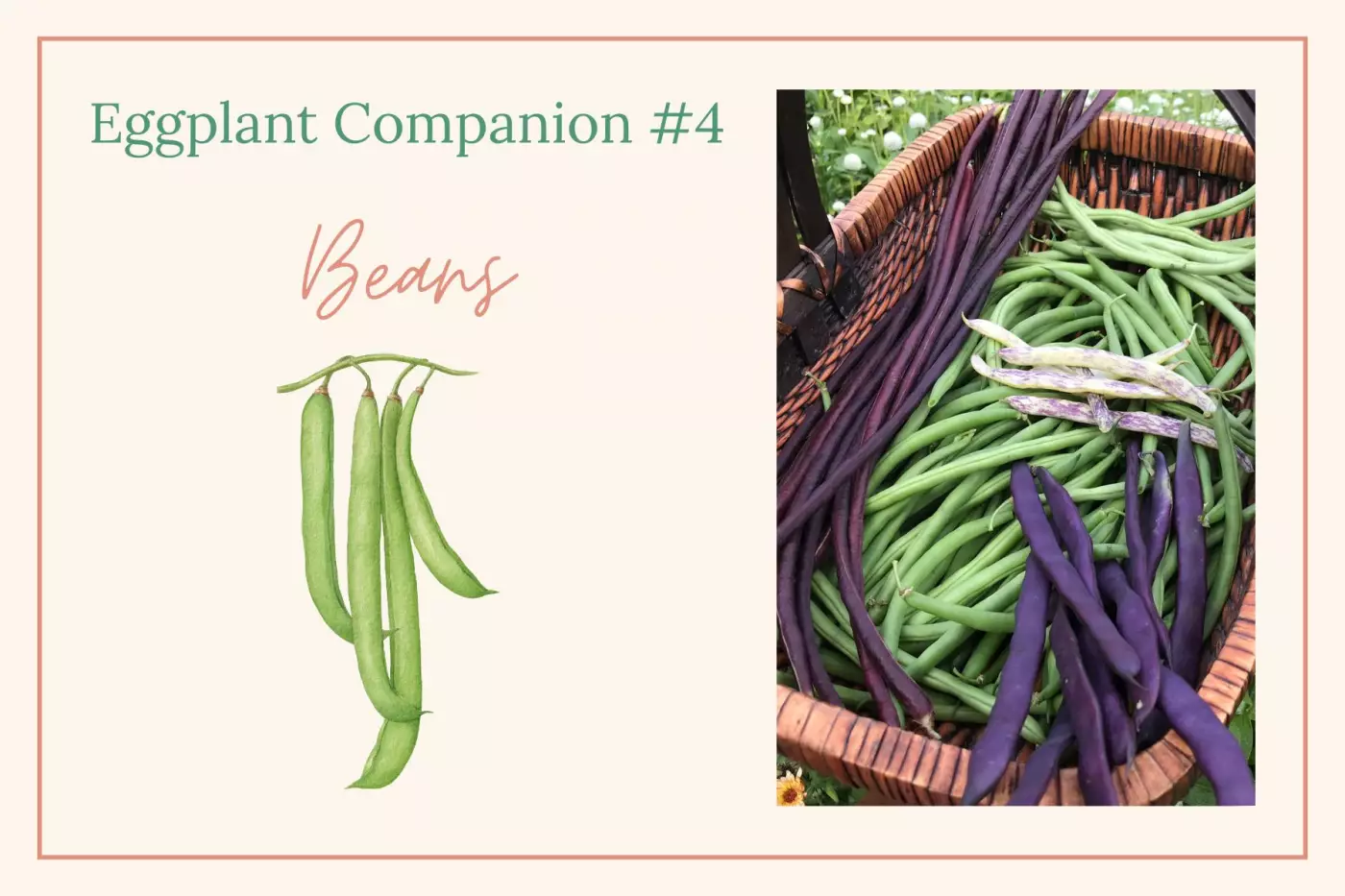
4. Beans
Beans are the quiet workhorses of the companion planting world. They don't put on a show the way marigolds and nasturtiums do, but what they do beneath the soil is remarkable.
Why Beans Work So Well with Eggplant
- Fix nitrogen in the soil — beans form a symbiotic relationship with soil bacteria that converts atmospheric nitrogen into a form plants can use. Eggplant is a heavy feeder that benefits enormously from this natural fertilization.
- Efficient use of space — pole beans grow vertically while eggplant grows horizontally, making them natural space-sharing companions in a raised bed
- Reduce the need for synthetic fertilizers — the nitrogen beans add to the soil means you can feed your eggplant more naturally throughout the season
Plant bush beans or pole beans alongside eggplant. If using pole beans, plant them on the north side of the eggplant so the vertical growth doesn't shade out your harvest.

5. Spinach
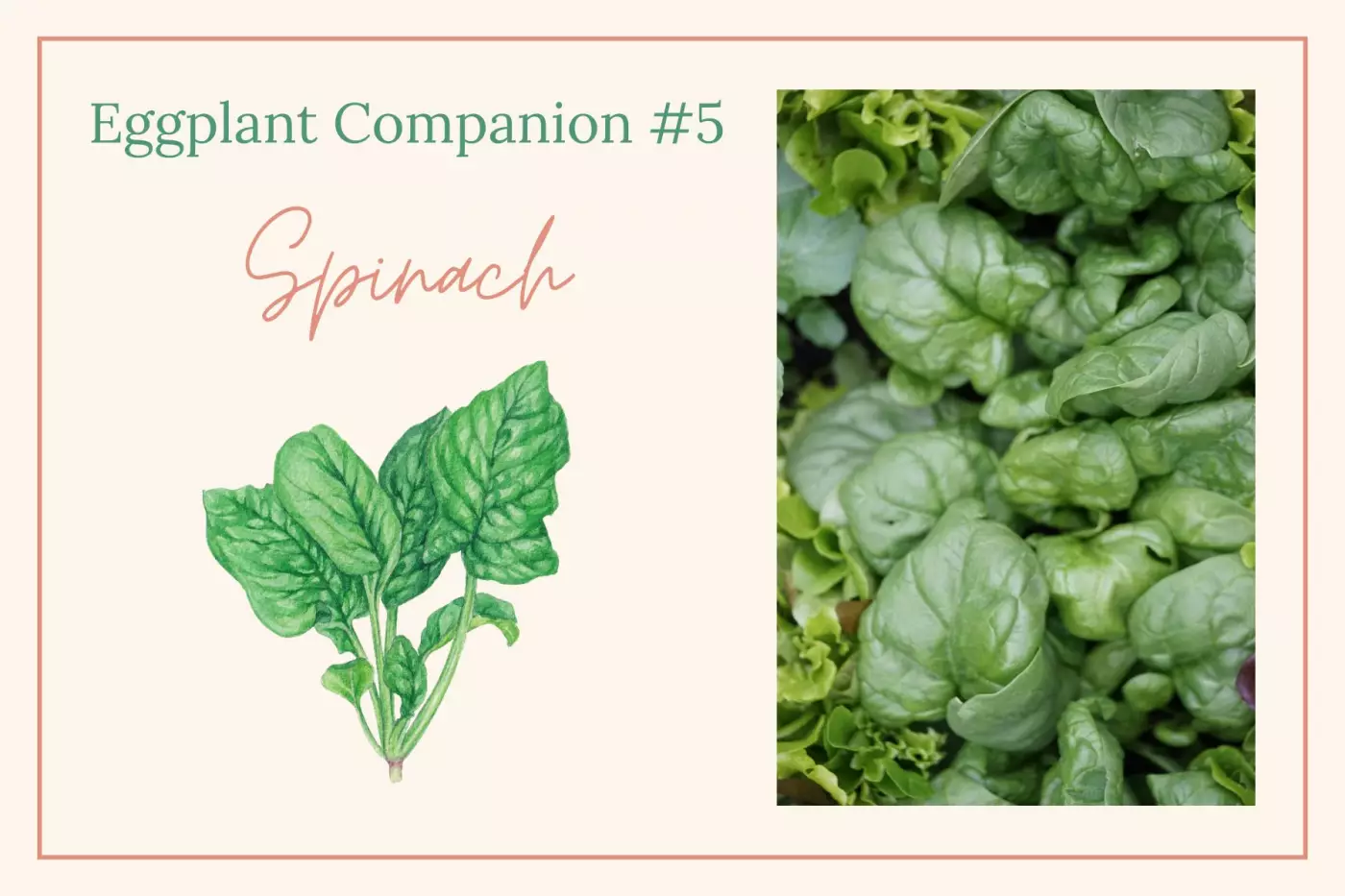
Spinach might seem like an unlikely eggplant companion. One is a cool-season leafy green, and the other is a warm-season fruiting plant. But in practice, they're a surprisingly good pair.
Why Spinach Works So Well with Eggplant
- Fills space efficiently — spinach's small root structure and low-growing habit means it tucks neatly under eggplant without competing aggressively for resources
- Acts as a living mulch — dense spinach growth shades the soil around eggplant roots, retaining moisture and reducing weed pressure
- Eggplant provides beneficial shade — as spinach approaches the end of its cool-season window and temperatures rise, the shade cast by taller eggplant plants extends spinach's productive life
Sow spinach seeds around and between your eggplant transplants in early spring. By the time the eggplant is large and the weather is warming, the spinach will appreciate the shade — and you'll be harvesting both from the same bed.
7 Tools, Beautifully Designed
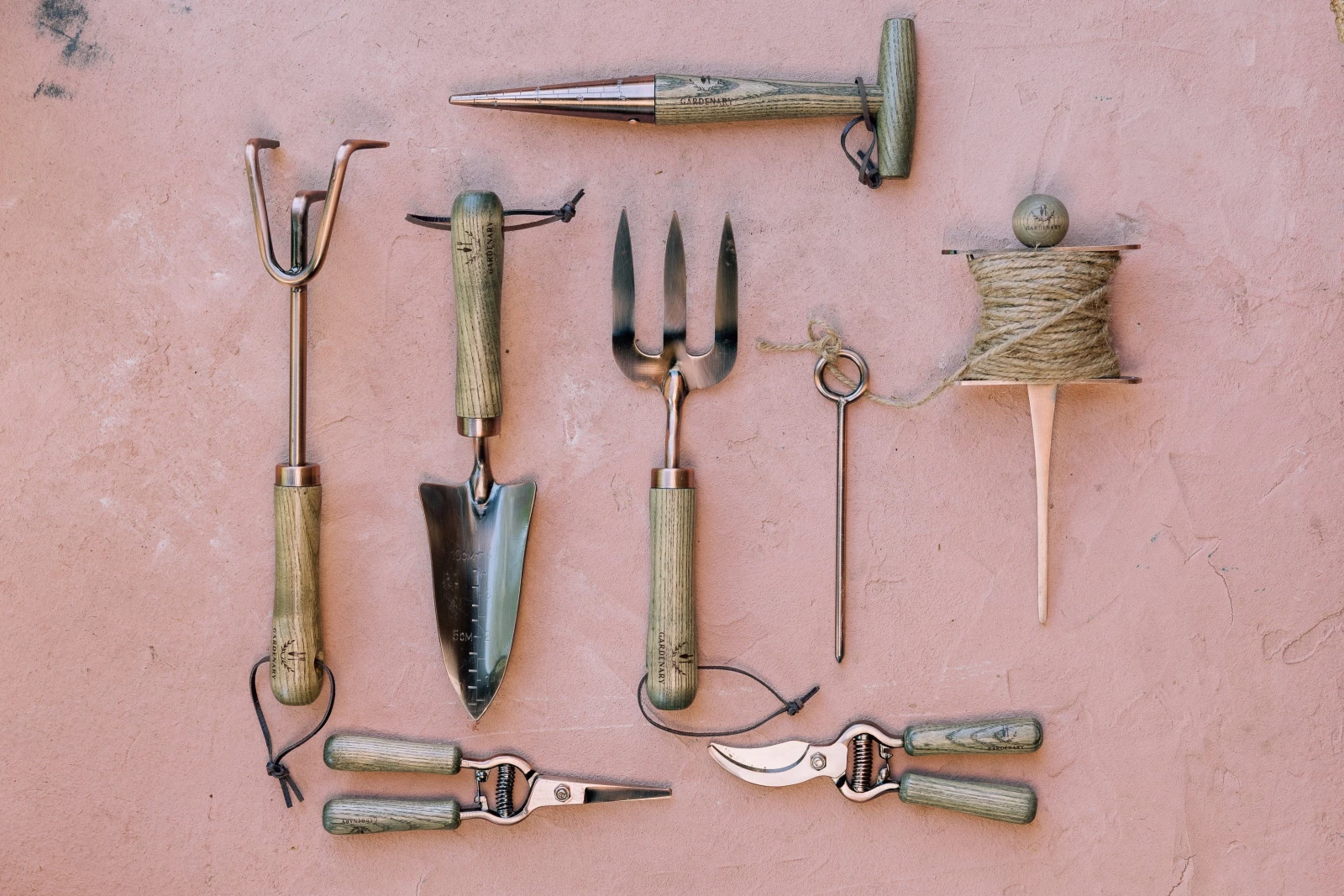
The tool set gardeners actually want, made from carbon steel with an ash wood handle and a warm copper finish.
- Bypass pruner for clean, precise harvest cuts
- Needlenose pruner for detail work in tight spaces
- Transplanting shovel for seedlings and planting holes
- Dibber for perfectly spaced seed sowing
- Cultivator for loosening soil and clearing debris
- Hand fork for weeding and working around established plants
- Row marker & planting line for straight, intentional rows
All in a gift box, ready to use.

6. Peppers
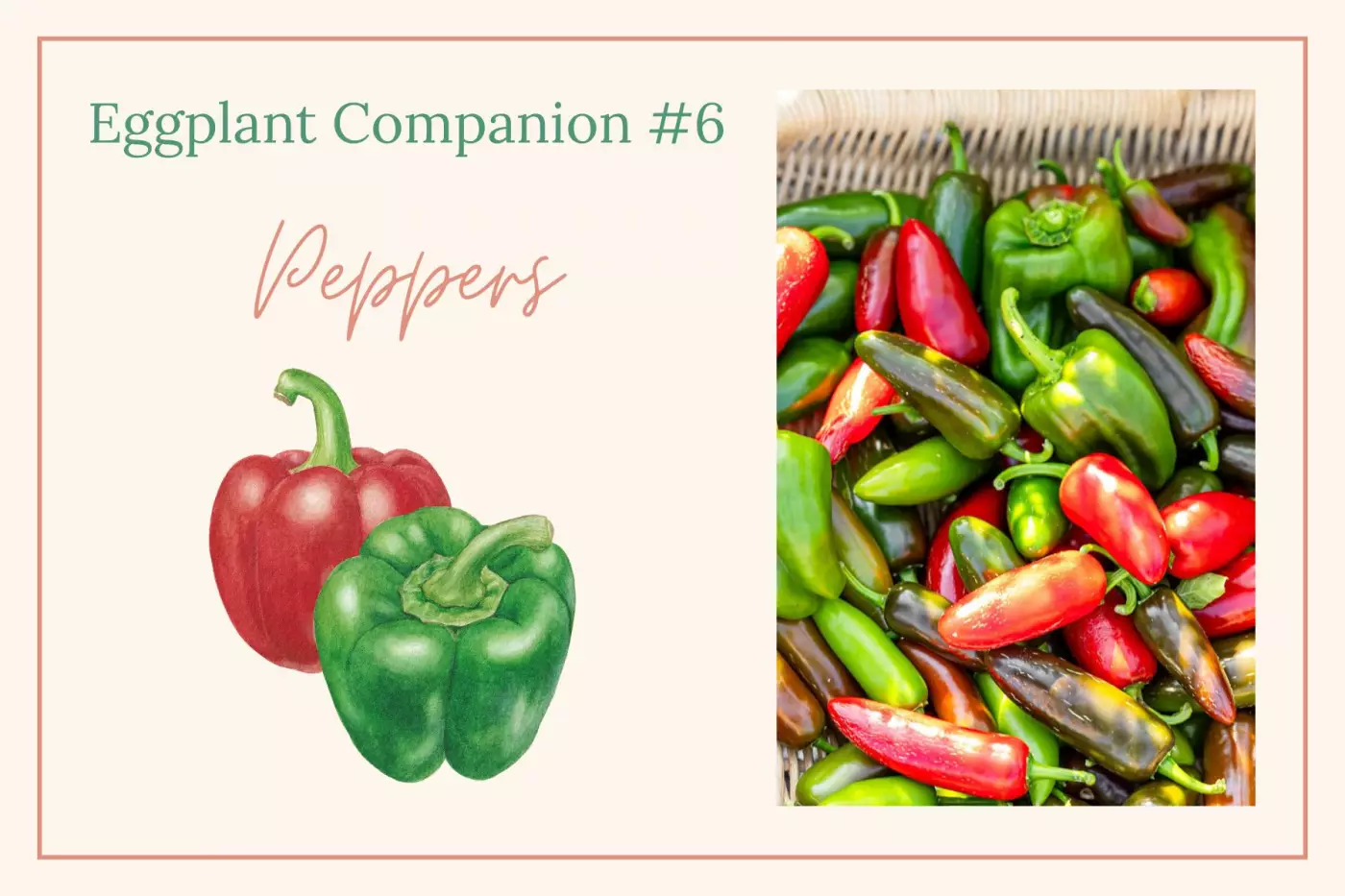
Peppers and eggplant are botanical cousins, and both are members of the nightshade family. They grow together naturally and easily.
Why Peppers Work So Well with Eggplant
- Identical growing requirements — same sun needs, same water needs, same soil preferences. Planting them together simplifies your tending routine considerably.
- Efficient space use — peppers tend to stay compact and upright while eggplant spreads wider, making them natural neighbors in a raised bed without significant competition
- Shared pest deterrence — eggplant actually helps deter whiteflies from pepper plants, and the two growing together can create some mutual pest confusion
Plant peppers and eggplant together in warm-season beds. Give each plant at least one square foot and let them coexist.

7. Garlic
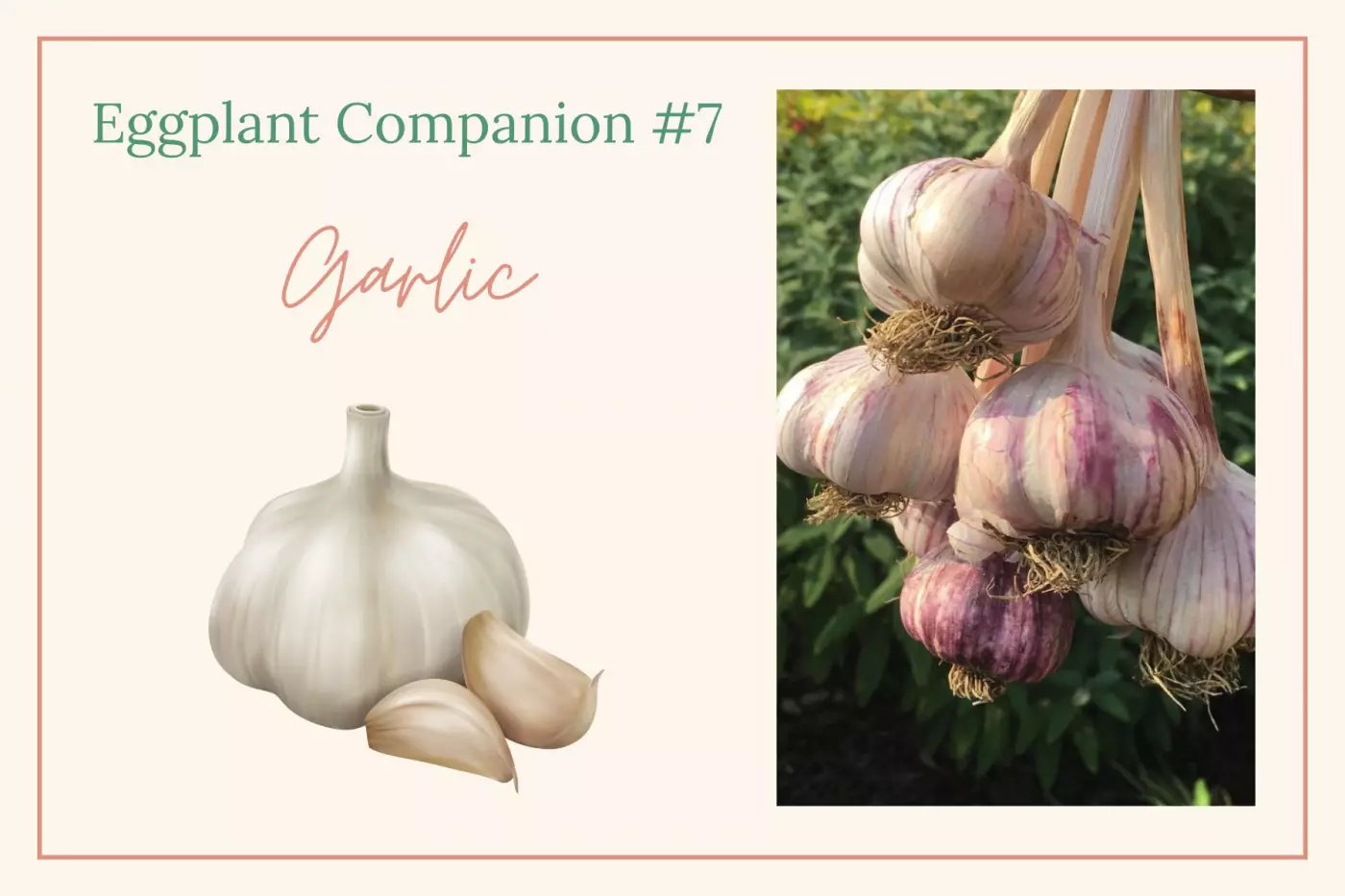
Garlic is one of the most powerful pest deterrents in the entire garden. It's quiet, it's low maintenance, and it does its best work through scent.
Why Garlic Works So Well with Eggplant
- Repels aphids, spider mites, and whiteflies — garlic's pungent sulfur compounds mask the scent of nearby plants, making eggplant harder for pests to locate
- Has antifungal properties — garlic's natural compounds help suppress soil-borne fungal diseases that can affect eggplant roots
- Takes up almost no space — garlic grows mostly underground with minimal above-ground footprint, making it an ideal plant to tuck between larger plants
Plant garlic cloves around the base of eggplant or along the border of the bed. It's one of the quietest, most effective pest management tools available.

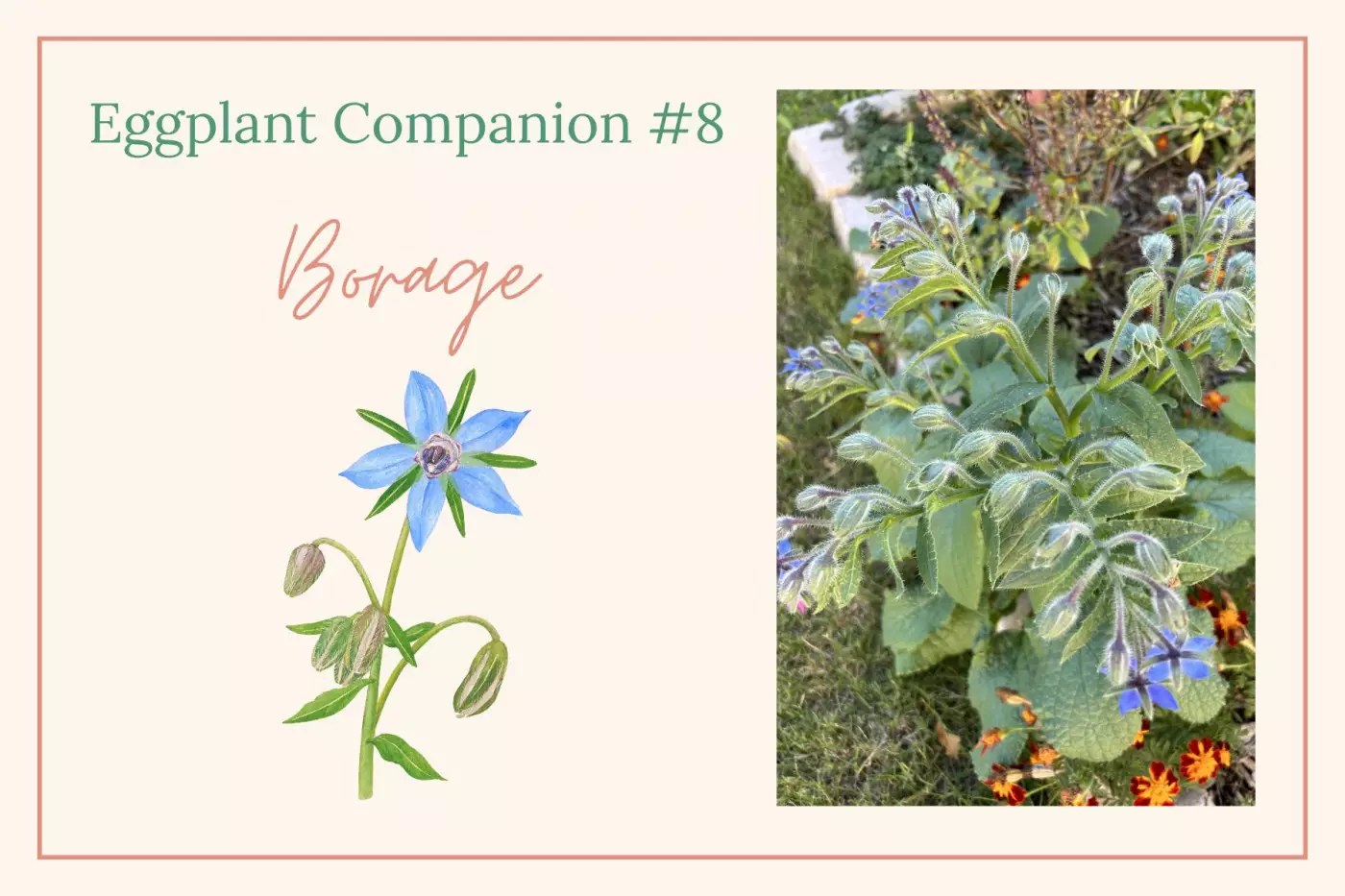
8. Borage
Borage is the companion plant that experienced kitchen gardeners consistently swear by — and beginners often discover with genuine delight. Those star-shaped blue flowers are some of the most beautiful things you can grow, and bees absolutely cannot resist them.
Why Borage Works So Well with Eggplant
- Attracts pollinators in large numbers — bees visit borage flowers repeatedly throughout the day. More pollinators visiting means better fruit set on nearby eggplant.
- Deters tomato hornworm and cabbage worms — borage is a well-documented companion plant for deterring several caterpillar pests that also affect eggplant
- Self-seeds freely — plant borage once and it will return on its own the following season. Perennial value from an annual plant.
Tuck borage in near your eggplant and let it do its beautiful, busy work. The flowers are also edible with a mild cucumber flavor, and they're lovely in a summer salad or frozen in ice cubes.

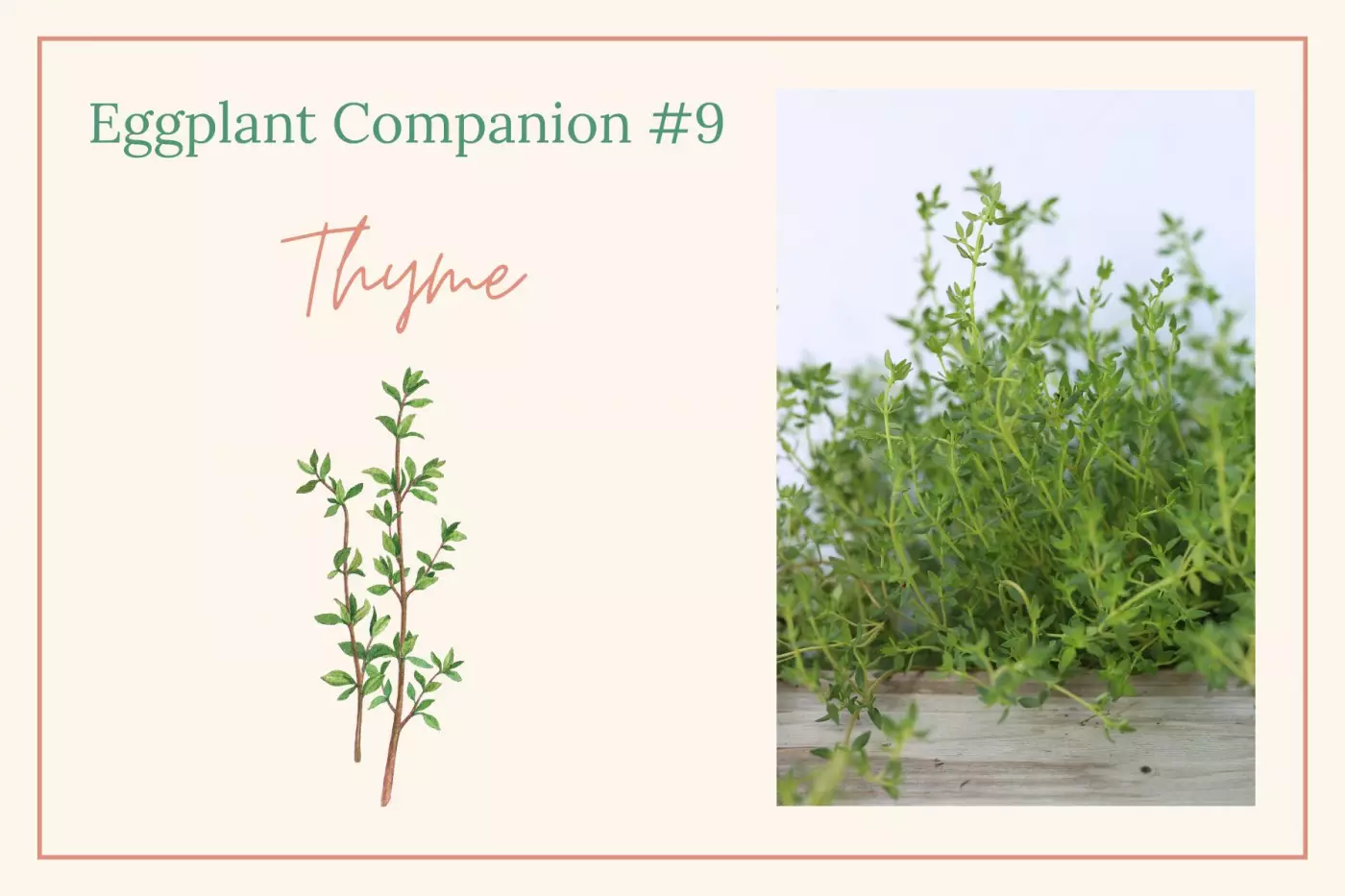
9. Thyme
Thyme gets underestimated in the companion planting conversation. Most people think of it as a cooking herb and nothing more. But next to eggplant, it's doing real pest deterrence work while also attracting the beneficial insects that keep your whole garden healthier.
Why Thyme Works So Well with Eggplant
- Deters whiteflies and cabbage worms — thyme's aromatic oils disrupt the ability of these pests to locate host plants, making your eggplant a much less obvious target
- Attracts beneficial insects — thyme flowers bring ladybugs, predatory wasps, and bees into the garden consistently. Ladybugs alone can consume more than 50 aphids per day, which is a pest management crew you want showing up regularly.
- Said to improve eggplant flavor — traditional gardening wisdom going back centuries holds that thyme planted near eggplant improves the flavor of the fruit. Modern research hasn't fully confirmed it yet, but generations of gardeners swear by it — and I'm not one to argue with that much collective experience.
- Perennial and nearly zero maintenance — plant thyme once along the border of your eggplant bed and it comes back every spring, gets bigger every year, and asks for almost nothing in return. Drought-tolerant, sun-loving, and largely pest-free.
Quick Note: thyme shares the same love of full sun and well-draining soil as eggplant, which makes them genuinely compatible neighbors — not just companion planting in theory but in actual growing conditions. Tuck it along the edges of the bed where it can spread low without competing with your eggplant for space.

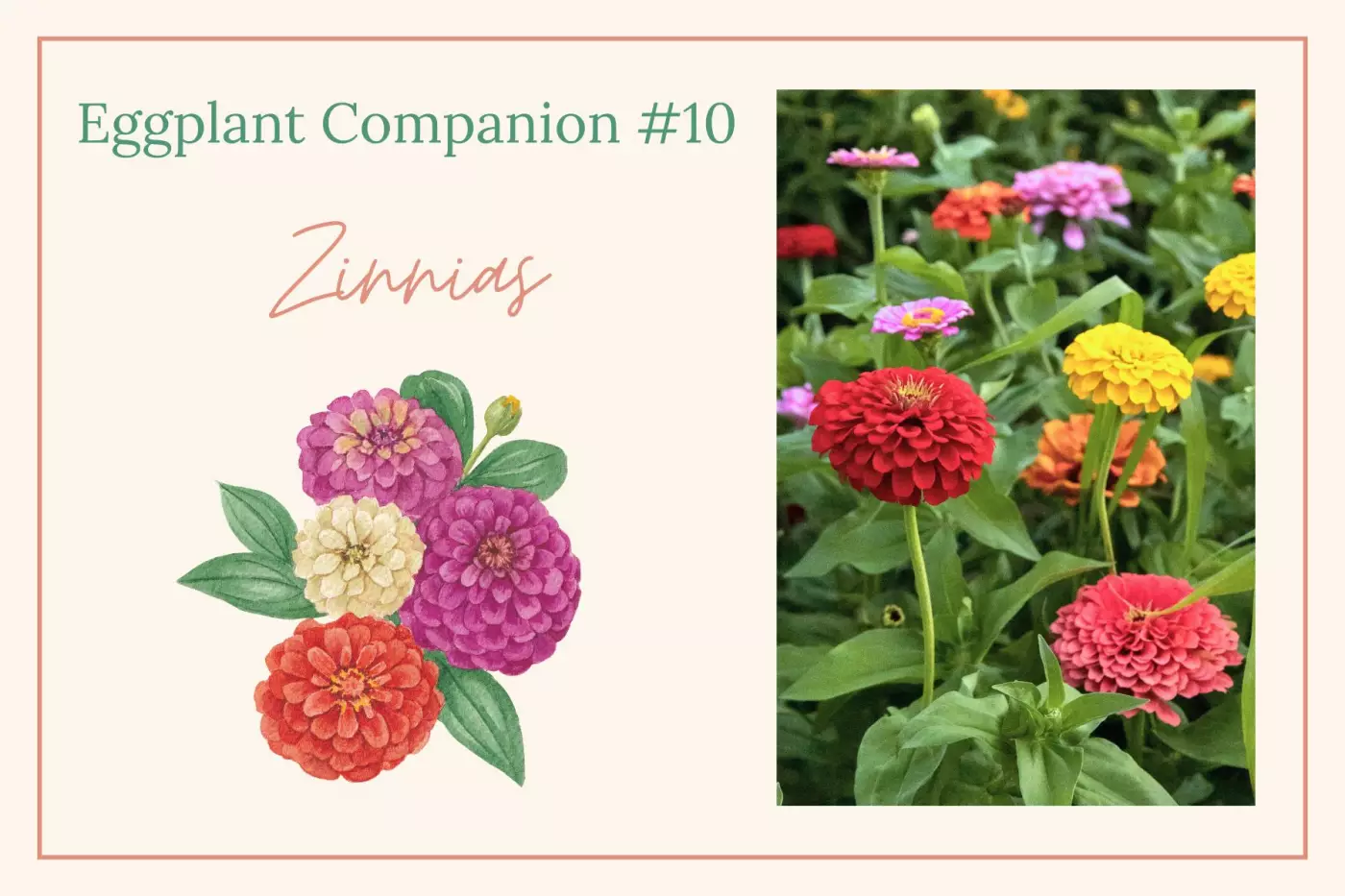
10. Zinnias
Zinnias in the kitchen garden are never just decorative — they're working. And next to eggplant, they work particularly well.
Why Zinnias Work So Well with Eggplant
- Attract butterflies and beneficial insects — zinnias are among the best pollinator-attracting flowers available, and that increased pollinator activity benefits every fruiting plant nearby, including eggplant
- Lure Japanese beetles away from eggplant — zinnias act as a trap crop for Japanese beetles, drawing them away from eggplant foliage and fruit
- Bloom continuously from midsummer to frost — the longer the bloom season, the longer the pollinator support for your eggplant harvest
- Beautiful — a raised bed of eggplant and zinnias together is genuinely one of the most striking things in a summer kitchen garden
Plant zinnias along the border of your eggplant bed or in the corners where their height adds structure without shading the crop. Be sure to cut them regularly. The more you cut, the more they bloom.

Learn How to Plan and Build Beautiful Raised Beds
Follow a simple process to build a raised bed that makes construction straightforward — even if you’re not “handy.”
A Few Plants to Keep Away from Eggplant
Before you go, a quick word on what not to plant nearby:
- Fennel — allelopathic to most vegetables and a poor neighbor for eggplant
- Other eggplant or nightshades in large concentrations — grouping too many nightshade family plants together concentrates shared pests and disease. Spread them around the garden rather than massing them together.
- Heavy feeders like corn — compete aggressively for the same nutrients eggplant needs
More About Eggplant
Sources
- "Companion Planting with Eggplant" — https://growcycle.com/learn/companion-planting-with-eggplant-best-plants-to-grow-together
- "The Best Eggplant Companion Plants" — https://meadowlarkjournal.com/blog/eggplant-companion-plants