
Join Thousands of Gardeners On the VIP List
Free perks, just for email subscribers:
- 15% Off Your First Order
- Gardening Videos & Articles
- Early Access to Sales
Sign up, check your inbox, then shop with your code.

At a Glance
- Find out what to plant in March based on your frost date so you don't miss your window for a full-season harvest.
- Whether you're gardening in a cold, mild, or warm climate, there are at least 10 organic seeds and transplants you can get started this month, both outdoors and indoors.
- From frost-hardy greens and root vegetables to warm-season tomatoes, peppers, and flowers, this guide covers exactly what to plant for each climate.
What to Plant in March: Your Complete Organic Garden Guide
If there's one thing I've learned after a decade of gardening in three very different climates — hot, cold, and everything in between — it's that March is the month. It doesn't matter how much you procrastinated in January or let yourself off the hook in February. If you want a productive, beautiful garden this year, March is your moment. Wait too long, and you'll be scrambling to catch up all season long.
Last call!
The good news is that there is so much you can be doing right now. So let's get into it.
First Things First: What to Plant in March Depends on Your Frost Date
Before you head outside with a bag of seeds, there's one thing you need to figure out: your last frost date. This single piece of information will shape everything about what to plant in March and how you plant it.
I like to break gardeners into three groups:
- Group 1: Your frost date has already passed — it was in February, earlier in the season, or you don't get frost at all. Lucky you!
- Group 2: Your last frost is coming up in March or April, with frost-free days reliably arriving by May.
- Group 3: You're still waiting — frost sticks around until May or even June in your area.
→Not sure which group you fall into? Enter your ZIP code below to find your frost dates.
Frost Date Calculator
*Based on historical climate data from NOAA, only zip codes from United States are supported.
Warm Climates

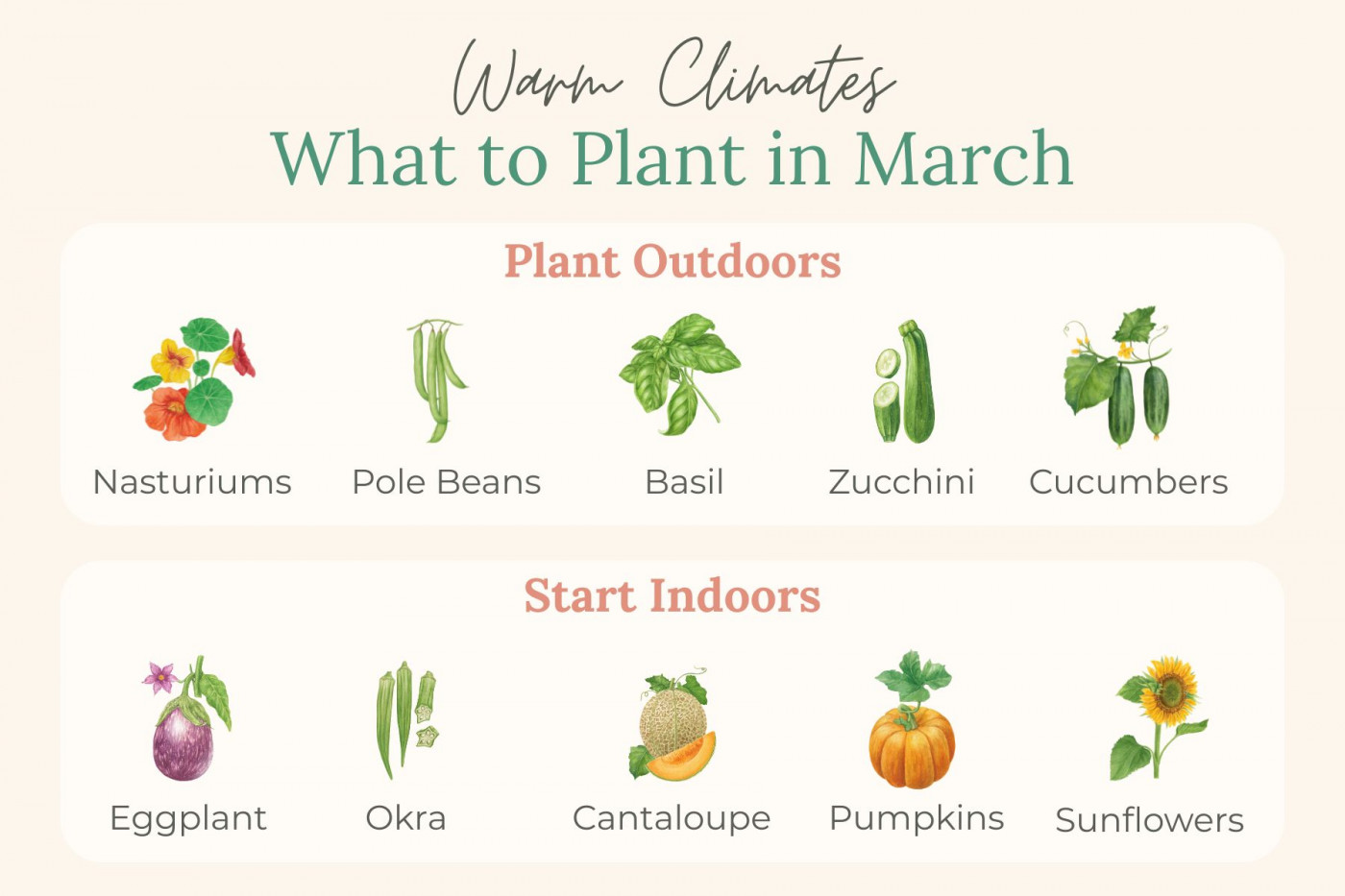
What to Plant in March in a Warm Climate (Group 1)
If your frost date is already behind you, I am genuinely a little envious. Your garden is wide open, and March is one of the most exciting planting months you'll have all year. Here's what I'd be putting directly in the ground using organic methods:
Nasturtiums are my number one recommendation for any warm-climate gardener planting in March. Tuck them into the corners of your raised beds and let them spill beautifully over the edges. They're completely edible — flowers, leaves, and all — and they act as a natural pest deterrent with no synthetic sprays needed.
Pole beans are another must. If your trellises are empty, now is the time to fill them. Plant seeds directly at the base of each support and you'll have a lush, productive vine in about 60 days.
Basil will thrive when started from seed directly in warm soil. Yes, it takes longer than buying a transplant, but you'll get far more production for a fraction of the cost.
These plants are perfect for filling out garden beds quickly. Give each plant a full square foot of space and let them trail over the edge of your bed. From seed to harvest is roughly 55 days.
Cucumbers are another fast-growing trellis option. In about 55–60 days, you'll have more cucumbers than you know what to do with. Homemade pickles, anyone?
Getting a Jump on the Hot Season: What to Start Indoors in March
One of the best organic gardening habits I developed when I lived in Houston was starting heat-loving plants indoors in March, so I'd have strong transplants ready when spring crops started struggling in the summer heat. Here's what's worth starting inside right now:
Eggplant thrives in high heat and produces beautifully through midsummer.
Okra's flowers alone make it worth growing; starting indoors gives it a head start.
Melons need a long, hot season, so early indoor starts give them the runway they need.
Pumpkins and long-season gourds
Anything over 120 days needs to start now for a fall harvest.
Move sunflowers outside in mid-April or early May, and they'll tower over your garden by summer, providing a little natural shade and a whole lot of joy.
Mild Climates

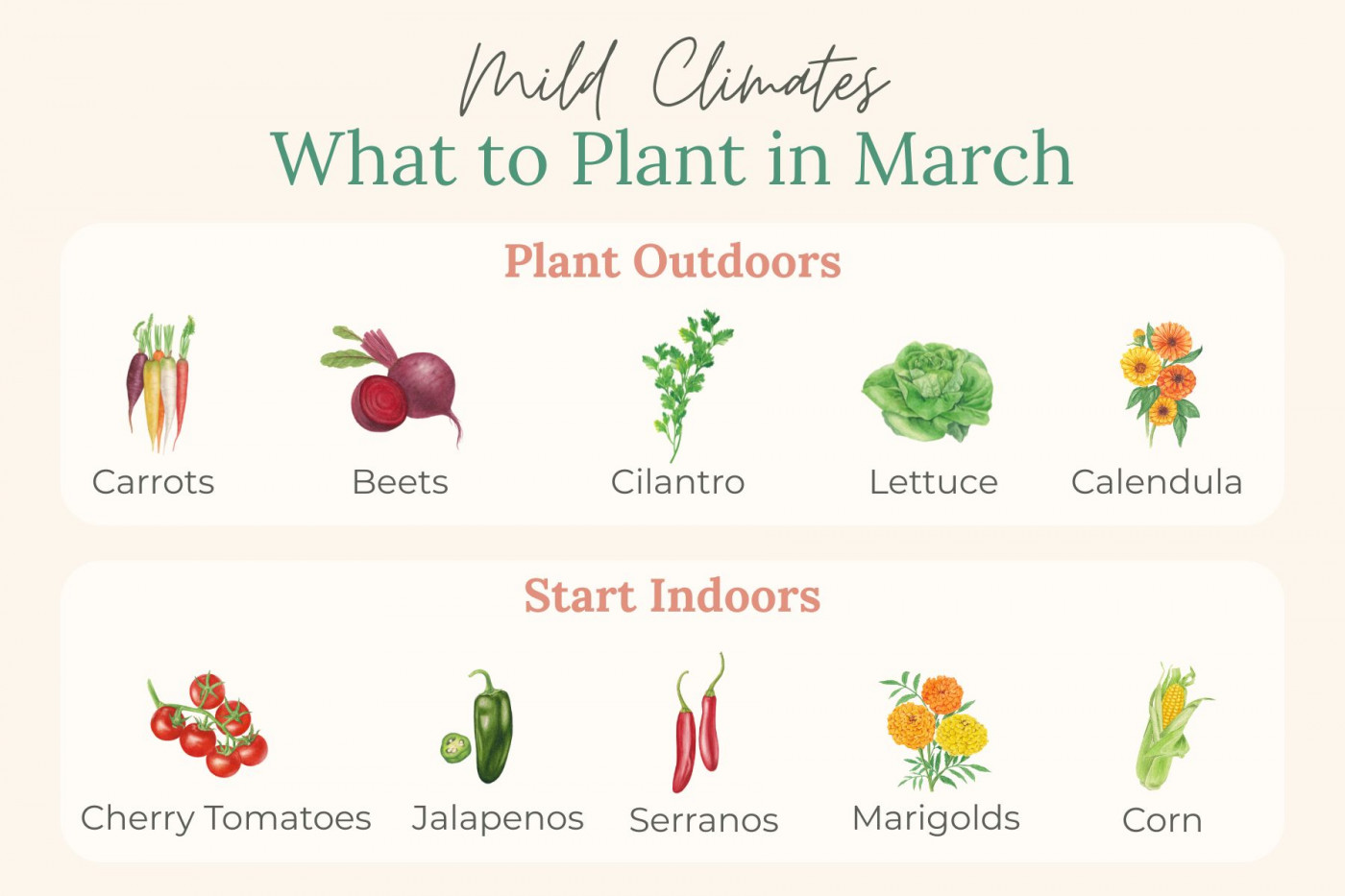
What to Plant in March for a Mid-Season Gardener (Group 2)
If you're a Group 2 gardener like me, March is a genuine sweet spot. You're in the middle of your cool season, your garden is ready to get busy, and there's plenty of time to grow a full crop of spring vegetables before warm weather arrives.
Here's what I'm putting directly in the ground this month:
Carrots are one of the best things to plant in March in a cool climate. Sprinkle them about 2–3 inches apart, press them lightly into the soil, and you should have them ready to harvest by the end of May. No frost cloth needed — they handle cool temperatures well on their own.
These roots are another cool-season superstar. Last year, I filled two full raised beds with beet seeds in March and was eating them well into summer. They're low-maintenance, incredibly nutritious, and one of the most satisfying harvests you'll have.
Two popular herbs that many gardeners struggle with, cilantro and dill, only seem difficult because gardeners try to grow them in the summer — but they're cool-season plants through and through. Get them in the ground now by seed, and they'll thrive as spring temperatures gradually rise. A word of advice: don't let a garden center talk you into buying cilantro or dill transplants in July. They'll bolt almost immediately.
Lettuce of almost any variety shines in March planting. Romaine types are especially productive and hold up beautifully in salads. There is nothing quite like cutting fresh leaves from your own garden a few weeks after planting.
Calendula rounds out the outdoor list beautifully. This cheerful flower grows right over the edges of beds, makes lovely teas and tinctures, and acts as an organic trap crop — drawing pests away from your vegetables naturally and keeping your garden chemical-free.
What to Start Indoors in March for an April or May Planting
While your cool-season crops settle in outside, use your indoor space to get a head start on warm-season favorites:
Cherry, grape, and pear tomatoes
Smaller varieties of tomatoes mature faster and are perfect for starting now; transplant once your last frost passes.
Small peppers are easier and faster than larger bell pepper varieties, and a great starting point if you're new to growing peppers from seed.
Marigolds are not frost-tolerant, so they stay inside until it's warm enough, but starting now means vibrant blooms ready to go the moment conditions are right.
Corn
Corn, a 100+ day crop that benefits enormously from an indoor head start; get it going now and transplant after your last frost.
Cold Climates

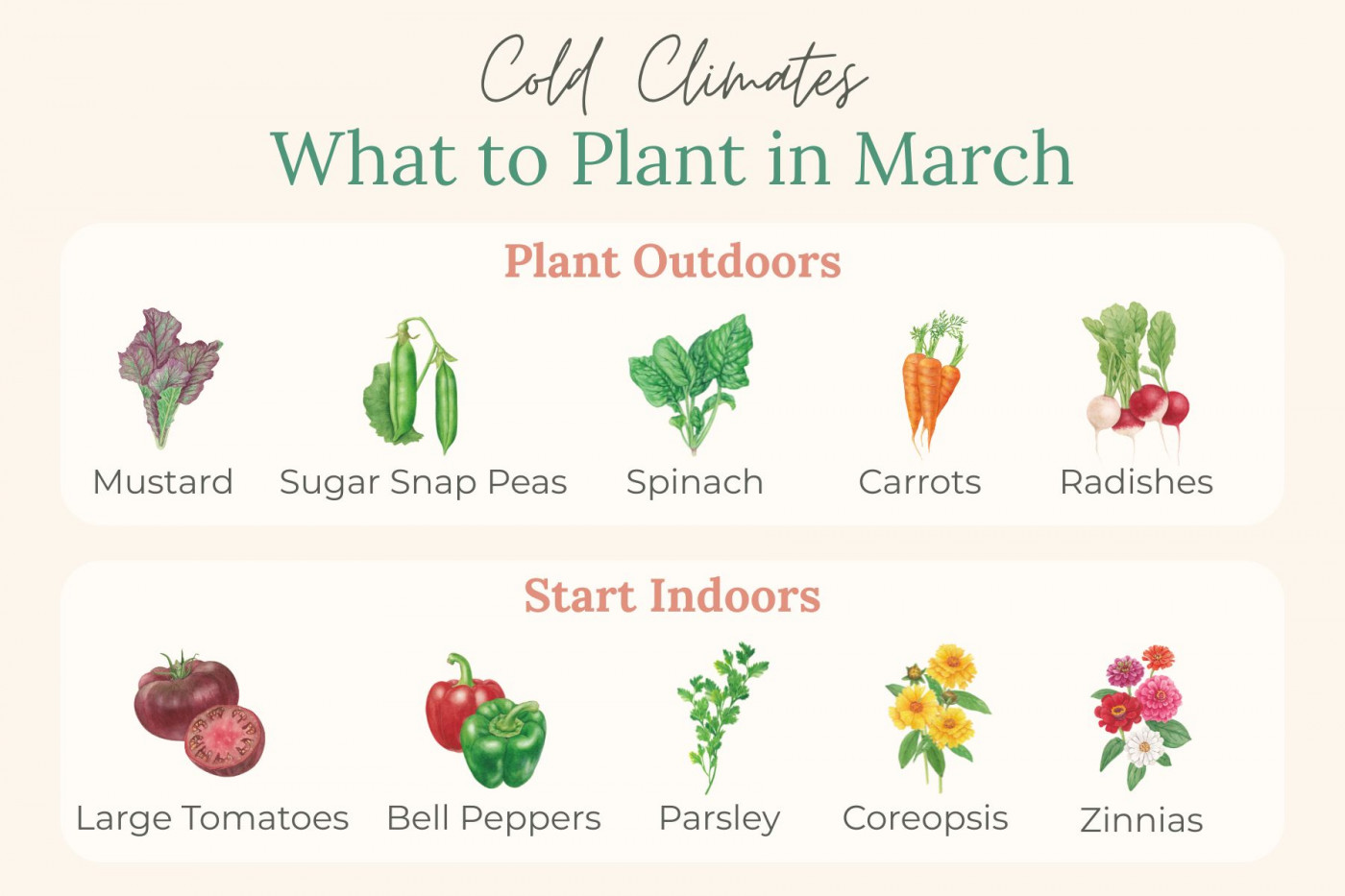
What to Plant in March If You're Still in Frost Country (Group 3)
I know it feels like winter will never end. I've been there — literally. When I lived in Chicago, I watched my garden sit under a blanket of snow well into early spring. But here's the thing: there are always a few windows of opportunity in March, even in the coldest climates. When the sun comes out and things start to thaw, you can warm up your soil faster by laying down organic frost cloth over your beds for a week or two before planting.
As soon as that soil is workable, these are the seeds I'd put in the ground:
Mustard can be direct sown; these bold, cold-hardy plants can be sown right into the center of your beds. They're stunning, and they thrive in cool conditions.
Plant peas at the base of your trellis and watch them climb. I used to put them in on St. Patrick's Day in Chicago, and they never let me down. Expect to be eating peas in about 60 days.
One of the most frost-tolerant vegetables you'll ever grow is spinach. Cover it with organic frost cloth after planting and it'll push through cold nights like a champ.
Direct sow carrots into the soil, keep them covered for the first few weeks, and you'll be pulling gorgeous, colorful roots by early June.
Radishes are your fastest reward. Get them in the ground now, and you could be harvesting by early May.
Starting Indoors: What to Plant in March for a Late-Spring Transplant
While your cold-hardy crops are establishing outside, March is also the perfect time to start warm-season plants indoors under grow lights and on a heat mat. This is how you set yourself up for a seamless transition once frost is behind you.
Start these indoors now for transplanting in May or June:
Large tomatoes need warmth to germinate, so a heat mat is essential. Give them 8+ hours of light daily.
Bell peppers are slow starters, but absolutely worth the patience.
Notoriously, parsley is slow to germinate, which is exactly why March is the right time. Get it started now, and it'll be ready for the garden by April or May.
Starting these flowers indoors in March means blooms in June or early July instead of late August. That's a massive head start on color.
The Organic Advantage: Why March Planting Sets the Whole Season Up Right
March rewards you for paying attention to your climate, your soil, and your seeds. When you choose organic seed varieties, build healthy soil with compost, and lean on tools like frost cloth and companion planting rather than synthetic chemicals, you end up with a garden that's genuinely resilient.
Gardening tips for March:
- Amend beds with compost before planting to give seeds the best possible start without relying on synthetic fertilizers
- Use a frost cloth to extend your season naturally — it lets in light and air while protecting against frost
- Companion plant strategically — nasturtiums, calendula, and marigolds all do double duty as natural pest deterrents alongside your vegetables
- Water from the base when possible to prevent fungal issues as the weather warms
- Avoid unnecessary tilling — a low-till approach protects soil structure and the beneficial organisms that make organic growing possible
Whether you're a Group 1, 2, or 3 gardener, this month is full of possibilities. The seeds you plant in March are the foundation for everything you'll be eating, cooking with, and enjoying from your garden for the rest of the year. So pull out those seed packets, check your frost date, and get outside. Your garden is ready for you — and honestly, you're ready for it too. It's time!