
Join Thousands of Gardeners On the VIP List
Free perks, just for email subscribers:
- 15% Off Your First Order
- Gardening Videos & Articles
- Early Access to Sales
Sign up, check your inbox, then shop with your code.


At a Glance
- Bolting means your plant is shifting its energy away from leaves and roots toward flowering and seed production, triggered by heat, longer days, or the natural end of its lifespan.
- You can delay bolting by growing plants during their preferred season, direct sowing seeds in place, harvesting regularly, providing afternoon shade, and keeping the soil consistently moist.
- When plants do bolt, you have two solid options: leave them for the pollinators and save the seeds for next season, or pull them and replant with something better suited to the current conditions.
Bolting Basics

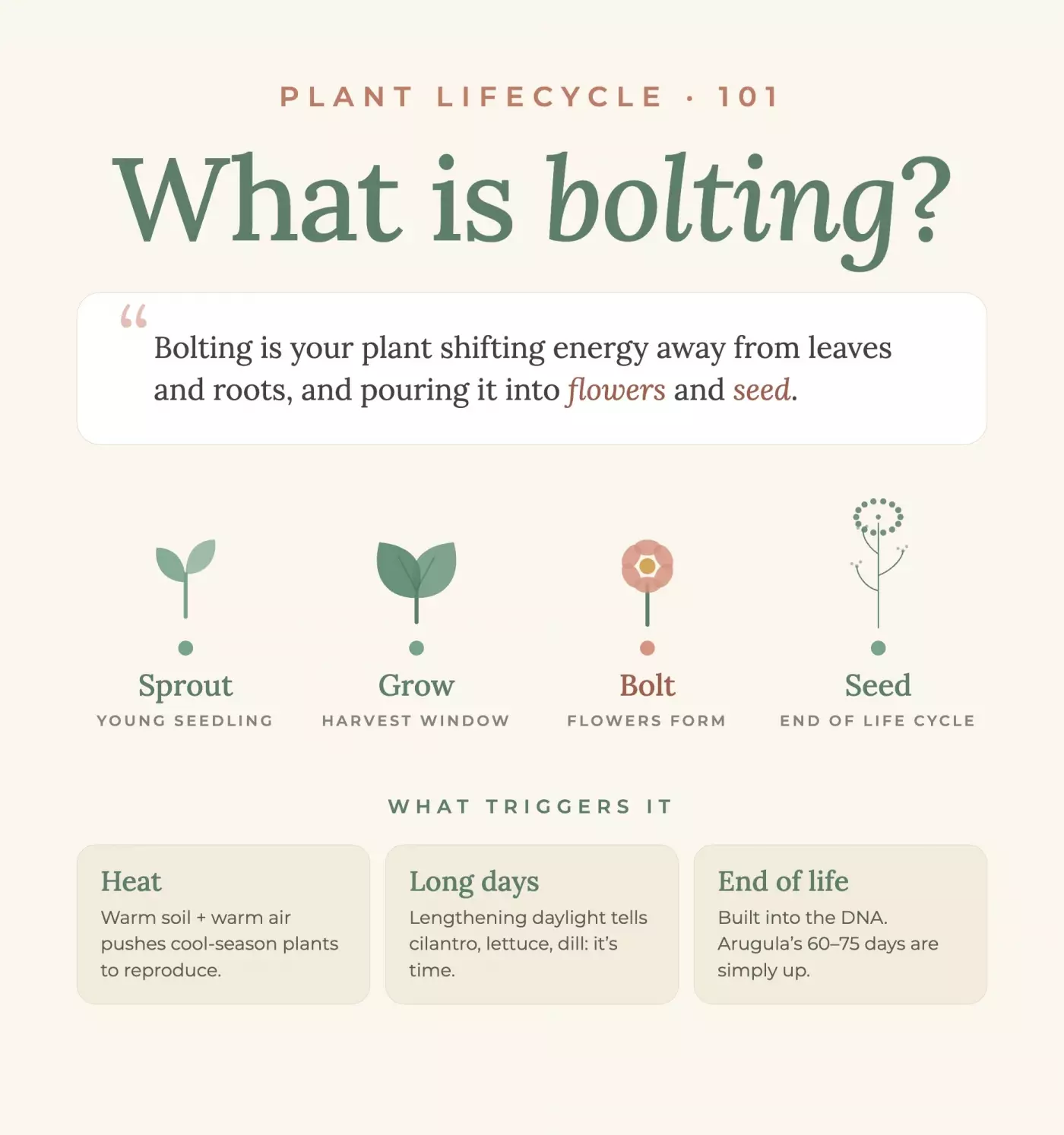
What is Bolting?
Bolting is just another way of saying that a plant is going to seed. Its time in the garden—whether that was around 30 days, 90 days, or 720 days—is coming to an end.
We get really excited when fruiting plants produce seeds because that means it's finally time to pick delicious tomatoes and cucumbers from the vine. But for herbs and leafy greens, going to seed means the end of the harvest party.
Let's look at why plants bolt, how you can prevent premature bolting, and what to do once your plants are going to seed.


Why Do Plants Bolt?
Plants typically bolt for one of two reasons. They're likely either stressed or just plain tired of growing. Either way, the plant switches from putting effort into its own survival to looking toward the survival of its own kind. It does this, of course, through producing seeds.
Plants have a strong desire to continue their genetic line for generations to come, and the formation of seeds is how they ensure that dozens, if not hundreds, of copies of themselves will exist long, long after they die.
Plants Bolt When It's the End of Their Lifespan
Each plant has a set lifespan that's built into their DNA, and they can feel when it's coming to an end. Arugula, for instance, generally only spends about 60 to 75 days in the garden. At the end of that time, the plant will be like, "Well, it's just about that time to reproduce so I can make sure there are arugula seeds for next season." In the picture below, you can see bolting arugula.


Plants Bolt When It's the End of Their Optimal Time to Grow
Certain environmental triggers can also cause stress in plants and push them toward taking action to ensure the survival of their kind sooner rather than later. A change in temperature is the most common trigger, though running out of space to grow or using up all the nutrients in the soil can also stress a plant out and cause it to bolt.
You may notice that certain plants begin to bolt as spring turns to summer. Certain plants like cilantro and lettuce and dill are programmed to grow in cooler temps and shorter days. So as the days grow longer and warmer, the plants have a little internal alarm that alerts them it's time to go to seed. Beep beep! It's no longer the optimal time for us to grow!
If you plant something outside of its preferred growing season, prepare yourself for some premature bolting. You should, for instance, only plant cilantro in hot weather if you want to see how fast the plant can produce flowers. This is why it's really important for you to study up on the plants you want to grow and know which range of temperatures they generally prefer. (Though some gardeners plant cilantro just for the dainty white flowers, which you can see below.)

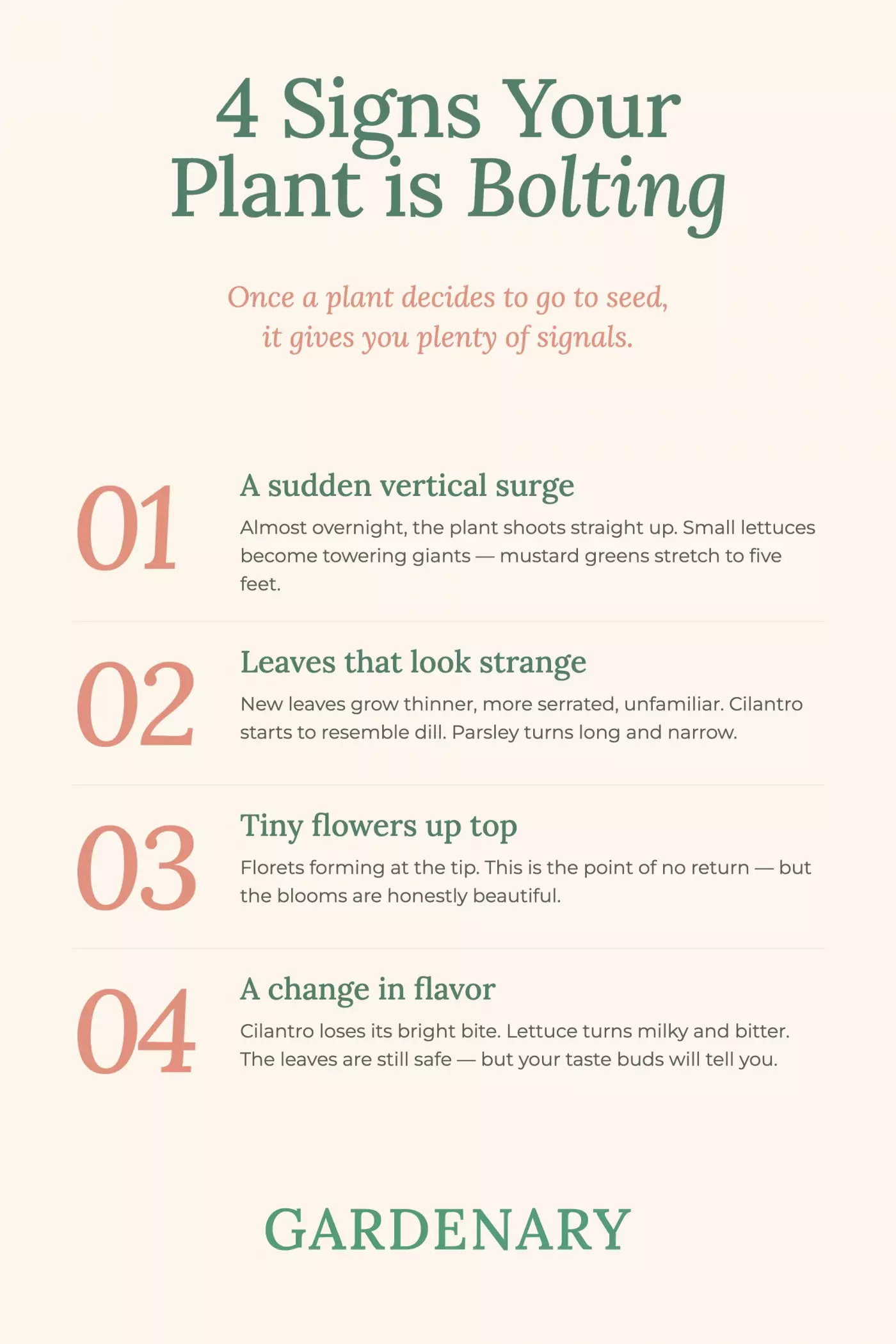
Signs Your Plant Is Going to Seed
Once a plant decides it's time to bolt, it gives you plenty of signals. Here are the four most common ones to watch for.
- A sudden surge of vertical growth. The most obvious sign is when your plant shoots straight up almost overnight. Mustard greens can stretch to five feet tall. Small lettuce plants can become towering giants. Plants with multiple stems, like parsley, will send up several thick stalks that look nothing like their normal stems.
- Leaves that look different than before. As the main stalk grows, the new leaves coming in will look noticeably different from the healthy leaves the plant was producing earlier. Bolting cilantro leaves grow thinner and start to resemble dill or carrot leaves. Bolting parsley leaves become long and narrow. Bolting arugula leaves turn much more serrated than the soft, rounded leaves you started with.
- Little flowers forming at the top. This is the point of no return. Once you see florets forming at the top of the plant, the plant is fully committed to going to seed. Those flowers will bloom, attract beneficial insects, and eventually dry out — leaving behind dozens or even hundreds of seeds for next season. And honestly, the flowers are worth appreciating. Basil's purple flower spikes, arugula's dainty white petals, dill's stunning yellow umbels — they're genuinely beautiful.
- A change in flavor. Once the plant redirects its energy toward seed production, it stops putting anything into the leaves or roots. Cilantro loses its bright flavor. Radishes turn starchy and bitter. Bolting lettuce can develop a milky sap at the base and a rubbery bitterness in the leaves. The leaves are still safe to eat, but your taste buds will probably tell you it's time to let this one go.
Bolting Plants


Get the complete Herb Garden Guide
Bolting Prevention
How to Prevent Bolting
Going to seed is inevitable, but you can keep your plants producing for as long as possible by growing them under their preferred conditions. The key is understanding what each plant needs — the right season, the right amount of water, and a little strategic harvesting — and then setting them up for success from the start. Here are the best ways to delay bolting and get the most out of every plant.
Grow plants from seed directly in the garden.
Direct sow annual herbs like cilantro and dill and leafy greens like spinach, lettuce, and arugula right where they'll grow. Plants started from seed in place tend to bolt slower than seedlings purchased from a nursery or started indoors and transplanted.
Grow plants during their preferred season.
Cool-season plants like spinach need to go in early — well before your last frost date in spring. If you only have a couple of weeks left before temps climb above 75°F, it's already too late for spinach. One thing to watch out for: big box stores don't always time their plant availability to the actual growing season, so you might see cilantro for sale when it's already far too warm to grow it successfully.
Look for slow-bolt varieties when shopping for seeds.
Seed packets labeled "slow bolt" or "long standing" have been bred to last longer in the garden. If warm weather is approaching, look for heat-tolerant varieties too. Jericho romaine, for example, is known for holding on long after other lettuce plants have gone to seed.
Harvest regularly and pinch early flower stalks.
Cut the older, outer leaves on a regular basis to keep the plant healthy and producing. If you spot an immature flower stalk starting to form, snip it off right away. That one small move can buy you another couple of weeks of harvest.
Provide afternoon shade.
Shade cloth can protect sensitive plants from the full force of the sun, keeping the air underneath cooler and helping the soil retain moisture — essentially tricking your plants into thinking it's still their ideal season a little longer. Taller plants nearby can also cast helpful shade. Lettuce, basil, and other leafy greens don't need full sun and can do just fine with 4 to 6 hours a day.
Keep the water coming.
As temperatures rise, increase your watering frequency. Tender leafy greens like lettuce and spinach have shallow roots and can't pull moisture from deep in the soil, so they feel water stress faster than other plants. During a heat spell, daily watering may be necessary to keep them going.
Succession plant for a continuous harvest.
Direct sow new seeds of the same plant every couple of weeks. When one round of arugula starts to bolt, the next round will be just about ready to harvest. Succession planting doesn't stop bolting, but it means you're never without the flavors you love.
Never Miss a Planting Date Again!


What to Do When Your Plants Start Going to Seed
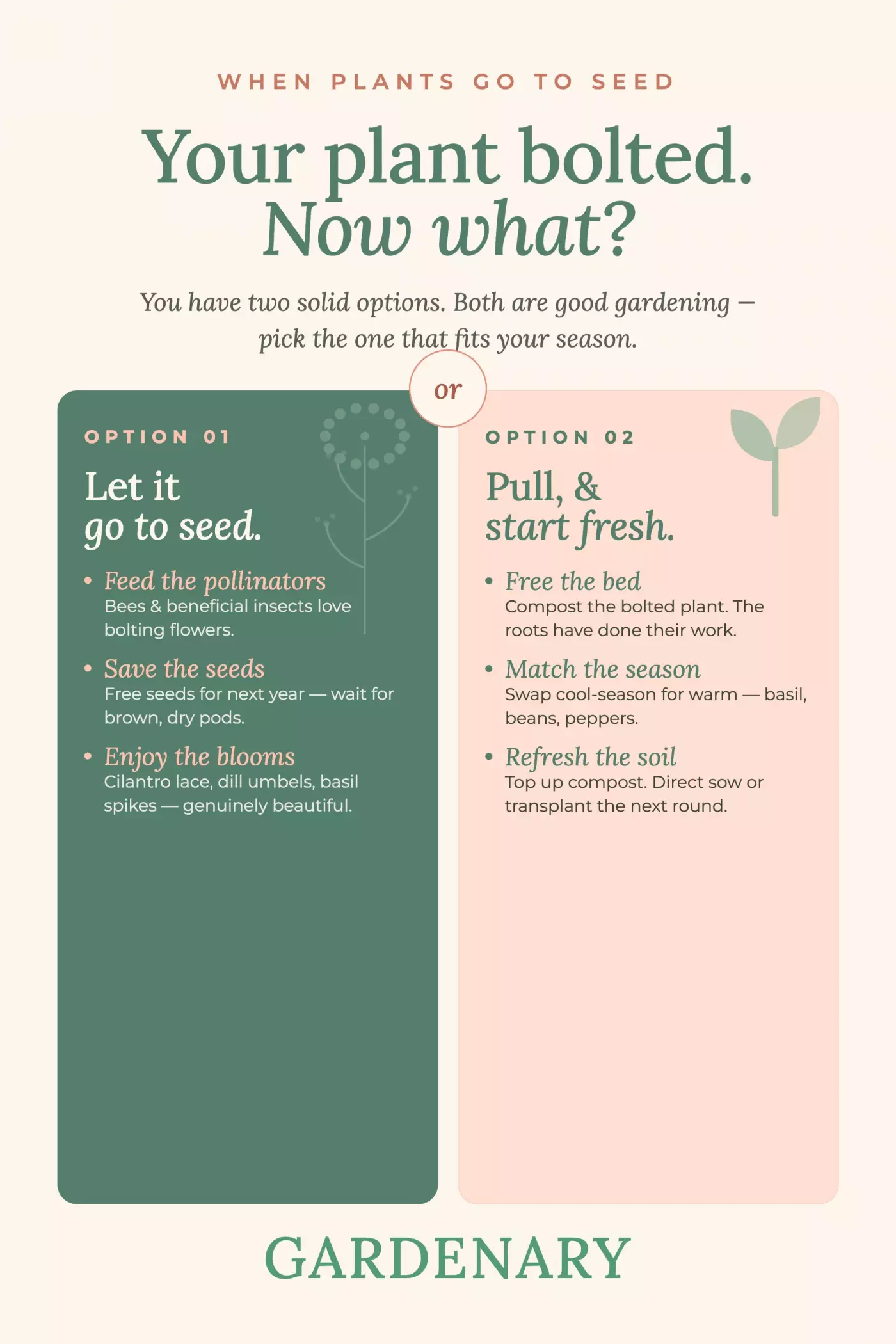
When your plants bolt, you have two choices. You can leave the plants in your garden to give food for the pollinators and save your own seeds. Or you can remove the plants and replace them with something better suited to the current season. Let's look at each choice.
Option #1: Keep the Plants in Your Garden
There are three good reasons to keep these plants a little longer, even though you won't be able to harvest any more delicious leaves.
One: Pollinators Love the Flowers
Those pretty little flowers produce food for our bees, butterflies, and ladybugs. Bees particularly love the yellow flowers of brassicas like bolting broccoli and bolting mustards because they're fragrant and there are a lot of them. Bees can drink their fill from just one plant.


Two: The Flowers Benefit the Overall Health and Productivity of Your Garden
The many pollinators that visit your garden to feast on your bolting basil and cilantro will swing by your fruiting plants and make sure they get pollinated, as well. That means your fruiting plants will be more productive. The flowers also attract other beneficial insects like parasitic wasps that can help you control garden pests.


Three: You Can Save Seeds for Next Year
If you leave your bolting plants in the garden long enough, the flowers will dry up and the seeds will mature inside them. You can collect these seeds or let them drop into the soil so they'll sprout next year.
Just one bolting plant can produce dozens, sometimes even hundreds, of seeds. Simply by leaving a plant or two in your garden each season, you can produce seeds to last you for years and years to come. You can even share with your gardening friends. I mean, who doesn't love free seeds?
Pick your favorite plants to go to seed (maybe they were super productive or extra beautiful). Assuming the plant wasn't a hybrid, the seeds will remain true to the original plant. Even cooler, over time, you can grow plants that are better and better adapted to your unique garden space.
In some cases, the seeds from these plants are a much-loved spice. That's certainly the case for cilantro (aka coriander), and dill seeds are also edible and delicious.


How to Save Seeds from Bolting Plants
Saving seeds from plants that are no longer producing is like making lemonade when the garden gives you lemons. Pinch off the flowers of your herbs and salad greens for as long as possible so you can buy yourself a couple more leaf harvests. Then, let the plants completely go to seed toward the end of the season.
Here are guides to saving seeds:
- Bolting cilantro? You're about to get cilantro seeds, or as we call them in the kitchen, coriander! Here's how to harvest and save your own coriander.
- Bolting basil? Here's the easy way to save your own basil seeds.
- Bolting radishes? This one's particularly fun because the seeds won't actually come from the beautiful purple and white flowers but from these little bean-like seed pods. Here's how to save those radish seeds.
- Bolting lettuce? Here are the easy steps to save your own lettuce seeds.
- Bolting dill? Follow these 3 easy steps to save your own dill seeds.
- Bolting arugula? Just like with radishes, the seeds will form in little bean-like seed pods. Here's how to save arugula seeds.


Option #2: Remove the Plants & Replace Them with Something More Suited to the Current Season
If you have limited space in your garden, then you might not want to keep these rapidly expanding plants around just for their seeds, especially not if you already have flowers for the pollinators.
Before you remove a plant, harvest a couple leaves and do a quick taste test to see if you still like the flavor or texture. I keep eating the leaves of bolting plants as long as I can. They are, after all, 100 percent edible. Harvest as much from the plant as you can before you say bye bye.
To remove a bolting plant, use pruners or a hori hori knife to cut the plant's base, right above the soil line. Leave the roots in the soil so that you don't disturb neighboring plants.
Now you'll have room for this season's plants, which will thrive in your current weather conditions instead of immediately trying to produce seeds. And as long as your bolting plants weren't suffering any major pest or disease issues, you can toss them into the compost pile so that they become food for next year's plants.
Are Bolting Plants Still Edible?
Before you toss a bolting plant into the compost, consider saving those flowers. Arugula flowers, radish flowers, cilantro flowers—they're not only edible, they're actually pretty delicious. Have you heard of broccoli raab or kale raab? Those culinary treats are just yellow broccoli flowers and kale flowers! Who knew letting your plants go to seed could feel so gourmet?
I like to sauté brassica flowers with some EVOO, salt, and pepper. You can also toss them into your salad bowl (arugula flowers are great to add a peppery kick). Radish flowers (pictured below) are edible, and guess what? So are those little green seed pods forming on your radish plant. They have the same peppery flavor you'd expect from a radish, and if you pick them before they start drying out, they have a nice, crisp texture.
This is the really cool part about growing your own veggies. You get to try something new and enjoy more parts of the plant than what you see at the grocery store. Even if you're not interested in eating the flowers, they're all so pretty you could use them as garnishes.


Frequently Asked Questions
Which plants are most likely to bolt?
Cool-season plants like lettuce, spinach, arugula, cilantro, dill, and parsley are most prone to bolting. They're programmed to flower when temperatures rise and days grow longer, which signals the end of their preferred growing season.
Can I eat plants that have bolted?
Yes, bolting plants are still edible, though the flavor often changes. Lettuce can turn bitter, cilantro leaves thin out, and radishes become starchy. The flowers of most bolting plants are also edible and can be used in salads or as garnishes.
Should I pull out bolting plants?
It depends on your garden space and goals. If you want to attract pollinators or save seeds, let them go. If you need the space for current-season crops, harvest what you can, then cut the plant at the base and compost it. Either choice is a good one.
7 Tools, Beautifully Designed
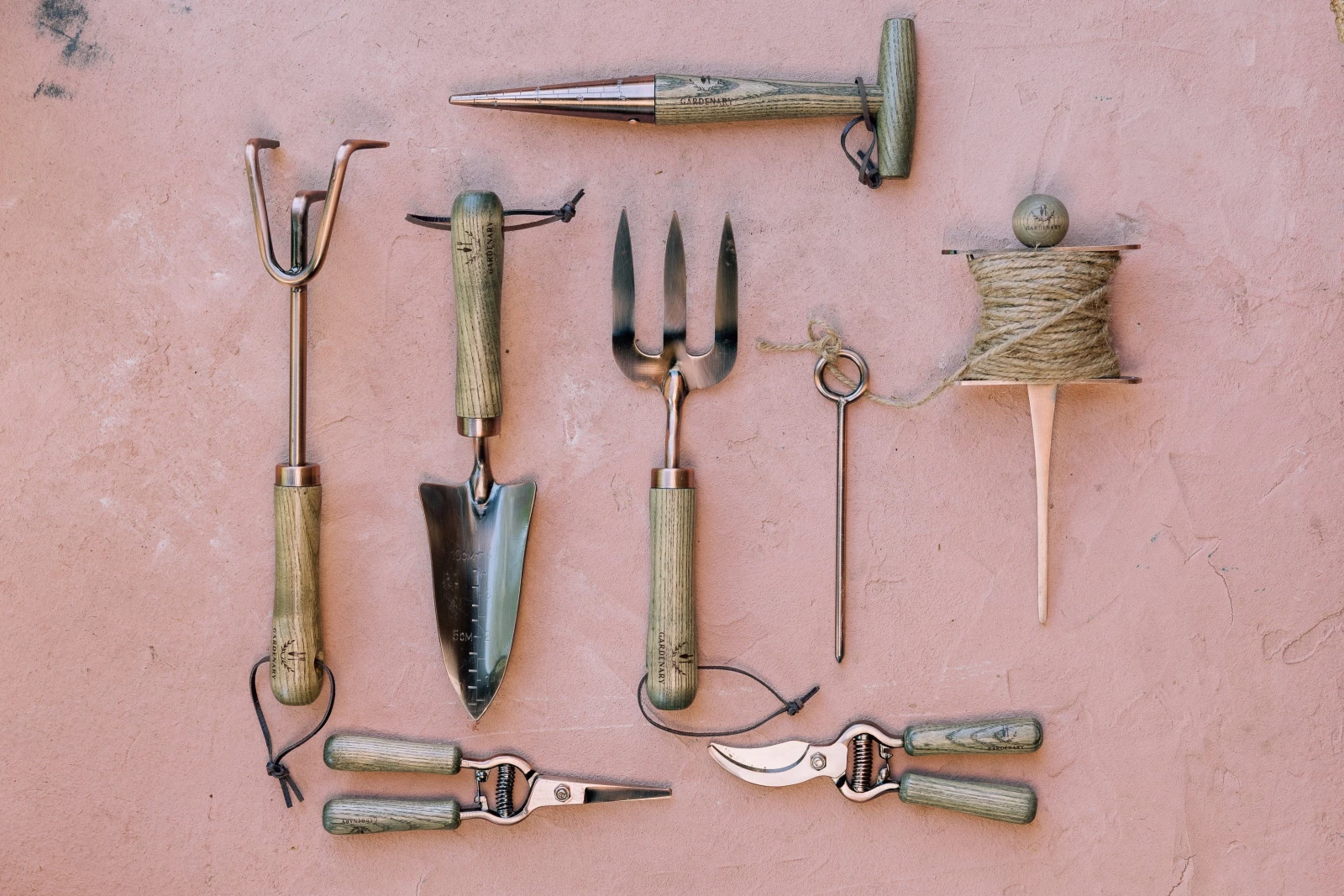
The tool set gardeners actually want, made from carbon steel with an ash wood handle and a warm copper finish.
- Bypass pruner for clean, precise harvest cuts
- Needlenose pruner for detail work in tight spaces
- Transplanting shovel for seedlings and planting holes
- Dibber for perfectly spaced seed sowing
- Cultivator for loosening soil and clearing debris
- Hand fork for weeding and working around established plants
- Row marker & planting line for straight, intentional rows
All in a gift box, ready to use.
Don't Cry Over Bolting Plants
Bolting is nothing to stress about when it comes to the garden. In fact, it's something to celebrate. Your plants have a purpose beyond what you're growing them for, and they're ready to produce flowers and then tons of seeds. You can enjoy their beautiful flowers, use them to help support our pollinators, and save seeds for yourself. And then as soon as you're ready, you can pull the plant and make room for next season's crops.
The garden is always giving, even if it's not the thing we originally wanted. Watching your plants go through their complete life cycle might just teach you a thing or two about plants and help you see them in a whole new light!

