Join Thousands of Gardeners On the VIP List
Free perks, just for email subscribers:
- 15% Off Your First Order
- Gardening Videos & Articles
- Early Access to Sales
Sign up, check your inbox, then shop with your code.

At a Glance
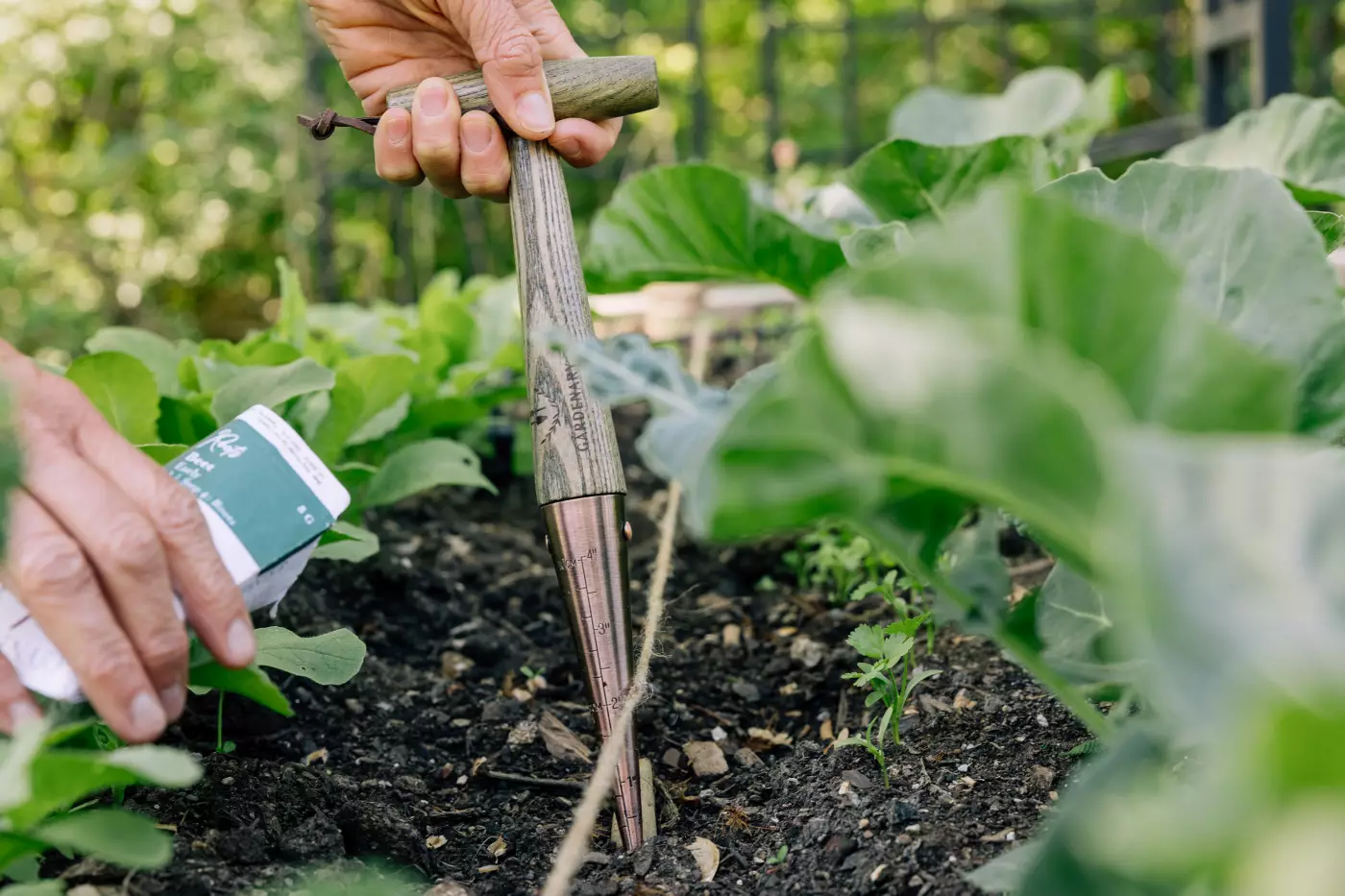
- Using the right tool for the right job means cleaner cuts, less root disturbance, straighter rows, and a lot less frustration in the garden.
- The Gardenary Tool Set is made of carbon steel with a copper plating and an ash wood handle. The set brings all seven essential garden hand tools together in one beautiful, gift-ready kit built to last for years.
- The best tools blend durability, function, and style.
The Best Gardening Tools for a Kitchen Garden
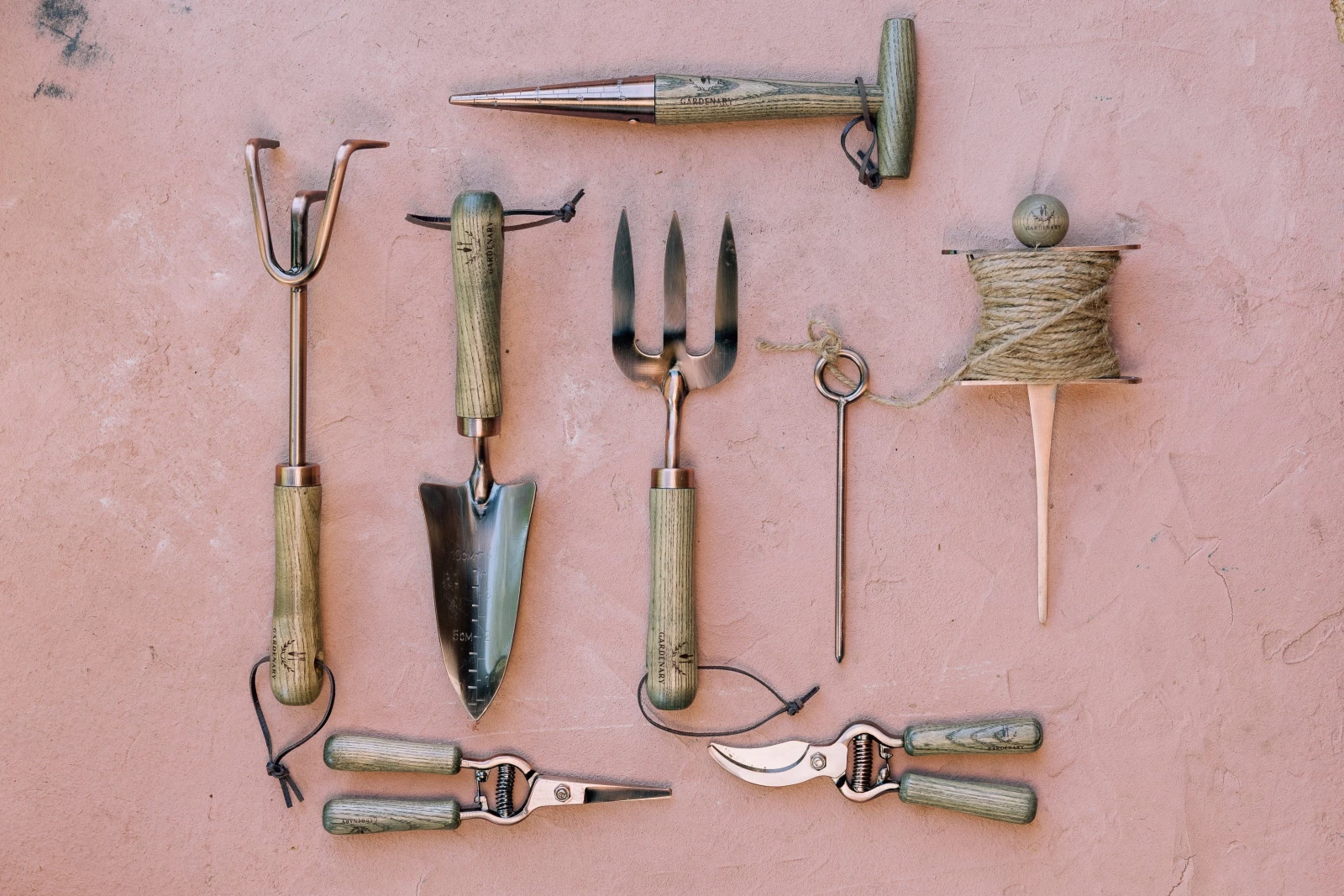
The seven essential hand tools every kitchen gardener needs are:
- Bypass Pruner — for clean cuts when harvesting and pruning
- Needlenose Pruner — for precision work in tight spaces
- Transplanting Shovel — for moving seedlings without disturbing roots
- Dibber — for creating uniform seed-sowing holes
- Cultivator — for loosening and aerating soil between plantings
- Hand Fork — for weeding and working soil around established plants
- Row Marker and Planting Line — for straight rows and consistent spacing
Each tool has a specific job. Together they cover every core task in the kitchen garden — planting, pruning, harvesting, maintaining, and sowing. I'll tell you what each tool does and when to use it.
7 Tools, Beautifully Designed
The tool set gardeners actually want, made from carbon steel with an ash wood handle and a warm copper finish.
- Bypass pruner for clean, precise harvest cuts
- Needlenose pruner for detail work in tight spaces
- Transplanting shovel for seedlings and planting holes
- Dibber for perfectly spaced seed sowing
- Cultivator for loosening soil and clearing debris
- Hand fork for weeding and working around established plants
- Row marker & planting line for straight, intentional rows
All in a gift box, ready to use.

The Bypass Pruner — Your Most-Reached-For Garden Tool
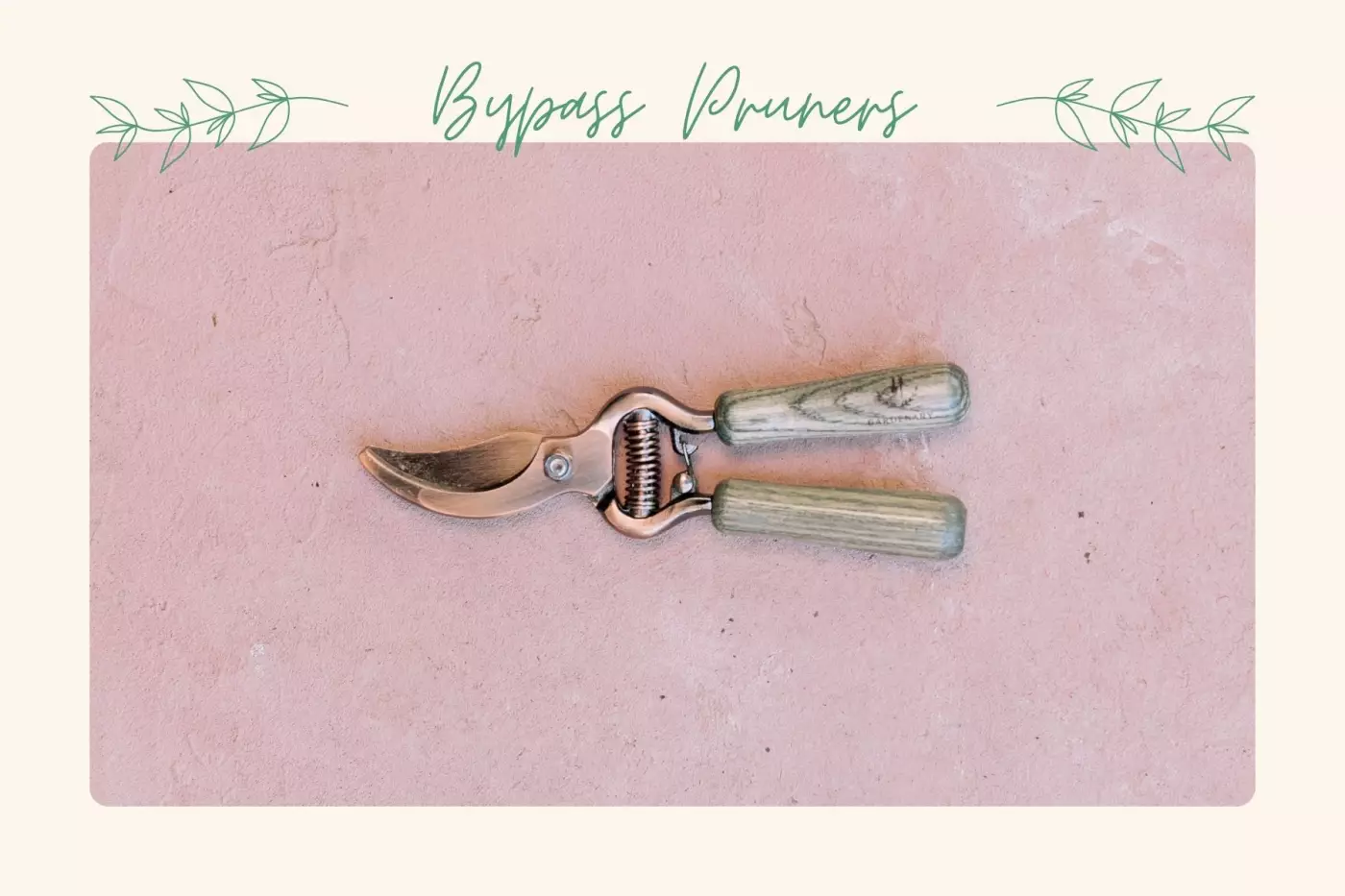
The bypass pruner is the workhorse of the garden tool kit. If someone asks me what the single best gardening tool for a beginner is, this is always my answer. It makes clean, precise cuts with two curved blades that bypass each other like scissors, producing a smooth, plant-healthy cut that minimizes stem damage and reduces disease entry points.
What you'll use it for:
- Harvesting fruit like tomatoes, cucumbers, and squash
- Trimming stems and cutting back spent plants at the end of a season
- General pruning throughout the growing season
- Cutting herbs at the stem for a clean harvest that encourages regrowth
Tool features and benefits:
- The bypass blade design produces clean cuts that heal faster than crushed or torn stems
- The Gardenary bypass pruner is carbon steel with a safety closing mechanism that keeps the blades locked when not in use
- A comfortable wooden handle reduces hand fatigue during longer sessions
Quick Tip: Wipe the blades with rubbing alcohol between plants — especially when pruning anything that looks diseased — to avoid spreading problems through the garden.

The Needlenose Pruner — Precision Where Standard Garden Tools Can't Reach
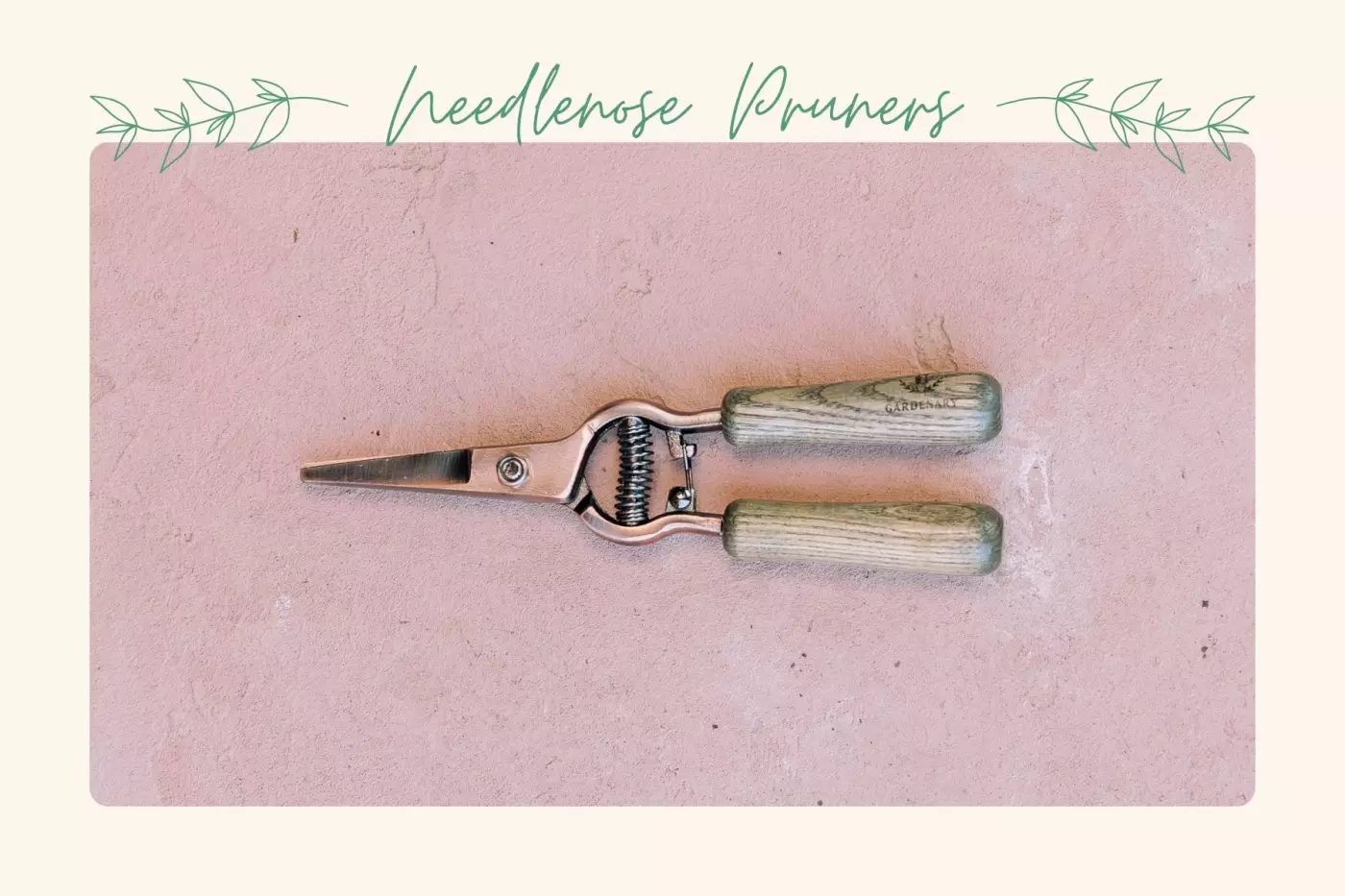
Think of the needlenose pruner (also called "snips") as the bypass pruner's more detail-oriented sibling. The slim, pointed blades reach places a standard pruner simply can't — deep into dense growth, between crowded stems, and into tight corners of a raised bed. It's one of those essential garden tools that beginners often overlook and experienced gardeners can't imagine working without.
What you'll use it for:
- Snipping flowers for bouquets without disturbing the surrounding stems
- Harvesting herbs with precision — especially in bushy plants like basil and thyme
- Making detailed cuts in tight spaces where a full-size pruner won't fit
- Deadheading flowers and removing individual spent blooms
Tool features and benefits:
- Slim pointed blades give you accuracy and control in confined spaces
- Safety closing mechanism for safe storage between uses
- Same comfortable wooden handle as the bypass pruner for a consistent feel across the tool set

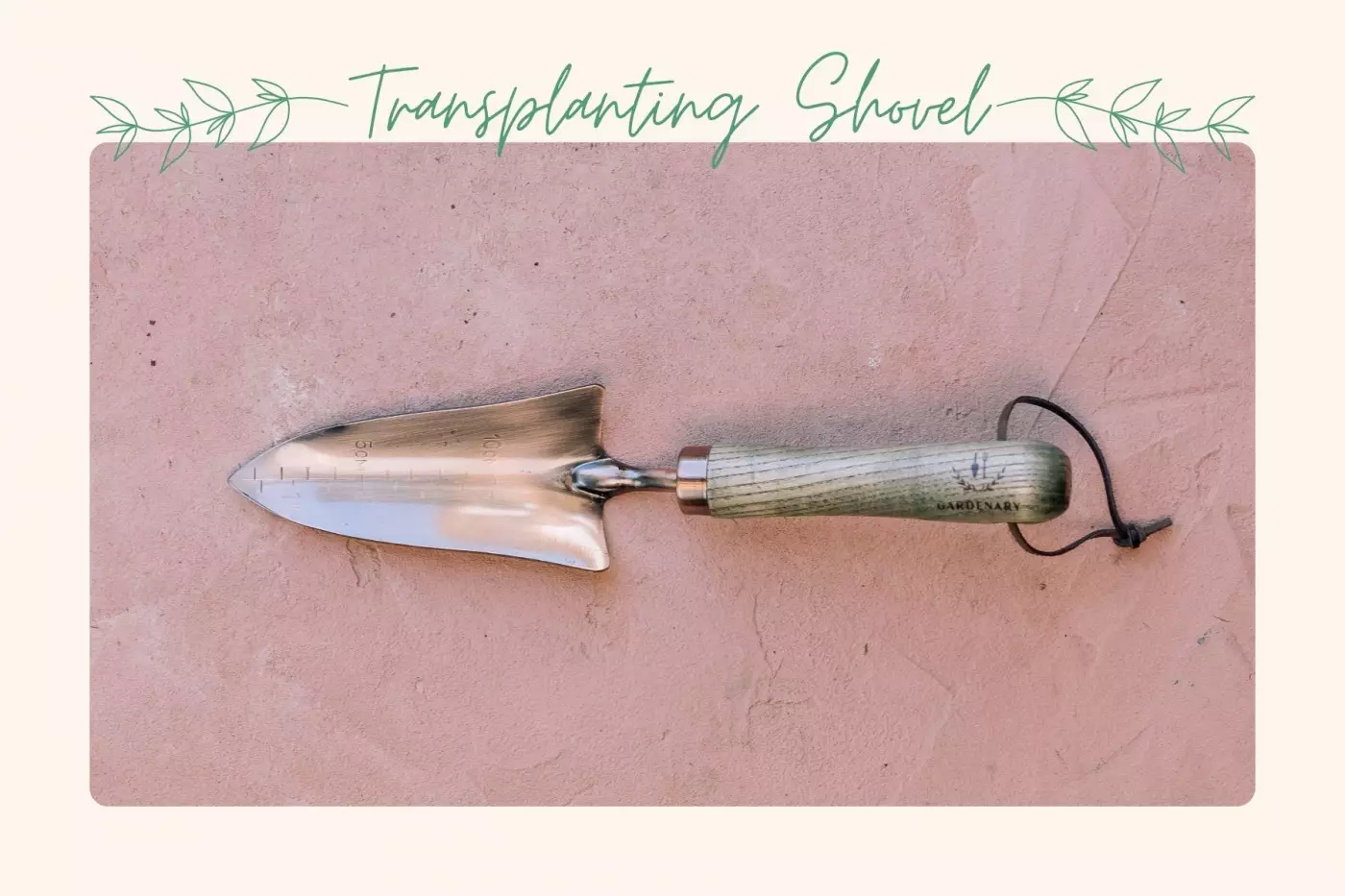
The Transplanting Shovel — The Essential Garden Tool for Seedlings
The transplanting shovel (sometimes called a narrow hand trowel) has a slim, pointed blade specifically designed for working in tight spaces without disturbing surrounding plants or roots. It's the garden hand tool you reach for every time you're moving something from one place to another.
What you'll use it for:
- Transplanting seedlings from starter trays into raised beds
- Digging precise planting holes sized exactly for the plant going in
- Cutting out root balls cleanly when moving established plants
- Working in densely planted beds without disturbing neighboring roots
Tool features and benefits:
- The narrow blade means less soil disturbance around plants you want to keep
- The pointed tip makes it easy to slice into soil cleanly rather than pushing through it
- Compact enough to use comfortably in a raised bed with multiple plants growing close together

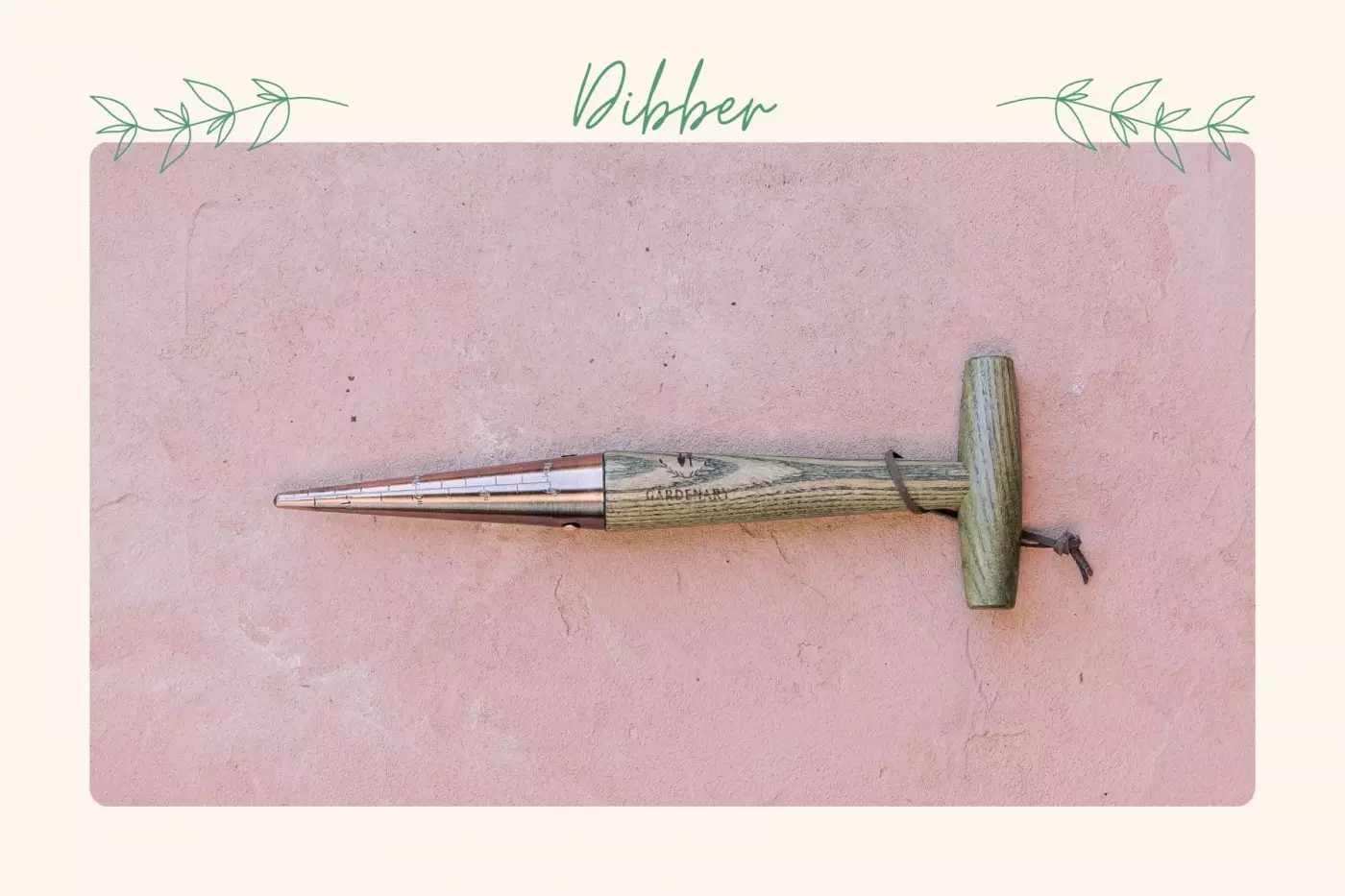
The Dibber — The Seed Sower's Secret Weapon
The dibber is one of those gardening tools that looks almost too simple to be useful until you try sowing seeds without one. It's a pointed tool used to create uniform, perfectly spaced planting holes quickly and consistently. For gardeners who regularly direct-sow, this is one of the most essential tools in the kit.
What you'll use it for:
- Creating planting holes for direct-sown seeds — beans, beets, carrots, bulbs, and more
- Spacing holes consistently across a raised bed so plants have room to develop
- Making small transplant holes for seedlings without overworking the soil
- Sowing in grid patterns for intensive planting layouts
Tool features and benefits:
- Creates uniform hole depth every time, so seeds germinate evenly
- Much faster than using your finger or a stick for large quantities of seeds
- Reduces soil compaction around planting holes compared to improvised tools
Quick Tip: Use the dibber alongside a row marker and planting line for perfectly spaced, straight rows every time.

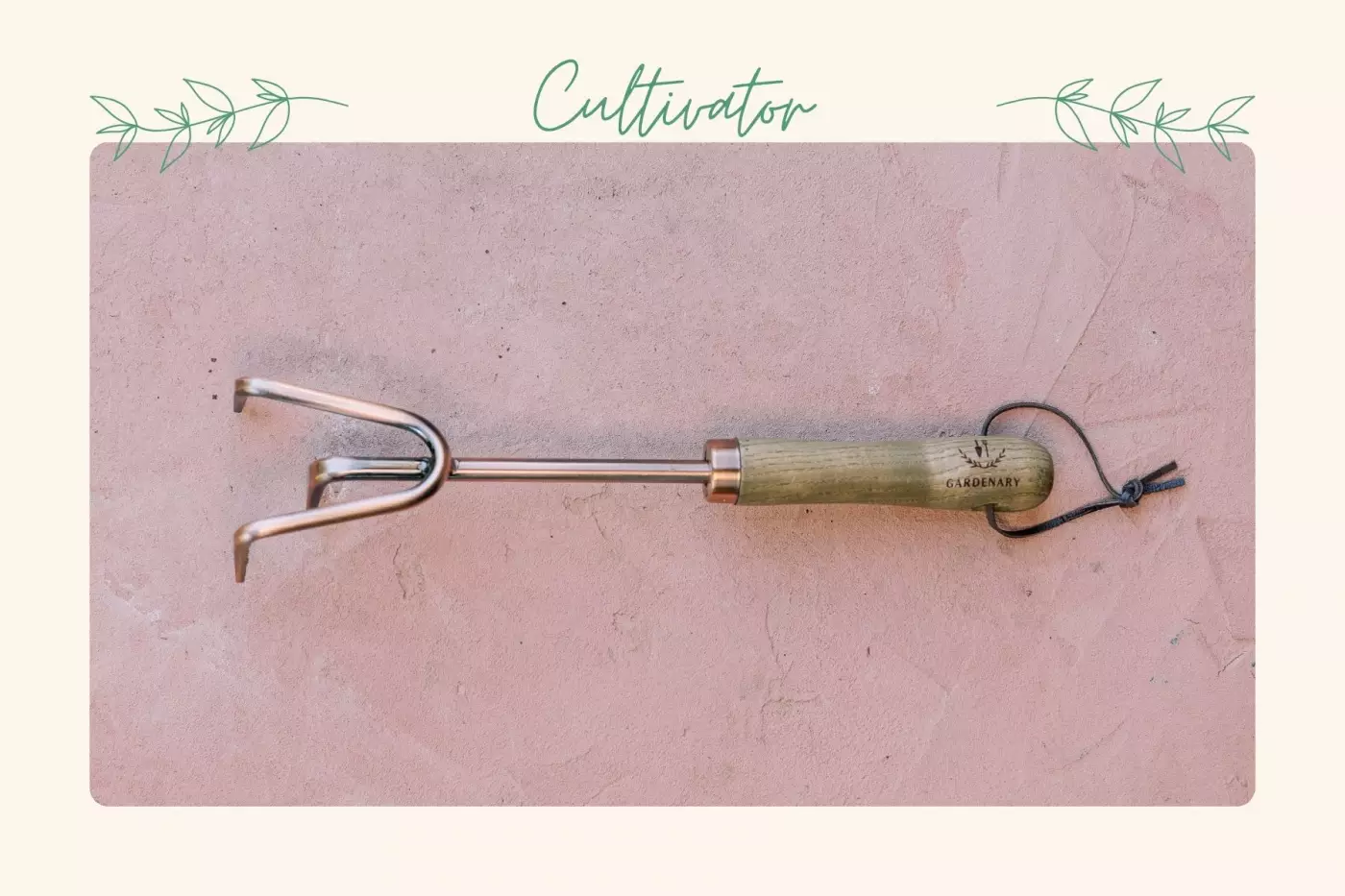
The Cultivator — The Garden Hand Tool That Keeps Beds Productive
The cultivator is the garden hand tool that keeps raised beds in top condition between plantings. Its wide head and tined design loosens compacted surface soil, breaks up crusting, and clears debris — all without going deep enough to disturb roots. It's one of the best gardening tools for anyone who grows in raised beds and wants to keep soil healthy and aerated all season long.
What you'll use it for:
- Loosening the top layer of soil between plantings to improve aeration and water absorption
- Breaking up the surface crust that forms after rain or heavy watering
- Clearing light debris and working in organic matter between crops
- Incorporating a top dressing of compost or earthworm castings into the surface layer
Tool features and benefits:
- The wide head covers more surface area quickly
- Tines penetrate just deep enough to loosen without disturbing established root systems
- Keeps beds productive and aerated without a full soil turnover between seasons

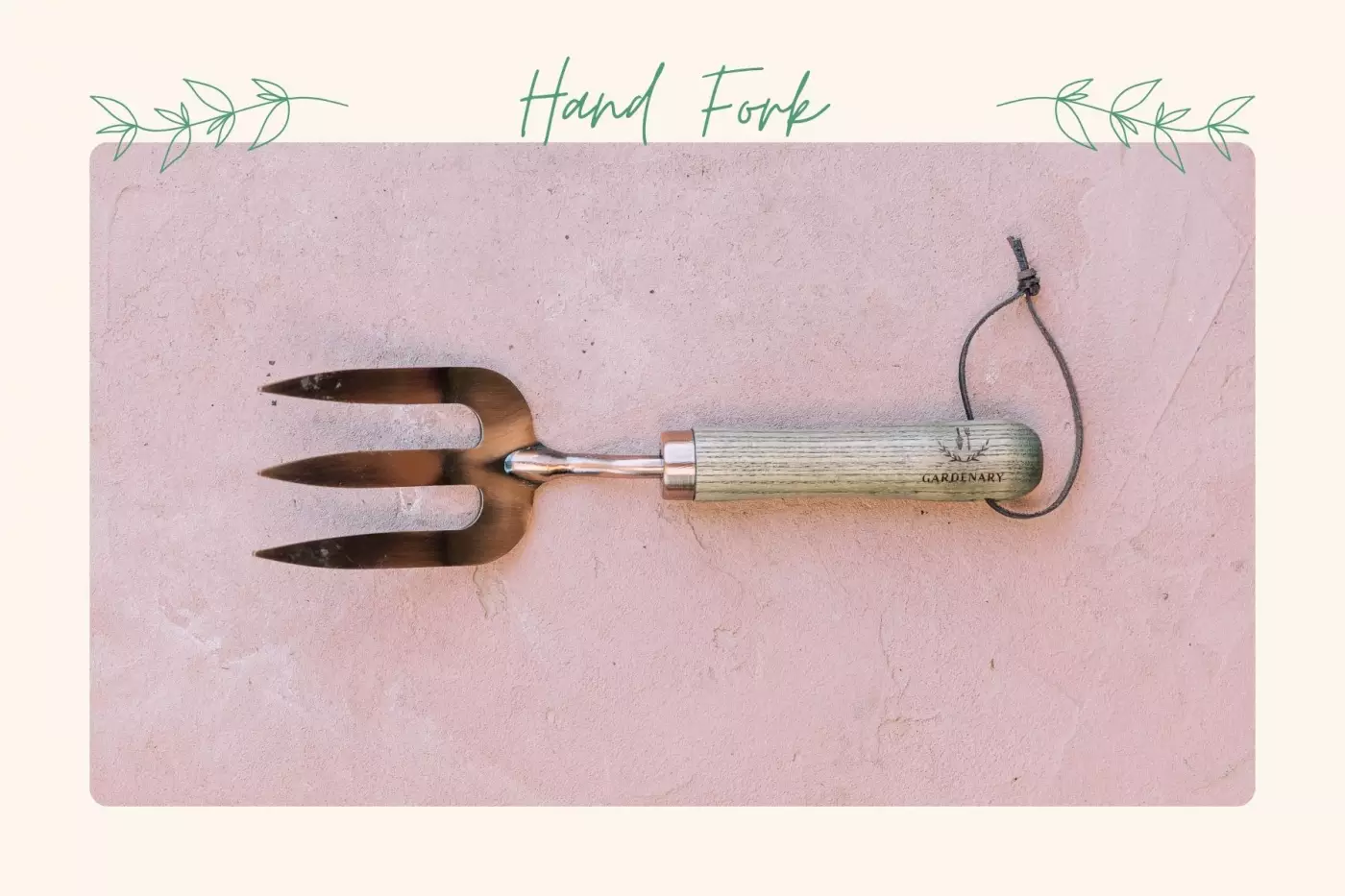
The Hand Fork — For Weeding Without the Collateral Damage
The hand fork looks similar to the cultivator but has narrower, sturdier tines designed for working more closely around established plants. It's the go-to garden hand tool for weeding between crops and loosening compacted soil in specific spots without disturbing everything around it. This tool is good for gardeners who want to weed precisely without pulling up what they want to keep.
What you'll use it for:
- Weeding between established plants without pulling up what you want to keep
- Loosening compacted spots in raised beds where soil has settled or hardened
- Working amendments into the soil around individual plants
- Aerating soil between root crops without disturbing the roots themselves
Tool features and benefits:
- Narrow tines give you precision in tight spaces between plants
- Sturdy enough to work through compacted soil without bending
- Short enough to use comfortably while kneeling at a raised bed

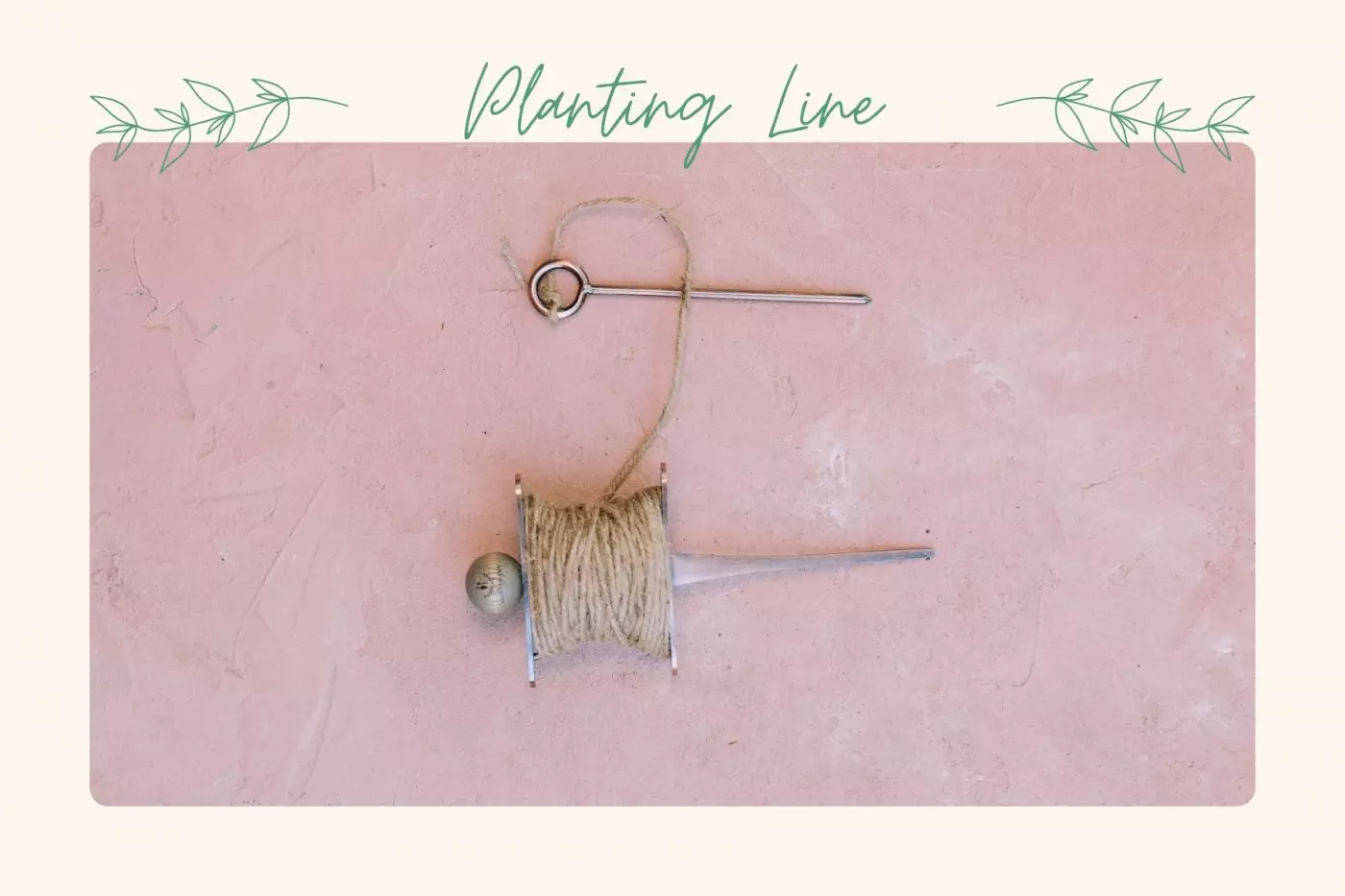
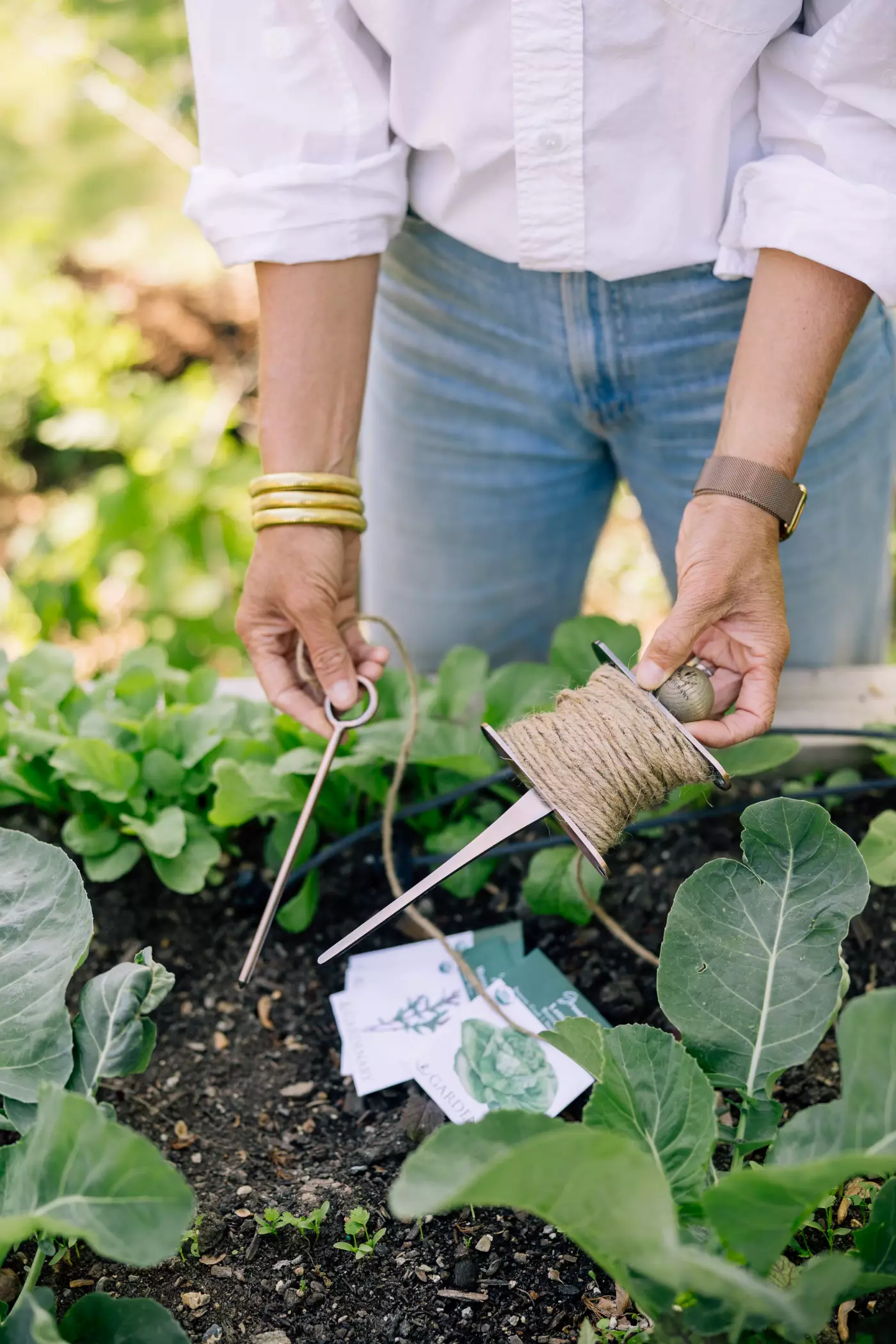
The Row Marker and Planting Line — For the Gardener Who Likes Things Straight
This one gets underestimated. A row marker and planting line is simply a length of line — often with markers or stakes — that you stretch across a bed to keep your rows straight and your spacing intentional. This tool will keep your garden looking professional and tidy.
What you'll use it for:
- Keeping rows straight when direct sowing seeds across a raised bed
- Maintaining consistent spacing between seed holes and transplants
- Laying out a planting grid for intensive planting
- Ensuring even spacing when planting multiple rows of the same crop
Tool features and benefits:
- Removes the guesswork from spacing so every plant has room to develop
- Keeps the bed visually organized which also makes tending and harvesting easier
- Works perfectly alongside the dibber for fast, consistent, well-spaced seed sowing
The Best Gardening Tool Set — All Seven in One Beautiful Kit
Now that you know what every essential garden tool does, here's the best news: you don't have to track them down one by one.
The stylish Gardenary Copper Plated Garden Tool Set brings all seven of these essential garden hand tools together in a single gift-ready box.
Each tool is made from carbon steel with warm copper plating and an ash wood handle, with a leather hanging loop on every piece. They're built to last, genuinely lovely to look at, and cover every essential gardening task from seed sowing to harvesting to bed maintenance.
Whether you're buying the best gardening tools for yourself or giving the gift to someone you love, this is the set that earns a permanent spot in the garden and never gets replaced.
- 7-piece copper-plated hand tool set packaged in a gift-ready box
- Carbon steel with copper plating for long-lasting durability through every season
- Ash wood handles with leather hanging loops on every tool
- Covers every essential gardening task — planting, digging, cultivating, pruning, and marking rows
- Beautiful and practical for gardeners at any level — beginner to experienced
The Gardenary Copper Tool Set is a complete, beautifully crafted collection of seven essential hand tools — each made from carbon steel with a warm copper plating and an ash wood handle — packaged together in a gift box and ready to use from day one.
Whether you're treating yourself or giving the gift to someone you love, this is the set that will live in your garden for years to come.