
Join Thousands of Gardeners On the VIP List
Free perks, just for email subscribers:
- 15% Off Your First Order
- Gardening Videos & Articles
- Early Access to Sales
Sign up, check your inbox, then shop with your code.


At a Glance
- Recent research and leading medical experts confirm that the benefits of gardening extend well beyond the food it produces. Gardening actively supports brain health and cognitive function.
- Gardening bundles physical movement, mental engagement, stress reduction, and social connection into a single daily activity, which touches nearly every lifestyle factor linked to brain health.
- You don't need a large garden to benefit; even a container garden on a patio counts.
What the Experts Are Saying About Gardening Benefits
I've been saying for years that gardening changes something in you. Not just the satisfaction of a harvest, not just the fresh food on the table, but something deeper. You feel more grounded. More yourself. It turns out that science has been quietly catching up to what gardeners have known all along.
Some of the most respected medical voices in the country have confirmed what I've noticed since I first put my hands in soil: the health benefits of gardening are real.
I wanted to share these recent findings with you because if you needed one more reason to get outside and grow something, here it is.

1. Gardening Bundles Healthy Brain Habits Into One Activity
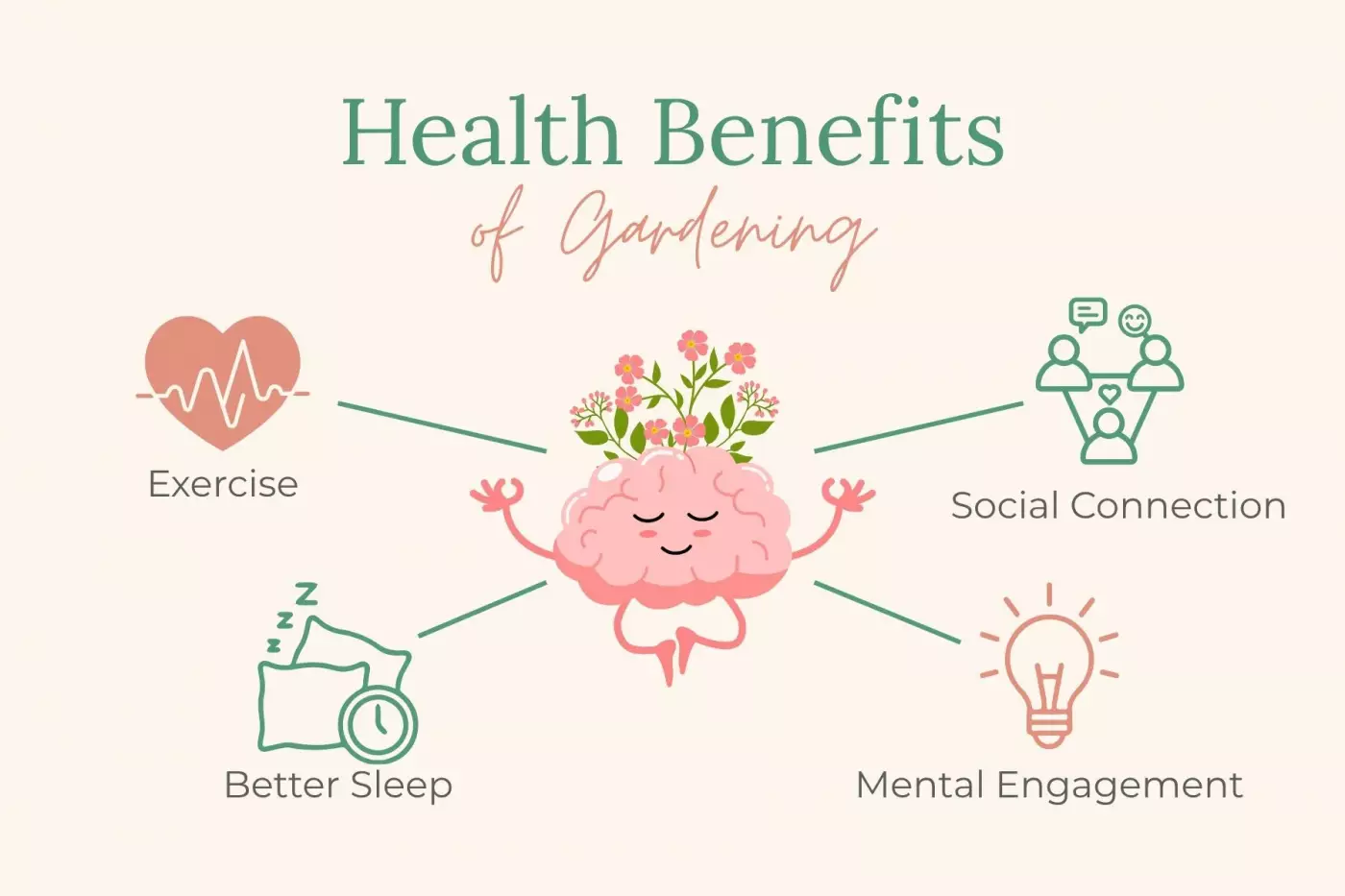
The Boston Globe recently published an article that stopped me in my tracks. They confirmed that gardening touches nearly every lifestyle factor for brain-health.
Gardening helps your mental and physical health.
- physical movement
- stress reduction
- social connection
- sleep quality
- sustained mental engagement
Think about that for a moment. Most of us are trying to check those boxes separately. Exercise on Tuesday. Meditate on Wednesday. Call a friend on Thursday. Gardening does it all on its own.
2. Digging, Planting, and Weeding Count as Real Exercise
One of the most encouraging things in the recent research is this: you don't have to be running marathons to support your brain health. Digging, planting, and weeding all qualify as low-to-moderate intensity aerobic movement (the kind that improves blood flow to the brain and is associated with a lower risk of cognitive decline).
Dr. Smita Patel, an integrative neurologist at Endeavor Health, explained it this way: physical activity is one of the most evidence-based ways to support long-term brain health. Gardening delivers that movement in a form that doesn't feel like an intentional workout.
I think about my parents in their garden every morning, and I genuinely believe those daily minutes of movement are doing more good for them than anyone anticipated. Gardening for seniors is a valuable activity.
Start your dream garden. Watch the free class!
3. Gardening Challenges Your Brain in Ways Most Activities Don't
Planning a garden, remembering what you planted where, troubleshooting why something isn't thriving, adjusting to the season — all of that is real cognitive work. It engages memory, executive function, problem-solving, and spatial reasoning simultaneously.
Research confirms that this kind of mental engagement matters. A study published in the Washington Post's recent coverage found that people who gardened regularly had better thinking and memory skills well into older age. The brain, it turns out, responds to gardening the same way it responds to learning something new.


4. Being in Nature Restores Attention and Reduces Mental Fatigue
This one resonates deeply with me. A professor noted that natural environments restore attention, reduce mental fatigue, and that chronic stress damages the brain over time, so anything that reliably brings it down is worth taking seriously.
I feel this every single time I step outside into the garden. The mental noise of a busy day doesn't follow me into the beds. There's something about the presence of growing things — the smell of soil, the weight of a tomato in your hand, the sound of bees in the flowers — that the brain finds genuinely restorative. It's not imagined. It's biological.
5. A Study of Nearly 137,000 People Found Gardeners Have Fewer Memory Problems
Here's another data point that struck me most from the recent coverage: a study of nearly 137,000 adults aged 45 and older found that people who engaged in regular gardening and yard work were less likely to report memory problems and limitations in daily functioning connected to cognitive decline.
137,000 people. That's not a small sample. That's a signal worth paying attention to.
Don't take my word for it! Earth.com covered this research in depth — you can read their full breakdown here.
6. You Don't Need a Big Garden to Get the Benefits of Gardening
This might be the most important thing of all, because I know a lot of people who talk themselves out of gardening because they don't have enough space, money, experience, or time. The research is clear: small gardens count just as much as large ones. Consistency is what matters.
A container on a patio. A raised bed in the backyard. A whiskey barrel on the deck. A few herb pots on a windowsill. All of it counts. All of it delivers the gardening benefits that researchers are documenting. You don't need a perfect setup or a green thumb — you just need to start.
If you're ready to start and don't know where to begin, that's exactly what I built Gardenary for. The Kitchen Garden Academy walks you through every step, from choosing your garden location to picking your first veggie. Start whenever you're ready!
The Bottom Line on Gardening for Health Benefits
Gardening has always been more than a hobby. It's movement and mindfulness, planning and problem-solving, connection to the seasons, and to something living that needs your care. The fact that science is now catching up and documenting what gardeners have felt for generations is genuinely exciting. It's a little validating, to be honest.
So if you've been on the fence about starting a garden, or if you've let yours go quiet over the winter, consider this your sign. The benefits of gardening are real. The research is there, so go grow something.
A Healthy Lifestyle
Sources
- "This Simple Springtime Activity Is Surprisingly Good for Your Brain" — https://www.bostonglobe.com/2026/04/08/lifestyle/gardening-health-benefits-springtime/
- "The Cognitive Health Benefits of Gardening" — https://www.washingtonpost.com/wellness/2026/04/08/gardening-cognitive-health/
- "Gardening Linked to Better Brain Health and Fewer Memory Problems" — https://www.earth.com/news/gardening-linked-to-better-brain-health-and-fewer-memory-problems/