Join Thousands of Gardeners On the VIP List
Free perks, just for email subscribers:
- 15% Off Your First Order
- Gardening Videos & Articles
- Early Access to Sales
Sign up, check your inbox, then shop with your code.


Quick Take: Sunflowers are one of the easiest plants to save seeds from, and once you've done it, you'll never want to stop. One single flower head can give you up to 1,000 seeds to replant, share, snack on, or grow as microgreens. I save mine every single year, and it takes less than an afternoon of hands-on work.
At a Glance
- Sunflower seeds are ready to harvest about 100 days after sowing, once the leaves yellow and the flower head droops toward the ground.
- A single sunflower head can produce up to 1,000 seeds.
- Store saved seeds in a cool, dry place, and they'll be ready to sow again next spring.
By Nicole Johnsey Burke: Founder of Gardenary and Author of Kitchen Garden Revival
How to Save Sunflower Seeds
There’s nothing quite like a sunflower winking at you from the garden to add delight to your tending tasks. We might enjoy the beauty of sunflowers, but our senses can't even fully appreciate how amazing they are. The center of each sunflower is basically an ultraviolet bullseye for pollinators.
Add to that the fact that sunflowers can be seen from long distances thanks to their large size and produce tons of pollen and nectar, and you can see why we might want to fill the world with a few (million) more sunflower plants.
And as it turns out, it's not hard to fill your own garden with more sunflowers next year if you save your own sunflower seeds this year. Saving seeds is super easy, and you'll end up with enough to snack on roasted sunflower seeds all winter long. Enough to plant your own little sunflower field next year. Even enough to share with friends and neighbors who've been admiring your beautiful yellow flowers.


When Can You Harvest Sunflower Seeds?
Sunflowers and other flowers grown for their seeds need to grow for about 100 days before they’re ready to harvest. You will, of course, get to enjoy their flowers many days before that.
About 3 months after you sow sunflower seeds, start looking for signs that your plants have reached full maturity. The sunflower leaves will turn yellow, their seeds will plump up, and their pretty little flower heads will begin pointing toward the ground. This is sunflower harvest time!
Follow these steps to harvest your sunflower seeds.


Steps to Harvest Sunflower Seeds

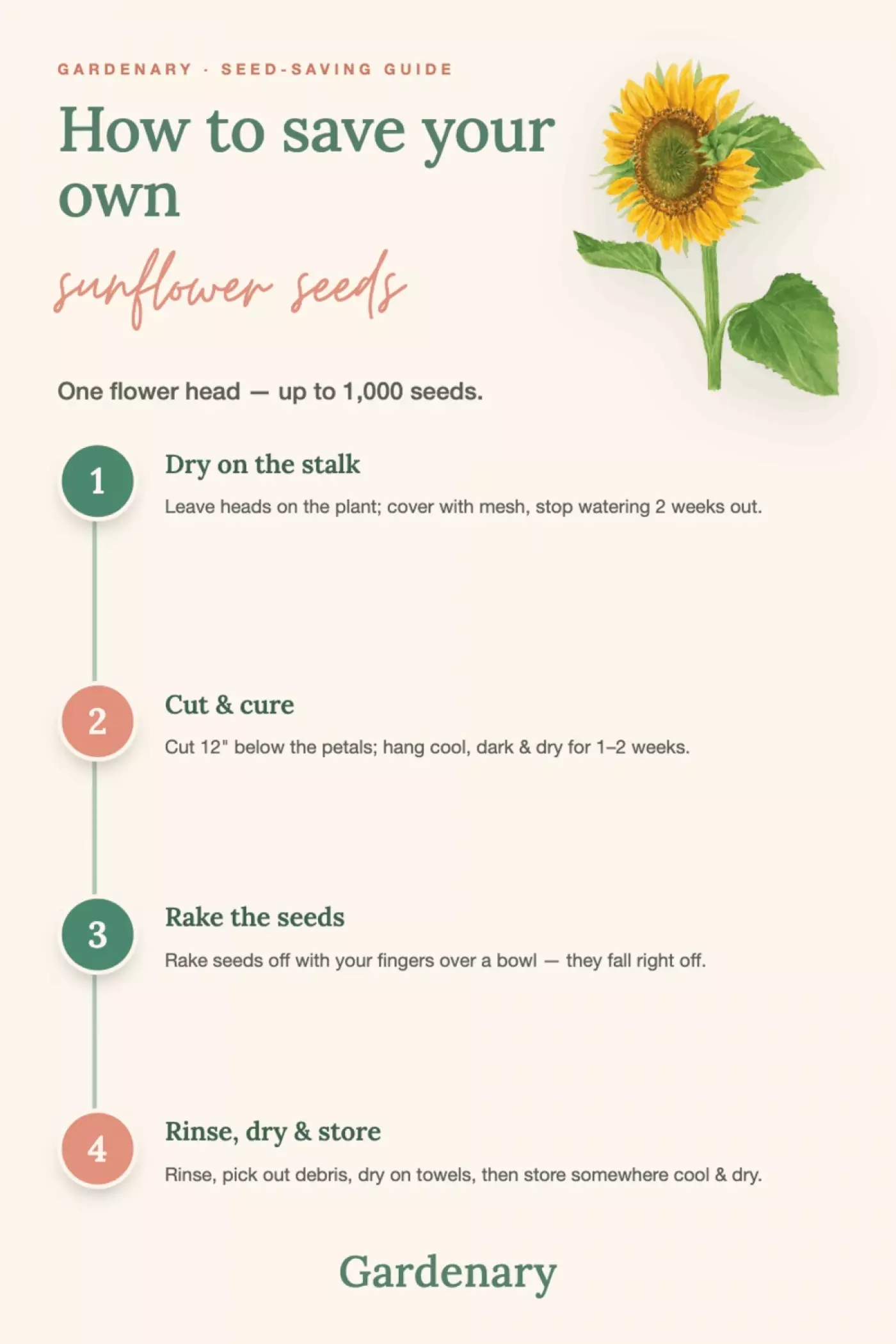
Step One
Leave the seed heads on the plant to fully dry. For best results, put some kind of physical barrier like a piece of mesh cloth or a mesh bag around each flower head to protect the developing seeds from birds. (I find it nice to also leave a couple sunflowers for the birds. There should be enough to share!)
About two weeks before you plan to harvest your sunflowers, stop fertilizing and watering your little sunflower patch.


Step Two
Once the seeds appear dry on the plant and the back of the seed head is brown, cut each stem about 12" below the petals using a clean pair of pruners. It's a good idea to place your stems in a harvest basket or large container to catch loose seeds.
Bring the seed heads indoors. Hang them somewhere cool, dark, and dry for a week or two.
Step Three
After a week or two, check to make sure the seeds are nice and dry. All you have to do to remove the seeds from the flower heads is rake them with your fingers over a bowl or plate. They should come right off.
It depends on the variety of sunflower you're growing, but a single sunflower head can often produce as many as 1,000 seeds!


Step Four
Rinse the seeds in a large colander and remove any petals and plant bits that got mixed in with your seeds during the removal process. Spread your seeds out on paper towels and leave them to dry for another day or two.
Your sunflower seeds are now ready to be enjoyed or saved for next year.
Store them in a cool, dry spot.
Three Things You Can Do With Your Sunflower Seeds Right Now
Here's what you can do with your sunflower seed harvest:
- Eat them raw straight from the flower head
- Roast them with salt for a satisfying snack (recipe below)
- Grow them as microgreens — one of the fastest and most rewarding things you can do in winter
If you're looking to try something new, I highly recommend growing some of your sunflower seeds as microgreens. Sunflower microgreens are really hardy; they grow very quickly and fill up a tray with pretty little leaves. They have a great crunchy texture and slightly nutty flavor.
I love to use sunflower microgreens as a garnish. I also love to make a salad with sunflower microgreens, avocado, and some cranberries, topped with a zesty vinaigrette. It's a nice, nutty salad that's perfect for the middle of winter.
Sunflower seeds are worth eating for reasons beyond the garden:
- High in vitamin E, an antioxidant that supports skin and immune health
- Good source of magnesium and healthy fats
- Rich in plant-based protein — about 6 grams per ounce


How to Make Roasted Sunflower Seeds
It's easy to make your own roasted sunflower seeds to replace your potato chip habit. Follow these simple steps:
Step One
Soak your sunflower seeds in a mixture of 6 cups water and 1/4 cup salt overnight.
Step Two
Strain the seeds and spread them out to dry before baking.
Step Three
Bake the seeds in a single layer on a large baking sheet at 325°F for 30 minutes, or until slightly browned. Stir often.
Step Four
Enjoy seeds as is or drizzle some EVOO and sprinkle your favorite spice over them.
Store any leftovers in an airtight container. They should be good for a couple weeks.
How to Grow Sunflower Seeds as Microgreens
Check out our list of supplies to grow microgreens if you want to give it a try. Here are the steps to plant, tend, and harvest your little microgreens. Another really nice thing about sunflower seeds is that they're nice and large, which makes them super easy to sow in a tray. You'll cover them with about an inch of seed starting mix (that's a lot more than you'd use for most other microgreens types).
You should have little sunflower sprouts in about 7 days and microgreens ready for harvest in about 12 days! Each tray is worth about $15 in sunflower microgreens.


Time to Harvest Some Sunflower Seeds
Since each sunflower plant produces so many seeds, you'll easily have enough seeds to save for planting next year, to grow your own sunflower microgreens all winter long, and even to leave out for the birds. If you're enjoying the seeds as snacks, the numbers won't seem quite as impressive, of course, unless you've grown your own sunflower field.
But even if you save just enough for a couple snacks a week, you’ll still be amazed that all of those seeds came from just one little seed. Nothing reminds you of the magic of the garden quite like holding a handful of seeds it took you months to grow.
Thanks for helping to make gardening ordinary again and sharing the sunflower love!
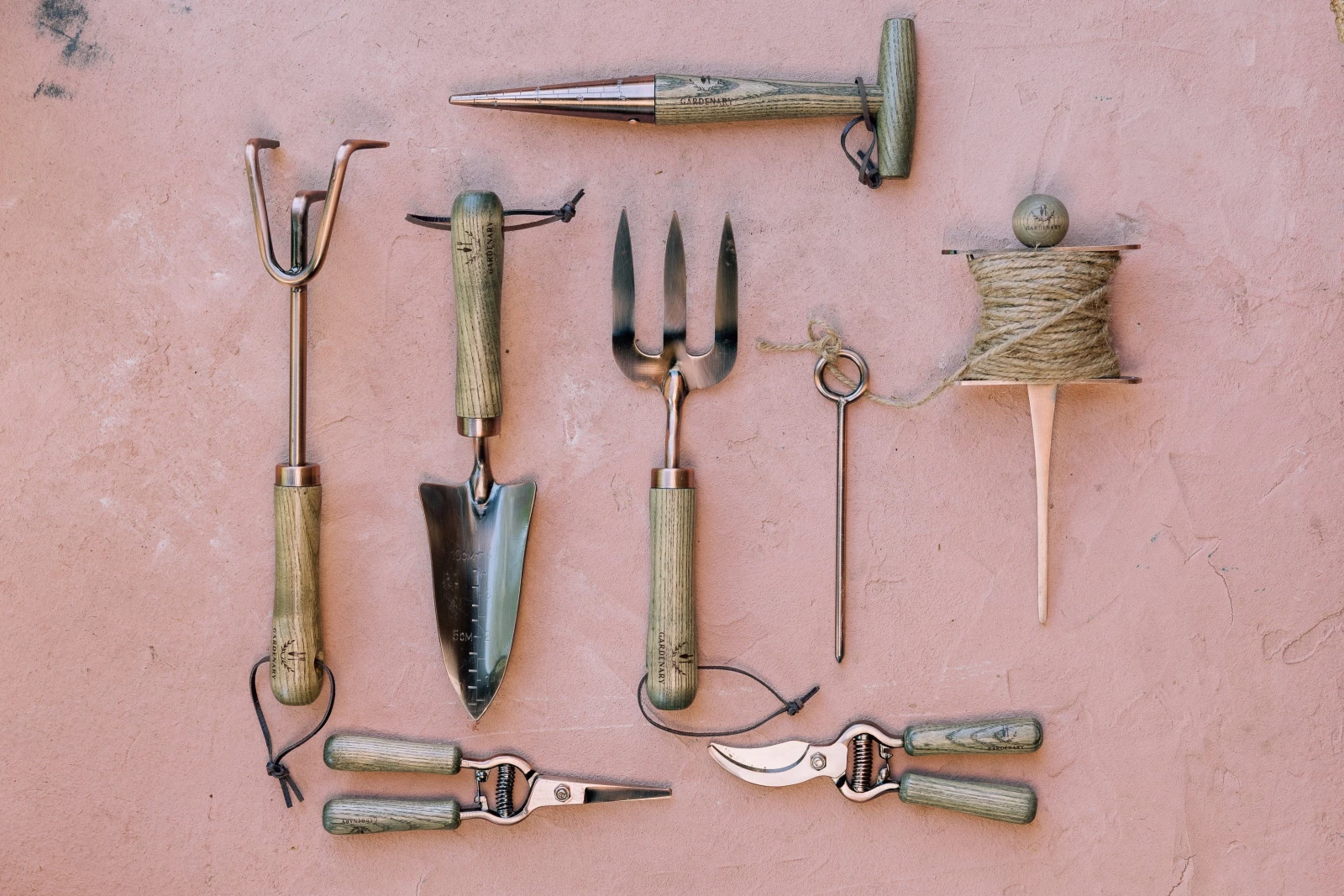
7 Tools, Beautifully Designed
The tool set gardeners actually want, made from carbon steel with an ash wood handle and a warm copper finish.
- Bypass pruner for clean, precise harvest cuts
- Needlenose pruner for detail work in tight spaces
- Transplanting shovel for seedlings and planting holes
- Dibber for perfectly spaced seed sowing
- Cultivator for loosening soil and clearing debris
- Hand fork for weeding and working around established plants
- Row marker & planting line for straight, intentional rows
All in a gift box, ready to use.
Frequently Asked Questions About Saving Sunflower Seeds
When should I harvest sunflower seeds?
Harvest sunflower seeds about 100 days after sowing, once the flower head droops toward the ground, the petals have dropped, and the back of the head has turned brown. The seeds should look plump and dry on the plant before you cut the stem.
How do I know if my sunflower seeds are ready to save?
Look for seeds that are plump and firm, with the characteristic black-and-white striped or solid black shell depending on the variety. The back of the flower head should be fully brown and papery. If the seeds pull off easily when you rake them with your fingers, they're ready.
How do I store saved sunflower seeds?
Store dried sunflower seeds in a cool, dry location in an airtight container or paper envelope. Label with the variety name and year. Properly stored seeds can remain viable for up to three years.
Do I need to save seeds from open-pollinated or heirloom sunflowers?
For true-to-type seed saving, yes — you'll want to start with open-pollinated or heirloom varieties rather than hybrids. Seeds saved from hybrid sunflowers may not grow into plants that look like the parent plant.
Related Reading