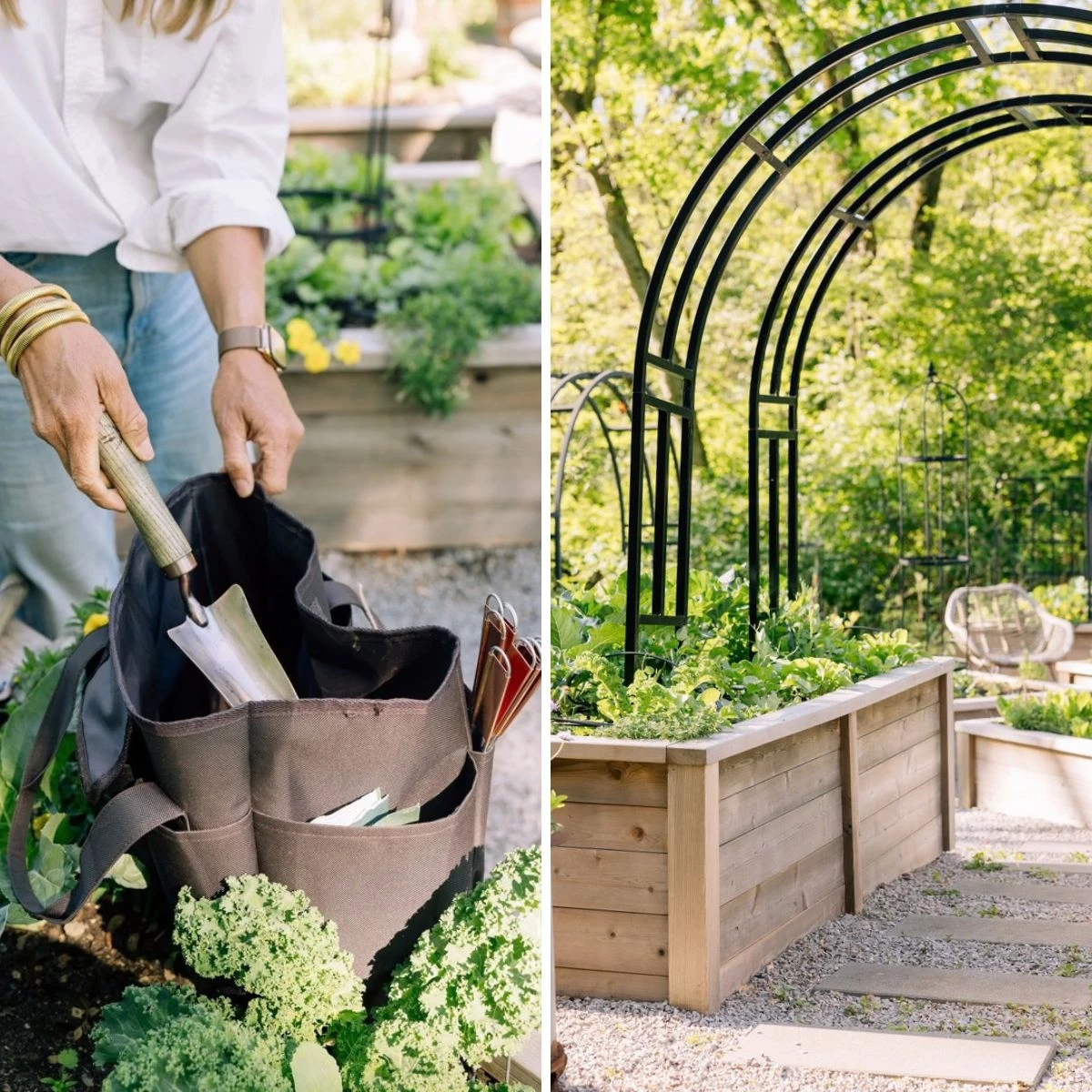
Nicole's Quick Take: After building hundreds of kitchen gardens, these are the fourteen tools I use the most, plus the one starter garden tool kit I recommend to every beginner, the Gardenary Copper Tool Set.
At a Glance
- A kitchen garden only calls for simple hand tools; no heavy equipment required.
- These fourteen essentials cover everything from planting and pruning to storage and cleanup.
- Beginners can skip the guesswork with the Gardenary 7-Piece Copper Plated Garden Tool Set, which bundles several of these picks into one package.
By Nicole Johnsey Burke: Founder of Gardenary & Author of Kitchen Garden Revival
Kitchen Garden Tools and Equipment
I used to think growing my own food meant owning a shed full of equipment. It doesn't. A kitchen garden asks for almost none of that: no tiller, no backhoe, just a few hand tools that fit in one tool bag or bucket.
Here are the top tools I find myself using every season.

Essential Garden Tools List
These are the tools and supplies I consider essential to the kitchen garden trade:
- gloves with rubber palms
- trowel
- dibber
- spacing ruler
- small cultivator
- hand broom
- hori hori
- pruners
- harvest basket
- garden tool bag
- watering can or hose
- plant tags
- twine
- garden mesh
- scissors/snips
Now let's look at how you can best use each of these items in your kitchen garden. I'll give you some recommendations in case you're shopping for yourself or another gardener.
Gardening Gloves


Gloves are first on my garden tools must-have list
Gardeners have been arguing about whether it’s better to wear gloves or feel the soil between your bare hands since time immemorial. I have super dry skin, so I like to protect my hands with gardening gloves. It's also a good idea to wear gloves whenever you're handling weeds or certain plants like okra that can irritate your skin.
Trowel

A trowel is the classic tool for digging small holes and moving soil
A trowel is usually the first tool people think of when they picture gardening, and there's a reason it's stuck around for so long. It's simple: a small, sturdy scoop you use to dig transplant holes, move potting soil into containers, mix in compost, or pop out a stubborn weed by the root. If you're just starting out and building your kit one piece at a time, a trowel is an easy, inexpensive place to begin.
7 Tools, Beautifully Designed
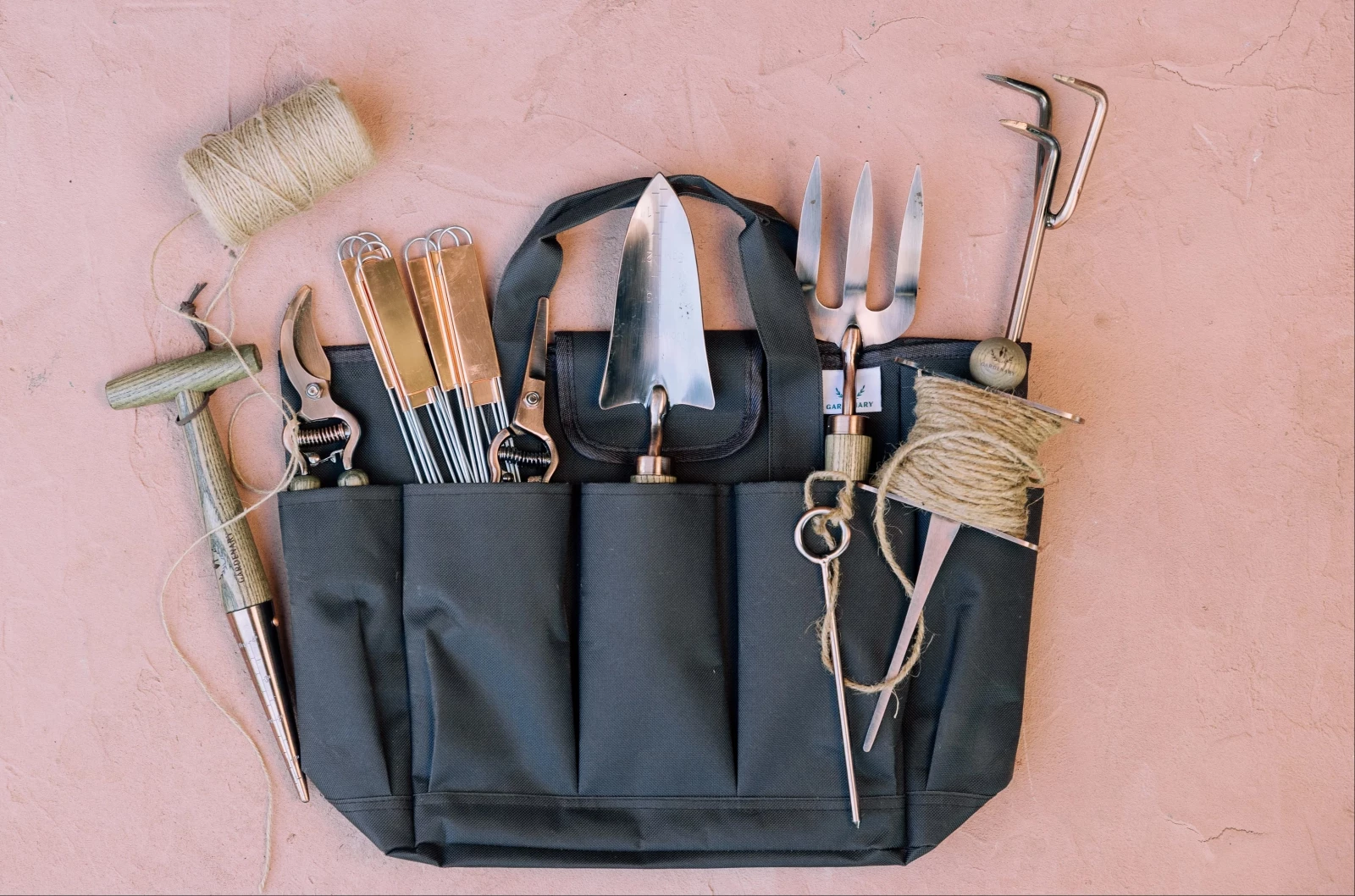
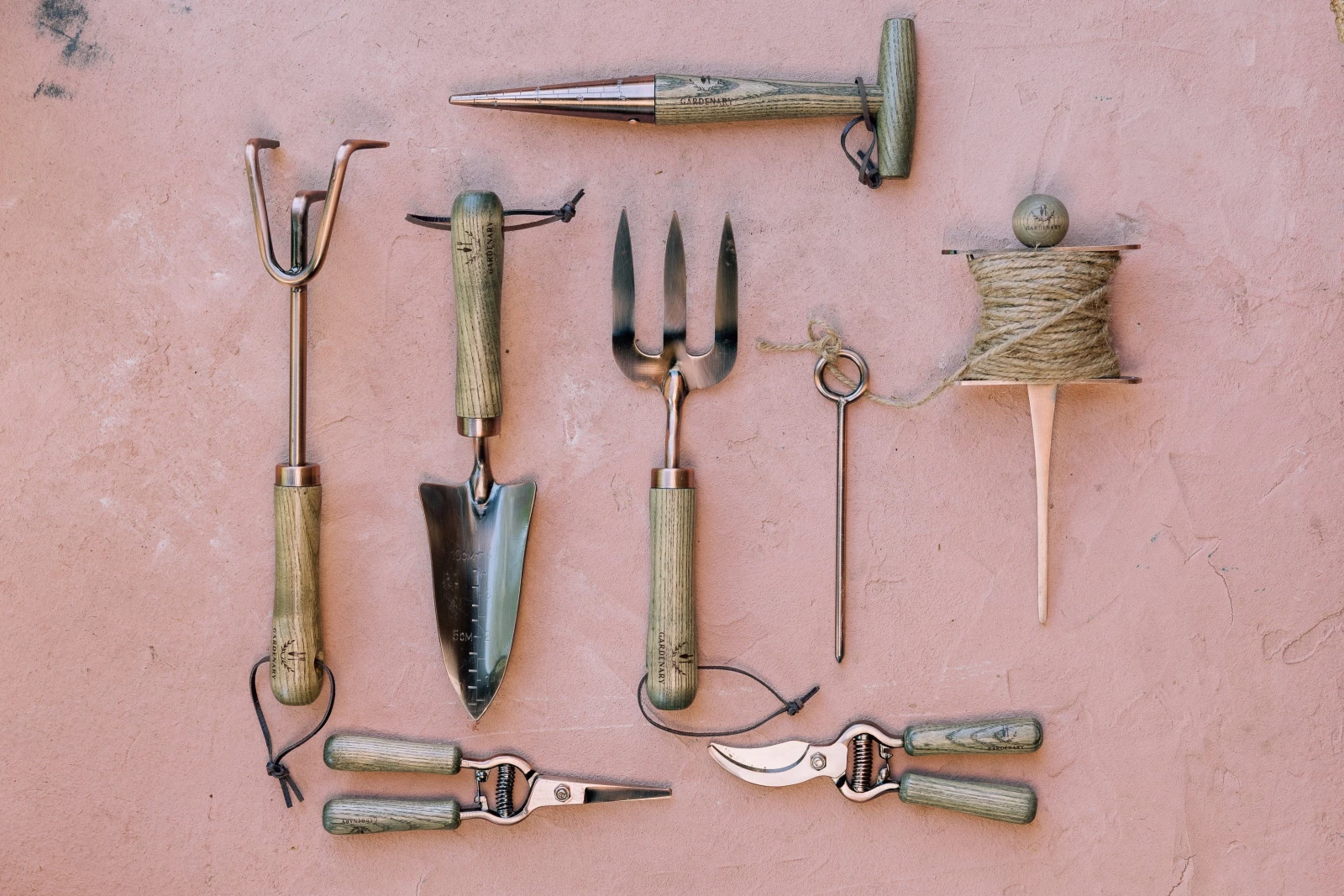
The tool set gardeners actually want, made from carbon steel with an ash wood handle and a warm copper finish.
- Bypass pruner for clean, precise harvest cuts
- Needlenose pruner for detail work in tight spaces
- Transplanting shovel for seedlings and planting holes
- Dibber for perfectly spaced seed sowing
- Cultivator for loosening soil and clearing debris
- Hand fork for weeding and working around established plants
- Row marker & planting line for straight, intentional rows
All in a gift box, ready to use.
Dibbers

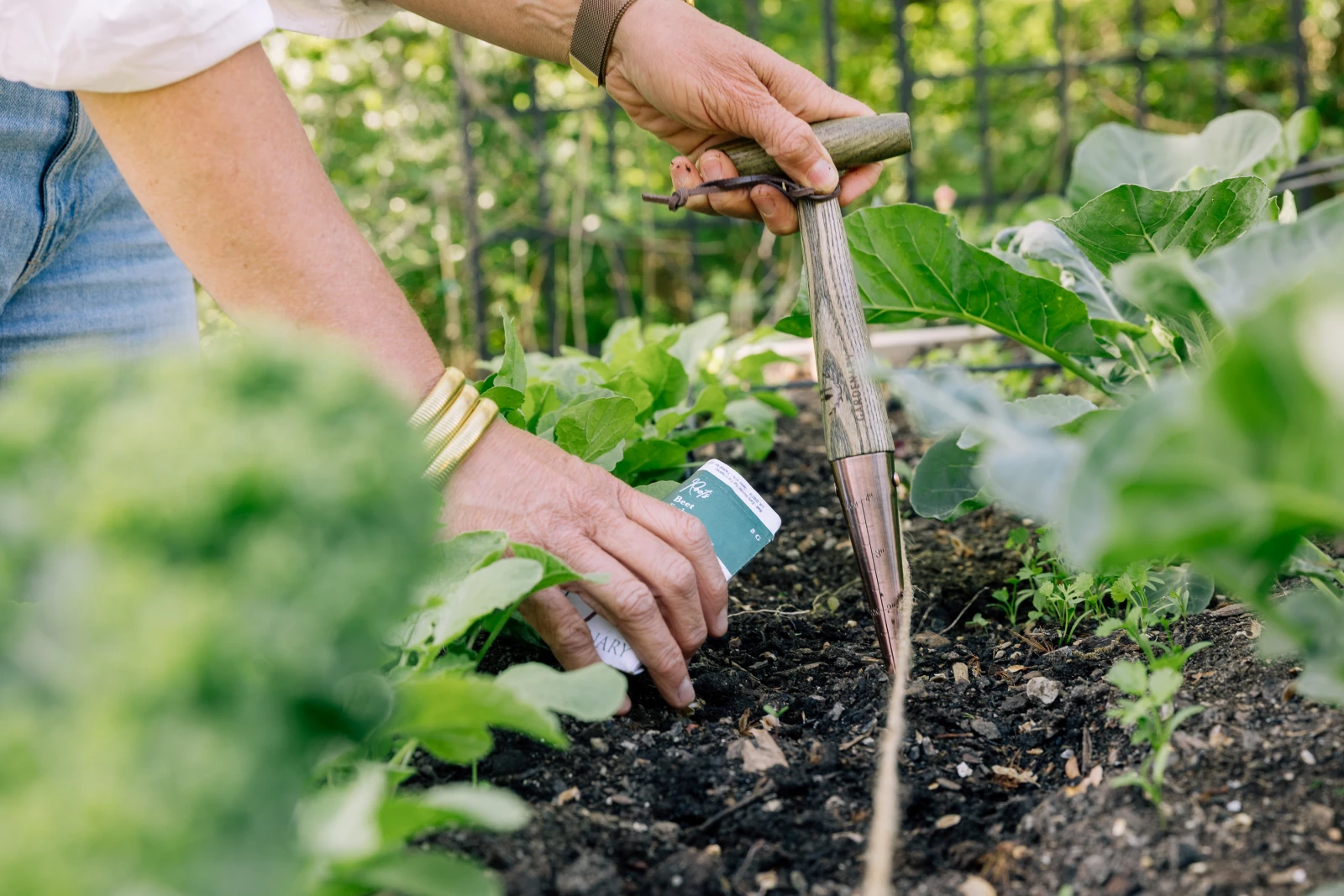
Dibbers are the best garden tools for planting seeds
Dibbers are my go-to tool for planting seeds in the garden because they produce nice, tidy holes where you need them. The dibber I use most often has inches marked on the side to help with spacing and to show you how deep to bury a seed. Most seeds don’t need to be buried all that deep, especially tiny ones like lettuce and radish, so a dibber ensures you sow something at its optimal depth for germination.
This short video shows the different types of dibbers and their uses in the garden. (Can you tell I collect dibbers?)
Seed Spacing Ruler


A spacing ruler is an important tool for planting seeds
I have a wooden planting ruler that marks centimeters and millimeters and has little holes every inch to aid seed sowing. Watch me put this ruler to use while sowing spinach seeds in this short video.
Other spacing tools you might find useful are multi-hole dibbers that help you evenly space out seed holes and plant in a straight line.
The green tools pictured above are seed dispensers. You can adjust the dial based on the size of the seed you're planting so that the dispenser only releases one seed at a time (at least in theory; mine often gives me two or three). The red and white tool is a seed injector. Either of these tools could be useful if you have arthritis in your hands or difficulty separating teeny tiny seeds.
Cultivator

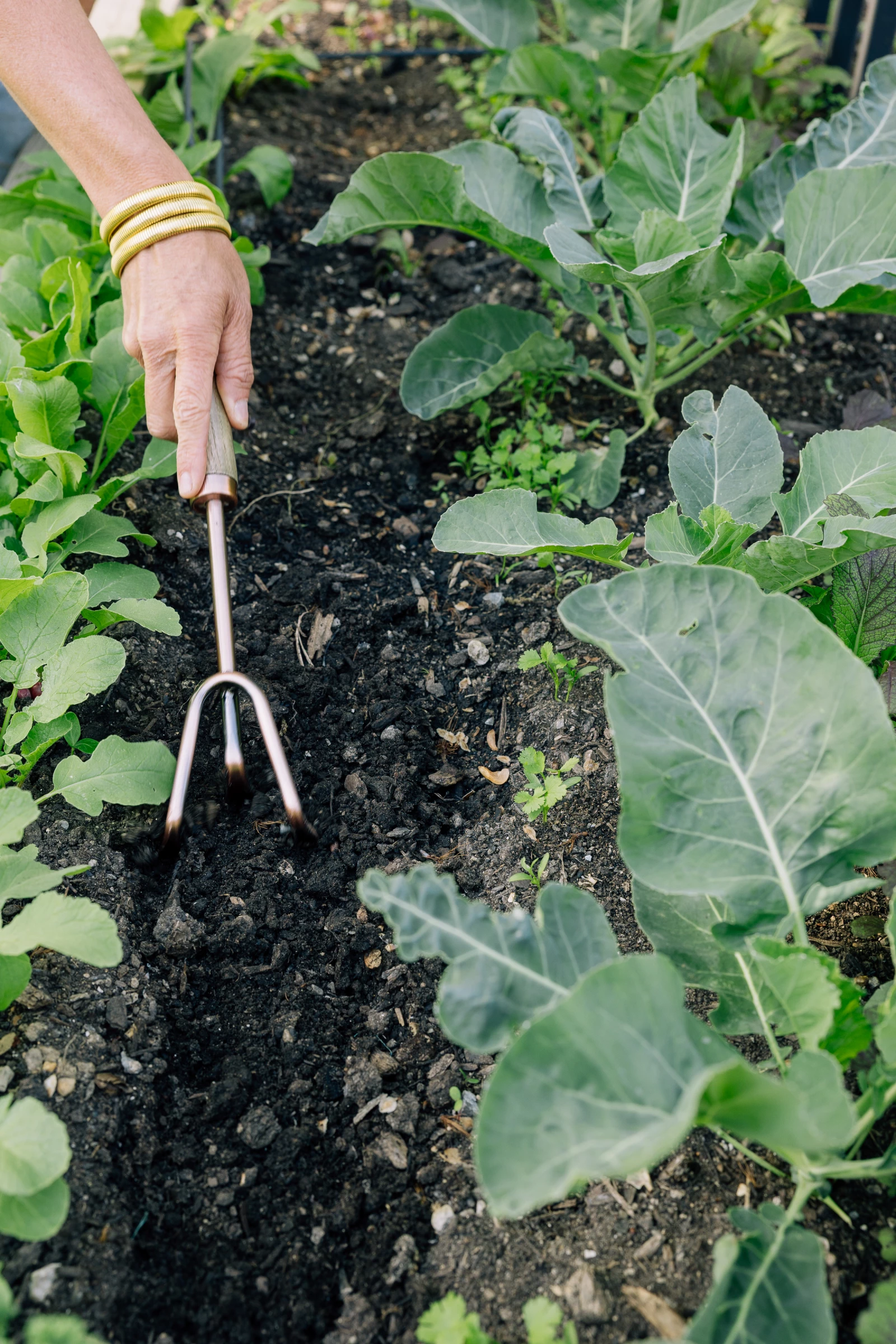
A cultivator is the fastest way to loosen soil
Before I plant anything new in a bed, I like to loosen the top few inches of soil, so roots have an easy path down, and a three-pronged hand cultivator is the tool I reach for. I drag the tines through the surface in short strokes to break up any crust that's formed from watering or rain, work in a little compost, and rough up the soil just enough to make it easy to dig or sow into.
It's also my go-to for evicting weeds before they get comfortable. The curved tines slip right under shallow-rooted weeds and lift them out roots and all, which beats yanking and snapping off just the top and watching the same weed reappear a week later. Ask me how many times I learned that one the hard way.
A cultivator is one of the many tools included in the Gardenary Copper Tool Set.
Small Broom


A hand broom cleans up garden messes
I make enough of a mess in my own garden, but after we install beds for my clients, there’s soil everywhere. It’s hard to present a brand new garden when there’s dirt covering every surface! I use a little hand broom to sweep along the edges of the beds and across the stepping stones to tidy up after myself.
Hori Hori


A hori hori is a garden tool with many uses
This little gem is like three tools rolled into one. It’s basically the Swiss Army Knife of planting. It has a spike to help you break ground easily, which is especially great if you’re working with harder soil. It’s got measurements along its side to help you know how deep you’re planting, and it even has a little pruning saw to cut a stem or a piece of twine.
I love how easy it is to dig a small hole in my garden with my hori hori without disturbing neighboring plants to transplant seedlings or herbs. ("Hori hori" is the onomatopoeia for the digging sound in Japanese.) I also use the spike to create a furrow in the ground when I’m sowing things like beans.
Pruners

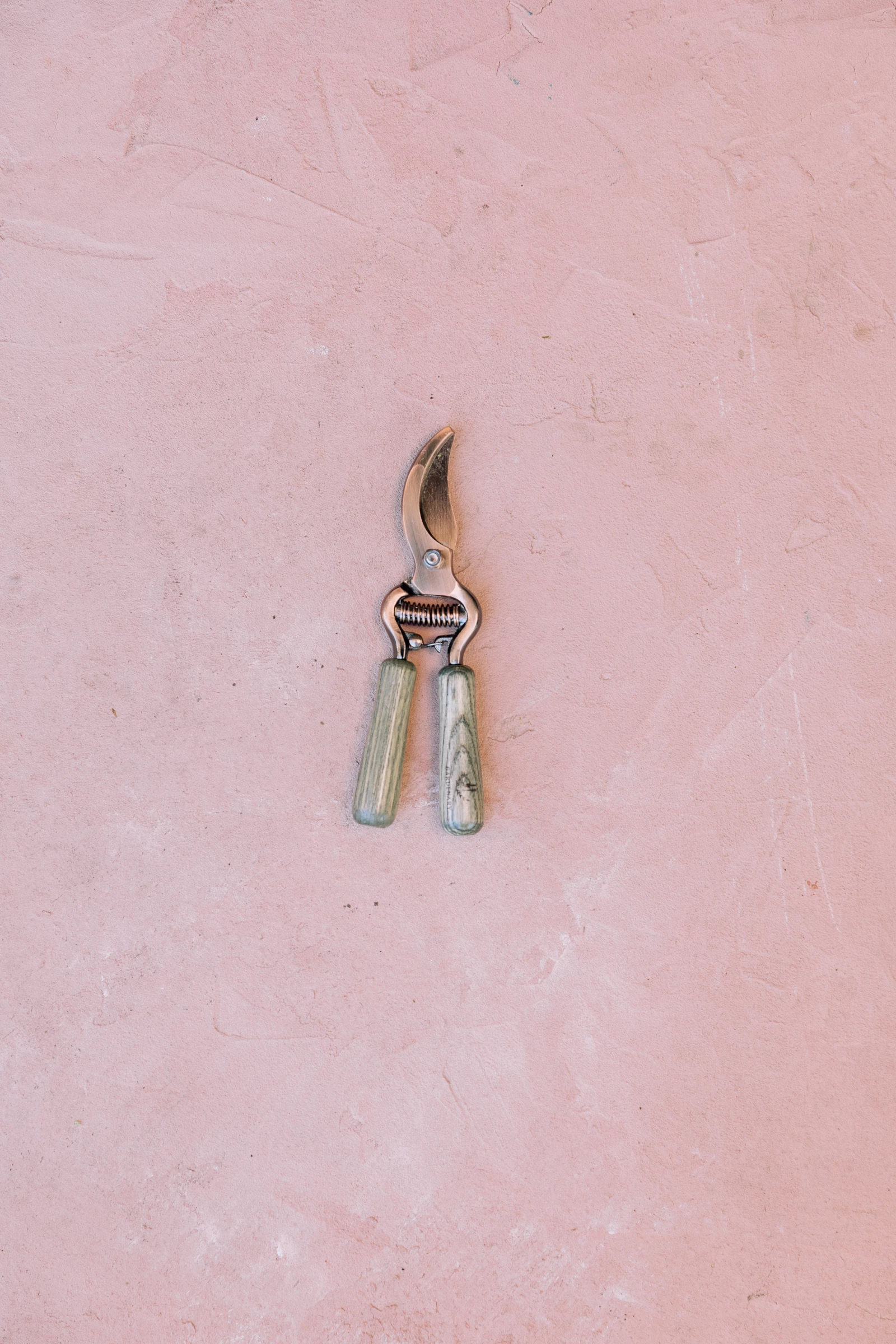
Pruners are must-have garden tools for beginners
Pruners are one of the most-used items in my caddy.
Here's what pruners are doing for me on any given day in the garden:
- Harvesting: cutting herbs, greens, and vegetables cleanly at the stem instead of tearing them off, which keeps the plant healthier and the cut spot from getting damaged.
- Deadheading: snipping spent blooms off flowering plants like zinnias so the plant keeps putting energy into new flowers instead of seed production.
- Thinning: cutting back crowded growth on things like basil or tomatoes so air and light can actually reach the middle of the plant.
- Cleanup: removing yellowing leaves, damaged stems, or anything that looks like it's starting to rot or attract pests, before it spreads to the rest of the bed.
- Season-end cutback: trimming perennial herbs and plants down at the end of the season to set them up for a stronger comeback next time.
Harvest Basket or Trug


A beautiful harvest basket is a garden must-have you'll look forward to using
There are few things more rewarding in the garden than filling a harvest basket with things you've just cut from your garden.
I get asked about my harvest basket constantly. I purchased mine from El Paso Import Co when I was in Houston, but it's no longer available.
Tool Caddy

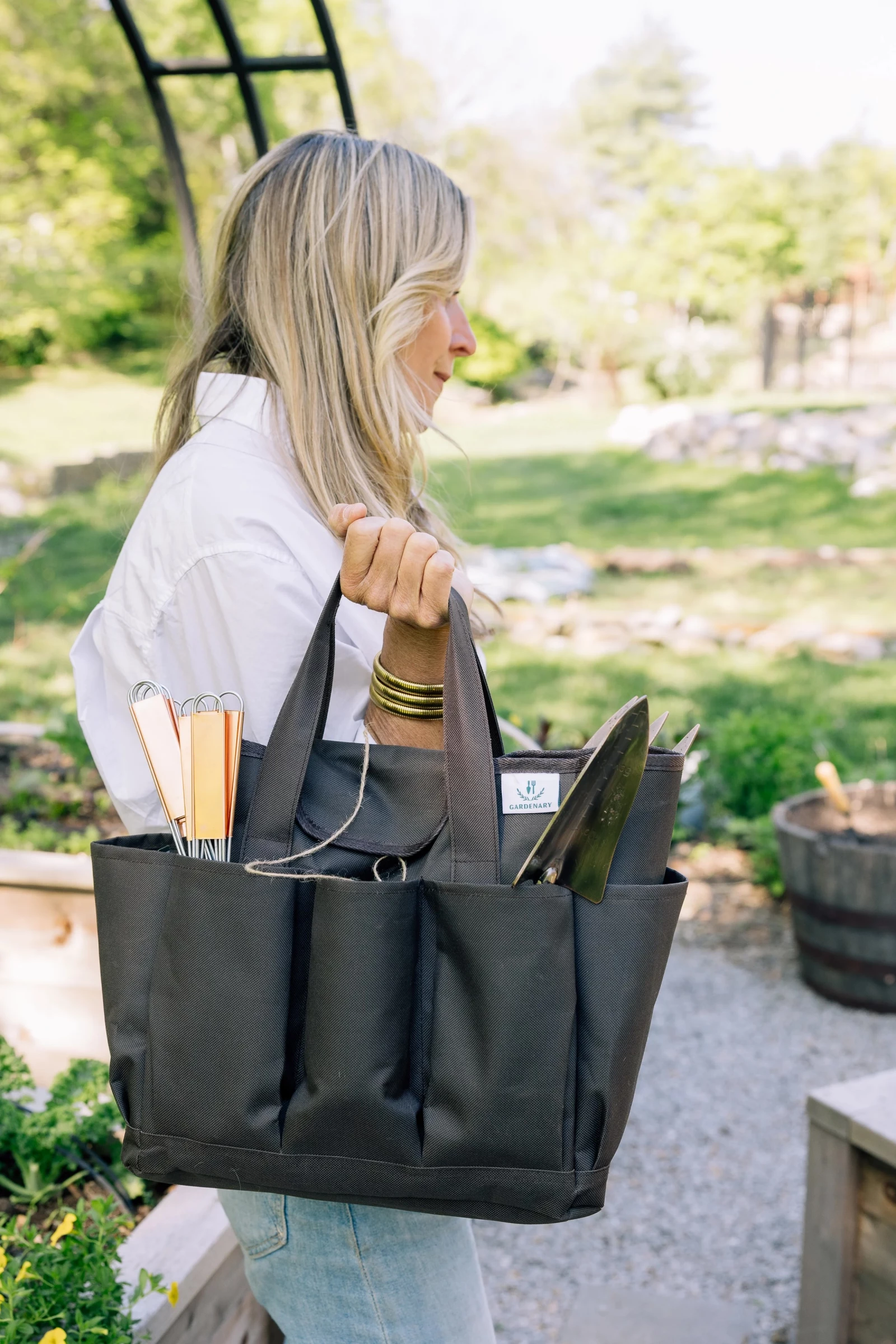
A tool bag with pockets keeps your tools moving with you
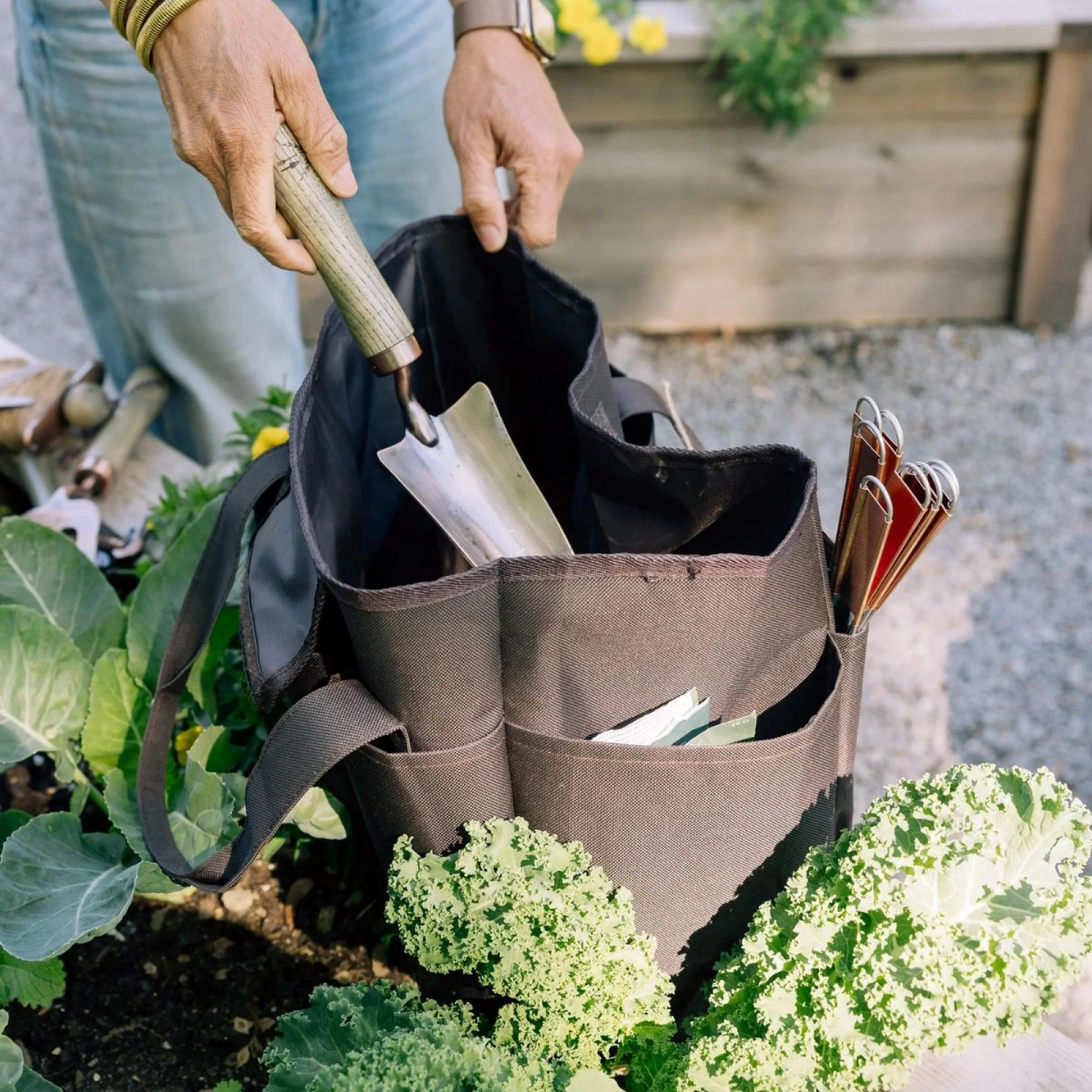
I like garden tool bags with a bunch of individual pockets so my pruners, trowel, and plant tags each have their own spot, and I'm not digging around trying to find what I need with dirt-covered hands.
The real win is not having to walk back and forth every time you need a different tool. If you're working your way down a long row or moving between several raised beds, a bag lets you carry everything you need in one trip and just keep going.
It sounds like a small thing until you've done it the other way for a season and realized how many extra trips you were making.
Gardenary Tool Bag
- Premium, heavy-duty canvas construction
- Structured design that holds its shape
- Foldable for easy storage when not in use
- Spacious interior for everyday garden tools
- Lightweight, durable, and easy to carry
- Designed for both beauty and function
Watering Can or Hose


A watering can or hose is an essential garden tool
Consistent watering makes or breaks a kitchen garden, and how you deliver that water matters almost as much as how often. I reach for a watering can on anything newly planted or growing in containers, since I can control exactly where the water lands and how gently it comes out, which matters when you're working around delicate seedlings. Once things are established, I switch to a hose so I'm not making a dozen trips back and forth to the spigot. Either way, the goal is the same: get water down to the roots, not just the leaves, and do it consistently enough that your plants never have to wonder if help is coming.
Plant Tags

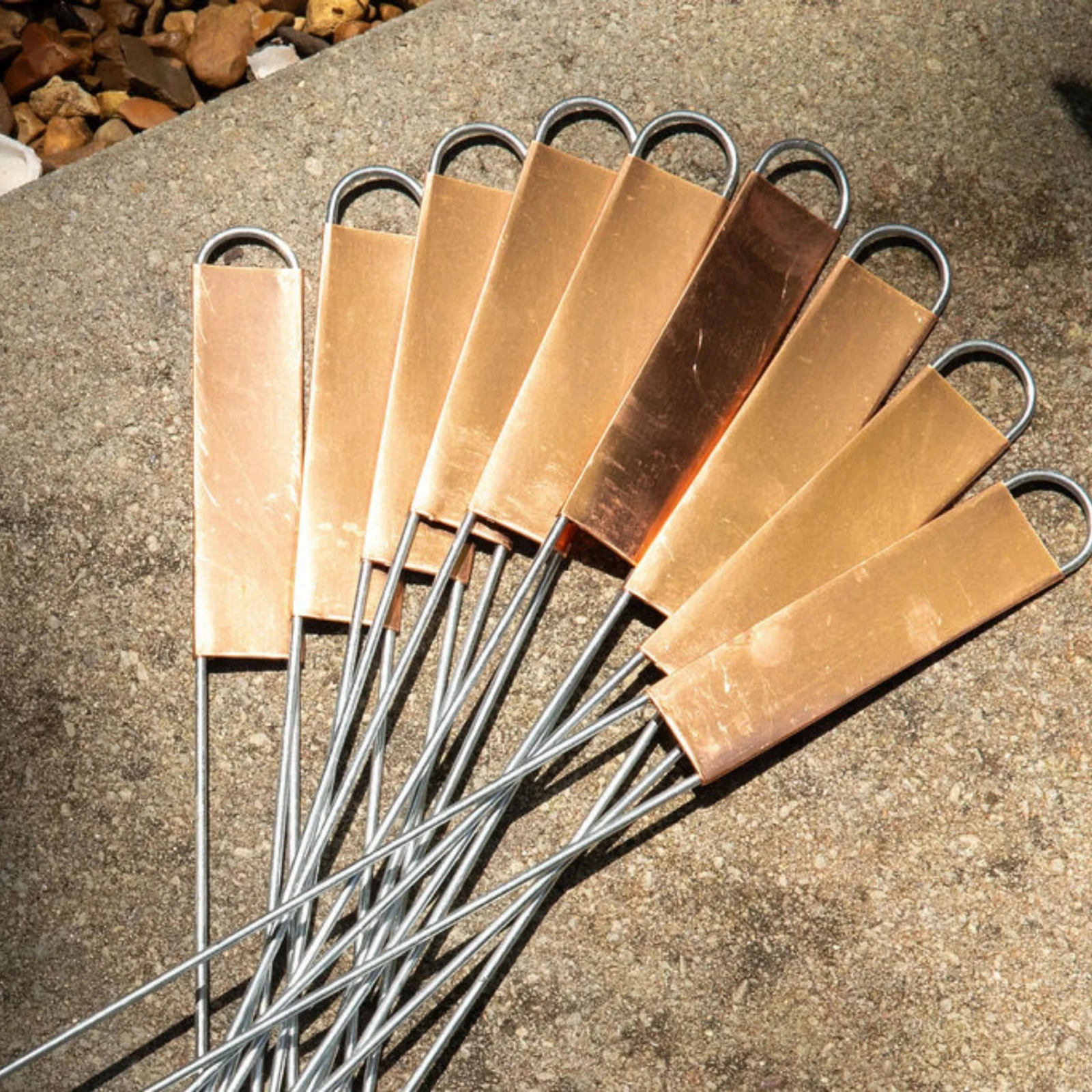
Plant tags mark planting areas
I'll remember where I planted those seeds is one of the many lies we gardeners tell ourselves. And then we double-plant or—even worse, in my opinion—leave spaces with nothing planted.
This is where plant tags, plant labels, and plant markers come in handy. Not only can they serve a very useful function in our garden spaces, but they can also bring a little personality, even charm.
My favorite metal plant tags are here.
Copper Plant Tags
- Set of 10 copper plant labels
- 12” tall double-wire hairpin stake for stability
- Extra-long copper nameplate for easy-to-read labeling
- Ideal for raised beds, in-ground gardens, containers, and flower beds
- Designed for vertical or diagonal writing
Natural Twine


Twine has many uses in the kitchen garden
Twine can be used to tie vining plants like tomatoes to the trellis. Twine made of natural fibers like jute is strong enough to hold plants securely without damaging the delicate vines. Similarly, twine can help you stake and support large bush plants like peppers when they're supporting lots of heavy fruit.
Twine can be used to hang herbs and cut flowers up to dry.
When you're planting, you can stretch twine between two stakes and create your own planting line to help you work in a straight row. If you're growing peas, you could run several rows of twine back and forth to give the little tendrils something to grab onto as soon as they sprout.
Garden Mesh


Garden mesh or ag fab is the best garden tool for organic pest control
Garden mesh fabric is strong and created specifically for pest protection. Honestly though, I've also just bought some tulle cloth from a fabric store and had lots of success using it.
You can find garden mesh, garden netting, and ag fabric at your local garden center (or you can head to your nearest fabric store). These are simple physical barriers that let water, sunlight, and air in, but keep pests out—and you'll be amazed just how effective they can be. The key is to use them from the very moment you plant seeds or seedlings.
Learn more about this easy form of organic pest control.
Scissors and Snips


A pair of dedicated scissors for the garden is a must
Scissors can cut twine, help you thin seedlings at their base to avoid disturbing nearby roots, and harvest herbs and microgreens.
I have several pairs of scissors I use exclusively for gardening. I also have a special pair of herb scissors in the kitchen that I bring out with me to the garden when I'm harvesting greens for my salad bowl so that I can cut up herbs as I go and toss them straight into a colander to rinse and enjoy.


How to clean rusted garden tools
After every use, I wipe my pruners and scissors down with rubbing alcohol and make sure that any garden debris is removed before storing them. It's best to store your tools in a cool, dry place.
If you notice rust starting to form on your garden tools, you have two options.
One, you can soak the tools overnight in equal parts vinegar and water, then wipe them down with a hard-bristled brush or steel wool. Or two, you can apply Bar Keepers Friend and leave the tools to sit for a bit. Either way, make sure to then clean them with dish soap, rinse well, and hang to dry. Mineral oil or WD-40 can help keep tools functioning well once rust has been removed.
Equally important to removing rust is keeping your tools sharp. Hardware stores like Ace Hardware will sharpen dull garden tools for you.


My top three garden tools and their uses
If I could, for whatever reason, only have three tools in my kitchen garden, I would keep my needlenose pruner, my hori hori, and my dibber. Those three tools cover all of my harvesting, pruning, digging, cutting, and planting needs.
So those are my tools of the kitchen gardening trade. I like anything that can make my life a little simpler and easier, don’t you? Whether you’re a gloves-on- or gloves-off-kind of gardener, I hope you can get outside soon and put some of these tools to good use!
7 Tools, Beautifully Designed
The tool set gardeners actually want, made from carbon steel with an ash wood handle and a warm copper finish.
- Bypass pruner for clean, precise harvest cuts
- Needlenose pruner for detail work in tight spaces
- Transplanting shovel for seedlings and planting holes
- Dibber for perfectly spaced seed sowing
- Cultivator for loosening soil and clearing debris
- Hand fork for weeding and working around established plants
- Row marker & planting line for straight, intentional rows
All in a gift box, ready to use.


Keep Reading
10 Reasons You Should Never Use Miracle-Gro in Your Garden
The Best Herbs to Grow in Shade

Are Your Radishes Ready to Harvest? Look for These 3 Signs
What to Plant in October: Vegetables for Every Climate

This Garden Consultant Started From Scratch, Now She's Featured in Martha Stewart