
Join Thousands of Gardeners On the VIP List
Free perks, just for email subscribers:
- 15% Off Your First Order
- Gardening Videos & Articles
- Early Access to Sales
Sign up, check your inbox, then shop with your code.

At a Glance
- The best annual flowers for raised beds earn their space by attracting pollinators, deterring pests, and adding beauty that makes the whole garden more productive.
- Most of these flowers thrive in the same conditions as your kitchen garden crops: full sun, well-draining soil, and consistent moisture.
- Many of these annuals are edible, easy to grow from seed, and will reseed themselves if you let them, giving you free plants the following season.
My Top 10 Annual Flowers for Raised Bed Gardens
I didn't always plant flowers in my raised beds. For a long time, I thought of flowers as purely decorative, like something for the front yard, not the kitchen garden. Then I started noticing what happened when I added them: more bees, fewer aphids, more color, more life. And honestly, I enjoyed being in my garden more. My garden went from looking like a productive vegetable patch to something eye-catching and elegant.
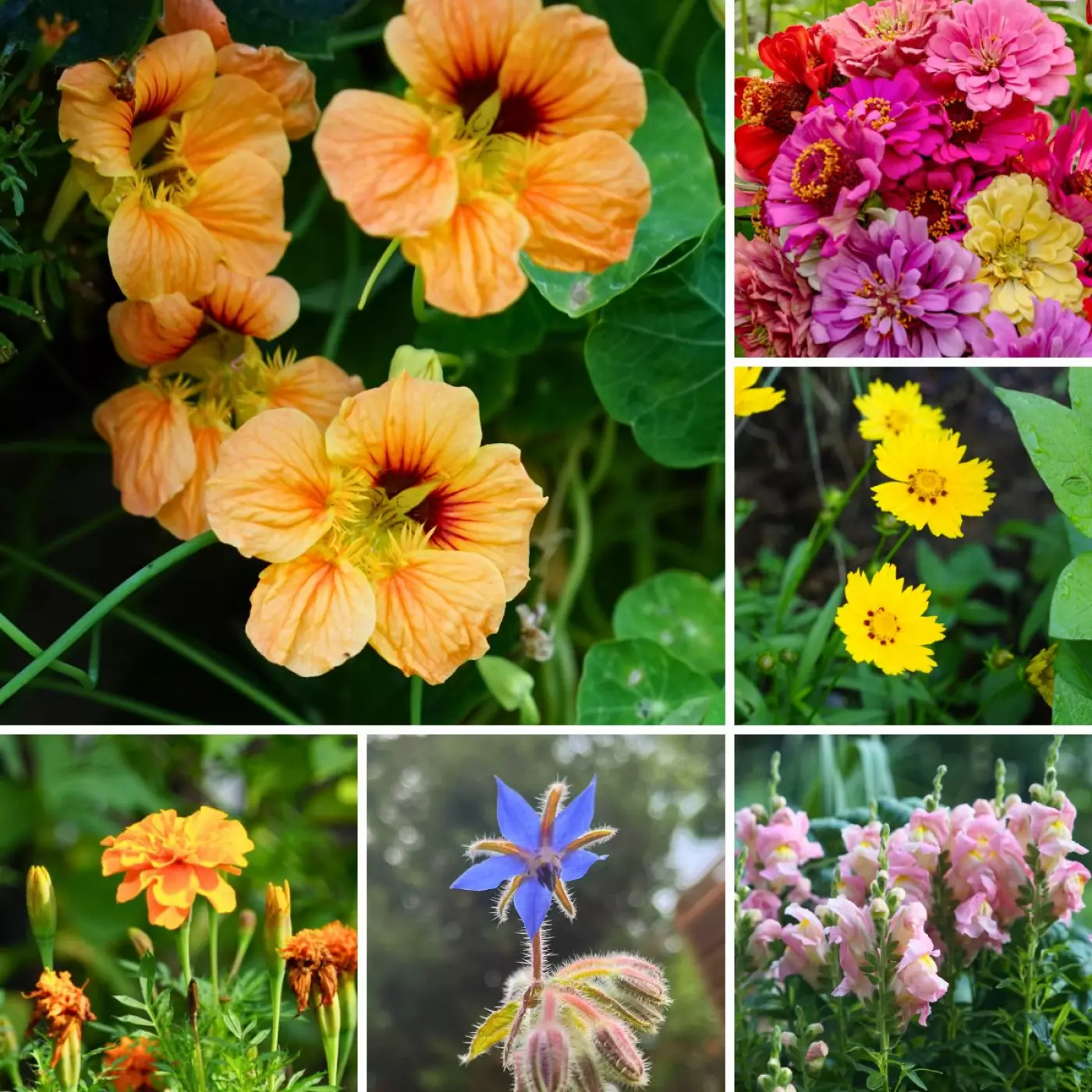
Here are my favorite annual flowers for raised beds:
- Zinnias
- Marigolds
- Nasturtiums
- Cosmos
- Calendula
- Snapdragons
- Sweet Alyssum
- Borage
- Coreopsis
- Petunias
Zinnias

1. Zinnias
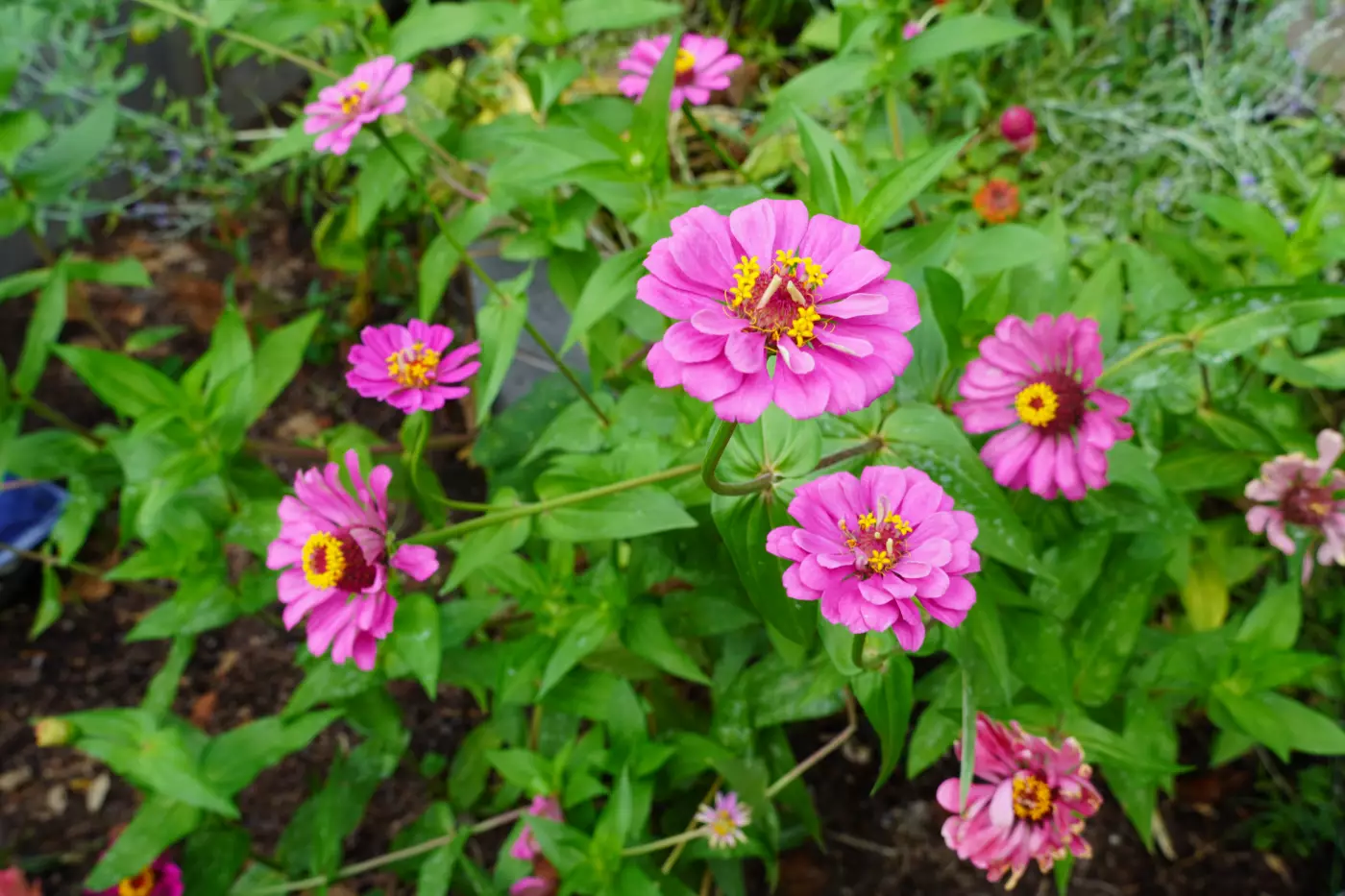
Zinnias are everything a kitchen garden flower should be — easy, beautiful, productive, and genuinely useful.
Zinnias bloom in a range of colors so wide it's almost overwhelming: red, orange, yellow, pink, coral, white, bi-color, and everything in between. They grow quickly from seed, bloom prolifically from midsummer through frost, and look stunning both in the garden and in a vase on the kitchen table. My kids used to race to cut the first zinnia of the summer when they were little — it was always a fun moment.
Why zinnias are a raised bed essential:
- They attract butterflies in significant numbers — monarch butterflies and painted ladies are particularly drawn to them
- Provide nonstop color from midsummer through the first frost
- Zinnias make excellent cut flowers with a long vase life — the more you cut, the more they bloom
- Grow easily and quickly from seed, and they grow well when direct-sown in the bed
- They're available in dwarf varieties perfectly sized for raised bed borders
- Zinnias thrive in heat — one of the best summer flowers when other things are struggling
Marigolds

2. Marigolds
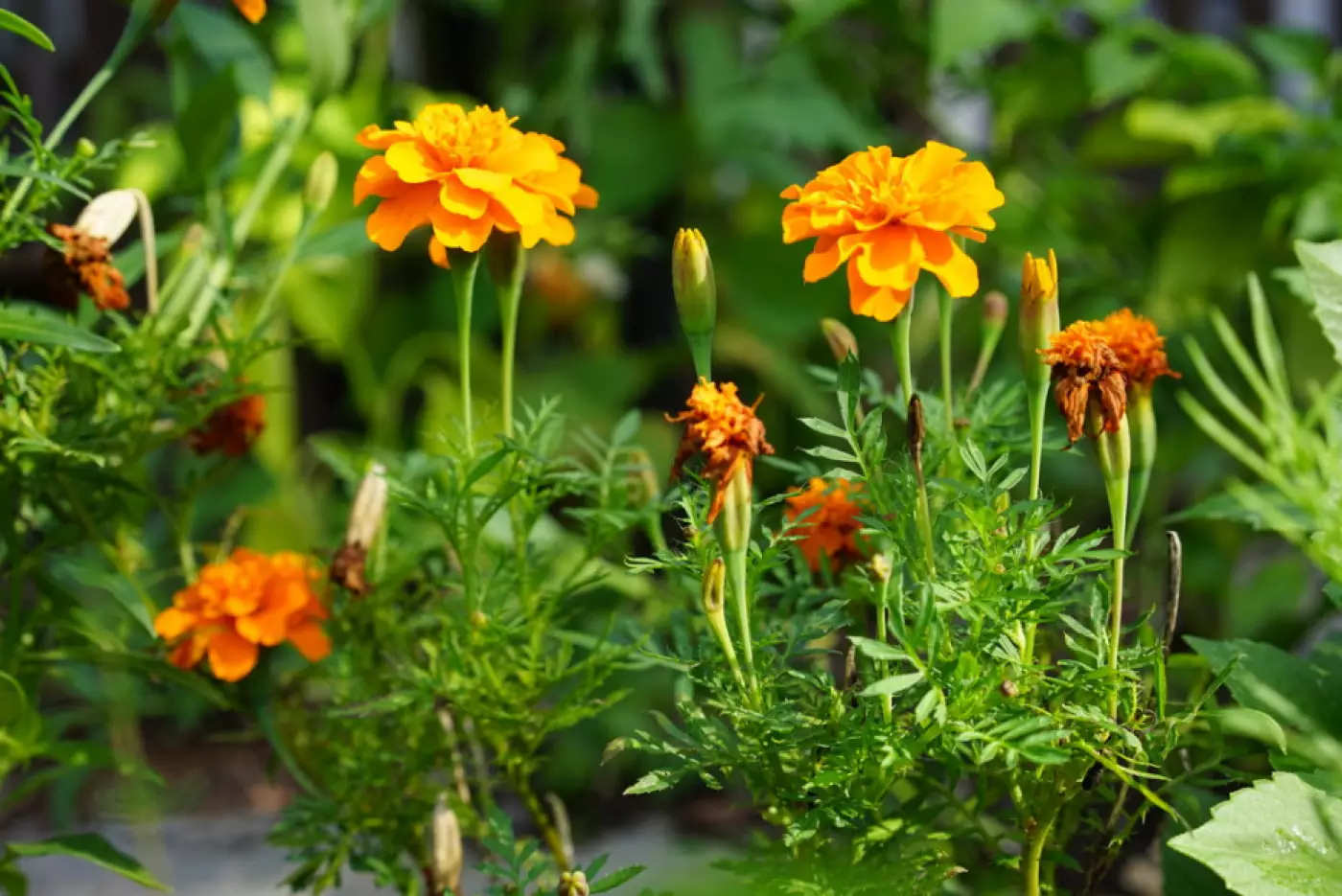
Marigolds are the most hardworking flower in the kitchen garden, and I don't say that lightly. They're beautiful, but they are also doing serious pest control work while they bloom, which makes them about as close to a perfect raised bed flower as you can get.
The scent that marigolds release — from both their foliage and their roots — actively deters aphids, whiteflies, and even soil nematodes. French marigolds (Tagetes patula) contain a compound called alpha-terthienyl in their roots that suppresses root-knot nematodes. That's a mouthful, but what it means practically is that your plants are healthier just from having marigolds nearby.
Why marigolds are a raised bed essential:
- Deter aphids, whiteflies, and nematodes through their natural root and foliage compounds
- Bloom continuously from early summer through frost with minimal deadheading
- Easy to grow from seed — even for beginners
- French and gem marigold varieties stay compact and perfectly sized for bed borders
- Attract beneficial predatory insects alongside pollinators
- Virtually indestructible once established
Start your dream garden. Watch the free class!
Nasturtiums

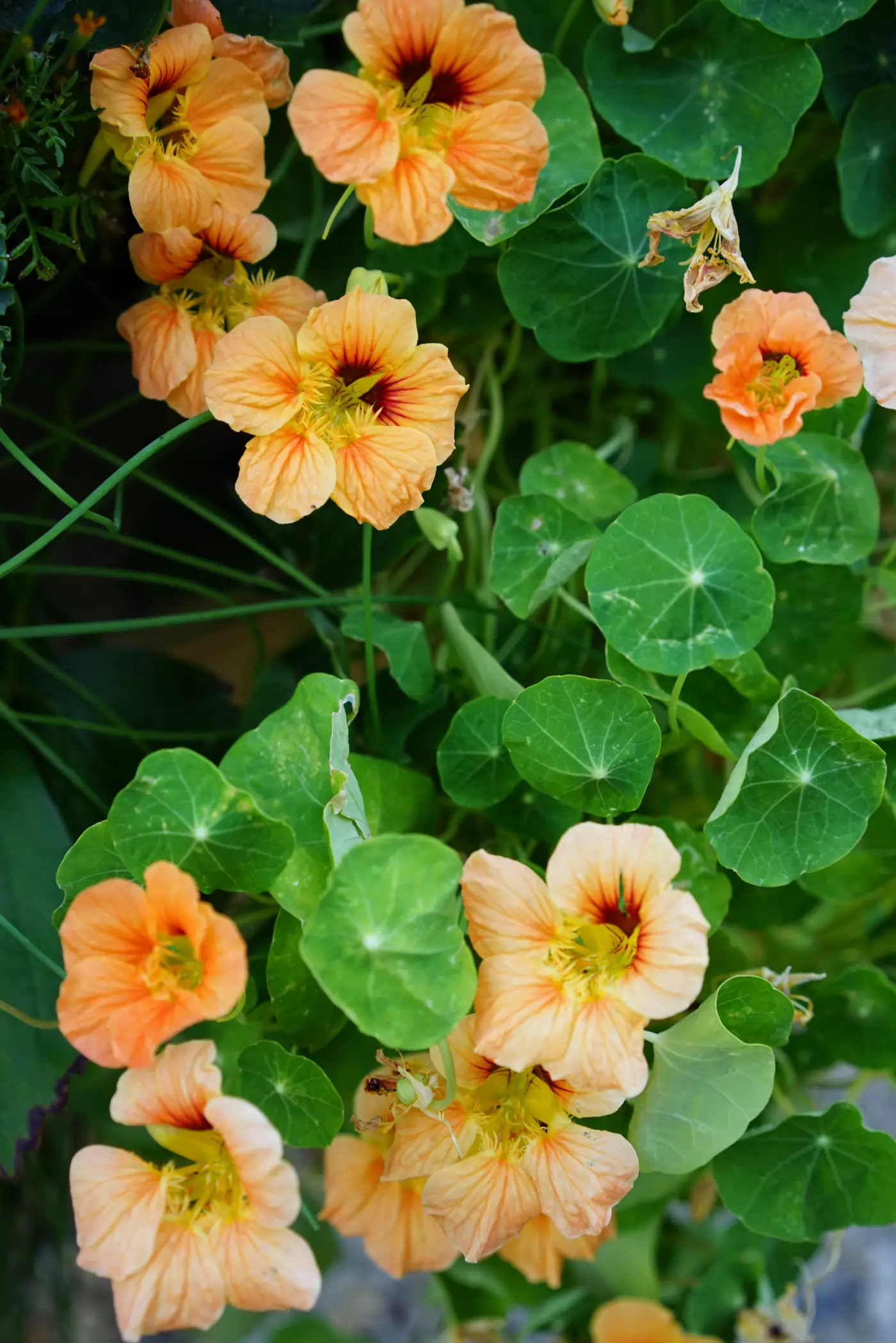
3. Nasturtiums
Nasturtiums are one of those flowers that feel almost too good to be true. They're beautiful, they're edible from flower to leaf to seed pod, and they attract pollinators.
Nasturtiums are extra special because they act as a trap crop. They lure aphids away from your vegetables and onto themselves instead.
The flowers have a bright, peppery flavor that makes them a useful kitchen ingredient. Toss them in salads, float them on soups, use them as a garnish. The seed pods, when young and green, taste remarkably like capers. The whole plant is a gift.
Why nasturtiums are a raised bed essential:
- Act as a trap crop for aphids — drawing pests away from vulnerable vegetables
- Every part of the plant is edible — flowers, leaves, and seed pods
- Attract pollinators and beneficial predatory insects
- Grow easily and quickly from seed direct-sown in the bed
- Spill beautifully over the edges of raised beds
- Thrive in slightly poor soil — actually bloom better with less fertilizer
Cosmos

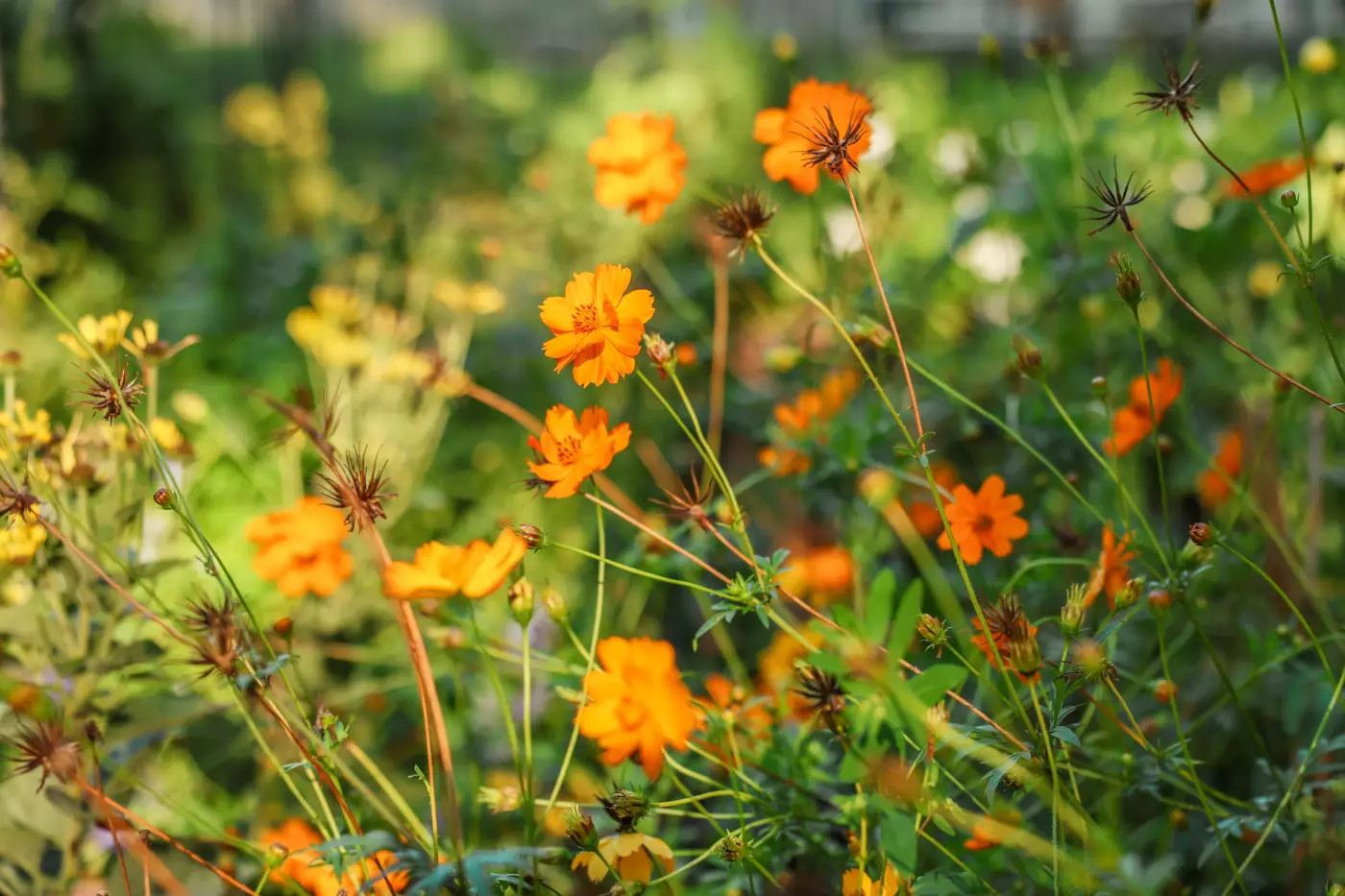
4. Cosmos
Cosmos are the airy, elegant flower that makes a kitchen garden look like it belongs in a magazine. Their tall, feathery stems and delicate daisy-like blooms add a softness and movement to the garden that no other flower quite replicates. And they attract pollinators beautifully. Bees find them almost irresistible.
I love cosmos for their height. In a raised bed, they add that vertical interest that makes the whole design feel intentional and layered. Plant them toward the center or back of the bed and let them reach upward while the lower-growing flowers fill in around their feet.
Why cosmos are a raised bed essential:
- Attract bees and beneficial insects reliably throughout the season
- Add beautiful height and vertical interest to the raised bed design
- Extremely low maintenance once established — they thrive on neglect
- Bloom from summer through frost with minimal deadheading
- Grow quickly and easily from seed direct-sown in the bed
- Self-seed generously — let a few go to seed, and you'll have volunteer plants next season
Calendula

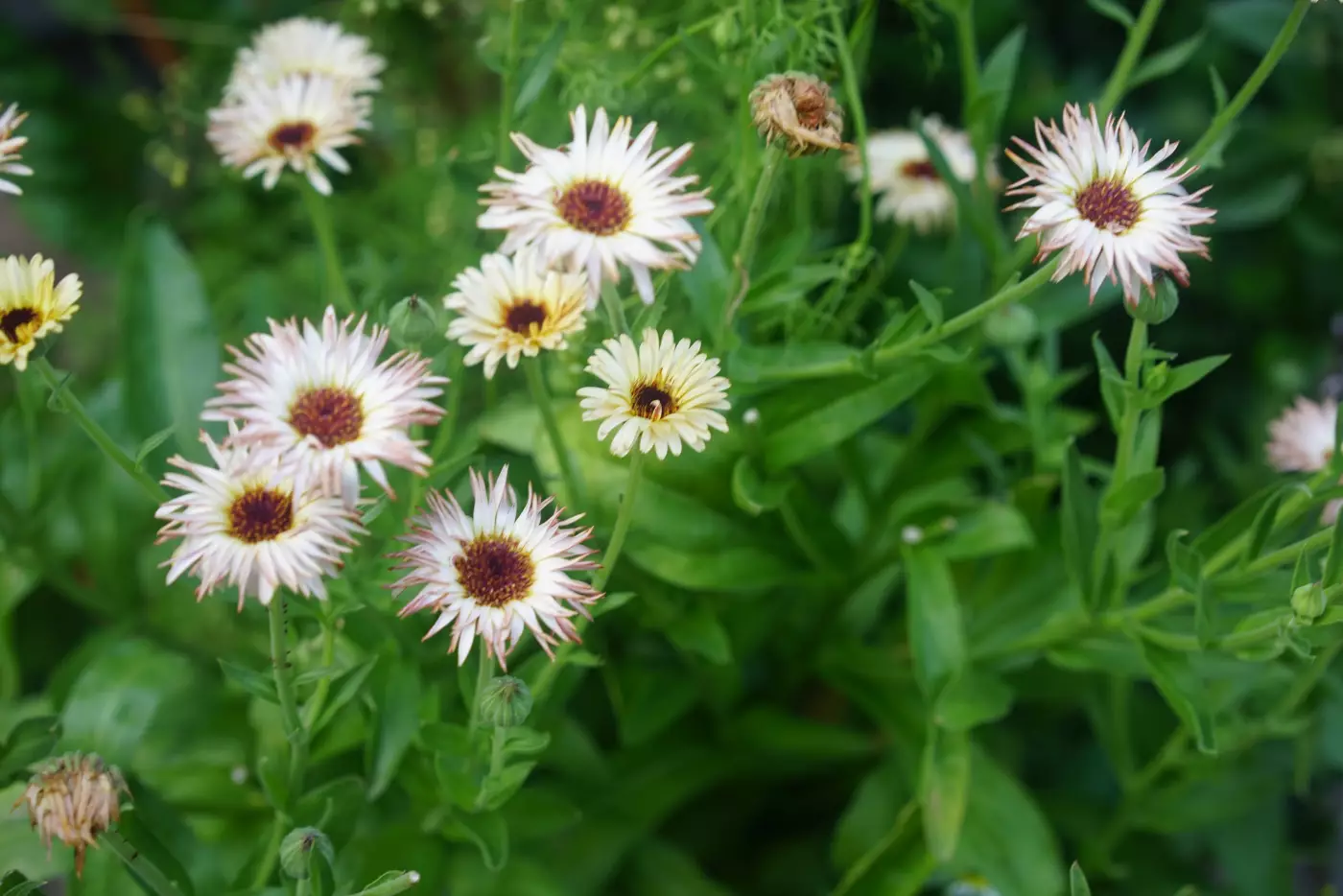
5. Calendula
Calendula, sometimes called "pot marigold", is one of the most useful flowers you can grow in a kitchen garden, and it has been grown alongside vegetables for centuries for good reason. Studies have shown that calendula helps repel aphids, brassica-eating caterpillars, and armyworms. And the flowers are edible, with a mildly spicy flavor that works beautifully in salads and soups.
Calendula is also one of the most forgiving flowers in the garden. It grows in nearly any soil, tolerates light shade, and blooms for an impressively long season. It's an excellent choice for gardeners who want reliable color with minimal fuss.
Why calendula is a raised bed essential:
- Research supports its ability to repel aphids, caterpillars, and armyworms
- Edible flowers add color and mild spice to salads, soups, and garnishes
- Grows in nearly any soil, including less fertile conditions
- Tolerates light shade — useful in beds where taller crops create some shadow
- Direct sows easily and often reseeds for the following season
- Blooms from cool spring weather all the way into fall
Snapdragons

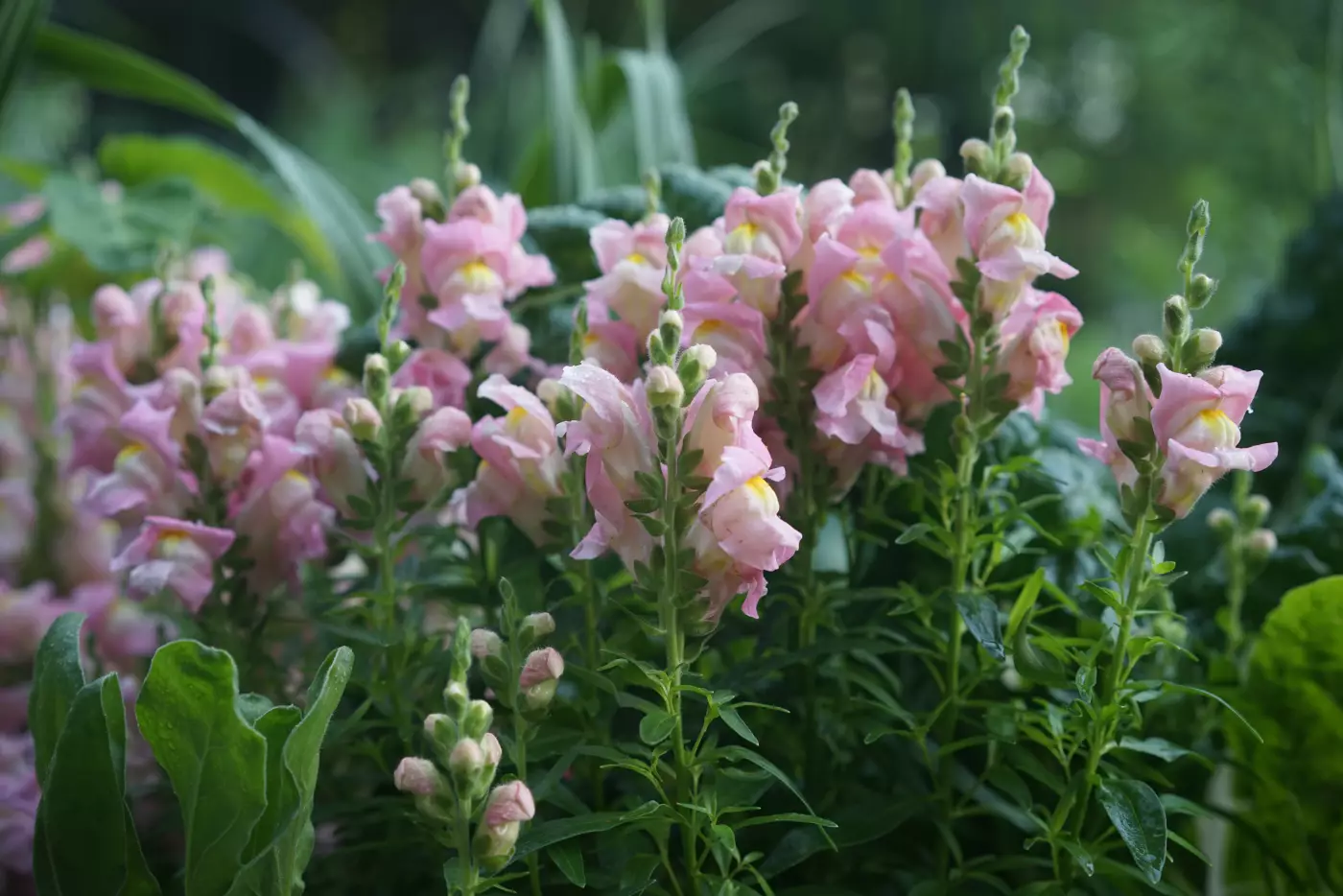
6. Snapdragons
Snapdragons are my favorite cool-season flower — full stop. When everything else is still waking up and the spring garden is just getting going, snapdragons are blooming in full color, attracting the first bees of the season, and making the whole bed look alive. I've taken some of my favorite garden photos ever when snapdragons are blooming right next to spring greens.
The bees don't just visit snapdragons — they go inside them. The bloom structure is designed for bumblebees specifically, who are heavy enough to push the flower open. Watching a bee disappear into a snapdragon is one of those small, genuinely delightful garden moments.
Why snapdragons are a raised bed essential:
- One of the best cool-season flowers — blooms in temperatures that would stop most other flowers
- Attract early season pollinators when bees need food sources most
- Available in a full range of colors and heights to suit any bed design
- Compact varieties fit perfectly along raised bed borders
- Deadheading spent blooms encourages the plant to rebloom two or three more times
- Excellent cut flowers with a long vase life
Sweet Alyssum

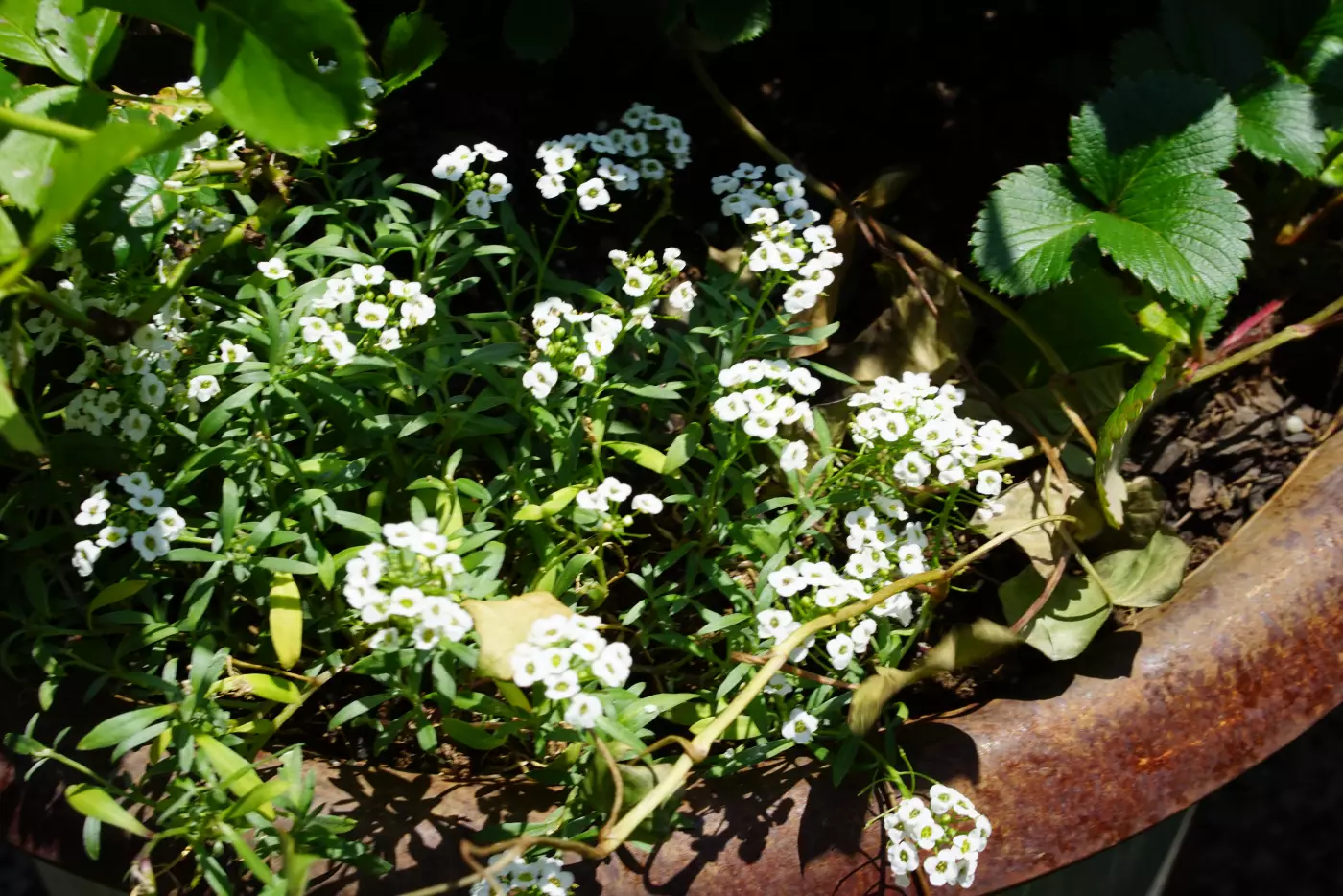
7. Sweet Alyssum
Sweet alyssum is small, low-growing, and easy to overlook in a catalog — but in a raised bed, it is one of the most strategic flowers you can plant. Its tiny blooms are magnets for hoverflies, whose larvae eat aphids in significant quantities. Planting alyssum near aphid-vulnerable crops like lettuce and kale is one of the most effective organic pest management moves available to a kitchen gardener.
The honey-like fragrance is also genuinely lovely. Walk past a raised bed edged with sweet alyssum on a warm morning, and the scent will stop you in your tracks.
Why sweet alyssum is a raised bed essential:
- Attracts hoverflies whose larvae are voracious aphid predators — excellent organic pest control
- Low-growing habit makes it perfect for edging without shading taller crops
- Honey-like fragrance attracts a wide range of beneficial insects
- Grows quickly from seed and fills in gaps between other plants beautifully
- Thrives in cool weather and tolerates light frost
- Blooms almost continuously with minimal care
Borage

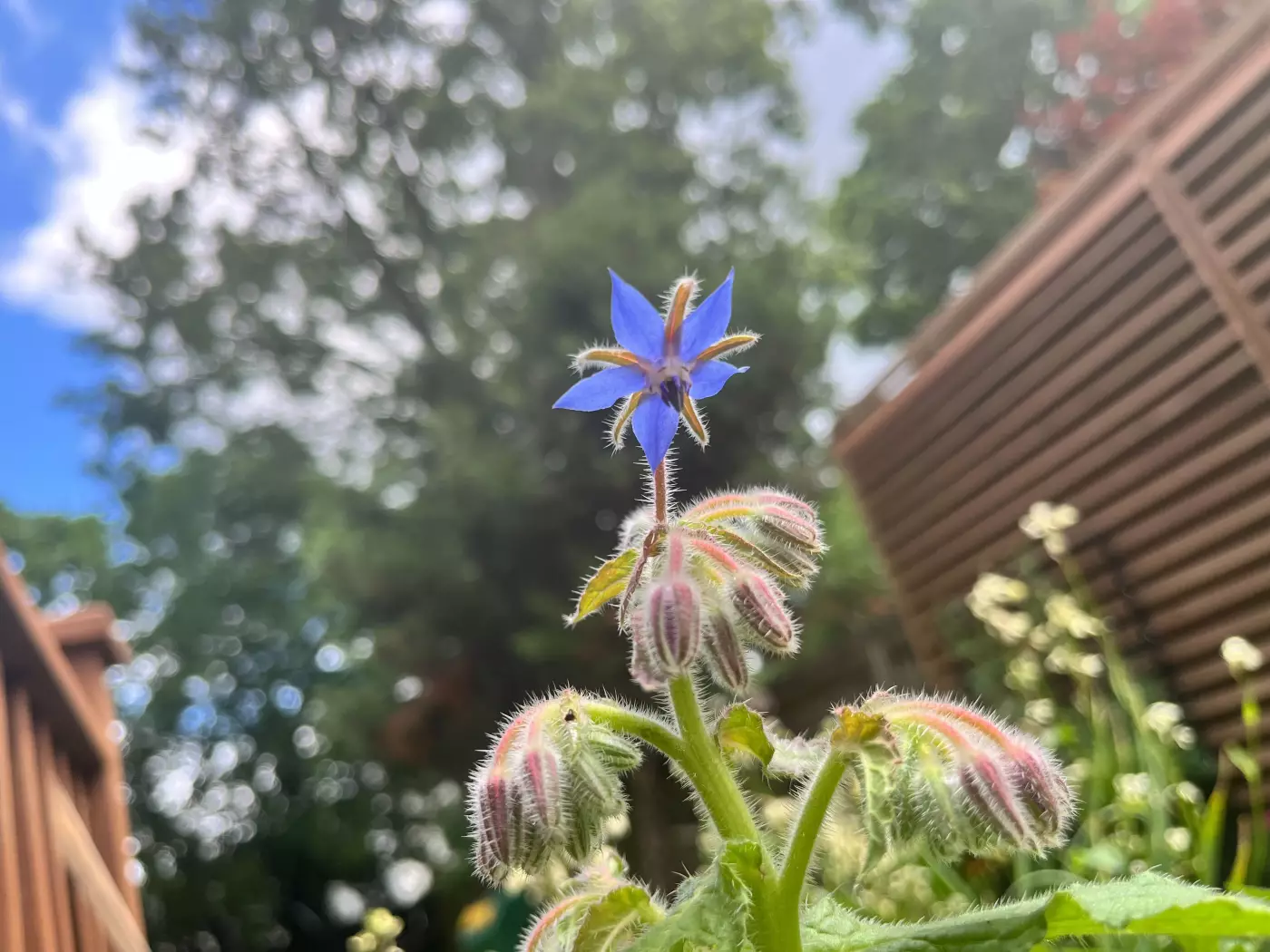
8. Borage
Borage is the flower that experienced kitchen gardeners swear by and beginners often haven't heard of — and that gap is worth closing. Its striking star-shaped blue flowers are one of the most beautiful things in a summer garden, and its relationship with pollinators is exceptional. Bees find borage almost irresistible.
Borage is also a companion plant with a long history alongside tomatoes and squash. It's said to deter tomato hornworm and cabbage worms, and gardeners who grow it consistently report healthier vegetable plants nearby. The flowers are edible with a mild cucumber flavor — gorgeous frozen into ice cubes or floated in a summer drink.
Why borage is a raised bed essential:
- One of the best bee-attracting plants available — bees visit borage flowers repeatedly throughout the day
- Companion plant with documented benefits near tomatoes and squash
- Star-shaped blue flowers are strikingly beautiful and unique in the garden
- Edible flowers with a mild cucumber flavor — great for garnishes and drinks
- Self-seeds prolifically — plant it once and it will return year after year
- Grows quickly from direct-sown seed with minimal care
Coreopsis

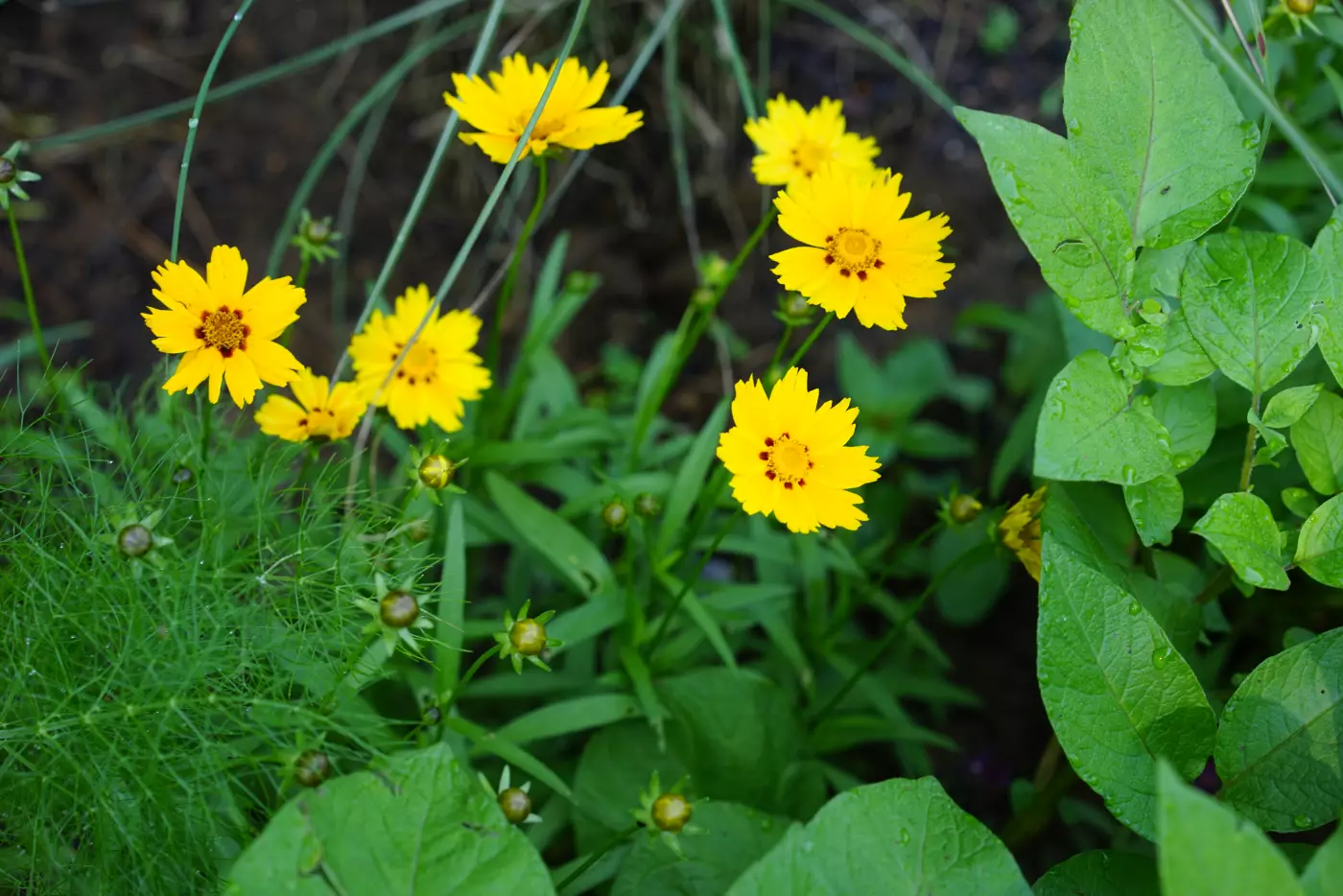
9. Coreopsis
Coreopsis, sometimes called tickseed, is one of the most cheerful, sun-drenched flowers you can add to a raised bed. Its bright yellow and gold daisy-like blooms are almost impossibly sunny, and it blooms for an extraordinarily long season, often from late spring all the way through fall with very little prompting.
Annual coreopsis varieties work beautifully in raised beds because they stay relatively compact while producing an abundance of blooms. They're drought-tolerant once established, which makes them a great choice for beds that might get inconsistent watering during the peak of summer.
Why coreopsis is a raised bed essential:
- Extremely long bloom season — one of the longest flowering annuals available
- Attracts native bees, butterflies, and beneficial insects consistently
- Drought-tolerant once established — forgiving during dry summer stretches
- Bright, cheerful colors add warmth and energy to the bed design
- Grows easily from seed direct-sown in the bed
- Requires almost no maintenance once established — deadhead occasionally for more blooms
Petunias

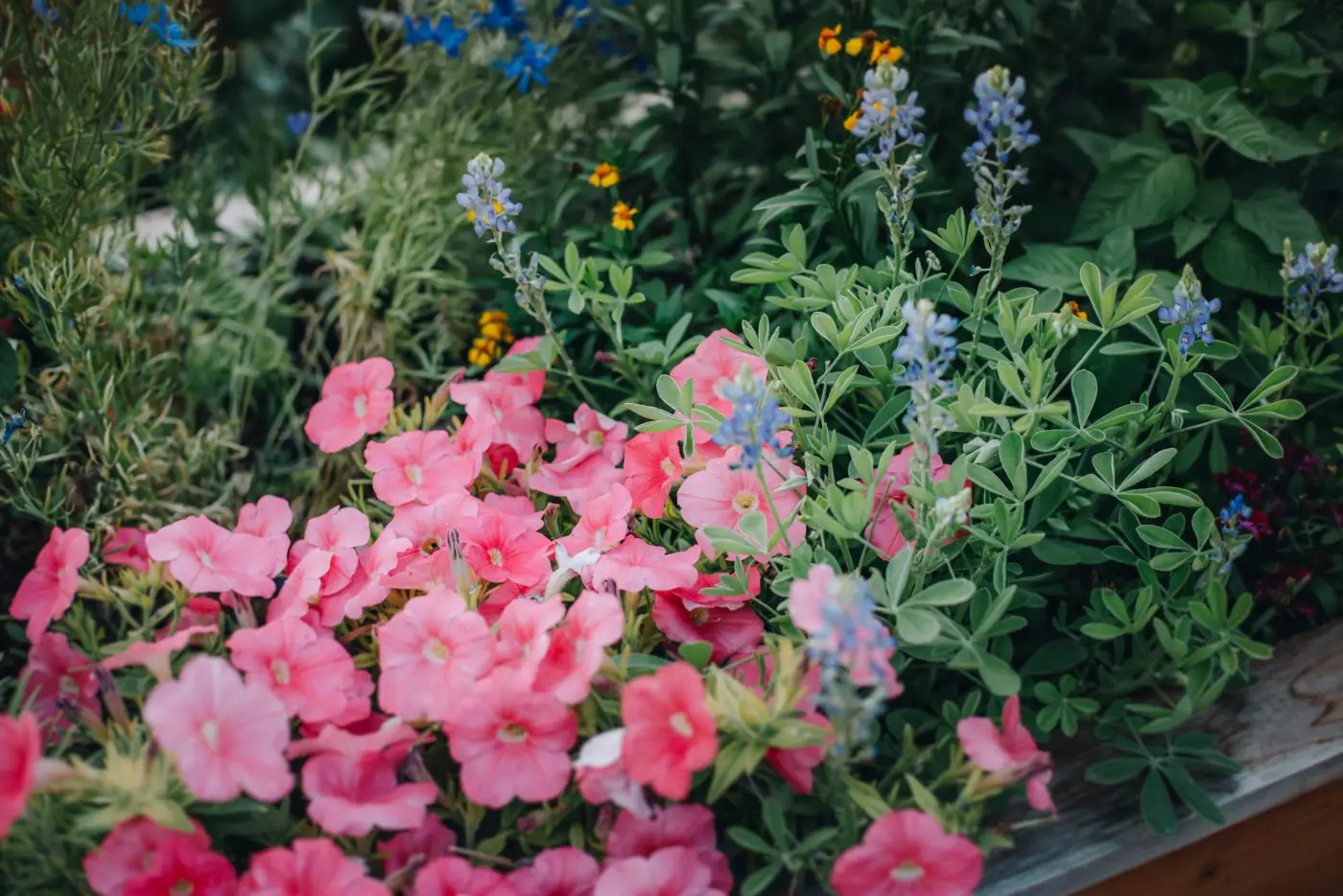
10. Petunias
Petunias might seem like the kind of flower you'd find in a window box rather than a kitchen garden — and honestly, that's exactly why I love surprising people with this one.
What most people don't know about petunias is that they're one of the better pest-deterring flowers you can plant. Their sticky stems and foliage naturally trap small insects, and their scent actively repels aphids, squash bugs, and tomato hornworms — three of the most common and frustrating kitchen garden pests. Plant them near your tomatoes, squash, or eggplant and let them do their quiet, effective work.
Why petunias are a raised bed essential:
- Repel aphids, squash bugs, and tomato hornworms through their natural scent and sticky foliage
- They make great "spillers" trailing beautifully over raised bed edges, adding color at every angle
- Available in an enormous range of colors — easy to match any garden aesthetic
- Bloom continuously from late spring through frost with minimal deadheading
- Widely available as transplants, making them one of the easiest flowers to add mid-season
- Compact varieties stay tidy in beds without crowding neighboring crops
Create a Productive Kitchen Garden—On Your Own Schedule
Kitchen Garden Academy is a self-paced video course that gives you a complete, step-by-step system to design, build, and grow an organic raised bed garden the Gardenary way. This self-paced course walks you through every phase of gardening from choosing your layout to planting and harvesting with ease.
Perfect for gardeners who want a clear plan and proven methods.
Ready to Build the Kitchen Garden These Flowers Deserve?
Flowers are one piece of a beautiful kitchen garden, but they work best when the whole system is in place.
If you're ready to create and grow a raised bed kitchen garden that's as stunning as it is productive, the Kitchen Garden Academy Course gives you the complete Gardenary method from start to harvest.
What you'll learn:
- How to choose the best location and layout for your kitchen garden
- How to design raised beds using Gardenary's proven principles
- What materials are worth investing in, and what to skip
- Step-by-step guidance for installing your garden yourself
- How to plant intensively and seasonally for maximum harvests
- How to reduce weeding, fertilizing, and pest pressure naturally
Final Tips for Growing Annual Flowers in Raised Beds
Before you start tucking flowers into your beds, a few things are worth knowing:
- Plant flowers along the border first — herbs and flowers along the outer edge of each raised bed creates a protective perimeter for your crops
- Interplant throughout the bed — don't limit flowers to the edges. Weave them between vegetables for maximum pollinator activity and pest deterrence
- Choose flowers that won't shade your crops — tall flowers like cosmos and sunflowers go toward the north side of the bed; low-growing flowers like alyssum and nasturtiums go along the south-facing edge
- Let some go to seed — many of these flowers will self-seed if you let a few blooms go to seed at the end of the season. Free plants next year
- Deadhead regularly — removing spent blooms keeps most of these flowers producing all season long
More About Flowers
Sources
- "Companion Planting with Annual Flowers" — https://www.almanac.com/companion-planting-guide-vegetables
- "Calendula as a Companion Plant" — https://www.growveg.com/guides/best-annual-flowers-for-your-vegetable-garden/