
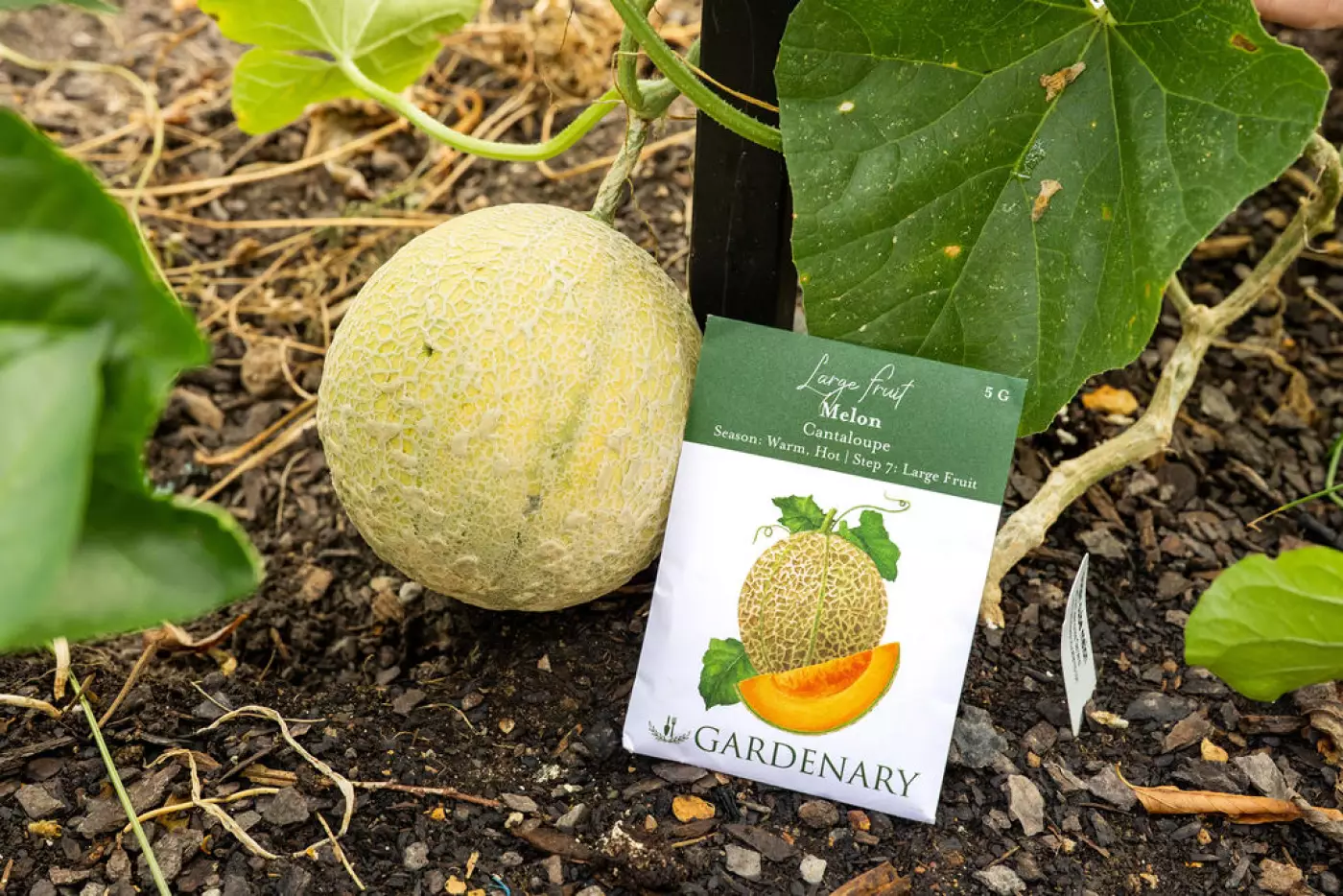
At a Glance
- Cantaloupe can be direct sown after your last frost date once soil temperatures reach at least 65 to 70°F, and it takes around 70 to 90 days to mature.
- Cantaloupe vines are vigorous and sprawling, but they don't need to take over your garden. You can plant them at the edge of a raised bed and let the vines trail into the pathway or trellis them.
- Harvest timing is everything: a ripe cantaloupe slips easily off the vine, smells sweet from a foot away, and has a cream or yellow patch on the underside.
There is nothing quite like biting into a cantaloupe you grew yourself. When I was running my garden business in Houston, cantaloupe was one of the crops clients were always most surprised by. You can grow these? In a raised bed?! Yes. Yes, you can!
Here's everything you need to know.
Key Takeaways: Basics You Need to Know Before You Plant
- Days to maturity: 70 to 90 days from seed
- Soil temperature to plant: 65 to 70°F minimum
- Sun needed: 8 or more hours daily
- Spacing: 36 inches between plants
- Water needs: 1 to 2 inches per week, deep and infrequent
- Fruit per plant: 2 to 4 melons per vine
- Best growing climates: Warm and mild — hot summers ideal

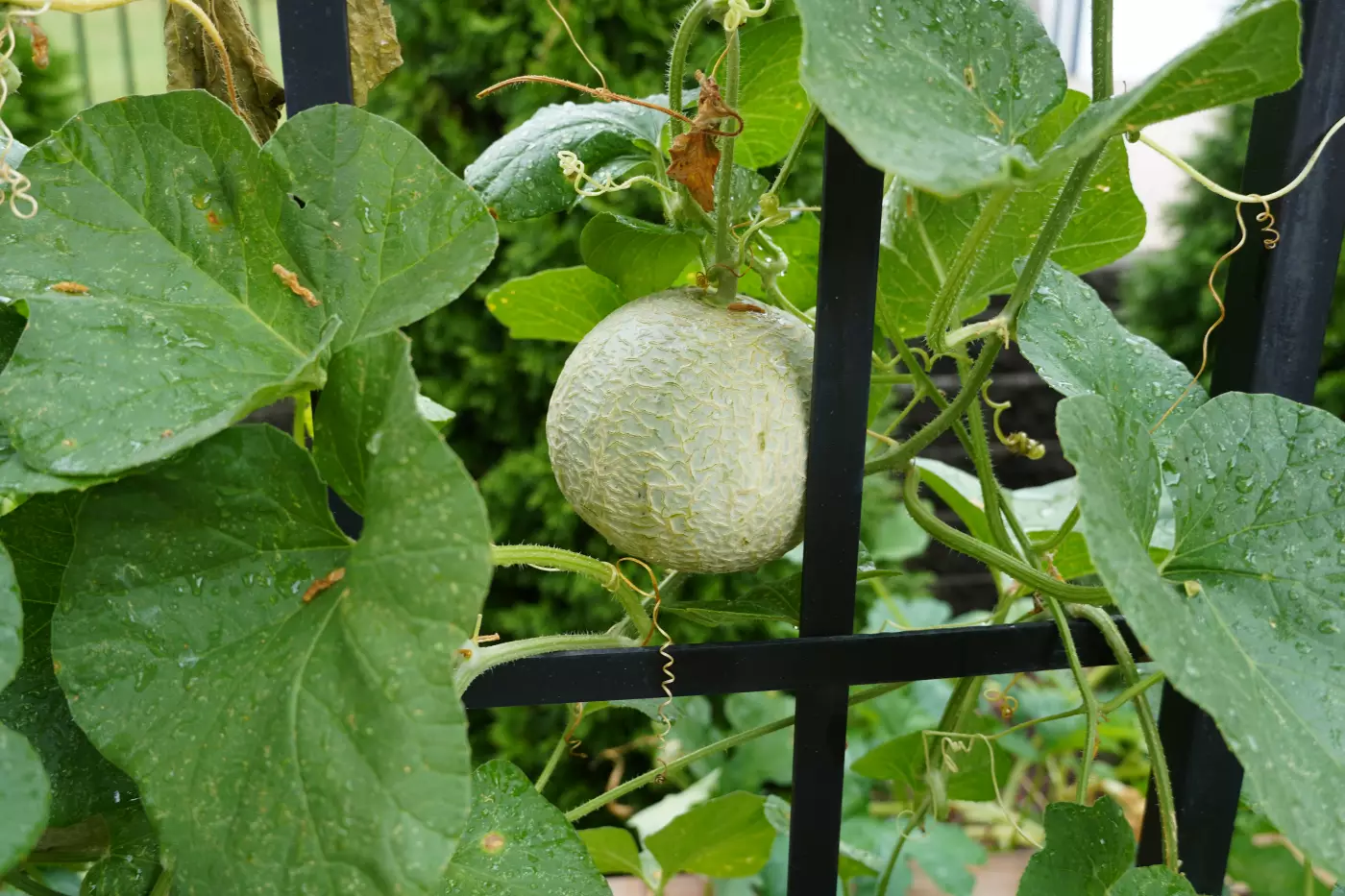
Cantaloupe 101: Understanding What You're Growing
Cantaloupe is a warm-season fruiting vine in the cucurbit family, which is the same family as cucumbers, zucchini, squash, and watermelon. It loves heat, hates frost, and produces sprawling vines that can reach 5 to 6 feet or longer.
Cantaloupe Needs:
Time: Cantaloupe is a long-season crop.
Most varieties need 70 to 90 days of warm weather from seed to harvest. Timing your planting correctly is the single most important thing you can do.
Space: The vines sprawl.
You don't need to give your entire raised bed to cantaloupe. Plant at the edge and let the vine trail over the side into the pathway. Only the roots need to be inside the bed. Or, believe it or not, you can trellis your cantaloupe!
Nutrient-rich Soil: It's a heavy feeder.
Cantaloupe needs rich, fertile, well-draining soil and consistent nutrition throughout the season.
Pollinators: Pollination is required for fruit.
Cantaloupe produces separate male and female flowers and needs bees or hand pollination to set fruit. Plant flowers nearby — zinnias, marigolds, and cosmos are excellent companions for attracting pollinators.
When to Plant Cantaloupe from Seed
This is the most critical piece of growing cantaloupe successfully. Get the timing right and everything else falls into place.
The Direct Answer on Timing
Direct sow cantaloupe seeds outdoors after your last frost date, once soil temperatures reach at least 65 to 70°F. In warm soil above 75°F, seeds germinate in as few as 3 to 5 days. In cooler soil between 65 and 70°F, expect 7 to 10 days.
For Gardeners in Cold Climates
If your frost-free window is less than 90 days, start cantaloupe seeds indoors 4 to 6 weeks before your last frost date. Use soil blocks or biodegradable pots — cantaloupe roots are sensitive to disturbance and do not like being transplanted from plastic cells. Transplant outdoors once nighttime temperatures stay consistently above 50°F, and the soil has warmed.
For Gardeners in Warm and Hot Climates
Direct sowing is almost always the better choice. Get seeds in the ground as soon as soil temperatures are right — in Houston, that's often May, and plants established in May have plenty of time to produce a full harvest before the season turns.
Quick Tip: If you're in a mild climate, May is your planting month for cantaloupe. Waiting until June means your fruit may not fully ripen before cooler fall weather arrives.

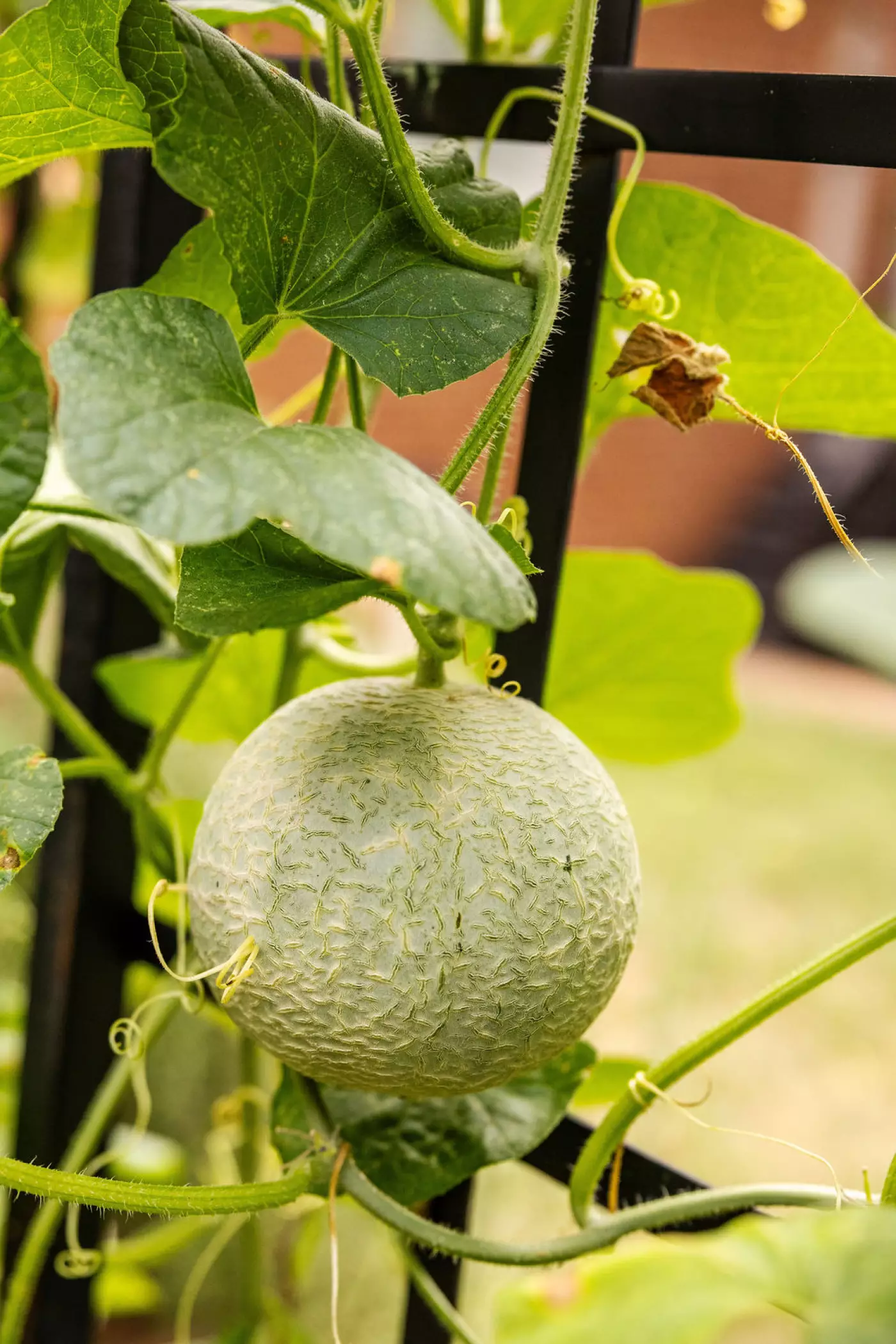
Where to Grow Cantaloupe
Sun
Cantaloupe needs at least 6 hours of direct sun daily, but 8 to 10 hours is where it truly thrives. The more sun, the sweeter the fruit. Choose your sunniest spot in the garden.
Soil
Cantaloupe soil needs:
- Well-draining and loamy — cantaloupe will not tolerate waterlogged roots
- Rich in organic matter — add 2 to 3 inches of compost before planting and work it into the top few inches of soil
- Slightly acidic to neutral pH of 6.0 to 7.0
- Warm — soil should be at least 65°F at planting time. Black plastic mulch laid over the bed before planting helps warm the soil faster in cooler climates.
In a Raised Bed
Raised beds are an excellent environment for cantaloupe because they warm up faster than in-ground soil and provide the drainage melons need. Here's the key: plant at the edge of the bed and let the vines trail over the side into the pathway between beds. The roots get all the benefits of your beautiful raised bed soil, and the vines have room to sprawl without taking over the whole bed.
I grew cantaloupe this way in Houston all the time — four plants along the edges of a single raised bed, vines cascading into the gravel paths, and cantaloupe everywhere by mid-July. It works beautifully.
Start your dream garden. Watch the free class!
How to Plant Cantaloupe from Seed: Step by Step
Direct Sowing
Prepare the soil. Add a 2 to 3 inch layer of compost to the planting area and work it into the top 6 inches. Cantaloupe roots go deep — give them something nutrient-rich to grow into.
- Plant at the edge of the bed. Choose a spot at the corner or edge where the vine can trail over the side.
- Sow seeds 1/2 to 1 inch deep. Plant 2 to 3 seeds per spot, spaced about 3 inches apart in a small cluster.
- Space clusters 36 inches apart if planting multiple plants.
- Water in gently but thoroughly. Keep the soil consistently moist until germination — check daily in warm weather.
- Thin to the strongest plant once seedlings reach a few inches tall. Snip weaker seedlings at soil level rather than pulling — pulling can disturb the roots of the plant you're keeping.
Starting Indoors (For Short-Season Climates)
- Fill soil blocks or biodegradable pots with quality seed-starting mix.
- Sow 2 seeds per block or pot, 1/2 inch deep with the pointed end facing down.
- Keep warm — cantaloupe germinates best at 75 to 85°F. A heat mat is genuinely useful here.
- Once seedlings have 2 to 3 true leaves, begin hardening off by introducing them to outdoor conditions gradually over 7 to 10 days.
- Transplant after your last frost date when nighttime temps stay above 50°F — handle the root ball as gently as possible.
How to Care for Cantaloupe
Watering
Cantaloupe needs consistent moisture to develop well, but the approach changes as the season progresses:
- While seeds are germinating: Keep soil evenly moist, not soggy. Check daily.
- Through the growing season: 1 to 2 inches of water per week, delivered deeply and infrequently to encourage deep root growth
- As fruit approaches harvest: Reduce watering in the final 1 to 2 weeks before harvest. Less water concentrates the sugars in the fruit and produces a sweeter, crisper melon.
- Always water at the base of the plant, not overhead — wet foliage invites disease
Fertilizing
- At planting: Work compost into the soil before seeds go in
- When vines begin to spread: Side-dress with a nitrogen-rich organic fertilizer like fish emulsion or kelp
- At flowering and fruit set: Switch to a phosphorus-rich fertilizer to support fruit development. Bone meal and rock phosphate are excellent organic sources.
- In the final 1 to 2 weeks before harvest: Stop fertilizing entirely so the plant can direct all its energy into ripening the fruit
Managing the Vines
Once cantaloupe vines start running, your garden will feel like it's taking on a life of its own. A few things to keep in mind:
- Spread vines out so each one gets sunlight and airflow — avoid letting them tangle or cross each other
- You can train vines vertically up a trellis for smaller-fruited varieties — fruit will need hammock-style slings made from fabric or pantyhose to support the weight as melons develop
- About 40 days into the season, you can prune to a single main vine for larger individual melons, or keep multiple vines for more but smaller fruit. I personally prefer more melons at a manageable size.
Pollination
About 30 to 40 days after planting, cantaloupe begins producing flowers. You'll notice two types:
- Male flowers appear first and have a straight stem
- Female flowers appear shortly after and have a small round base — this is the developing fruit
Bees do most of this work naturally. If you're not seeing bees, hand pollinate by transferring pollen from a male flower to a female flower using a small paintbrush or cotton swab. Plant zinnias, marigolds, and cosmos nearby to attract pollinators and make the whole process much more reliable.

Plan, Learn, and Grow — Every Season, Simplified
Turn every season into a harvest. These beautiful planners teach you step-by-step how to grow your own food—no green thumb required.
Common Cantaloupe Growing Mistakes to Avoid
- Planting too early. Cold soil leads to poor germination and slow, stressed plants. Wait for 65 to 70°F soil temperature — not just the last frost date.
- Planting too late. Cantaloupe needs 70 to 90 days of warm weather. If you plant in June in a mild climate, you may run out of season before the fruit ripens.
- Overwatering. Cantaloupe roots don't like sitting in wet soil. Water deeply and infrequently rather than a little every day.
- Too much nitrogen late in the season. Excess nitrogen produces lush vines and foliage but stunts fruit production. Switch to phosphorus-focused fertilizer once flowers appear.
- Harvesting too early. Underripe cantaloupe doesn't improve much off the vine. Wait for the slip, the smell, and the cream-colored patch before you cut.

How to Know When a Cantaloupe Is Ready to Harvest
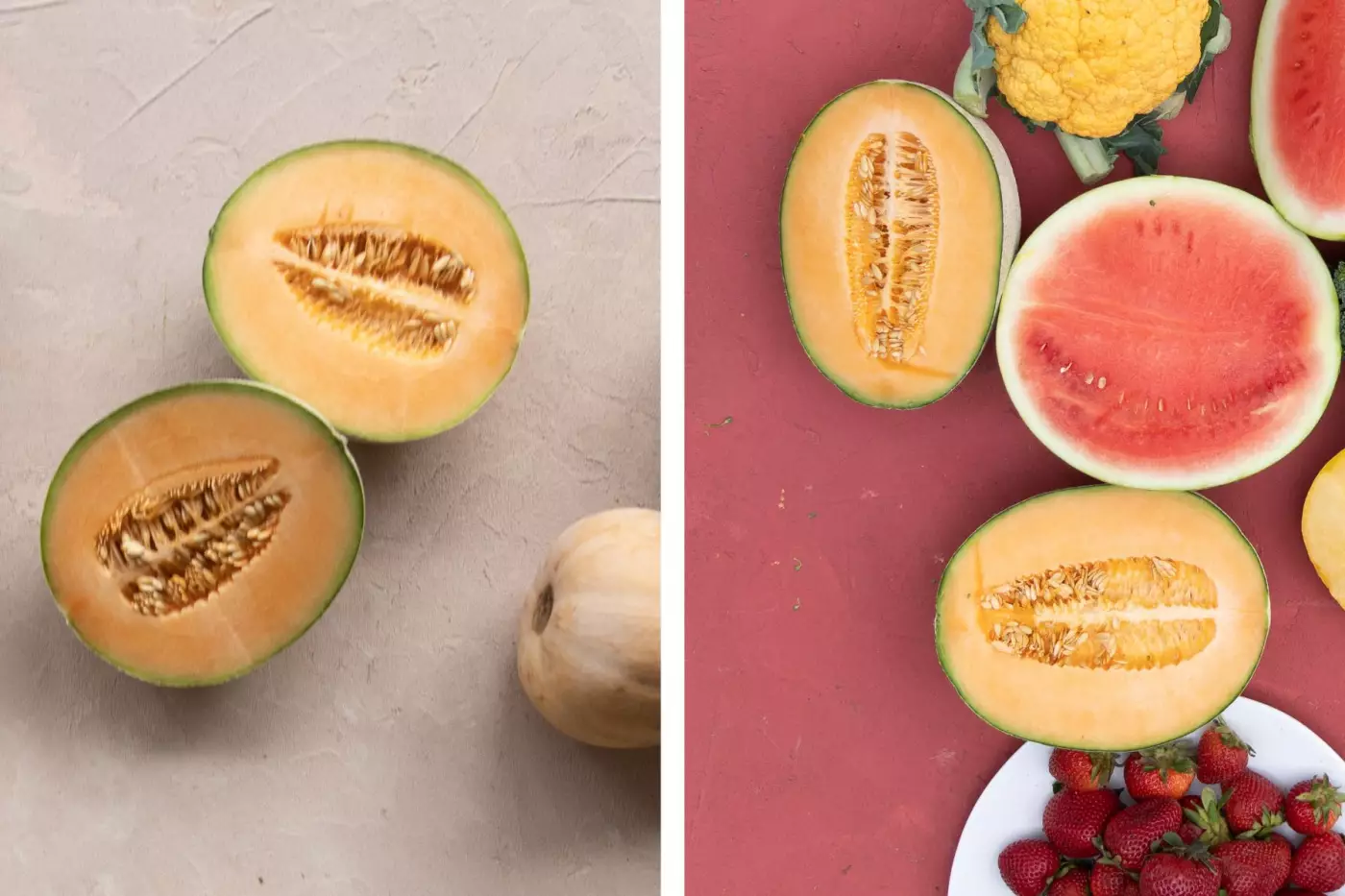
This is the part that takes a little practice — and is absolutely worth getting right. Here's what to look for:
- The slip test: Gently press at the base of the stem where it meets the fruit. A ripe cantaloupe will slip — separate from the vine with very little pressure. If you have to tug, it needs more time.
- The smell test: Get close. A ripe cantaloupe smells sweet and fragrant even before you cut it. If it doesn't smell like anything, it's not ready.
- The underside color: The patch where the melon rests should have turned from white or green to cream or yellow.
- The netting: The skin should have developed a full, coarse, raised netting pattern.
- The stem tendril: The small curling tendril closest to the fruit dries up when the melon is ripe.
When it's ready, use clean pruners to cut the stem rather than pulling — leaving about 2 inches of stem attached. One healthy plant typically produces 2 to 4 melons.
Quick Tip: Stop watering and fertilizing in the last week before harvest. This concentrates the sugars and gives you the sweetest possible melon.
Learn How to Plan and Build Beautiful Raised Beds
Follow a simple process to build a raised bed that makes construction straightforward — even if you’re not “handy.”
Frequently Asked Questions About Growing Cantaloupe from Seed
How long does a cantaloupe take to grow from seed? Most cantaloupe varieties take 70 to 90 days from seed to harvest. Short-season varieties like Minnesota Midget can be ready in as few as 60 days, while some larger heirloom varieties may take up to 100 days.
Can you grow cantaloupe in a raised bed? Absolutely. Plant at the edge of the raised bed so the roots benefit from your rich soil while the vines trail over the side into the pathway. This is one of the best ways to grow cantaloupe without sacrificing your entire raised bed to a single crop.
When should I plant cantaloupe seeds? After your last frost date, once soil temperatures reach at least 65 to 70°F. In warm climates, that's often May. In cooler climates with shorter seasons, start seeds indoors 4 to 6 weeks before your last frost date and transplant once nighttime temps stay above 50°F.
How many cantaloupes does one plant produce? A healthy cantaloupe plant typically produces 2 to 4 melons per vine. Pruning to a single main vine tends to produce larger individual melons, while keeping multiple vines produces more fruits at a smaller size.
Why isn't my cantaloupe producing fruit? The most common reasons are insufficient pollination (not enough bees visiting the flowers), too much nitrogen fertilizer (which promotes foliage over fruit), or temperatures that are too high or too low during flowering. Hand pollinate if you're not seeing bees, and switch to a phosphorus-rich fertilizer once flowers appear.
Can cantaloupe cross-pollinate with cucumbers or watermelon? No. Cantaloupe does not cross-pollinate with cucumbers, watermelon, squash, or pumpkins. Different cantaloupe varieties will cross-pollinate with each other, but this only affects seeds saved from the fruit — not the fruit itself.
How do I know when a cantaloupe is ripe? A ripe cantaloupe slips easily from the vine with gentle pressure, smells sweet and fragrant, has a cream or yellow patch on the underside where it rested on the ground, and has a fully developed coarse netted rind. If you have to pull hard to remove it from the vine, give it a few more days.
Save this article by clicking the image below!

More About Melons
Sources
- "How to Grow Cantaloupes" — https://www.almanac.com/plant/cantaloupes
- "How to Grow Cantaloupe from Seeds" — https://savvygardening.com/how-to-grow-cantaloupe-from-seeds/
- "How to Grow Cantaloupe" — https://growfully.com/how-to-grow-cantaloupe/
- "Cantaloupe in the Garden" — https://extension.usu.edu/yardandgarden/research/cantaloupe-in-the-garden
- "How to Plant and Grow Cantaloupe" — https://gardenerspath.com/plants/fruit/grow-cantaloupe/