
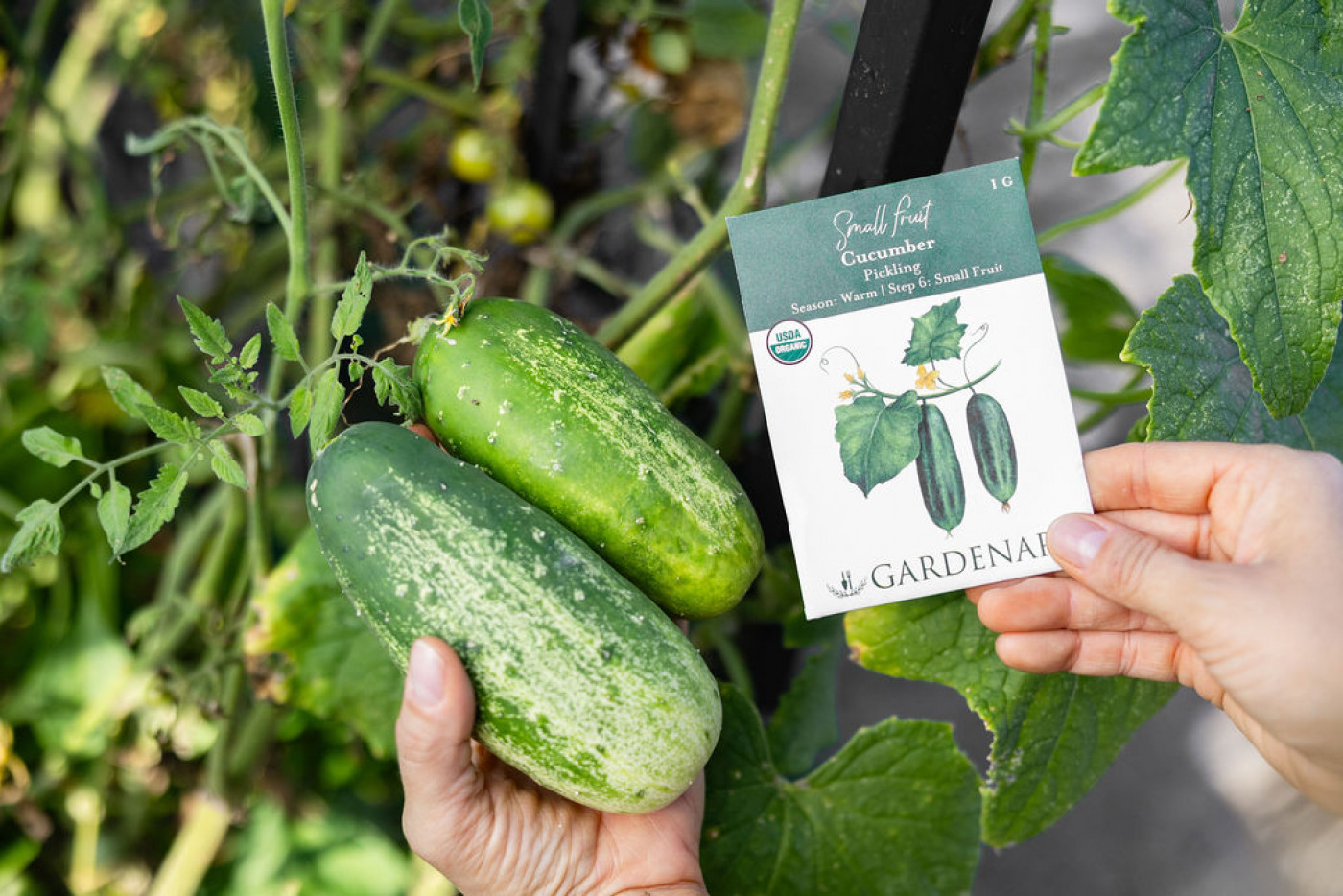
Cucumber Plants Love a Good Companion
If your cucumbers have been struggling with sad harvests and aphids throwing a house party on your vines, it might be time to consider giving your cucumbers some helpful companions.
Companion planting is one of the oldest tricks in the gardening book, and for good reason: the right plant neighbors can protect your cucumbers from pests, attract pollinators, improve the soil, and even make your cucumbers taste better. The wrong ones? Well. We'll get to that.
Here's everything you need to know about cucumber companion plants.
At a Glance
- Get a detailed list of cucumber companion plants and discover the benefits of each plant.
- Learn strategic companion planting methods to reduce your need for pesticides and increase yields without extra effort.
- Increase beneficial pollinators in your garden to help cross-pollinate your cucumbers.
Start your dream garden. Watch the free class!

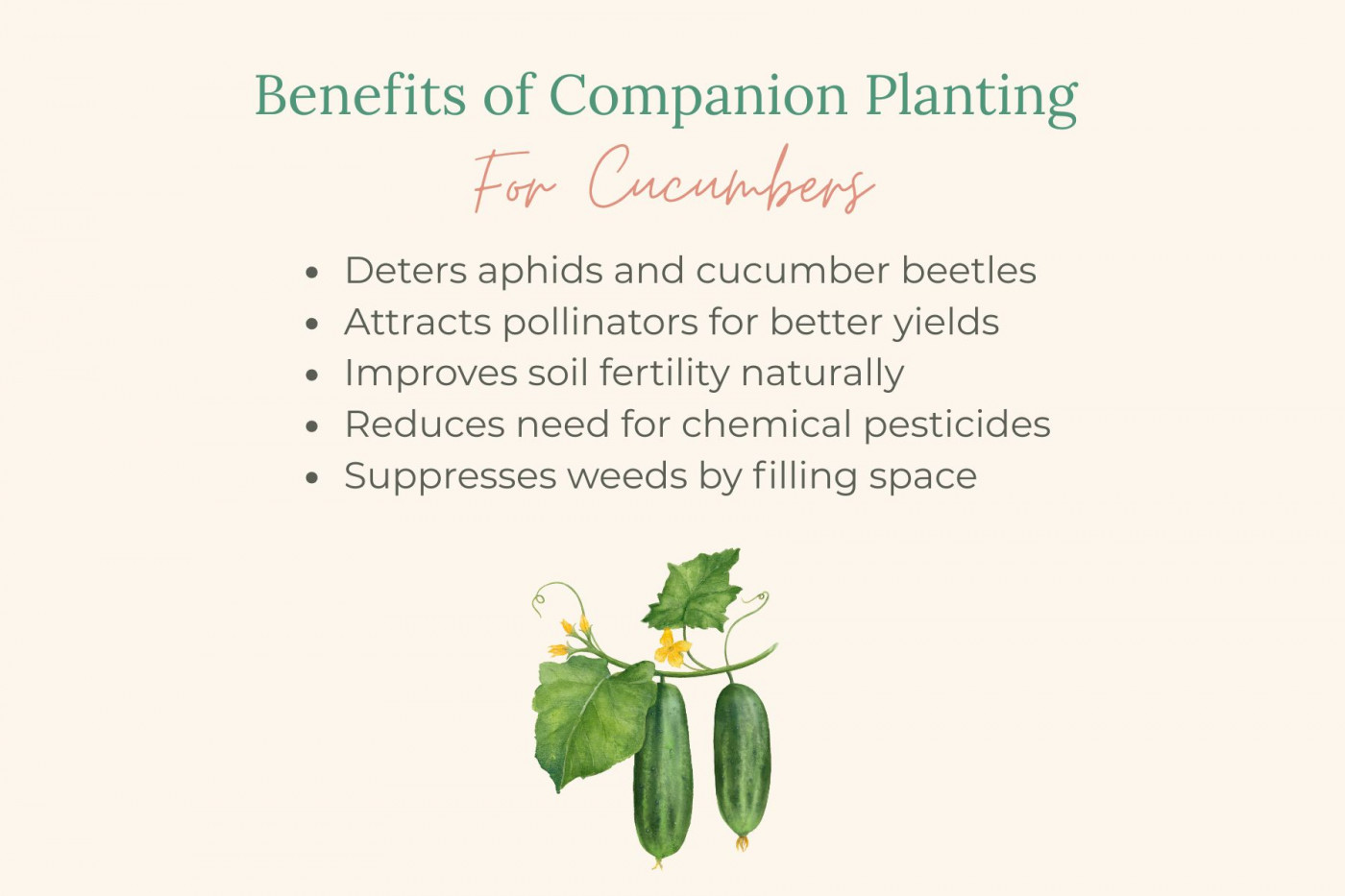
Why Companion Planting With Cucumbers Actually Works
Before we get into the plant-by-plant breakdown, it helps to understand the 'why.' Companion planting isn't magic — it's ecology. Plants interact with each other through their root systems, the chemicals they release, the insects they attract, and the shade or support they provide.
For cucumbers specifically, companion planting addresses a few key challenges:
- Pest Control: Aphids, cucumber beetles, and spider mites love cucumbers as much as we do.
- Soil Improvement: Cucumbers are heavy feeders and benefit from nitrogen-fixing neighbors.
- Attract Pollinators: They rely on pollinators, so anything that attracts bees is a win.
- Prevent Disease: Cucumbers are susceptible to fungal disease — good airflow and certain aromatic plants help keep that in check.
The good news? A little strategic planning at planting time does most of the heavy lifting for the whole season.
Good Neighbors

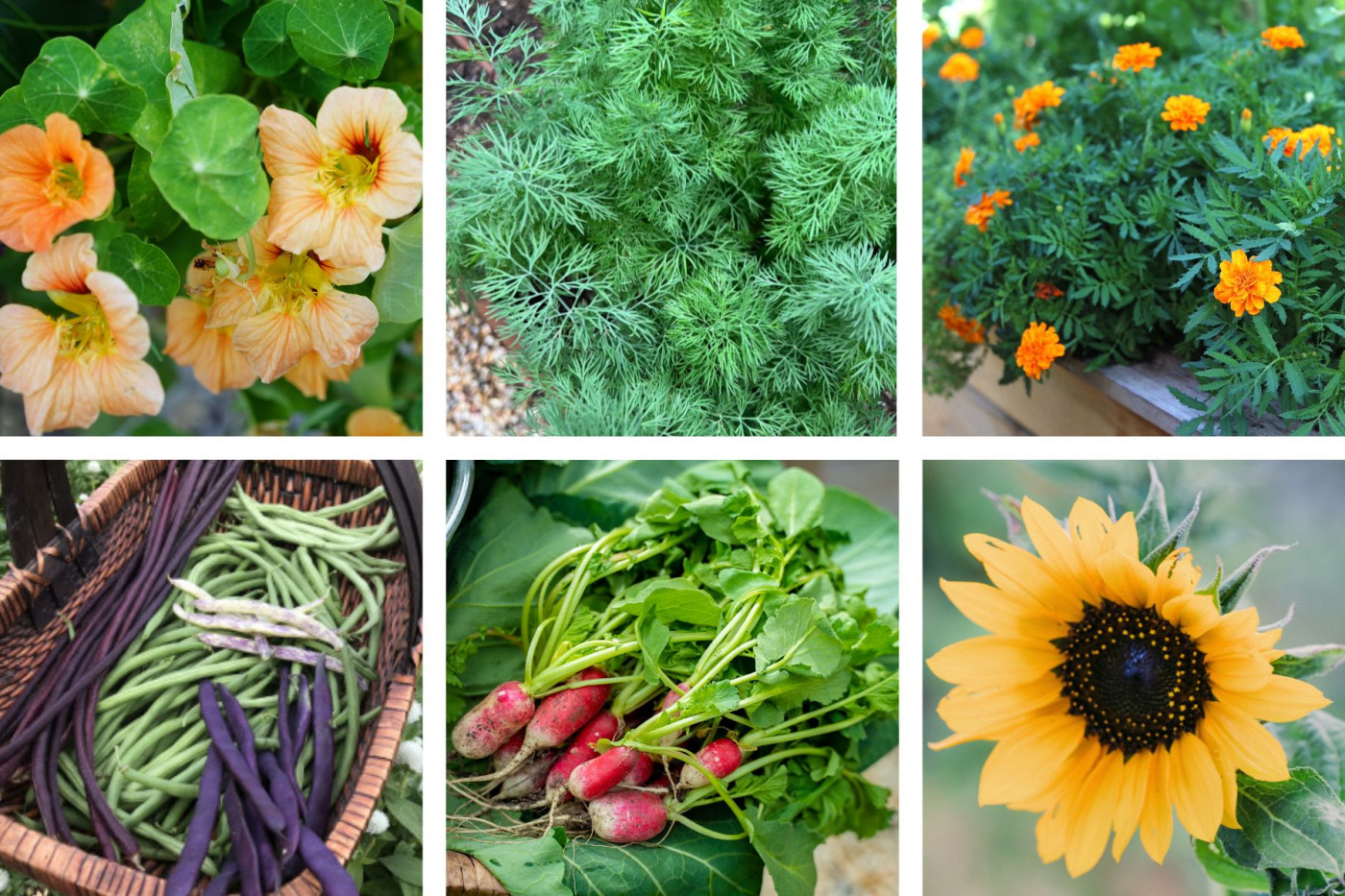
The Best Cucumber Companion Plants
Let's get into the good stuff — the plants that will genuinely help your cucumbers thrive.
1. Nasturtiums — The Ultimate Sacrificial Plant
Nasturtiums are arguably the single best companion plant for cucumbers. They act as a trap crop — aphids are so attracted to them that they'll flock to the nasturtiums and leave your cucumbers alone. Think of them as the appetizer that keeps pests busy while your main crop is the real feast.
Beyond pest control, nasturtiums attract predatory insects like lacewings and hoverflies that eat aphids. They're also edible (the flowers have a peppery kick), so they're pulling double duty in any kitchen garden.
- Plant type: Annual flowering
- Benefit: Trap crop for aphids, attracts beneficial insects
- Placement: Around the perimeter of your cucumber bed
2. Dill — The Pollinator Magnet (with a Caveat)
Dill is a fantastic companion for cucumbers when it's young. Its flowers attract a huge range of pollinators and beneficial insects, including parasitic wasps that target cucumber beetles — the bane of every cucumber grower's existence.
The caveat: don't let your dill bolt and go to seed near your cucumbers. Mature dill can actually inhibit cucumber growth. Plant it nearby, enjoy the flower stage, then move it along before it matures fully.
- Plant type: Annual herb
- Benefit: Attracts pollinators, repels cucumber beetles
- Caveat: Remove before it fully matures and goes to seed
3. Marigolds — The Garden's All-Purpose Bodyguard
Marigolds belong in every vegetable garden, and cucumbers are no exception. Their scent confuses and deters aphids, whiteflies, and even nematodes in the soil. French marigolds (Tagetes patula) are particularly effective — they secrete a compound from their roots called alpha-terthienyl, which suppresses root-knot nematodes.
They're also just cheerful. Your cucumber bed will look great, and your cucumbers will thank you.
- Plant type: Annual flowering
- Benefit: Deters aphids, whiteflies, and soil nematodes
- Best variety: French marigolds (Tagetes patula)
4. Beans — The Nitrogen Fixers
Cucumbers are heavy nitrogen feeders. Beans, particularly pole beans, fix atmospheric nitrogen into the soil, essentially fertilizing the bed for free. This is one of those pairings where both plants are pulling their weight — cucumbers benefit from the improved soil, and beans don't mind sharing space with a vining neighbor.
Plant pole beans on the north side of your cucumber trellis so they don't shade out your cucumbers, and let them do their quiet, nitrogen-fixing thing all season.
- Plant type: Annual vegetable
- Benefit: Fixes nitrogen in the soil, improves fertility
- Tip: Plant on the north side to avoid shading
5. Radishes — The Cucumber Beetle Deterrent
Radishes have a long history as companion plants, and with cucumbers, they earn their keep twice over. First, they help deter cucumber beetles — one of the most destructive cucumber pests. Second, they're fast-maturing, so you can harvest them before they compete with your cucumbers for space.
Some gardeners also use radishes as a trap crop for flea beetles. They're doing a lot of heavy lifting for a small, humble root vegetable.
- Plant type: Annual vegetable
- Benefit: Deters cucumber beetles, fast-maturing
- Bonus: You get radishes to eat!
6. Sunflowers — The Trellis and the Pollinator Hotel
Tall sunflowers can serve as a natural trellis for cucumber vines if planted correctly, and their large open flowers are absolute bee magnets. More bees mean better pollination, which directly translates to more cucumbers.
Just be mindful of spacing — sunflowers are tall and can block significant sunlight if planted on the south side of your bed. Plant them to the north or east and let your cucumbers bask.
- Plant type: Annual flowering
- Benefit: Attracts pollinators, can provide natural trellis support
- Watch out for: Shading — plant thoughtfully
Bad Neighbors

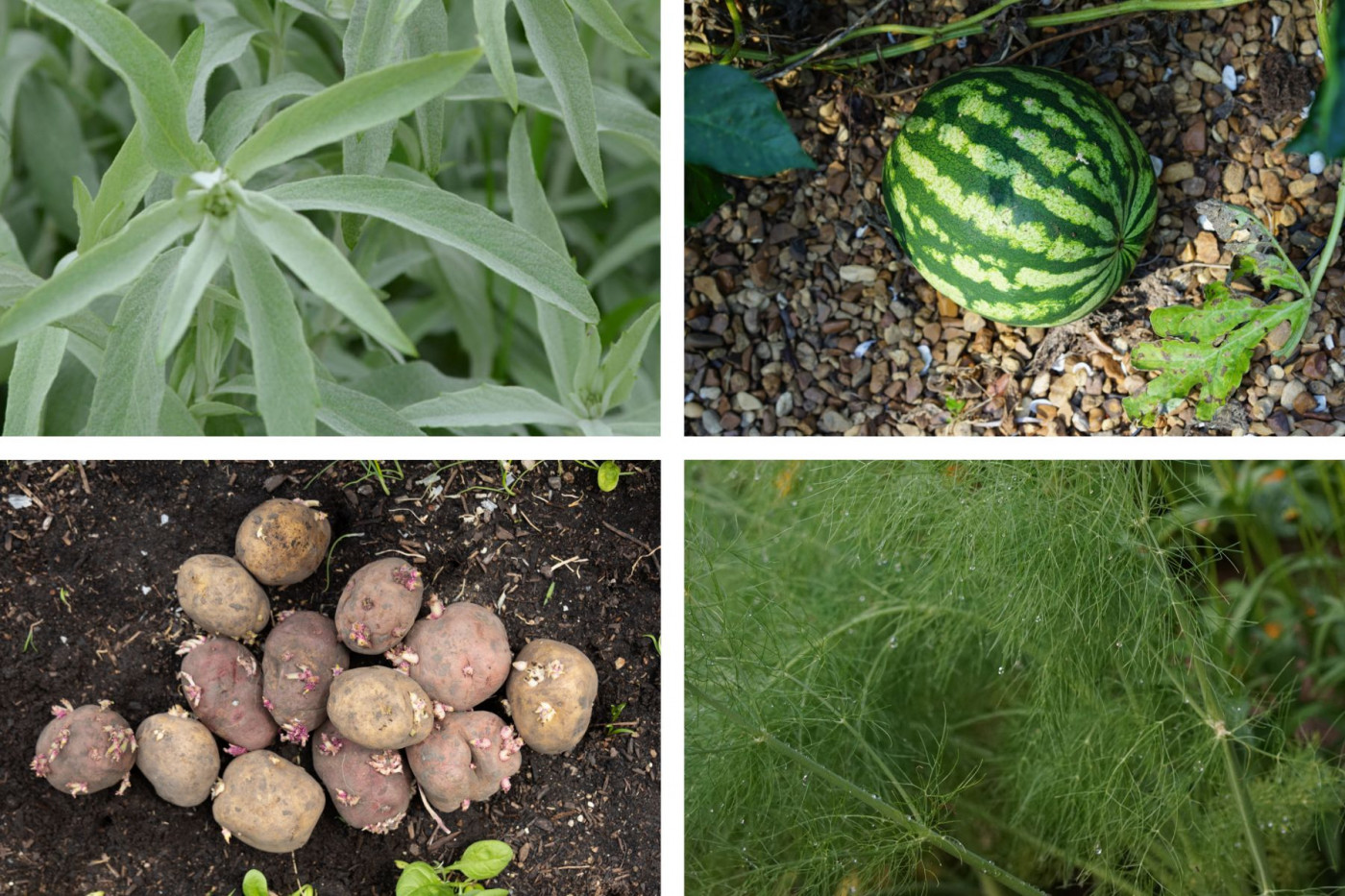
Cucumber Companion Plants to Avoid (Keep These Far Away)
Just as important as knowing what to plant with cucumbers is knowing what not to plant with them. These plants are bad neighbors — they compete, inhibit, or invite trouble.
Sage
Sage is allelopathic — it releases compounds that inhibit the germination and growth of nearby plants. Cucumbers are particularly sensitive to it. Despite sage being a generally useful garden herb, keep it well away from your cucumber bed.
Melons and Squash
Melons and squash are cucumbers' close relatives, and they share the same pests and diseases. Planting them together is essentially concentrating a target for cucumber beetles and powdery mildew. They also compete aggressively for the same nutrients. Give these groups their own separate garden real estate.
Potatoes
Potatoes and cucumbers are a bad match because they compete for nutrients and potatoes are prone to blight — a disease that can spread to cucumbers. Keep these two well separated.
Fennel
Fennel is famously allelopathic and makes a bad neighbor for almost everything in the vegetable garden — cucumbers included. It's best given its own isolated container or corner of the yard where it can't do damage.
Companion Planting Tips
How to Plan Your Cucumber Companion Planting Layout
You don't need to overthink the layout, but a little forethought goes a long way. Here are a few practical tips:
- Border plantings: Ring your cucumber bed with nasturtiums and marigolds as a first line of pest defense.
- Intercropping: Tuck radishes between cucumber plants early in the season — they'll be harvested before the cucumbers need the space.
- North side: Plant sunflowers and pole beans to the north so they don't shade your cucumbers.
- Herb patches: Keep dill nearby but not directly interplanted. A pot or a small separate patch within 10 feet works well.
- Rotate annually: Move your cucumber bed each year to prevent soil-borne diseases from building up, and let your companion plant arrangement follow.
Frequently Asked Questions About Cucumber Companion Plants
What is the best companion plant for cucumbers?
Nasturtiums are widely considered the best overall companion plant for cucumbers because they act as a trap crop for aphids, attract beneficial predatory insects, and are easy to grow. Marigolds are a close second for their broad pest-deterring properties.
Can I plant tomatoes next to cucumbers?
Tomatoes and cucumbers are generally considered neutral companions — they don't actively help or hurt each other. They can coexist in the same bed, but they both have significant water and nutrient needs, so make sure your soil is rich and well-amended if planting them together.
Do cucumbers grow well with zucchini?
It's not ideal. Cucumbers and zucchini (a type of squash) share pests — particularly cucumber beetles — and both attract powdery mildew. Planting them together concentrates these problems. Give each crop its own space in the garden.
Can I plant basil with cucumbers?
Basil is a generally positive companion for many vegetables, and it's not harmful to cucumbers. It may help deter aphids and whiteflies with its aromatic oils. It won't cause the problems that sage or fennel would, so it's a reasonable addition if you have space.
How far apart should companion plants be from cucumbers?
For most companion plants used as a border or pest deterrent — like nasturtiums and marigolds — planting them 12 to 18 inches from the cucumber row is sufficient. For dill, which can inhibit cucumbers when mature, a distance of 3 to 5 feet is safer while still allowing beneficial insects to travel between plants.
Stop Spraying. Start Gardening Smarter.
Organic Pest Control Made Simple
No harsh sprays. No endless guessing. Just a thriving, abundant garden that practically protects itself. With the Organic Pest Control Method, you’ll learn Nicole Burke's exact steps to grow naturally and confidently, season after season.
Quick Reference for Cucumber Companion Plants
GOOD COMPANIONS
- Nasturtiums — Trap crop for aphids, attracts beneficials
- Marigolds — Deters aphids, whiteflies, nematodes
- Dill (young) — Attracts pollinators and predatory wasps
- Beans — Fixes nitrogen, improves soil fertility
- Radishes — Deters cucumber beetles, quick harvest
- Sunflowers — Attracts pollinators, natural trellis support
BAD COMPANIONS
- Sage — Allelopathic, inhibits growth
- Melons & Squash — Shared pests and disease, heavy competition
- Potatoes — Disease risk, nutrient competition
- Fennel — Allelopathic to most vegetables
Grow Smarter, Not Harder: Final Thoughts on Cucumber Companion Planting
Cucumber companion planting is about being intentional with what you put in the ground next to your cucumbers. The right neighbors, like nasturtiums, marigolds, and beans, do a surprising amount of work for you: deterring pests, feeding the soil, and pulling in pollinators. The wrong ones, like sage, fennel, and melons, quietly sabotage a harvest you've worked hard for. A little planning at the start of the season pays off every single time you reach into those vines and pull out a perfect cucumber.