
Join Thousands of Gardeners On the VIP List
Free perks, just for email subscribers:
- 15% Off Your First Order
- Gardening Videos & Articles
- Early Access to Sales
Sign up, check your inbox, then shop with your code.

Nicole's Quick Take: Every September I pull anything that's diseased, spent, or won't mature before frost, and I leave anything still producing or built to handle cold. But the exact list changes by climate. What I rip out in Nashville isn't what a Chicago or Houston gardener should pull this month.
At a Glance
- Cold-climate gardens (Chicago, Minneapolis, Denver) should be pulling frost-tender crops and disease-riddled plants now, while cold-hardy greens and root vegetables stay put.
- Mild-climate gardens (Nashville, Atlanta, Charlotte) are usually still in a productive second season this month, so most tomatoes, peppers, and herbs get to stay.
- Hot-climate gardens (Houston, Phoenix, Orlando) are only just starting fall planting in September, so the rule is mostly patience: leave anything still producing through the heat.
By Nicole Johnsey Burke: Founder of Gardenary & Author of Kitchen Garden Revival

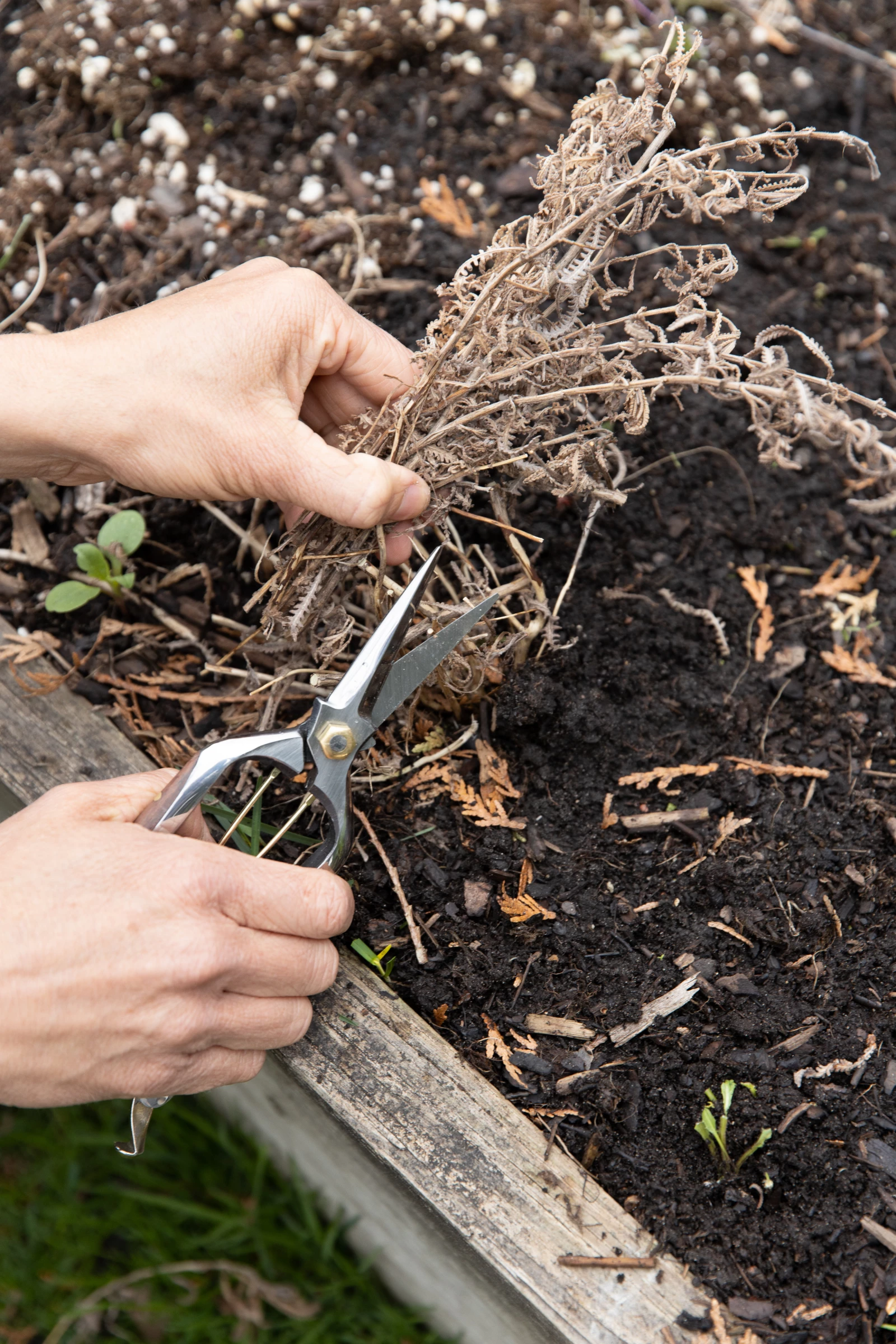
September Garden Cleanup: What to Remove by Climate Zone
I get a version of this question every September: "What should I pull, and what should I keep?"
The answer depends entirely on where you garden.
Climate types:
- Cold climate (Chicago, Minneapolis, Denver)
- Mild climate (Nashville, Atlanta, Charlotte)
- Hot climate (Houston, Phoenix, Orlando)
Continue reading for your climate-specific September plan.
Gardenary's Fall Garden Guide
Spring gets all the attention, but fall is actually the ideal time to start your kitchen garden. Get expert guidance, done-for-you layouts, and step-by-step tips to help you plant smarter, grow healthier crops, and harvest more—right through fall.

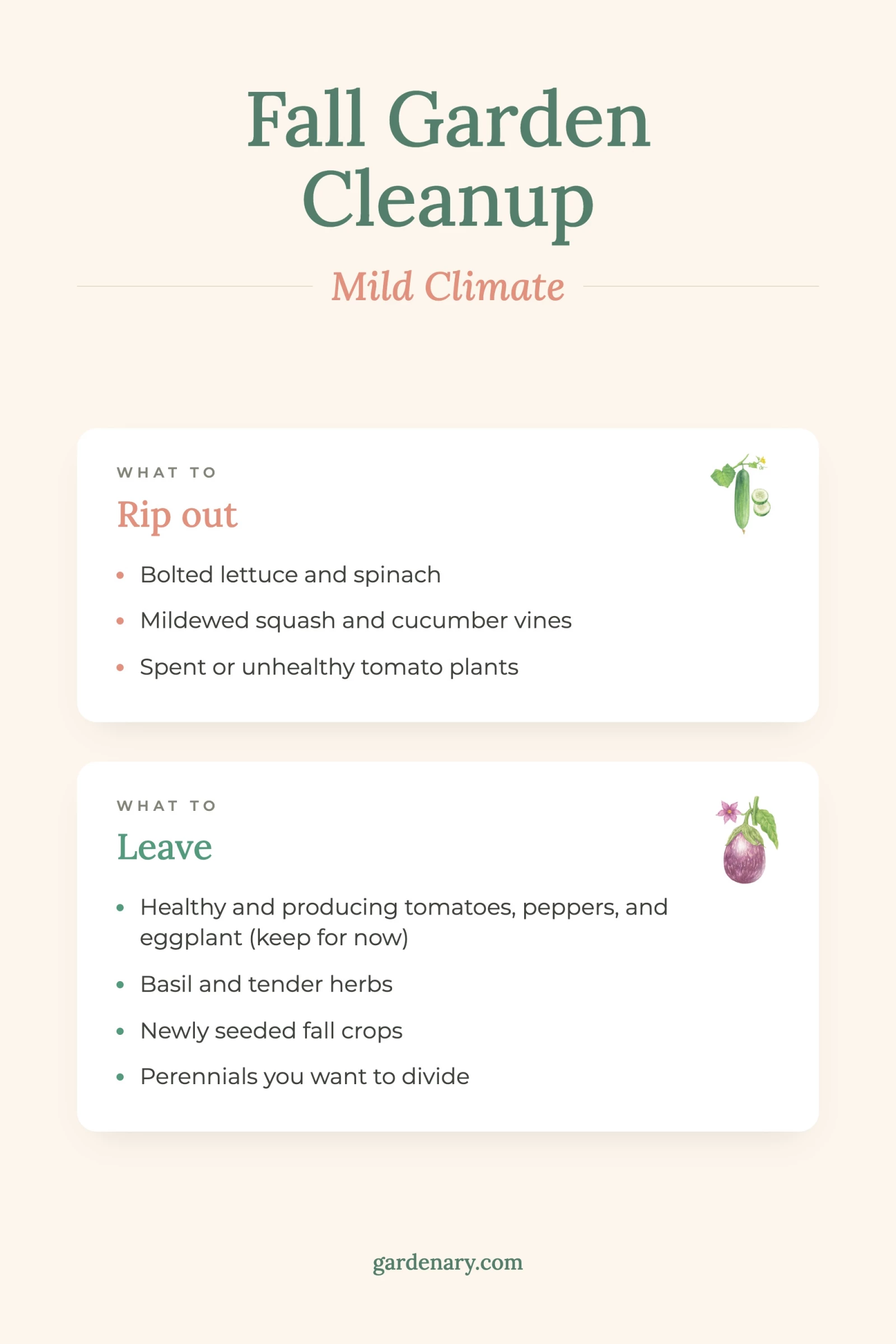
Mild Climate: Nashville, Atlanta, Richmond, Charlotte, Louisville, and Oklahoma City
This is my home base, and it's a genuinely fun place to garden in September.
There's a real "second garden season" that runs from late summer into November here, and that matches my own experience exactly.
What to Rip Out
- Bolted spring lettuce and spinach. Anything that's gone to seed and turned bitter can come out to make room for a fresh fall sowing.
- Squash and cucumber vines with heavy powdery mildew. Our humidity makes this a near-annual event by September, and once production stops, there's no reason to keep the vine.
- Tomato plants that are clearly finished, meaning disease has taken over, and fruit set has stopped. If they're just slowing down, though, keep reading.
What to Leave
- Tomatoes, peppers, and eggplant that are still producing. In a mild climate, these often keep going well into September and even October. Don't pull a plant just because it's September on the calendar; pull it because it's actually done.
- Basil and other tender herbs. Keep harvesting right up until frost is genuinely forecast.
- Newly seeded fall crops. University of Tennessee Extension recommends seeding lettuce, mustard, and Swiss chard by mid to late September for a strong fall harvest, so if you've just planted these, leave them be and let them establish.
- Herbaceous perennials you want to divide. September is actually a good time to divide overgrown perennials in a mild climate, not a time to remove them.

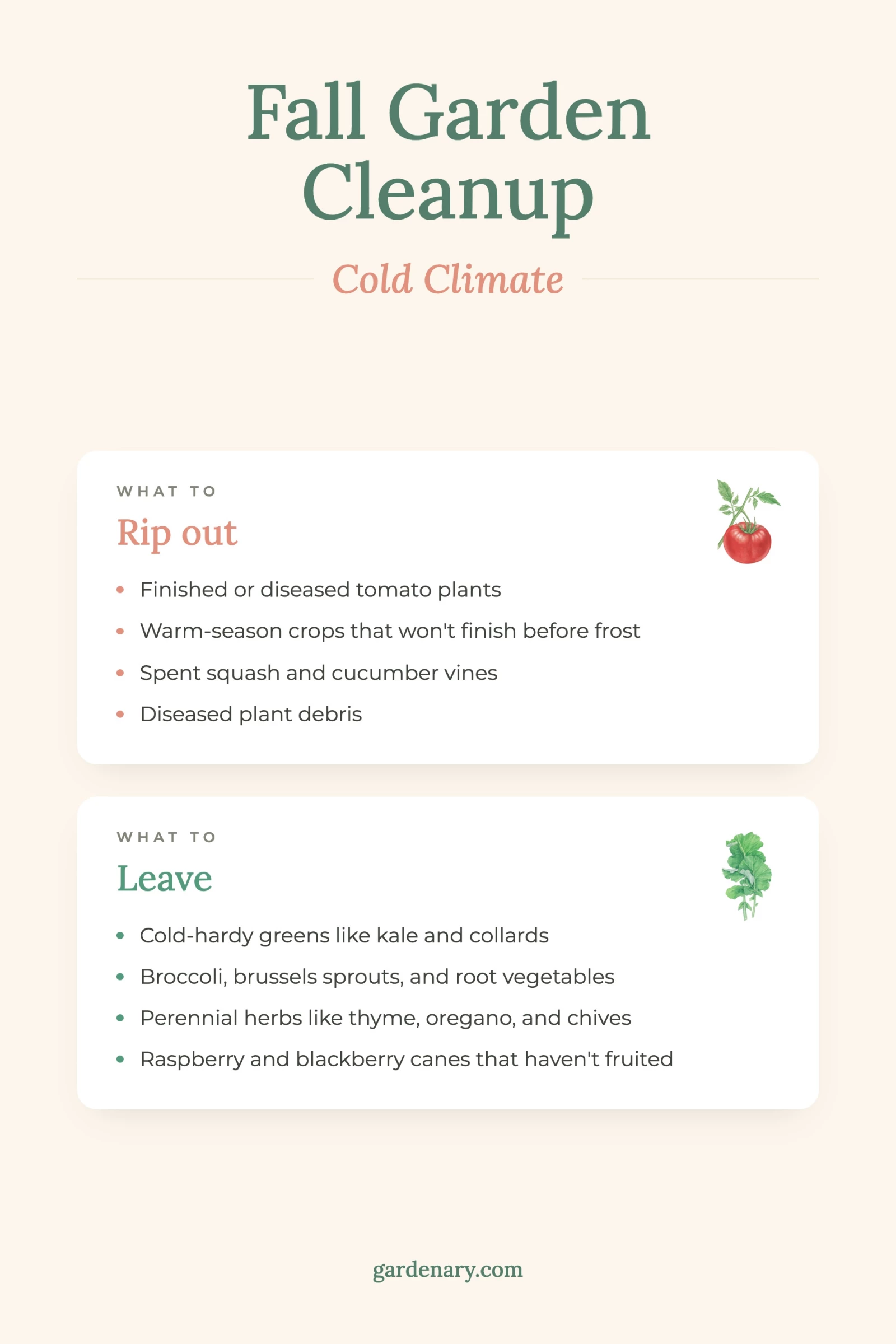
Cold Climate: Chicago, Minneapolis, Denver, Boston, Milwaukee, and Burlington
If you're gardening somewhere with an early first frost, usually mid-September through early October, September is your last real cleanup window before the cold sets in for good.
What to Rip Out
- Tomato plants that are declining from disease. If blight or wilt has taken over, pull the whole plant. According to University of Maryland Extension, if tomato plants are rapidly declining due to disease, you can pick the remaining fruit and ripen it indoors rather than leaving a sick plant in the ground.
- Warm-season crops that won't finish in time. Green beans, peppers, and other frost-tender vegetables need to mature before a killing frost, per University of Tennessee Extension guidance. If the math doesn't work out for your first frost date, pull them now and free up the space.
- Spent squash and cucumber vines. Once powdery mildew has taken hold and production has stopped, these are done for the season.
- Diseased plant debris. University of Connecticut Extension recommends removing dead or diseased plant material to the trash rather than the compost pile, since many diseases overwinter on old leaves and stems.
- Tender bulbs, after frost. Cannas, dahlias, and gladiolus should be lifted and stored once frost has hit, according to Iowa State University Extension.
What to Leave
- Cold-hardy greens. Kale, collards, and other cool-season crops can withstand a real frost, and their harvest window often continues for weeks afterward.
- Broccoli, brussels sprouts, and root vegetables. Carrots, beets, and brassicas actually sweeten after a light frost touches them, so there's no rush to pull these.
- Perennial herbs and dormant perennials. Hold off on major pruning of perennials until late spring. Beneficial insects use old plant stems as winter habitat, so a little bit of visual mess right now is doing real ecological work.
- Raspberry and blackberry canes, except for the ones that already fruited this summer. Those can be pruned out; the rest stay.

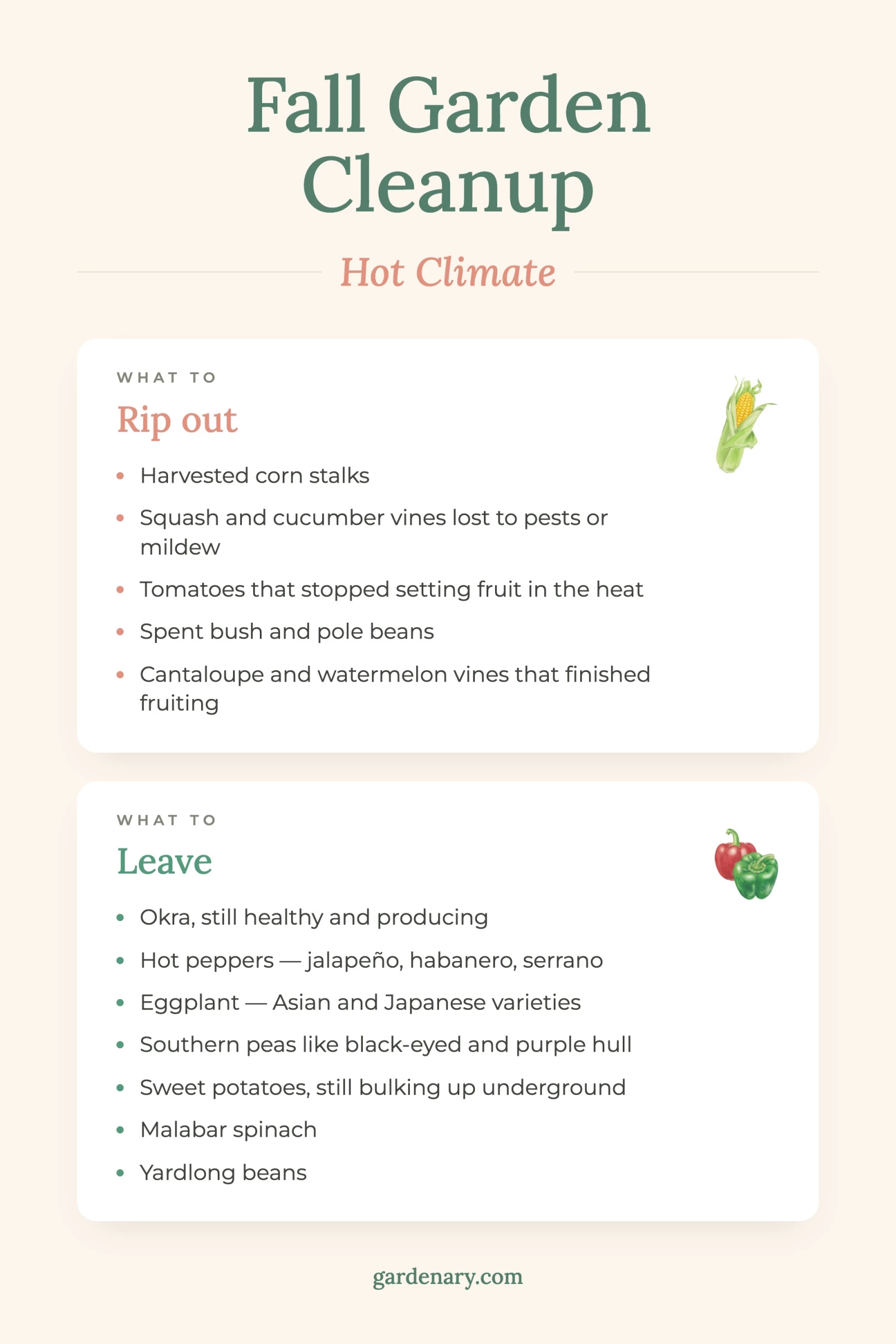
Hot Climate: Houston, Phoenix, Orlando, Austin, New Orleans, and San Antonio
If you're gardening somewhere hot, September can still feel like the middle of summer, and your fall garden is really just getting started. Gardeners in this climate are sometimes still riding out 100-degree days this month, even as they prep for fall planting.
What to Rip Out
- Squash and cucumber vines that gave out to squash vine borers, powdery mildew, or spider mites — the usual culprits for yellow squash, zucchini, and pickling cucumbers by this point in the heat.
- Tomato plants, especially slicing varieties like Better Boy or Celebrity, that stopped setting fruit once nighttime temperatures stayed above 75 degrees and show no sign of recovering. Texas A&M AgriLife horticulture specialists note that when moisture and fruit set both fail during extreme heat, it's sometimes best to pull the plant and wait for cooler, more favorable conditions rather than nursing it along.
- Spent bush bean and pole bean plantings from spring, along with sweet corn stalks that have already been harvested and are browning and drying out at the base.
- Cantaloupe and watermelon vines that finished fruiting weeks ago and are visibly dying back, leaving brittle, yellowing vines behind.
What to Leave
- Okra. It keeps producing right through the last of the heat and often all the way into October. Keep harvesting pods every couple of days so the plant keeps setting new ones.
- Hot peppers, including jalapeño, habanero, serrano, and banana peppers. These plants are often just hitting their stride now that they've had a full summer to establish.
- Eggplant, especially Asian and Japanese varieties, which tend to handle extended heat better than the classic Italian types and are usually still setting fruit steadily.
- Southern peas, like black-eyed peas and purple hull peas. These heat-loving legumes are often still filling out pods and shouldn't be pulled early.
- Sweet potatoes. The vines can look a little wild this time of year, but the roots are still bulking up underground. Leave them in place until closer to your first frost date.
- Malabar spinach. Where cool-season greens struggle, this vining green thrives in exactly the conditions a hot-climate September brings.
- Yardlong beans (asparagus beans). A heat-tolerant stand-in for green beans that keeps producing long after regular bush beans would have given up.
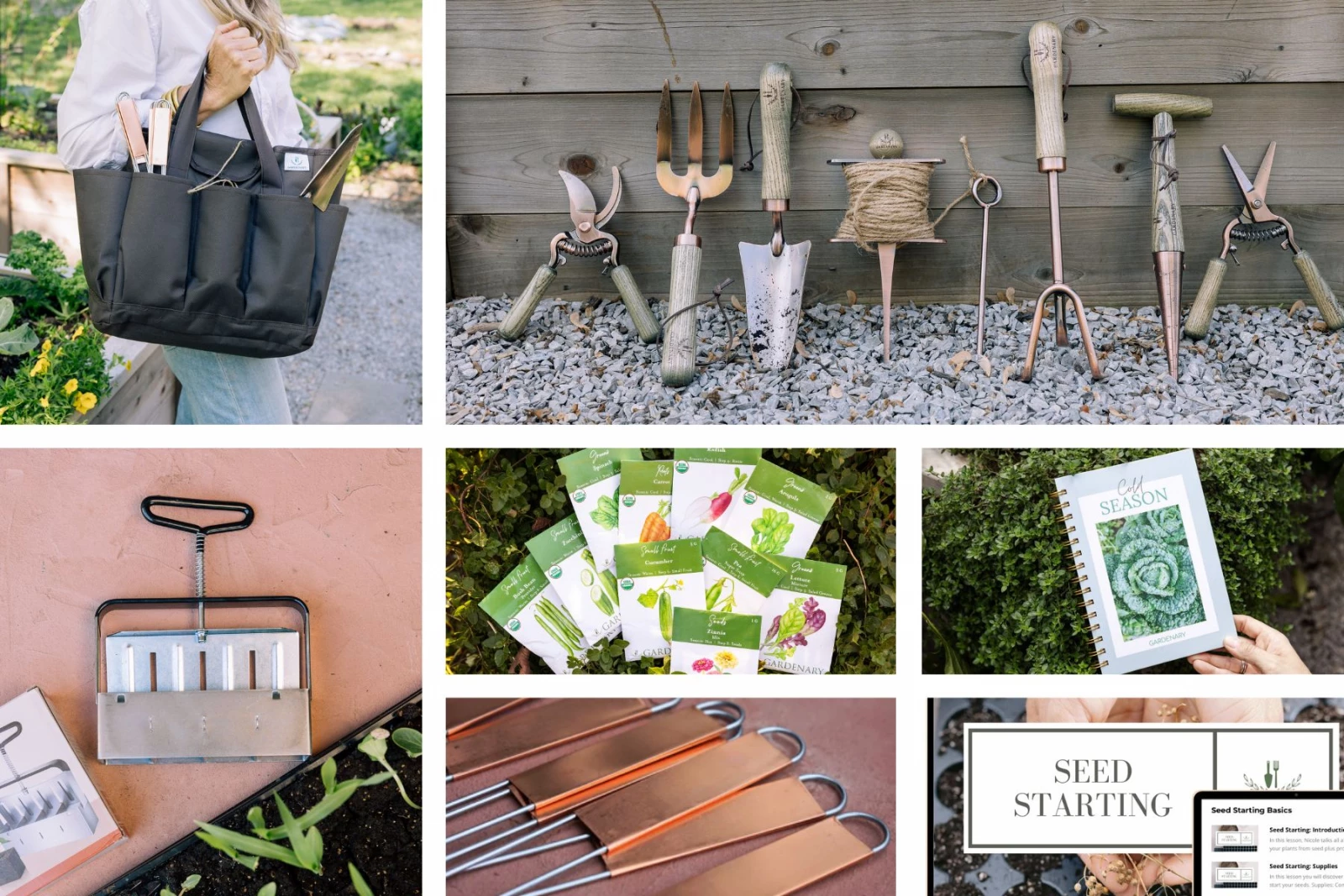
Everything You Need For Fall in One Curated Kit
The Fall Kitchen Garden Kit
- 7-Piece Copper Tool Set
- Garden Essentials Tote Bag to keep everything organized
- Gardenary Soil Blocker for stronger roots, faster germination
- Cold Season Garden Planner with 90 in-depth activities for your fall and winter garden
- BONUS Seed Starting Course delivered digitally by email after purchase
The Tool Set That Makes September Cleanup So Much Easier
No matter which climate you're gardening in, this month always comes down to the same basic motion: cut, pull, sort, repeat, across every bed in your garden.
This is exactly the kind of work Gardenary's Tool Set was built for. It includes a bypass pruner for clean cuts on spent stems, a weed knife for getting tough roots out without disturbing what's growing next to them, and a trowel for digging to help remove and plant new fall crops.
Having everything I need in one set means I can easily knock out my September garden cleanup in an afternoon.
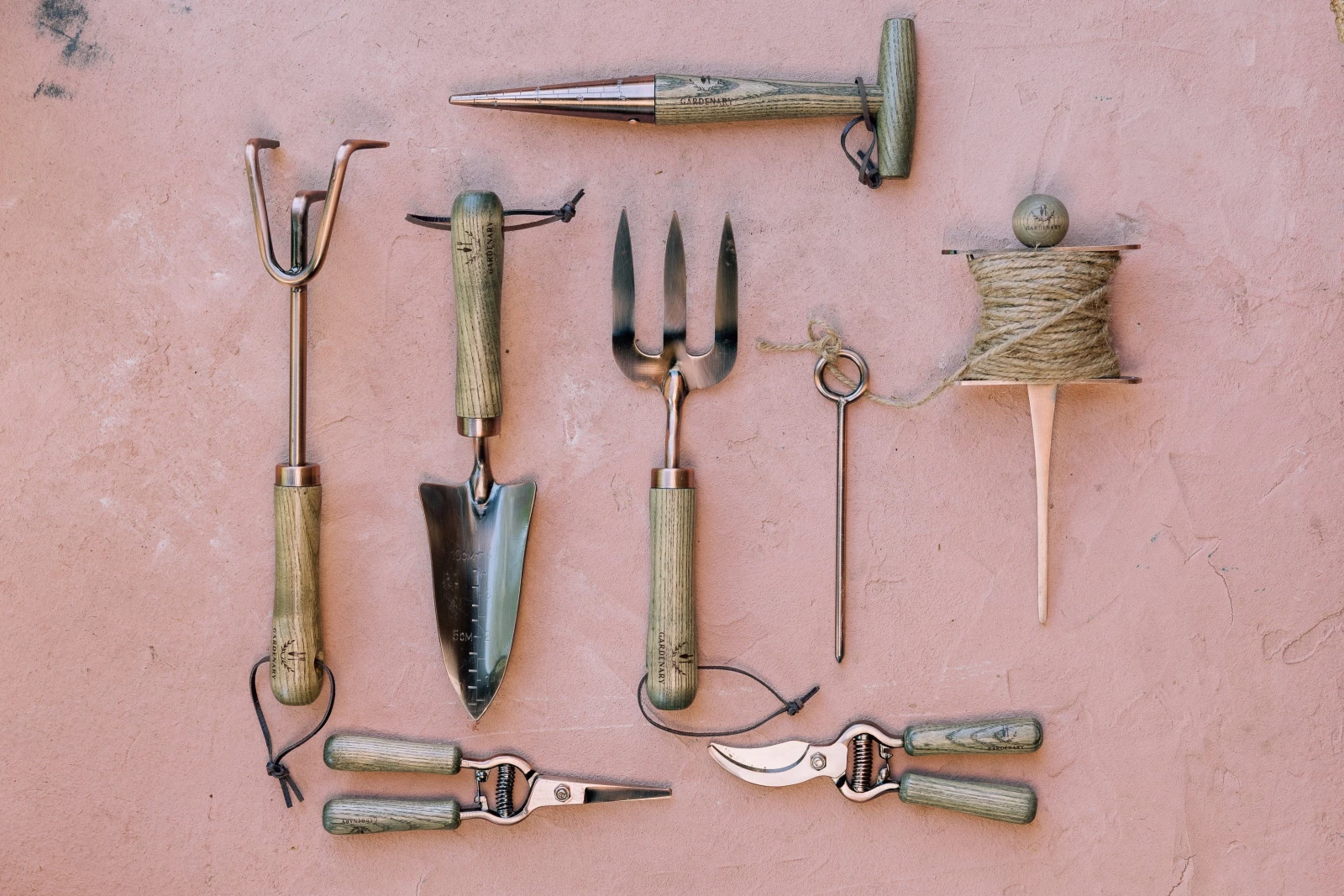
7 Tools, Beautifully Designed
The tool set gardeners actually want, made from carbon steel with an ash wood handle and a warm copper finish.
- Bypass pruner for clean, precise harvest cuts
- Needlenose pruner for detail work in tight spaces
- Transplanting shovel for seedlings and planting holes
- Dibber for perfectly spaced seed sowing
- Cultivator for loosening soil and clearing debris
- Hand fork for weeding and working around established plants
- Row marker & planting line for straight, intentional rows
All in a gift box, ready to use.
Where Gardeners Get September Cleanup Wrong
- Ripping out a plant just because it's September. The calendar isn't the deciding factor. Whether a plant is still producing or has genuinely finished is what matters, and that answer looks completely different in Houston than it does in Chicago.
- Composting diseased plant material. Diseased leaves and stems belong in the trash, not the compost pile, or you'll reintroduce the same problem next season.
- Over-pruning perennials in a cold climate. It's tempting to tidy everything up, but leaving old stems in place through winter gives beneficial insects a place to overwinter.
- Giving up on a hot-climate garden too early. If you're in Houston or Phoenix and your tomatoes look tired, that doesn't mean your garden is over. It usually means you're a few weeks away from your actual fall season.
Keep Going, Wherever You're Gardening
September asks something different of every climate, and that's part of what I love about it.
Whether you're clearing space for kale in Minneapolis, letting your tomatoes ride out a few more warm weeks in Nashville, or waiting on real relief from the heat in Houston, the goal is the same: set your garden up to keep feeding you for as long as your climate will allow.
September Gardening FAQs
Should I pull my tomato plants in September?
Only if they're clearly diseased or have stopped setting fruit with no sign of recovery. In mild and hot climates, many tomato plants are still productive well into September and shouldn't be removed just because of the calendar.
What vegetables can survive a frost?
It depends on the frost, but Kale, collards, broccoli, Brussels sprouts, Spinach, and most root vegetables like carrots and beets can withstand a light frost, and several of these actually taste sweeter afterward.
Is it bad to compost diseased plants?
Yes. Diseased leaves and stems can overwinter in a compost pile and reintroduce the same disease into your garden next season. These should go in the trash instead.
When should I start pulling out my summer garden?
It depends entirely on your climate. Cold-climate gardeners typically start clearing frost-tender plants in early to mid-September; mild-climate gardeners often wait until production genuinely slows; and hot-climate gardeners may not start major fall cleanup until October.
Keep Reading
How to Grow a Lifetime Supply of Garlic: How Much to Plant and Save Each Year
Garden Coaching as a Second Career: How Kate Corrigon Built a Successful Business After Retirement
When Should I Cover My Plants? The Temperatures and Timing I Use in My Own Garden
The Galvanized Garden Trug: A Tool Caddy Too Pretty to Hide
Thanksgiving Herbs: What to Grow for Turkey, Stuffing, and Sides
Obelisk Trellis for Tomatoes: 4 Reasons It Beats a Tomato Cage
Sources
- "September Gardening Tips and Tasks" — University of Maryland Extension
- "Fall Vegetable Gardens (SP291-G)" — University of Tennessee Extension