
Join Thousands of Gardeners On the VIP List
Free perks, just for email subscribers:
- 15% Off Your First Order
- Gardening Videos & Articles
- Early Access to Sales
Sign up, check your inbox, then shop with your code.

Nicole's Quick Take: Lavender, thyme, and sage don't need a hard fall pruning, and cutting them back right before frost can hurt them. Right now, I give mine a light tidy-up, one last harvest, steady water, and good drainage, then save the real pruning for spring.
At a Glance
- Keep fall pruning minimal, and stop hard cuts 4 to 6 weeks before your first hard freeze.
- Soggy soil is a bigger threat to these herbs than most gardeners realize.
- Brown stems in spring aren't always dead, so scratch one before you cut.
By Nicole Johnsey Burke: Founder of Gardenary & Author of Kitchen Garden Revival
The Herbs I Leave (Mostly) Alone in October
Every October, I get the itch to tidy the whole garden. The tomatoes come out, the beds get refreshed, and my pruners start eyeing the herbs.
But lavender, thyme, and sage are the plants I've learned to leave mostly alone this time of year. Here's what they need during fall, and the one job I save for spring.

Should You Cut Back Lavender, Thyme, and Sage in the Fall?
Keep pruning minimal.
A light trim is fine, but hard pruning should wait. Woody herbs heal slowly, and fresh cuts or tender new growth right before cold weather leave the plant more likely to get damaged.
HERE'S THE TIMING I FOLLOW:
- Hard pruning stops 4 to 6 weeks before the first hard freeze. That gives cuts time to heal before the cold arrives.
- Lavender gets cut only in the green, leafy parts. Cutting into the bare, woody base can keep it from growing back.
- A light trim after frost is fine. Snipping a few sprigs or tidying a stray stem won't hurt.
Not sure how close you are to that cutoff? Our frost date calculator will tell you. For many of us, mid-October means the hard-pruning window has already closed, so drop those pruners!
Get the complete Herb Garden Guide
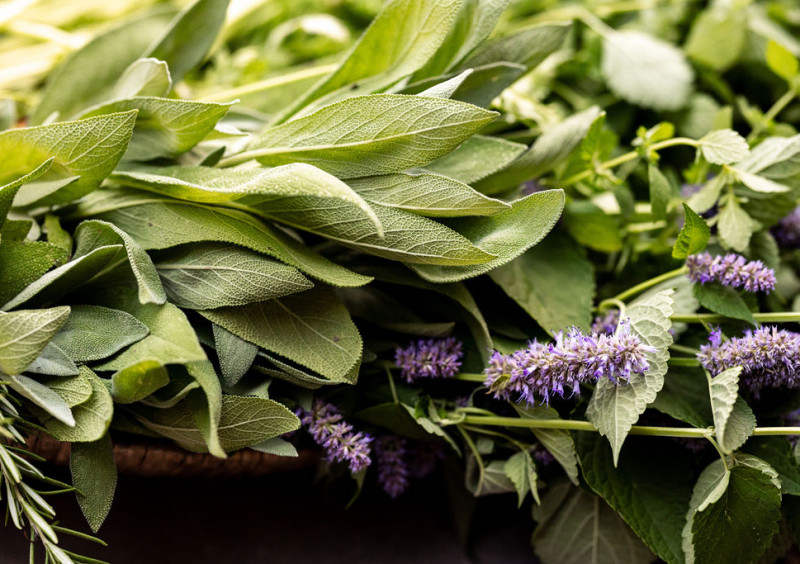
My Fall Checklist for Perennial Herbs
So what do you do instead of pruning? Plenty, and all of it is easy.
Take One Last Light Harvest
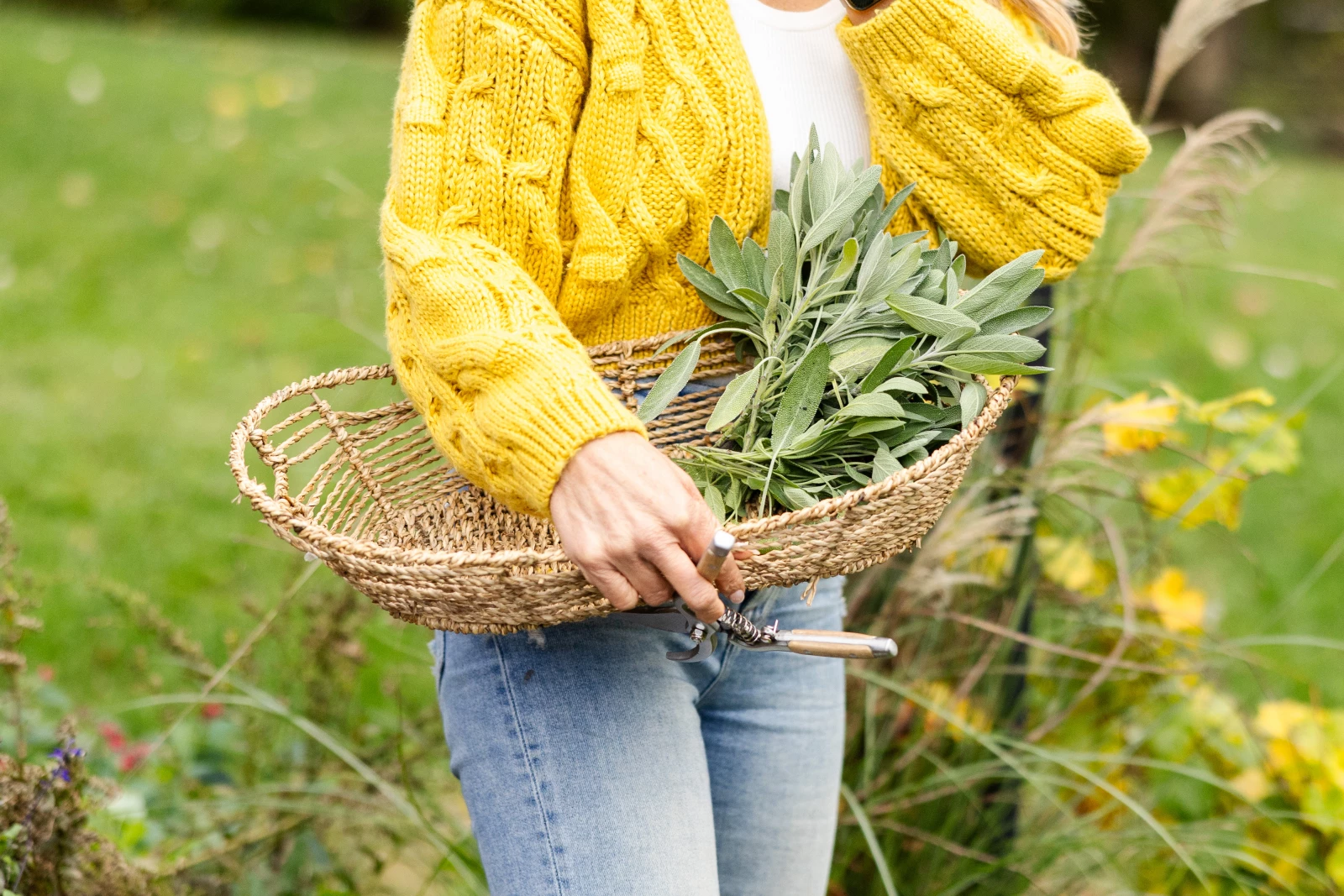
Snip a few sprigs from each plant for cooking or drying, not a full haircut. I clip with the pruners from my Gardenary Copper Plated Garden Tool Set so the stems stay clean instead of torn. Then I dry the extras using my favorite way to dry and store herbs.
Tidy, Don't Trim
Pull out stems that are clearly dead or broken, and remove spent lavender flower stalks. Leave the healthy, leafy growth alone. That foliage helps protect the plant through cold weather.
Stop Feeding Them
No fertilizer this late in the season, even organic. Feeding pushes out soft new growth that won't have time to toughen up before frost.
Keep Watering Until the Ground Freezes
Drought-stressed herbs handle cold worse than well-watered ones. If fall turns dry, give them a drink, especially before a hard freeze is in the forecast.
Check Your Drainage
This is the big one. Lavender, thyme, and sage come from dry Mediterranean climates, and wet, soggy soil makes them much less cold-hardy. If water puddles around your herbs after rain, that's the problem to fix.
This is a big reason I grow my woody herbs in raised beds. A Gardenary Cedar Raised Garden Kit drains fast, so roots don't sit in cold, wet soil for weeks at a time.
Protect From Harsh Wind and Hard Freezes
Drying winds can be as rough on tender herbs as the cold itself. A few evergreen branches laid loosely over thyme help keep its foliage from drying out, and a spot sheltered from wind helps lavender.
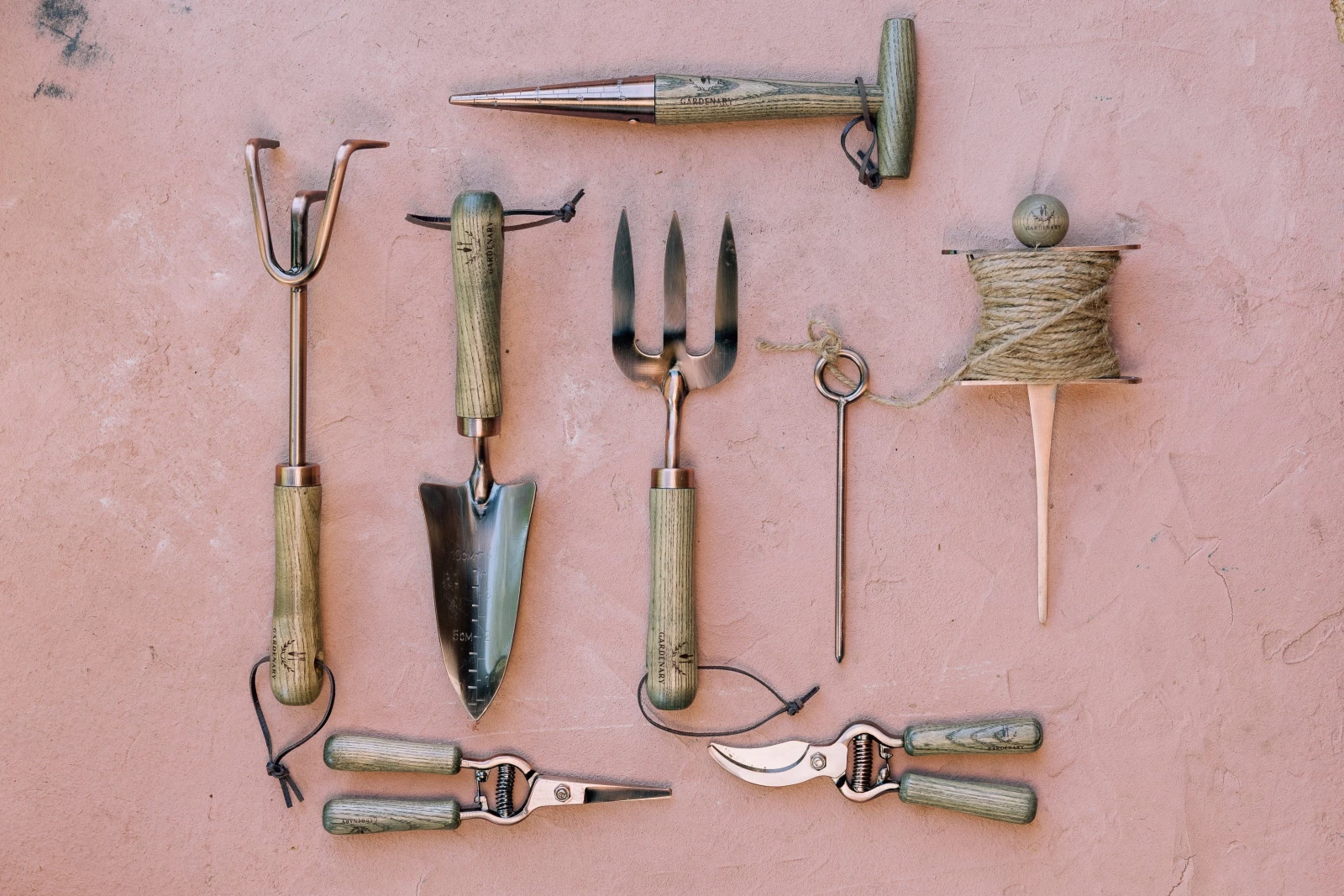
7 Tools, Beautifully Designed
The tool set gardeners actually want, made from carbon steel with an ash wood handle and a warm copper finish.
- Bypass pruner for clean, precise harvest cuts
- Needlenose pruner for detail work in tight spaces
- Transplanting shovel for seedlings and planting holes
- Dibber for perfectly spaced seed sowing
- Cultivator for loosening soil and clearing debris
- Hand fork for weeding and working around established plants
- Row marker & planting line for straight, intentional rows
All in a gift box, ready to use.

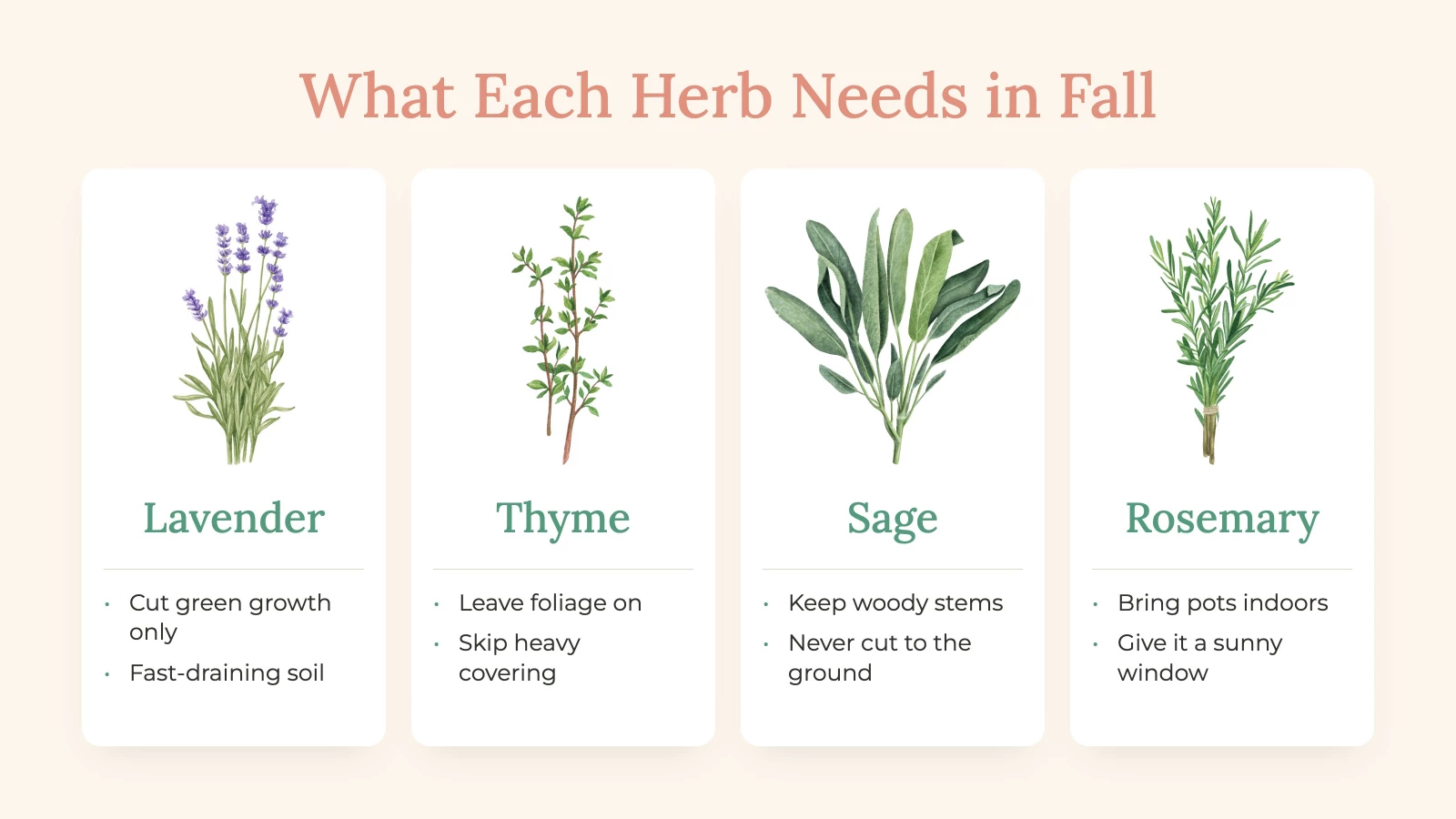
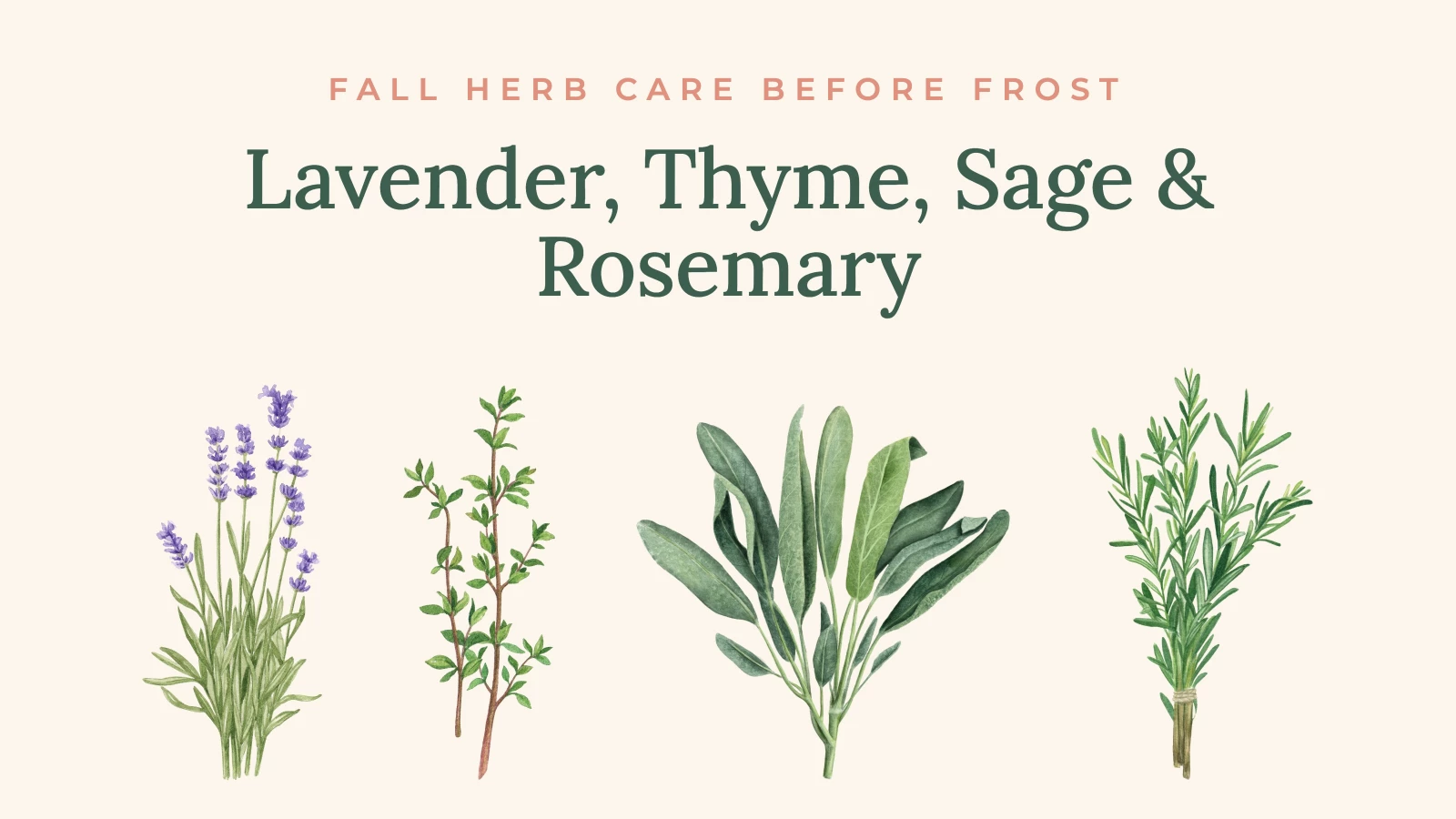
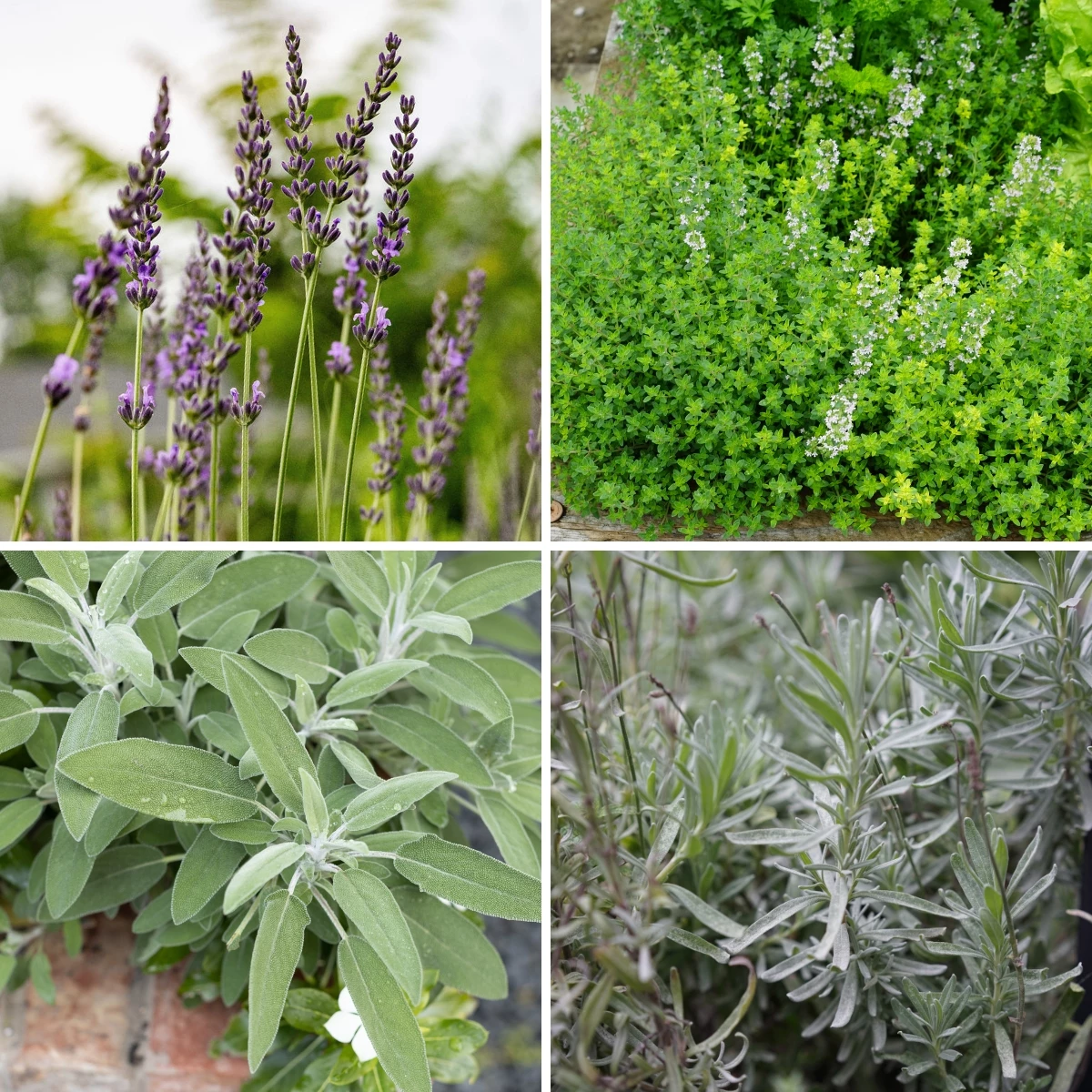
What Lavender, Thyme, Sage, and Rosemary Each Need
Lavender
- Stop pruning about 6 weeks before your first frost, and cut only into green growth
- Fast-draining soil is a must, since wet roots are its biggest weakness
- A spot sheltered from drying winds helps it come through cold weather looking good
New to growing it? Here's how to grow your own organic lavender.
Thyme
- Leave the foliage on, since it's tough and handles frost well
- Skip heavy covering, because thyme prefers to stay on the dry side
- A few loose evergreen branches can keep the leaves from drying out in harsh wind
More on how to grow and harvest your own organic thyme.
Sage
- Keep the woody stems intact, and never cut it to the ground in fall
- Harvest lightly, then let it rest
- Don't panic if it looks rough by spring, since sage often bounces back from the base
All my tips for how to grow sage in your kitchen garden.
Rosemary
- Rosemary is the tender one of the group and often can't survive a hard freeze in colder climates
- If it's in a pot, bring it indoors before your first hard freeze and give it your sunniest window
- If it's planted in the ground in a mild climate, leave it in place and make sure it drains well
Here's how I handle overwintering herbs indoors, plus my tips to keep your rosemary plant happy once it's inside. New to it? Start with how to grow and harvest your own organic rosemary.
Love the Look of a Gardenary Garden? Start With the Beds.
Handmade cedar kits that skip the sawing, measuring, and hammering
- A raised bed for every space, with 39 size options
- Three heights to fit your planting needs
- Handmade in the USA from premium, untreated cedar
- Built for long-term durability and productivity
What to Do With a Small Fall Herb Harvest
Since we're keeping the cuts light, your fall harvest will be small. The good news? Lavender, thyme, sage, and rosemary are so flavorful that a little bit goes a long way.
SMALL-BATCH IDEAS I LOVE:
- Sage brown butter: A few leaves crisped in butter turn pasta, gnocchi, or roasted squash into something special.
- Herb salt: Chop a few sprigs of rosemary, thyme, and sage with coarse salt, let it dry, and keep it in a jar by the stove.
- Compound butter: Mix chopped thyme or sage into soft butter, roll it into a log, and freeze slices for weeknight dinners.
- A pinch of lavender: A few dried buds in sugar, tea, or baked goods is plenty. Too much and it tastes like soap.
- Rosemary shortbread: One of my favorite ways to use just a sprig or two. Here's my rosemary shortbread recipe.
- A cozy cup of tea: A few fresh or dried sprigs make a lovely evening cup. Find more ideas in my homemade herb teas for sleep.
- Holiday sprigs: Tuck a few fresh sprigs in the fridge for Thanksgiving stuffing or a roast.
Grow All the Herbs You Love Right at Home
Skip the expensive grocery store herbs and snip your own instead
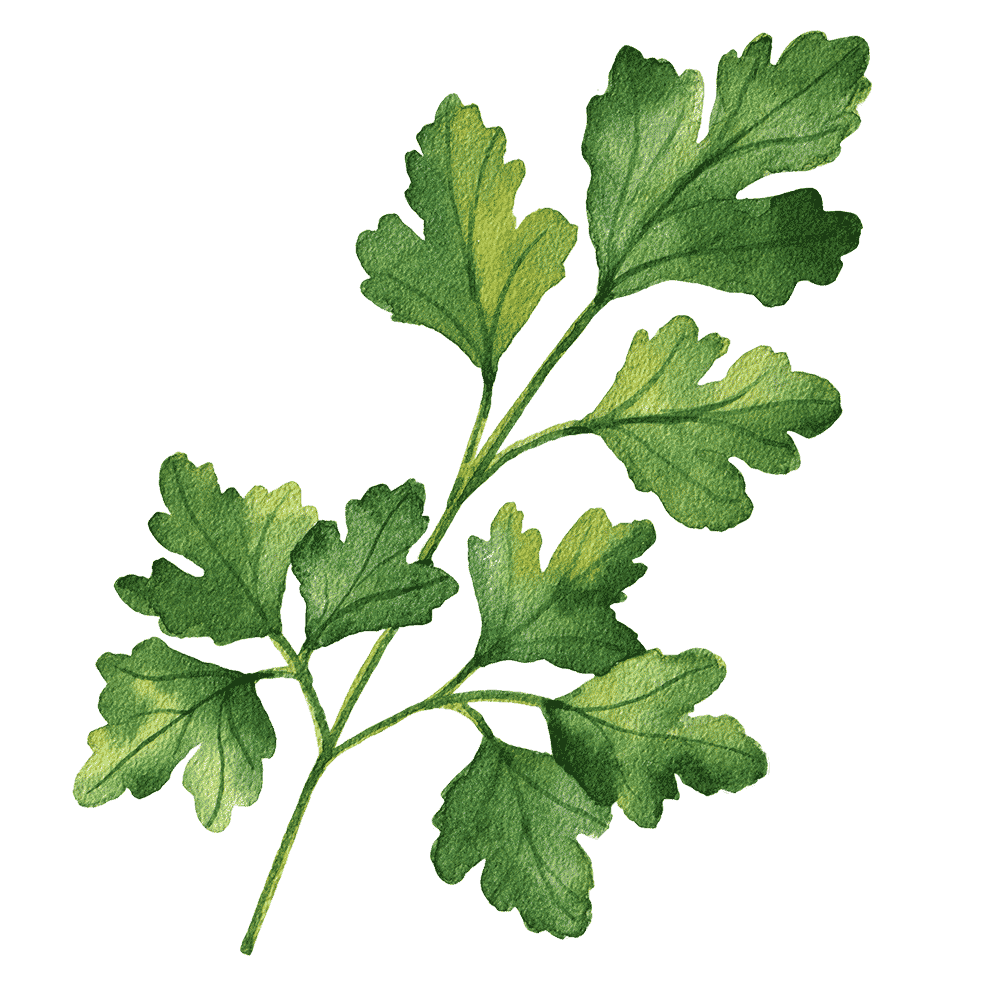
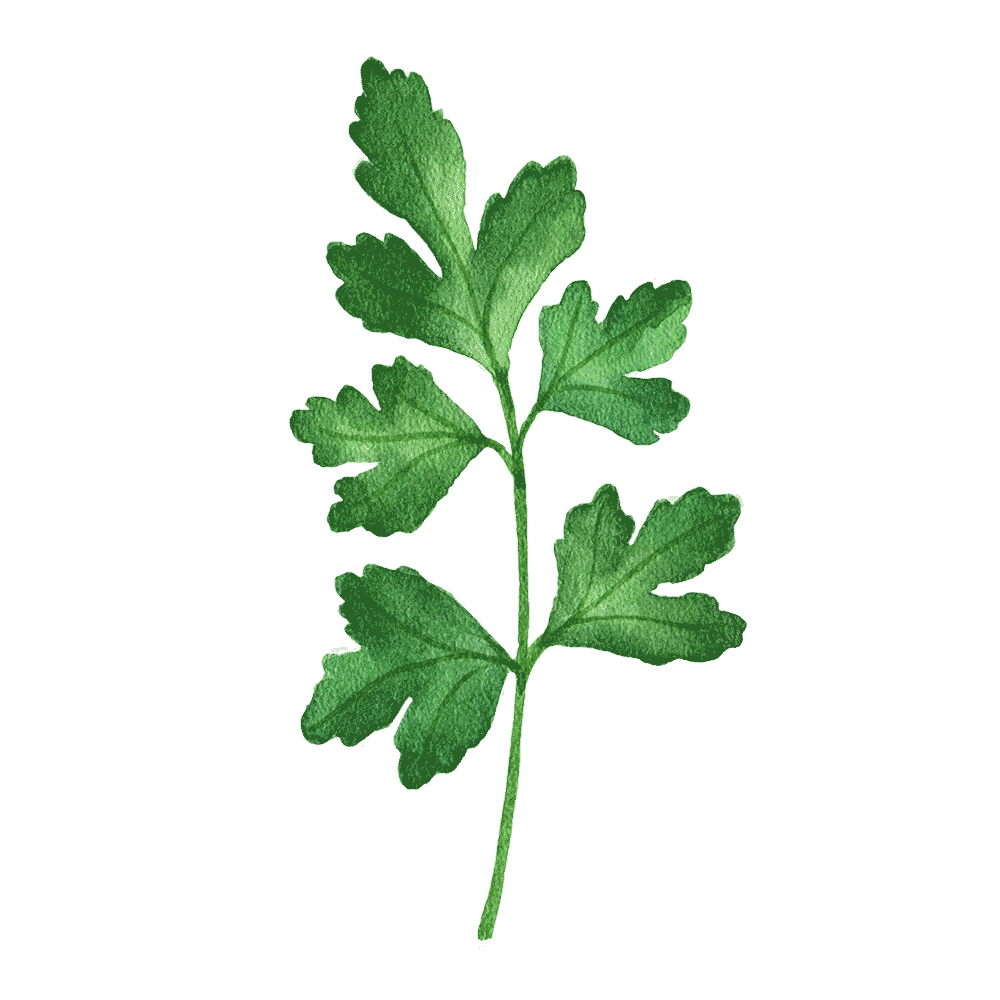
Imagine picking fresh basil, thyme, and parsley from your own backyard whenever a recipe calls for it. The Herb Garden Guidebook teaches you how to grow organic culinary herbs at home and keep them thriving all year. Instantly download your copy and start planting today.
Save the Real Pruning for Spring
Once new growth starts in spring, that's when your herbs get their real cut.
HERE'S MY SPRING ROUTINE:
- Wait for fresh growth. Dormant stems can look dead long after they've survived, so give them time.
- Do the scratch test. Gently scrape a stem with your fingernail. Green underneath means it's alive.
- Cut back to healthy wood. Trim just above a spot with live buds or new leaves.
- Remove anything dead. Brown, brittle stems with no green under the bark can go.

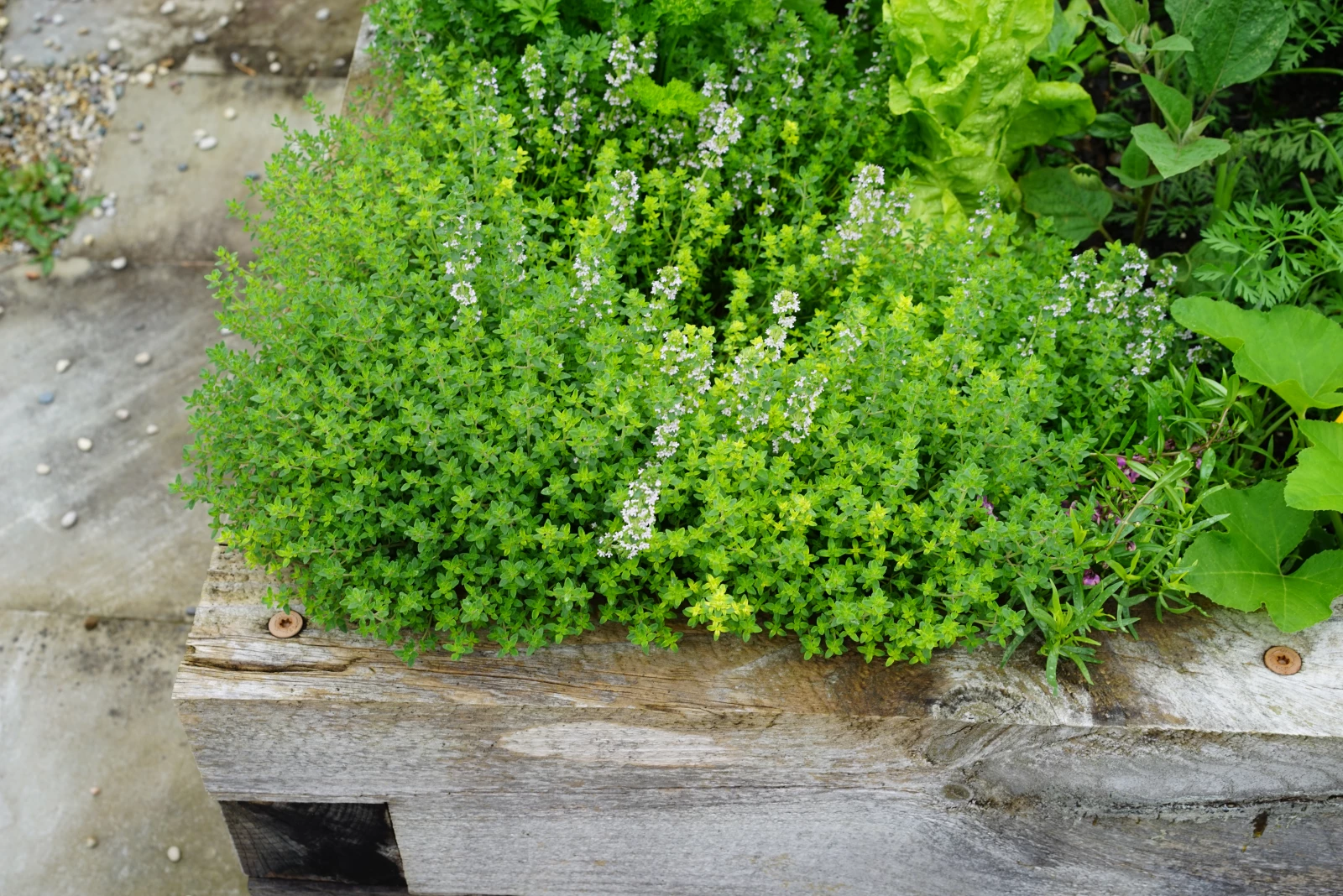
Where Fall Herb Care Usually Goes Wrong
- Giving everything a hard haircut in October. It feels productive, but it leaves woody herbs open to cold damage.
- Feeding late in the season. Fertilizer now means soft growth that frost will burn.
- Letting herbs sit in soggy soil. Poor drainage makes woody herbs much less cold-hardy.
- Giving up on brown stems in spring. Scratch first. Many "dead" herbs are just slow to wake up.
Keep Your Garden Tools Organized and Easy to Grab
Classic British trug design in durable galvanized steel
- Durable galvanized steel with a sturdy wooden handle
- Classic British trug design
- Pairs perfectly with Gardenary's copper garden tools
- Looks beautiful on a counter, shelf, or potting bench
Fall Herb Care FAQs
Is it too late to prune lavender in October?
Should I cut sage back to the ground in the fall?
Will thyme survive frost outside?
Can I bring lavender, thyme, and sage indoors?
How do I know if my lavender is dead after a cold snap?
Where can I learn to grow herbs all year?
What's the best tool for harvesting herbs?
Keep Reading
Fall Herb Care Before Frost: Lavender, Thyme, Sage, and Rosemary
When to Harvest Pumpkins and Winter Squash: 4 Signs to Check Before You Cut
How to Plant a Fall Garden in 5 Simple Steps
10 Reasons You Should Never Use Miracle-Gro in Your Garden
The Best Herbs to Grow in Shade

Are Your Radishes Ready to Harvest? Look for These 3 Signs
Sources
- Prune Lavender at the Right Time — Purdue Extension