
Join Thousands of Gardeners On the VIP List
Free perks, just for email subscribers:
- 15% Off Your First Order
- Gardening Videos & Articles
- Early Access to Sales
Sign up, check your inbox, then shop with your code.

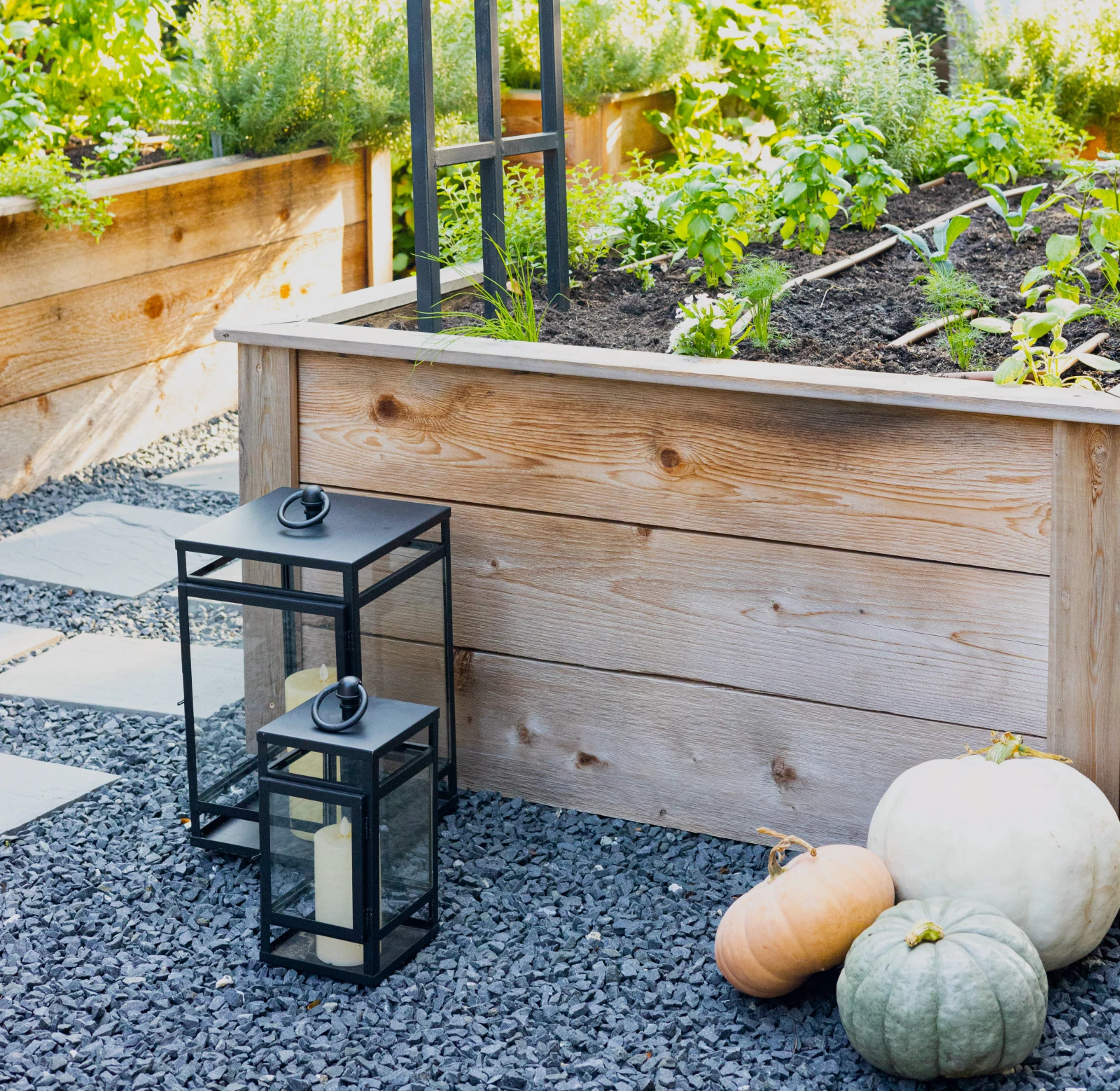
Nicole's Quick Take: I harvest pumpkins and winter squash when the color is deep and even and my fingernail can't dent the rind, always before a hard freeze. Cut with pruners, leave a stem, cure them warm for 1 to 2 weeks, then store at 50 to 55°F.
At a Glance
- Leave 2 to 4 inches of stem, and never carry squash by it.
- Skip curing acorn squash, since warmth shortens its storage life.
- Stored well, pumpkins and butternut keep 2 to 3 months.
By Nicole Johnsey Burke: Founder of Gardenary & Author of Kitchen Garden Revival
Why I Stopped Trusting a Pumpkin's Good Looks
Few things feel as good as a row of homegrown pumpkins and butternut squash lined up on the porch in October. But I've learned the hard way that a squash can look ready weeks before it's actually ready.
Now, I check for four simple things before I harvest.
When to Harvest Pumpkins and Winter Squash
Harvest pumpkins and winter squash when the rind is fully colored and hard enough that your fingernail can't dent it. Get them in before a hard freeze, even if they're not perfect.
Pumpkins and butternut squash are warm-season crops, so cold hurts them long before frost does. Temperatures under 50°F can damage the fruit and shorten how long it keeps.
HERE'S WHEN I BRING THE WHOLE CROP IN:
- Nights stay below 50°F for about a week: That's my signal to stop waiting, ripe or not.
- The forecast turns rainy: Squash sitting in wet soil starts to rot from the bottom.
- A hard freeze is coming: Pick everything. Frozen squash won't store.
Not sure when cold weather arrives where you live? Plug your zip code into our frost date calculator and work backward from there. If a surprise cold snap sneaks up on you, my frost protection guide can buy you a few extra nights.
One thing that surprises people: a light frost that kills the vines usually won't hurt the fruit. It's fine to leave squash sitting on brown, crispy vines for a few days, as long as you harvest before a hard freeze.

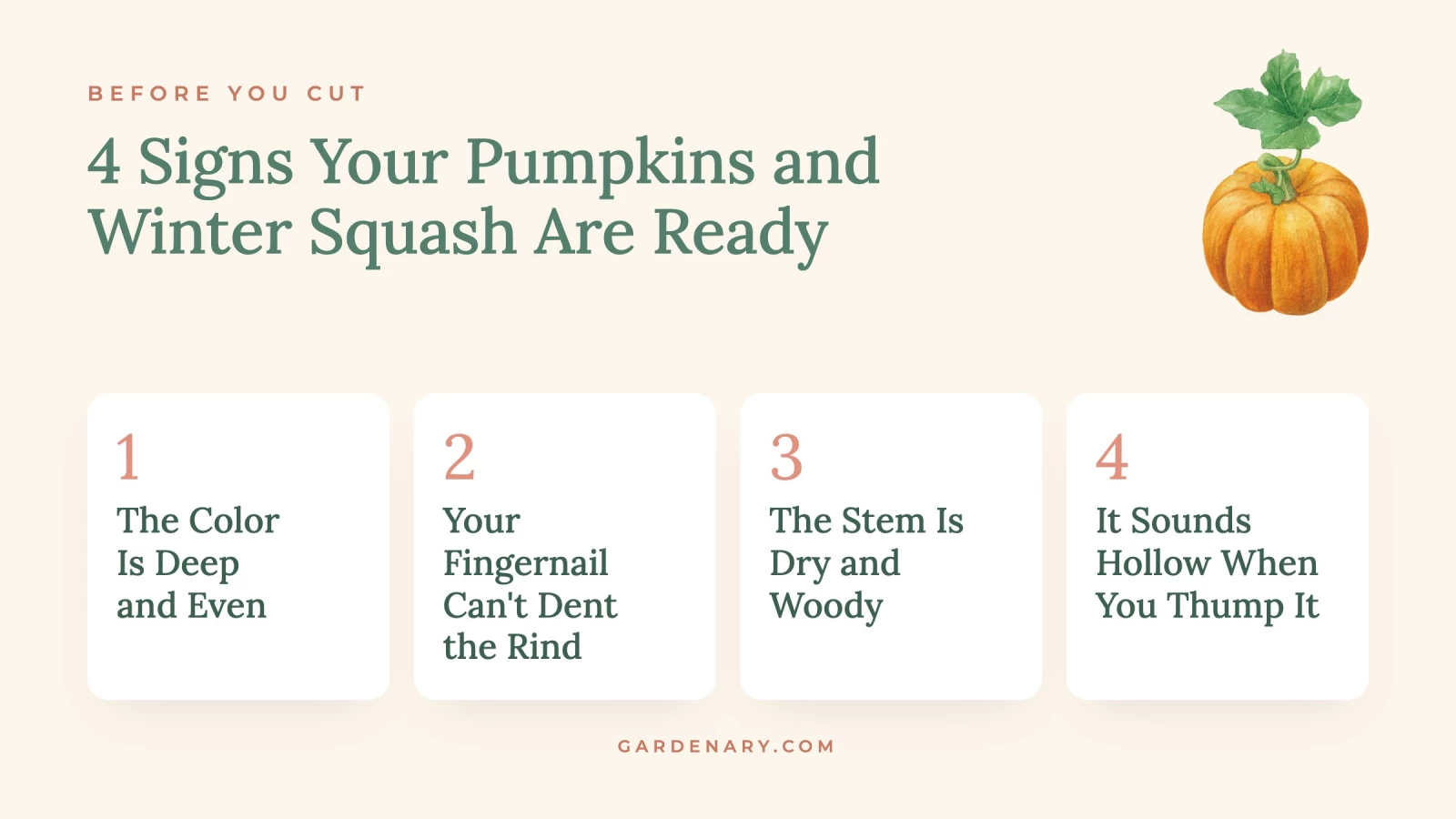
4 Signs Your Pumpkins and Winter Squash Are Ready to Cut
1. The Color Is Deep and Even
The squash has reached its full mature color all the way around, including the side resting on the soil. On butternut, green streaks near the stem mean it needs more time.
2. Your Fingernail Can't Dent the Rind
Press a nail into the skin away from the stem. If it barely leaves a scratch, the rind has hardened and it's ready.
3. The Stem Is Dry and Woody
A soft, green stem means the squash is still pulling from the vine. A ready one feels dry, corky, and tough.
4. It Sounds Hollow When You Thump It
Give it a knock with your knuckles. A ripe pumpkin or squash answers with a dull, hollow sound.
Grow Every Crop From Seed to Harvest
Step-by-step guidance for vegetables, herbs, and flowers
- How to start seeds and care for plants at every stage
- Soil, watering, and pest management practices
- Seasonal guidance to keep you on track
- Printed guide shipped straight to your door
How to Tell Each Type Is Ready
Those four signs work for every squash, but each type has its own tells. Here's what I look for on the ones I grow most.
Pumpkins
- Deep, even color all the way around, including the side touching the soil
- A hard, shiny shell that resists your fingernail
- A stem that's turning woody and dry
- A hollow sound when you thump it
Butternut Squash
- Solid tan or beige skin with no green streaks, especially near the stem
- A dull finish instead of a glossy one (young squash shine, mature squash don't)
- A rind your fingernail can't pierce
Acorn Squash
- Dark green skin that has lost its shine
- An orange or yellow patch where the squash rested on the ground
- A hard rind and a dry, corky stem
Spaghetti and Delicata Squash
- Spaghetti squash turns golden yellow all over, with no green tint
- Delicata turns cream or pale yellow between its green stripes
- Both should have hard, dull skin
Hubbard Squash
- Hard, dull rind in its mature color (blue-gray, green, or orange depending on the variety)
- These giants are slow, so give them every warm day you can before the cold arrives

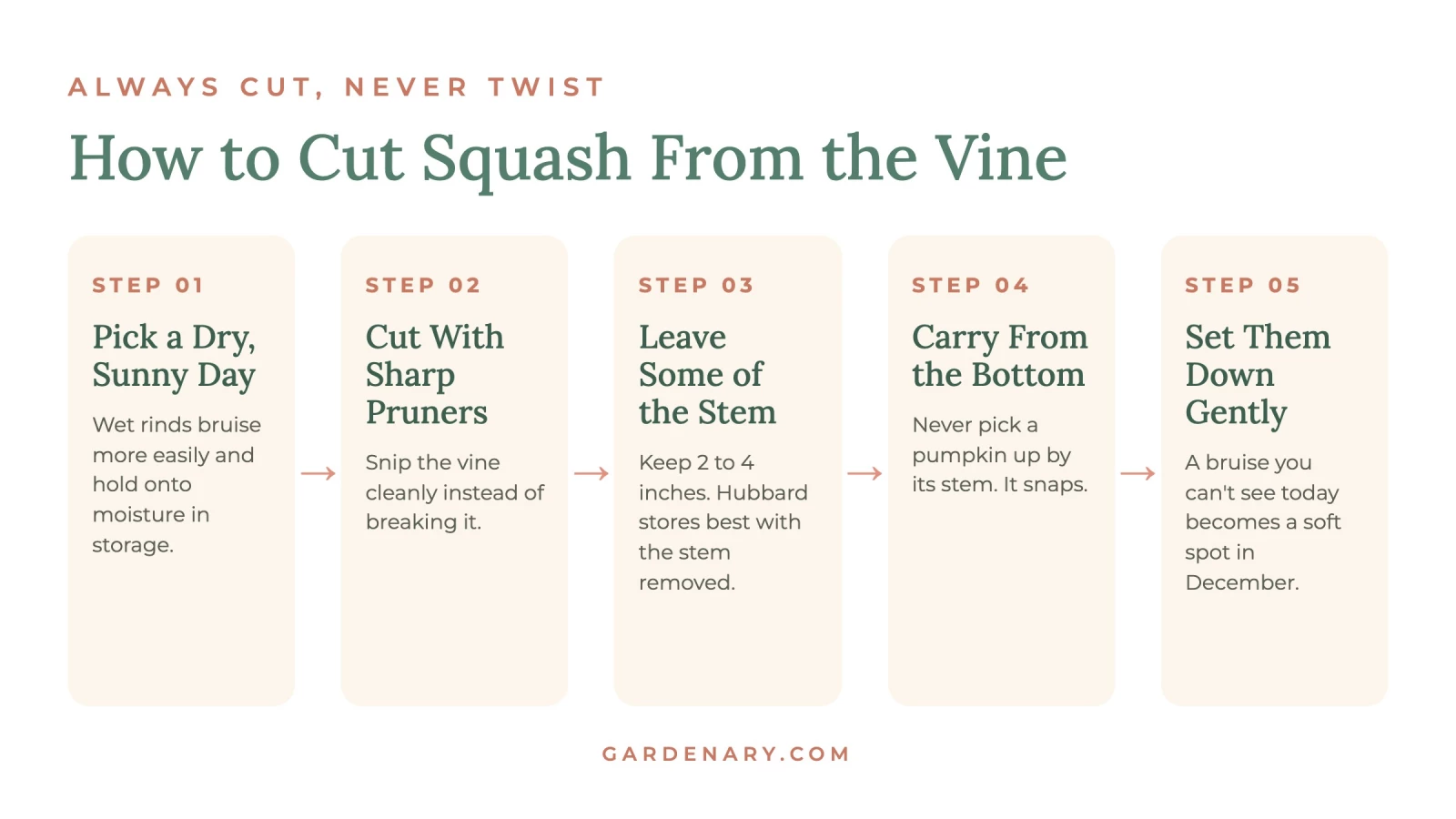
How to Cut Pumpkins and Squash From the Vine
Always cut, never twist or yank. A torn stem is an open door for rot, and a pumpkin without its stem won't store well.
HERE'S HOW I HARVEST EACH ONE:
- Pick a dry, sunny day. Wet rinds bruise more easily and hold onto moisture in storage.
- Cut with sharp pruners. Snip the vine cleanly instead of breaking it.
- Leave the right amount of stem. Leave 2 to 4 inches of stem on pumpkins, butternut, acorn, spaghetti, and delicata. Hubbard squash is the exception: it stores best with the stem removed completely.
- Carry from the bottom. Never pick a pumpkin up by its stem. It's a handle in name only, and it snaps.
- Set them down gently. No dropping, tossing, or stacking in piles. A bruise you can't see today becomes a soft spot in December.
For small squash like acorn and delicata, I fill my Galvanized Garden Trug and make a few trips. The big pumpkins get carried one at a time, hugged like a toddler.
Any squash that gets nicked or bruised along the way goes straight to the kitchen. Damaged fruit won't last in storage, so roast it this week.
Keep Your Garden Tools Organized and Easy to Grab
Classic British trug design in durable galvanized steel
- Durable galvanized steel with a sturdy wooden handle
- Classic British trug design
- Pairs perfectly with Gardenary's copper garden tools
- Looks beautiful on a counter, shelf, or potting bench
The Pruners I Reach for Every Harvest
The bypass pruner in my Gardenary Copper Plated Garden Tool Set cuts through a thick, woody squash vine in one clean snip, which is exactly what keeps that stem intact. The set includes seven carbon steel tools with copper plating and ash wood handles, from the trowel I use to plant garlic in the same bed next week to the pruners I keep in my pocket all fall.
It also comes in a gift box, so it's one to remember when holiday shopping starts.
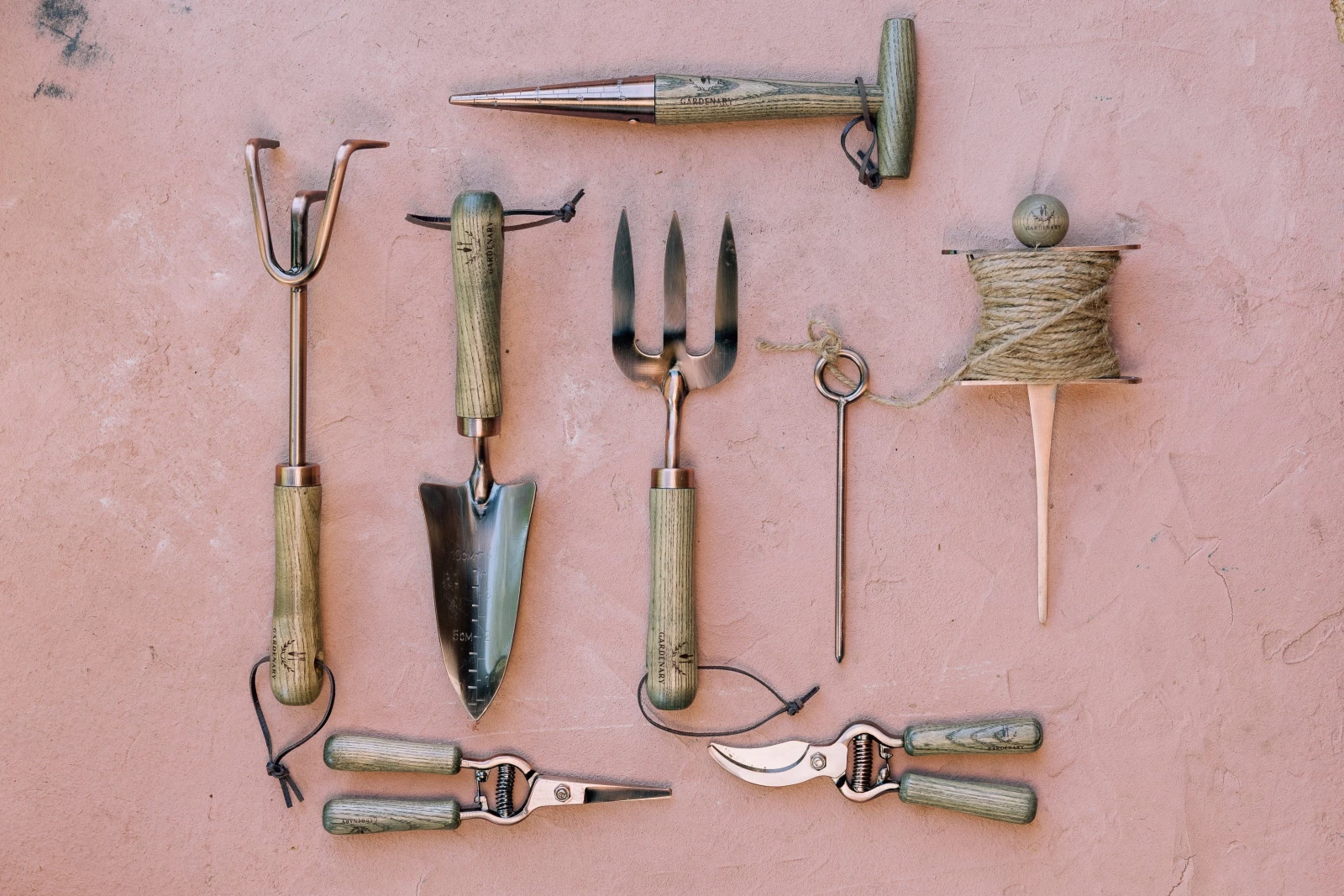
7 Tools, Beautifully Designed
The tool set gardeners actually want, made from carbon steel with an ash wood handle and a warm copper finish.
- Bypass pruner for clean, precise harvest cuts
- Needlenose pruner for detail work in tight spaces
- Transplanting shovel for seedlings and planting holes
- Dibber for perfectly spaced seed sowing
- Cultivator for loosening soil and clearing debris
- Hand fork for weeding and working around established plants
- Row marker & planting line for straight, intentional rows
All in a gift box, ready to use.

How to Cure Pumpkins and Winter Squash
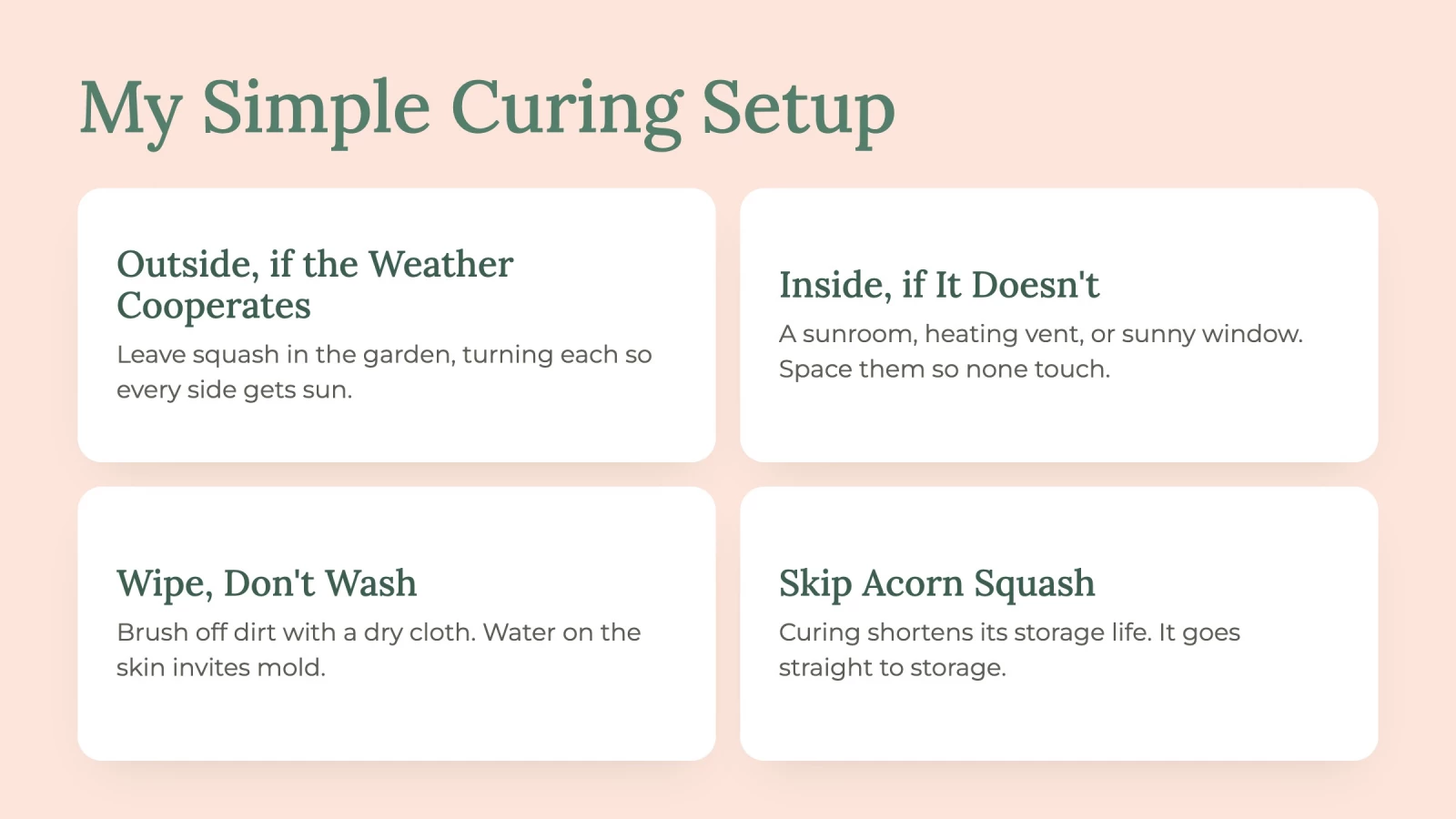
Curing means keeping freshly picked squash warm and dry for 1 to 2 weeks, ideally around 80 to 85°F. It hardens the rind and heals small scratches so the fruit keeps for months instead of weeks.
MY SIMPLE CURING SETUP:
- Outside, if the weather cooperates: Leave the squash right in the garden in a dry, sunny stretch, turning each one so every side gets sun.
- Inside, if it doesn't: A warm sunroom, a spot near a heating vent, or a sunny window works. Space them out so none are touching.
- Wipe, don't wash: Brush off the dirt with a dry cloth. Water left on the skin invites mold.
- Skip acorn squash: Warm, humid curing shortens its storage life, so it goes straight to storage (or straight into the oven).

How to Store Them So They Last for Months
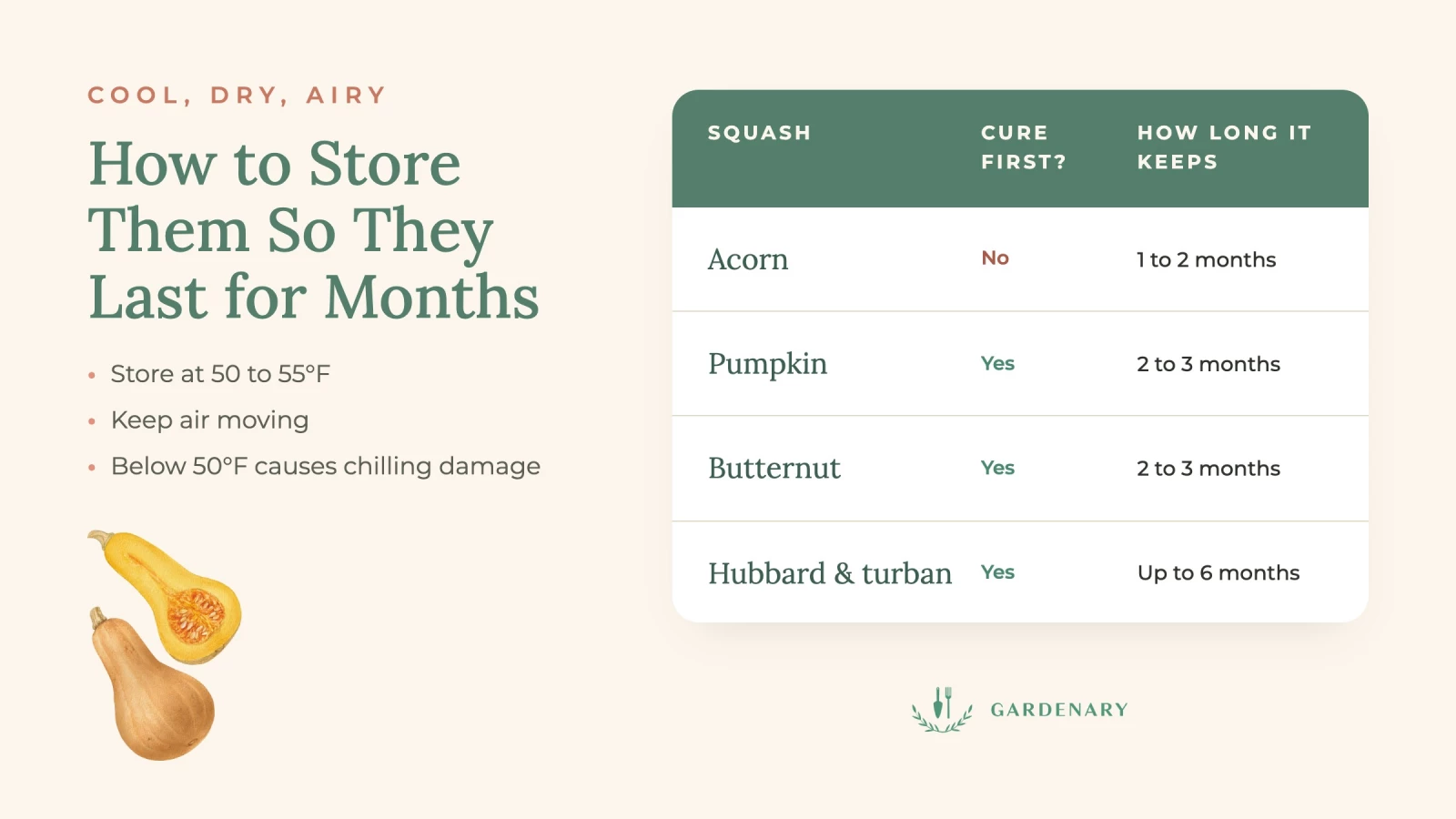
Store cured pumpkins and winter squash somewhere cool and dry, at 50 to 55°F with good air circulation. Colder isn't better here: below 50°F, squash gets chilling damage.
Squash | Cure first? | How long it keeps |
|---|---|---|
Acorn | No | 1 to 2 months |
Pumpkin | Yes | 2 to 3 months |
Butternut | Yes | 2 to 3 months |
Hubbard and turban | Yes | Up to 6 months |
HERE'S WHAT KEEPS MY SQUASH SHELF HAPPY:
- Get them off the floor. Shelves are ideal. A layer of straw underneath helps keep them dry.
- Give them space. A single layer, not touching, so air moves around each one.
- Skip the newspaper and paper bags. They hold moisture against the rind and encourage rot.
- Keep them away from apples and pears. Ripening fruit gives off ethylene gas, which speeds up spoilage.
- Check once a week. Pull anything with a soft spot before it spreads to its neighbors.
A cool garage or basement shelf usually works great. I keep my squash near the carrots and sweet potatoes, and it feels like having my own little farm stand all season.
Grow Your Pumpkins Up Next Year
If your pumpkin vines took over half the yard this year, the Nicole Arch Trellis is my favorite fix. Small-fruited squash like delicata and acorn climb right up it, which keeps the fruit off wet soil and frees up your raised bed for more plants underneath.
It's made of powder-coated steel that lasts for years, and it tends to sell out every season, so it's worth grabbing before spring planting sneaks up on you.
Nicole Arch Trellis
Our bestselling Nicole Arch Trellis is perfect for all your vining vegetables and strong enough for vining roses or other ornamental vining plants.
Product Features:
- Powder-coated black steel
- Easy assembly: pieces slide together without tools
- Four stakes to secure the trellis into the ground
- Measures 88" x 67" x 15"
Where the Squash Harvest Usually Goes Wrong
- Going by size alone. A full-sized butternut can still be weeks from ripe. Trust the rind and the color, not how big it looks.
- Picking it up by the stem. It feels like a handle. It isn't. A snapped stem means a pumpkin that rots early.
- Waiting through a hard freeze. Fruit that freezes on the vine breaks down fast in storage, no matter how ripe it was.
- Storing it somewhere too cold. A chilly garage floor or an unheated shed in January can drop below 50°F. Shelves in a cool, steady spot work best.
- Tucking it next to the fruit bowl. Apples and pears make squash yellow and spoil faster. Give them separate rooms if you can.
If you're pulling squash vines this week, it's a great time to tackle the rest of the beds, too. My list of what plants to remove before your first frost walks you through it.
Gardenary's Fall Garden Guide
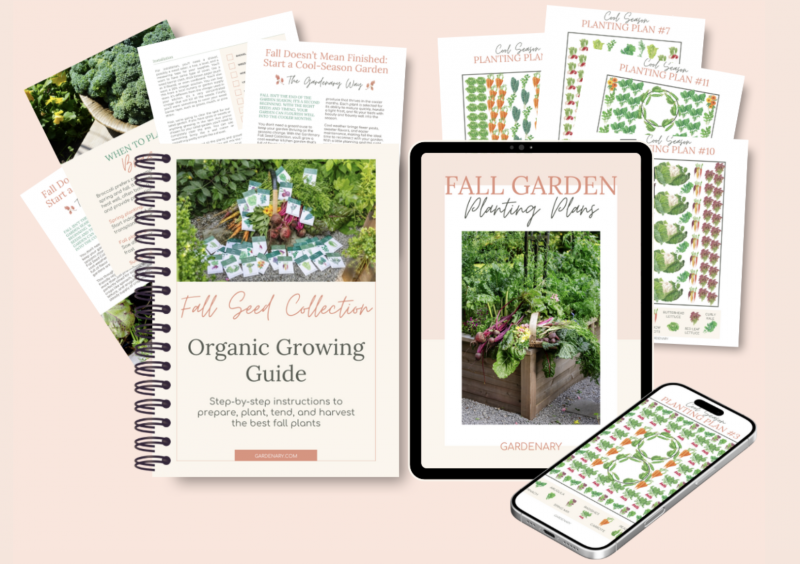
Spring gets all the attention, but fall is actually the ideal time to start your kitchen garden. Get expert guidance, done-for-you layouts, and step-by-step tips to help you plant smarter, grow healthier crops, and harvest more—right through fall.
Pumpkin and Winter Squash FAQs
Will my pumpkin turn orange after I pick it?
Can I eat the pumpkin I grew for carving?
Should I store winter squash in the refrigerator?
Can I leave my pumpkins on the porch until Thanksgiving?
What should I plant in the bed after I pull my squash vines?
What's the best tool for harvesting pumpkins and squash?
Where can I buy a trellis to grow squash vertically?
Keep Reading
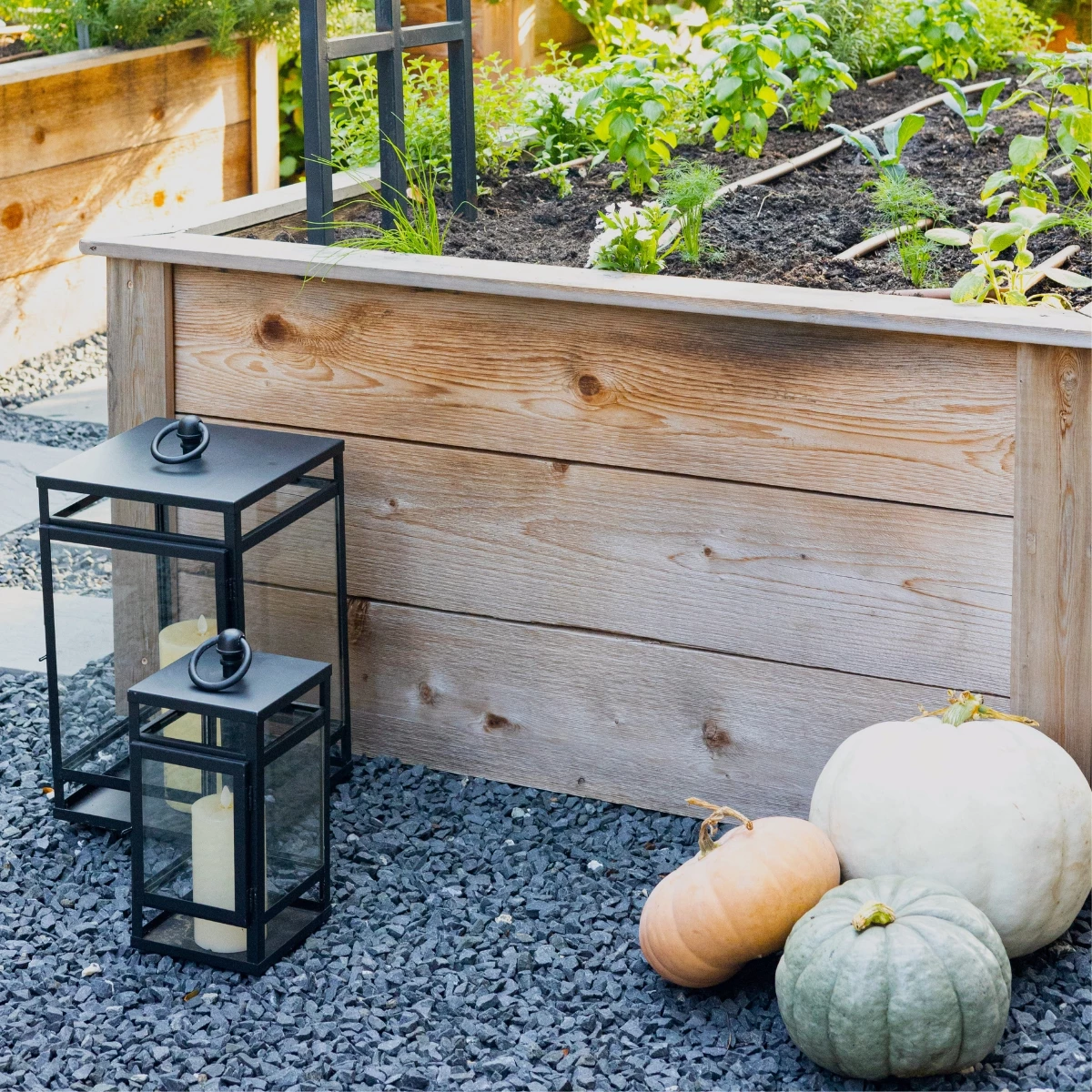
When to Harvest Pumpkins and Winter Squash: 4 Signs to Check Before You Cut
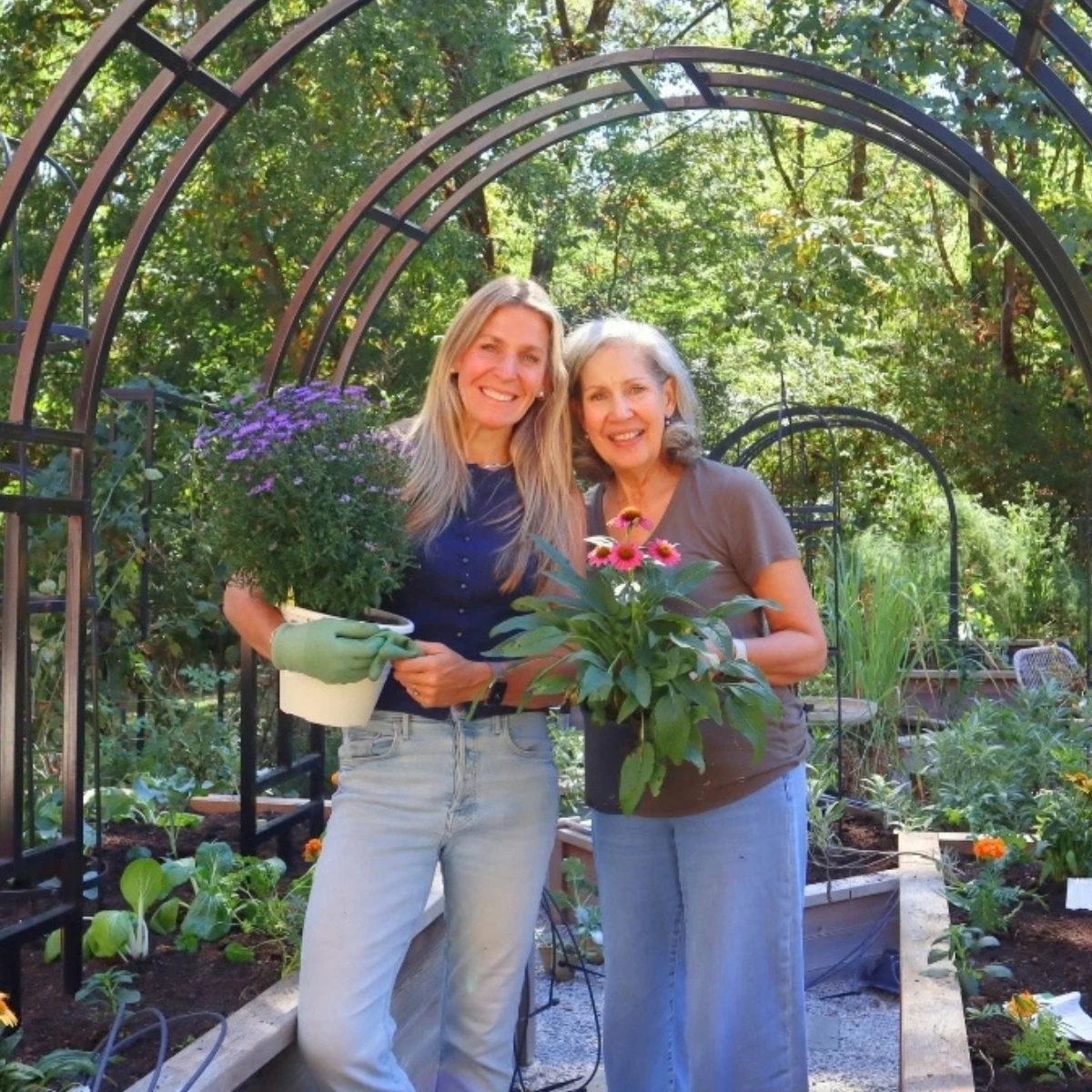
How to Plant a Fall Garden in 5 Simple Steps
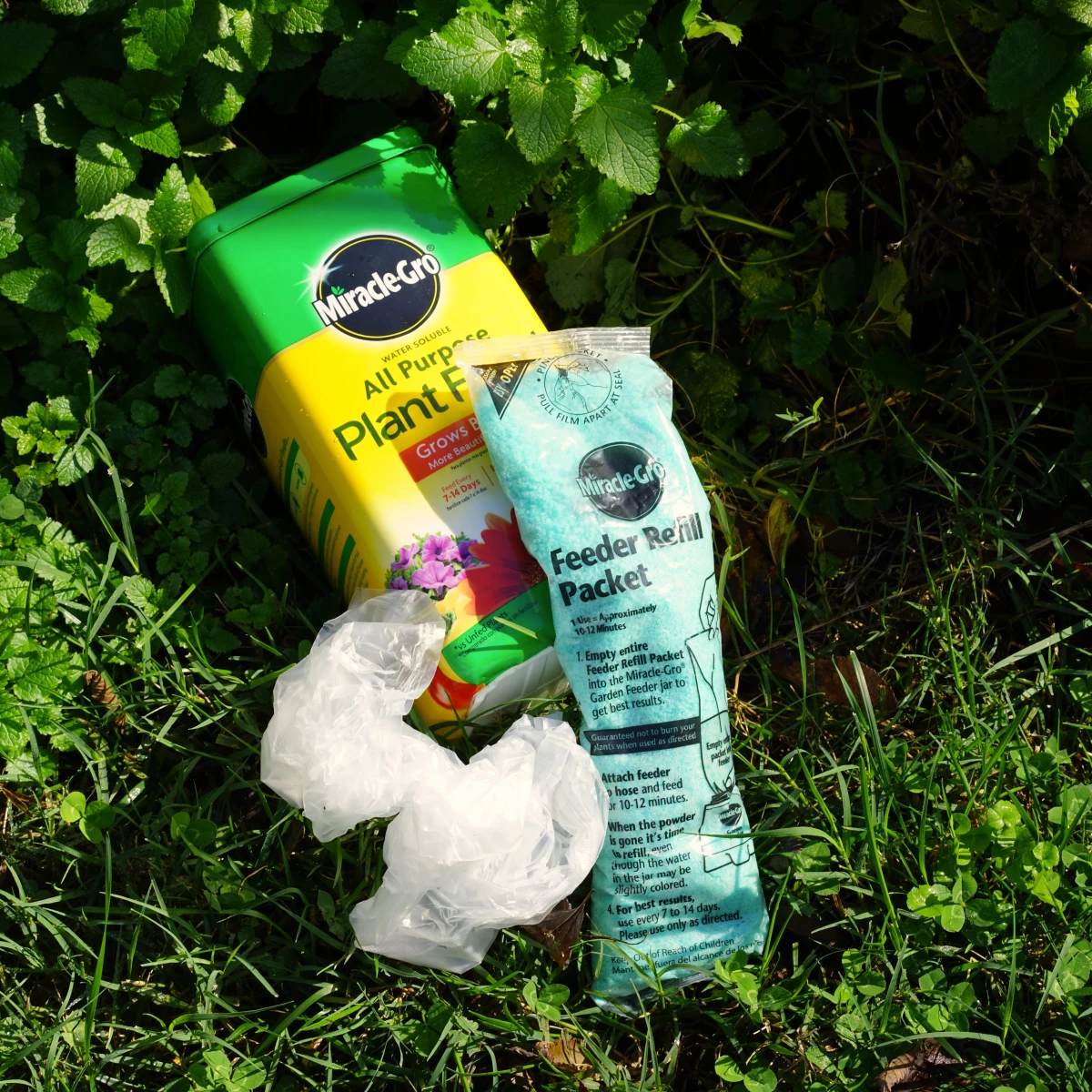
10 Reasons You Should Never Use Miracle-Gro in Your Garden
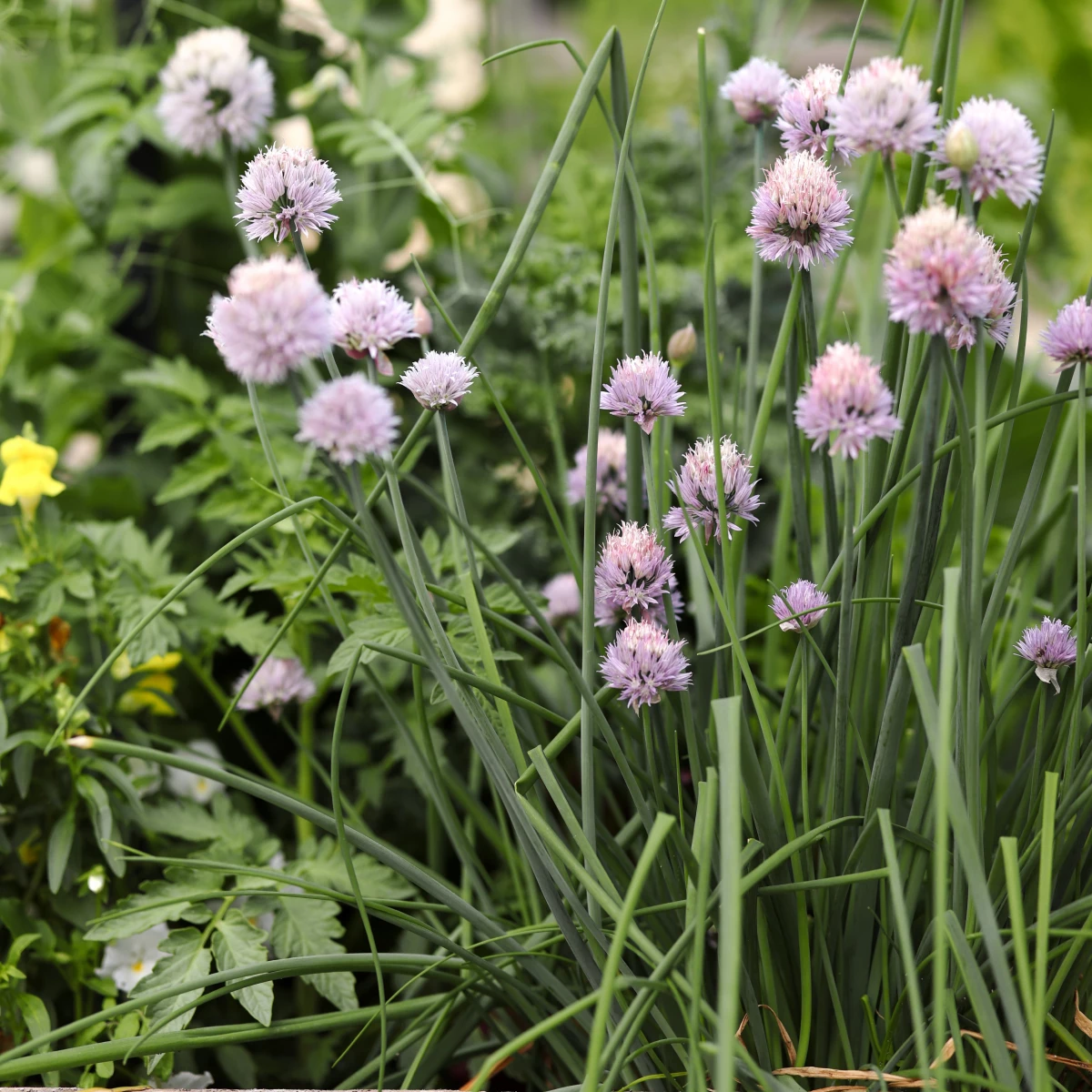
The Best Herbs to Grow in Shade

Are Your Radishes Ready to Harvest? Look for These 3 Signs
What to Plant in October: Vegetables for Every Climate
Sources
- Plan now to harvest and store pumpkins and winter squash — Oregon State University Extension Service
- Growing pumpkins and winter squash in home gardens — University of Minnesota Extension
- Preserving pumpkins and winter squash — Oregon State University Extension Service