
Join Thousands of Gardeners On the VIP List
Free perks, just for email subscribers:
- 15% Off Your First Order
- Gardening Videos & Articles
- Early Access to Sales
Sign up, check your inbox, then shop with your code.


Nicole's Take: A fall garden isn't about cramming in as many plants as possible. It's about pairing the right plants so they work together. Give your fruiting vines the center spot, tuck root crops in around your leafy greens, and you'll get a raised bed that's productive right up until frost.
At a Glance
- Fall gardens thrive on layering: fruiting vines in the center, large leafy greens down the middle, and root crops or small greens filling the edges.
- Cool season plants grow best between 35 and 65°F and can tolerate light frost.
- Herbs, garlic, and flowers like calendula round out the bed and help protect leafy greens from pests.
By Nicole Johnsey Burke: Founder of Gardenary & Author of Kitchen Garden Revival
Mix & Match Your Favorite Veggies in Your Fall Garden
You may be wondering how you can put plants together in your vegetable garden to make the most of your growing space, maximize productivity, keep your garden healthy, and still look beautiful all season long.
That might sound like a tall order, but it's actually quite simple if you follow these six steps to pick the right plants for the right spot in your garden. We're going to pack those plants in there and make the most of every square inch!
These cool-season plants grow best when temps range from 35 to 65°F (1.7 to 18.3°C), and they can handle varying degrees of frost.
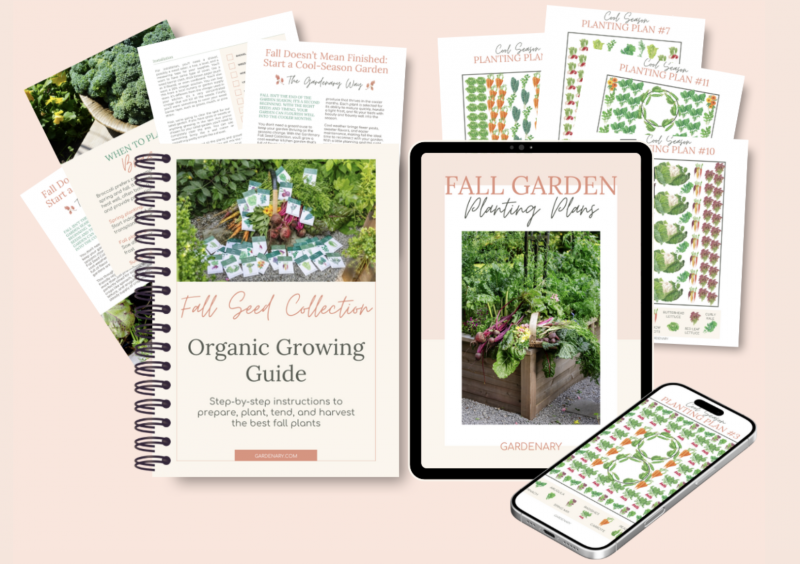
Gardenary's Fall Garden Guide
Spring gets all the attention, but fall is actually the ideal time to start your kitchen garden. Get expert guidance, done-for-you layouts, and step-by-step tips to help you plant smarter, grow healthier crops, and harvest more—right through fall.
6 Steps to Your Best Fall Garden Planting Plan
Step 1: Pick a Fruiting Plant for the Center of Your Raised Beds
Fruiting plants need the most amount of sun, especially as the days grow shorter.
I recommend growing them right down the center of your raised beds if they're accessible from all sides. That way, these large plants can actually create some shade for smaller plants that don't want harsh afternoon light, like root crops and leafy greens. (Otherwise, grow them in the back of the garden.)
Make sure you've got a sturdy trellis for these vines to climb. I love growing cool season fruiting plants on obelisk trellises, but a panel or arch would do great, too. Your fruiting plants will take up vertical space on the trellis and still leave tons of growing space in your raised beds.
We don't have a lot of fruit options in the cool season, but what we do have are good ones: snow peas, sugar snap peas, or fava beans.


Step 2: Pick a Large Leafy Green
In the fall, I recommend dedicating the majority of your growing space to leafy greens—this is when they really thrive. Plant large leafy greens in long rows down the middle of your raised beds. They'll look so beautiful and produce a ton of leaves.
Large leafy green options include kale, Swiss chard, cabbage, and mustard greens. You could also do broccoli or cauliflower, which aren't technically leafy greens (they do produce edible leaves though!). My fall must-haves are dinosaur kale, blue curled scotch kale, and Napa cabbage.
These plants take a while to mature, but once they're up and growing, they'll give you so many leaf harvests (you can take the outer leaves from your cabbage plants even while you're waiting on the head to form).


Step 3: Pick a Root Crop for Your Fall Garden
The cool days of fall are the perfect time to grow root crops. Your options include radishes, beets, and carrots. You really can't go wrong which one you choose, but if you're looking for something fast, I recommend French breakfast radishes.
Root crops make great companion plants to grow with all your fall leafy greens because they take up way more space underground than they do aboveground. Just make sure you're planting your roots somewhere they won't get too much shade. I like to plant my roots in the space around my large leafy greens or right up along the edge of my raised bed so they can get as much sunlight as they need.


MY SEED STARTING SECRET
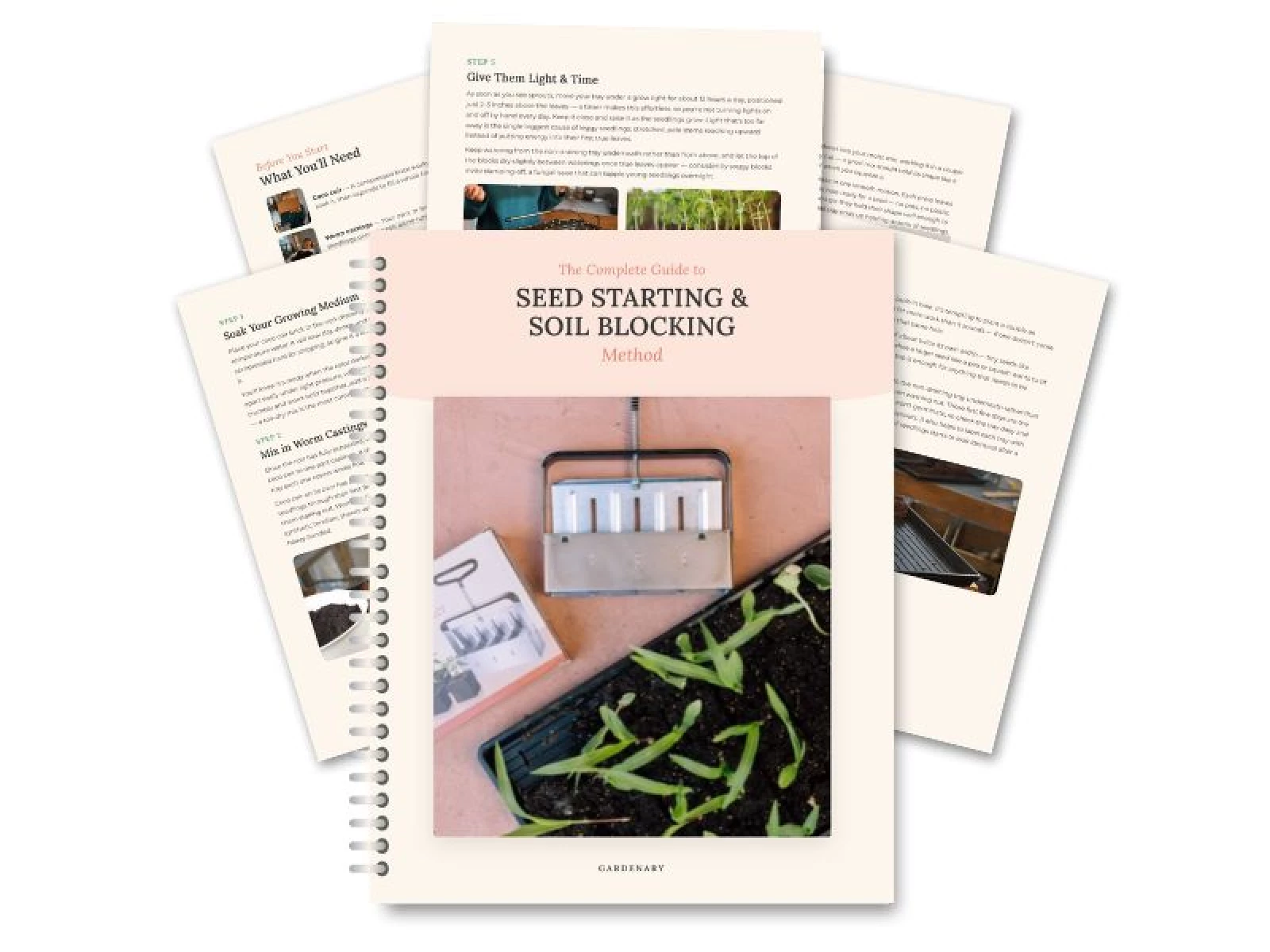
Get the 5-Step Method for Healthier Seedlings
I'm sharing my free step-by-step guide to seed starting and soil blocking — the exact method I use every season to grow healthier seedlings. You'll get my 5-step process plus the trick I use to keep seedlings from getting leggy. It's a free instant download, straight to your inbox.
Step 4: Choose Some Herbs
Parsley, cilantro, and dill love growing in the cool season. Perennial herbs like chives and oregano can also stick around well past your first frost.
They may not be herbs, but garlic and onions can also be planted in the fall, and along with chives, will help protect your leafy greens from pests before frost hits. Plus, you'll have some fantastic bulbs growing underground while your leafy greens grow big aboveground.


Step 5: Pick Some Small Leafy Greens
Now it's time to add in some smaller leafy greens so that you have something to harvest while you're waiting on the peas and larger leafy greens to produce. These small leafy greens can fill in any empty spaces in your raised beds and can be continuously planted throughout the season. You can even plant small greens right next to your root crops since the leaves won't grow tall enough to shade the root plants.
Some of the many options you have for small leafy greens include green lettuce, red lettuce, spinach, arugula, buttercrunch, spring mix, romaine, and mizuna.


Step 6: Add Some Flowers
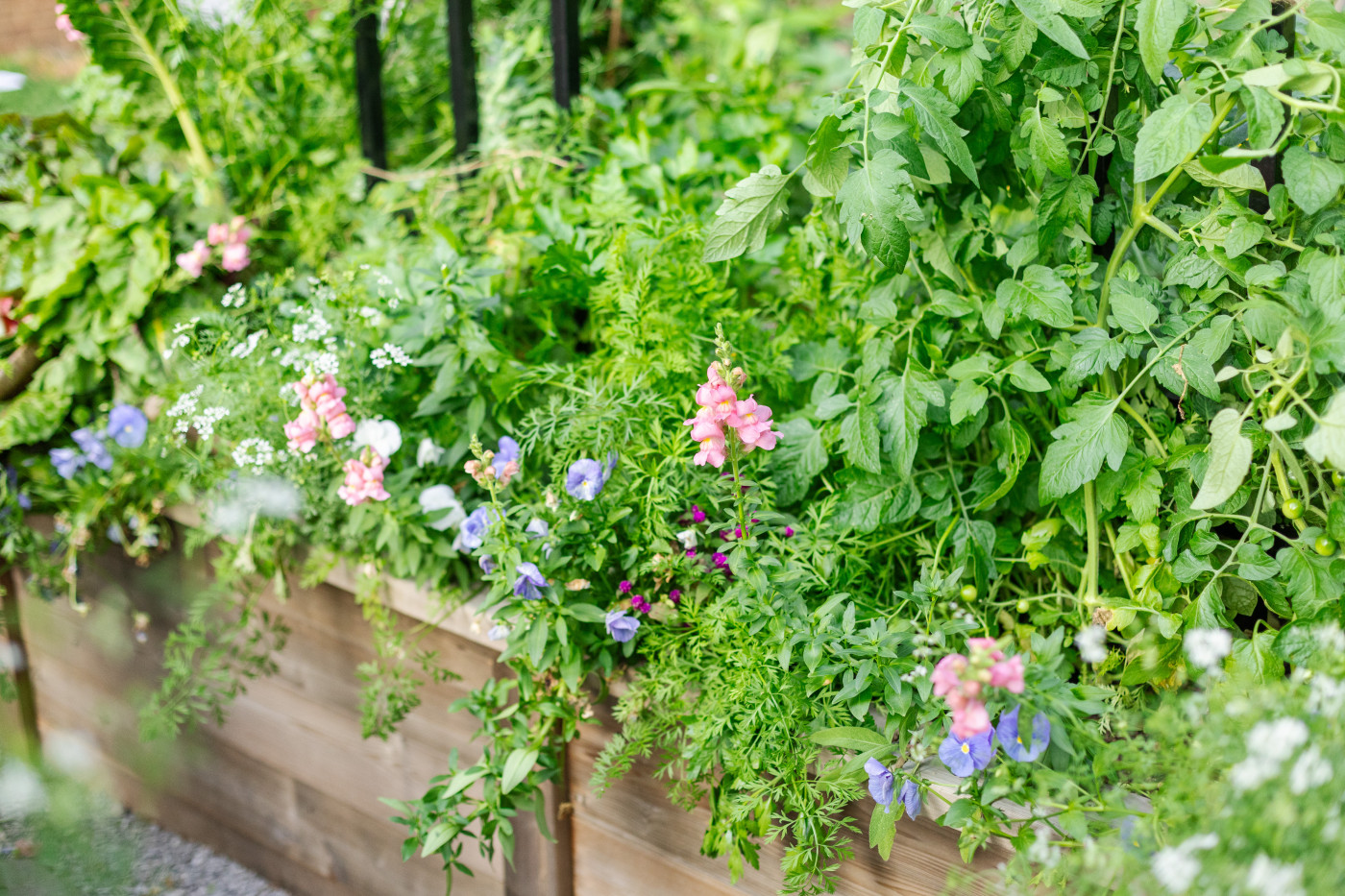
The last step is to select some flowers to go around the border of your raised beds and add lots of color to your garden beds.
Frost-tolerant fall flower options include snapdragons, dianthus, and pansies, plus the flowering herbs chamomile and calendula. Both chamomile and calendula can help distract pests that might be hunting for your leafy greens. You can also harvest the flowers to make cozy teas for winter.

That's How You Create Your Own Fall Garden Planting Plan
Those are the steps to creating a mix of plants that combine perfectly. And by that, I mean they'll look stunning and work together throughout the season to keep your garden full, healthy, and productive.
By following these steps, you can create your own planting plan for a garden of any size, from a little 4x4 raised bed to a huge kitchen garden.
Fall Garden FAQs
What herbs can I grow in a fall garden?
Parsley, cilantro, dill, chives, and oregano all thrive in cool fall temperatures, and garlic and onions can be planted in fall for a summer harvest.
What temperature is best for cool season fall vegetables?
Cool season vegetables grow best when temperatures range from 35 to 65°F and most can tolerate light frost.
Where can I buy a trellis for fall peas and fava beans?
Gardenary's obelisk and panel trellis styles are built for cool-season vines and hold up season after season — shop.gardenary.com has the full lineup.


Join Thousands of Gardeners On the VIP List
Free perks, just for email subscribers:
- 15% Off Your First Order
- Gardening Videos & Articles
- Early Access to Sales
Sign up, check your inbox, then shop with your code.