Join Thousands of Gardeners On the VIP List
Free perks, just for email subscribers:
- 15% Off Your First Order
- Gardening Videos & Articles
- Early Access to Sales
Sign up, check your inbox, then shop with your code.
By Nicole Johnsey Burke: Founder of Gardenary and Author of Kitchen Garden Revival

At a Glance
- Most tomato problems come down to one of seven fixable issues: pests, disease, sunlight, nutrients, water, temperature, or support.
- Organic solutions exist for every common tomato problem — you don't need synthetic sprays or fertilizers to grow a healthy crop.
- Catching problems early is the single biggest factor in saving a tomato plant before it's too late.

Tomato Troubleshooting
I've grown tomatoes in Houston heat, Chicago cold, and Nashville humidity. And I'll tell you the truth: tomatoes are dramatic. They will absolutely let you know when something is wrong. Once you know what to look for, most problems are very fixable.
Here's your quick-reference guide to diagnosing the seven most common tomato problems and getting your plants back on track!

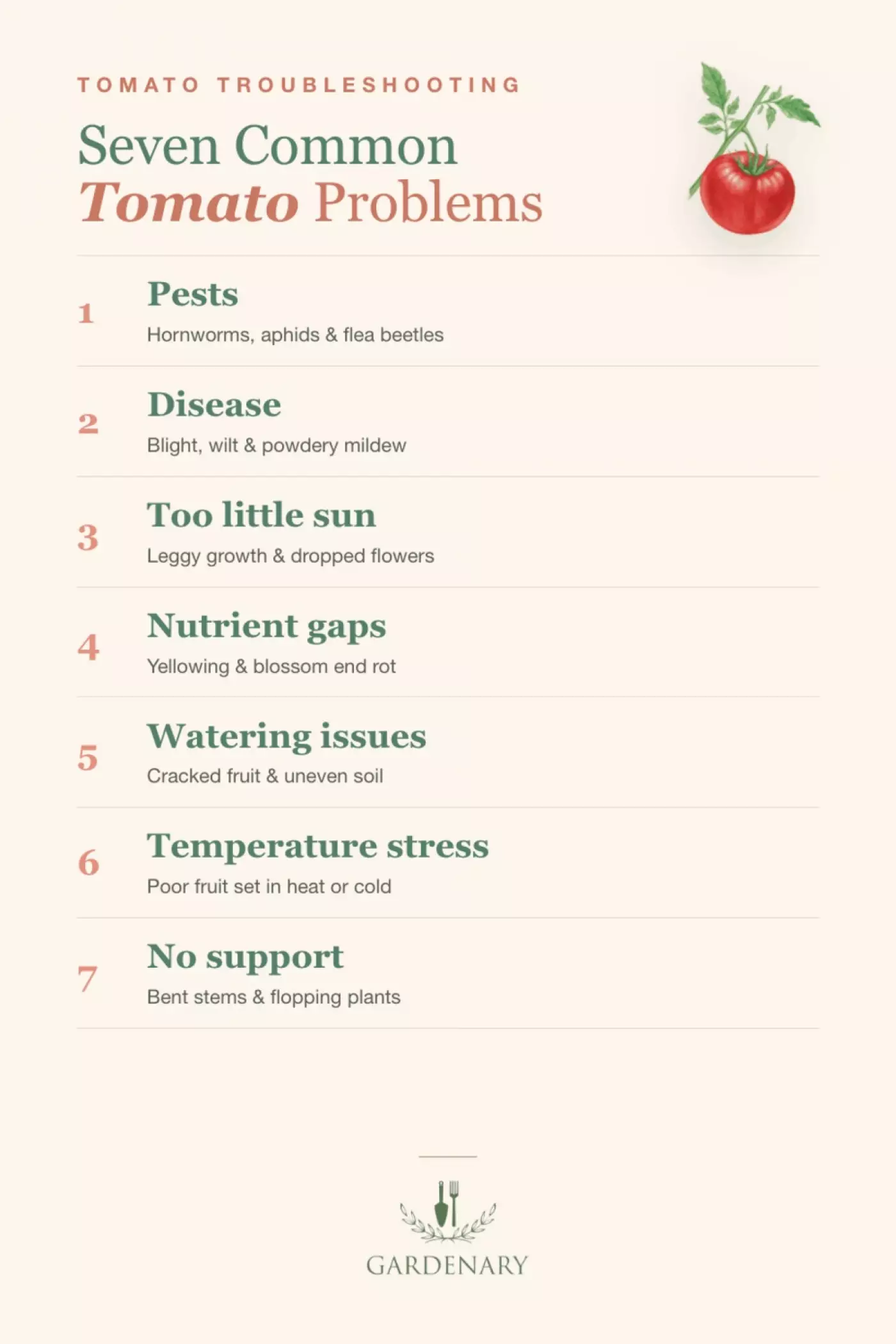
1. Pest Damage
What it looks like:
Holes in leaves, chewed stems, missing fruit, sticky residue, or tiny bugs visible on the undersides of leaves.
Common culprits:
- Tomato hornworms — large green caterpillars that can strip a plant overnight
- Aphids — tiny clusters (usually on new growth or stem undersides) that weaken plants fast
- Flea beetles — small jumping insects that leave peppered holes in leaves
Organic fix:
- Hand-pick hornworms and drop them in soapy water
- Blast aphids off with a strong stream of water
- Use row covers early in the season to keep flea beetles off young plants
- Plant basil, marigolds, or nasturtiums nearby as natural pest deterrents
Need help identifying a pest or more ideas for a solution?
Check out our free pest control ebook!
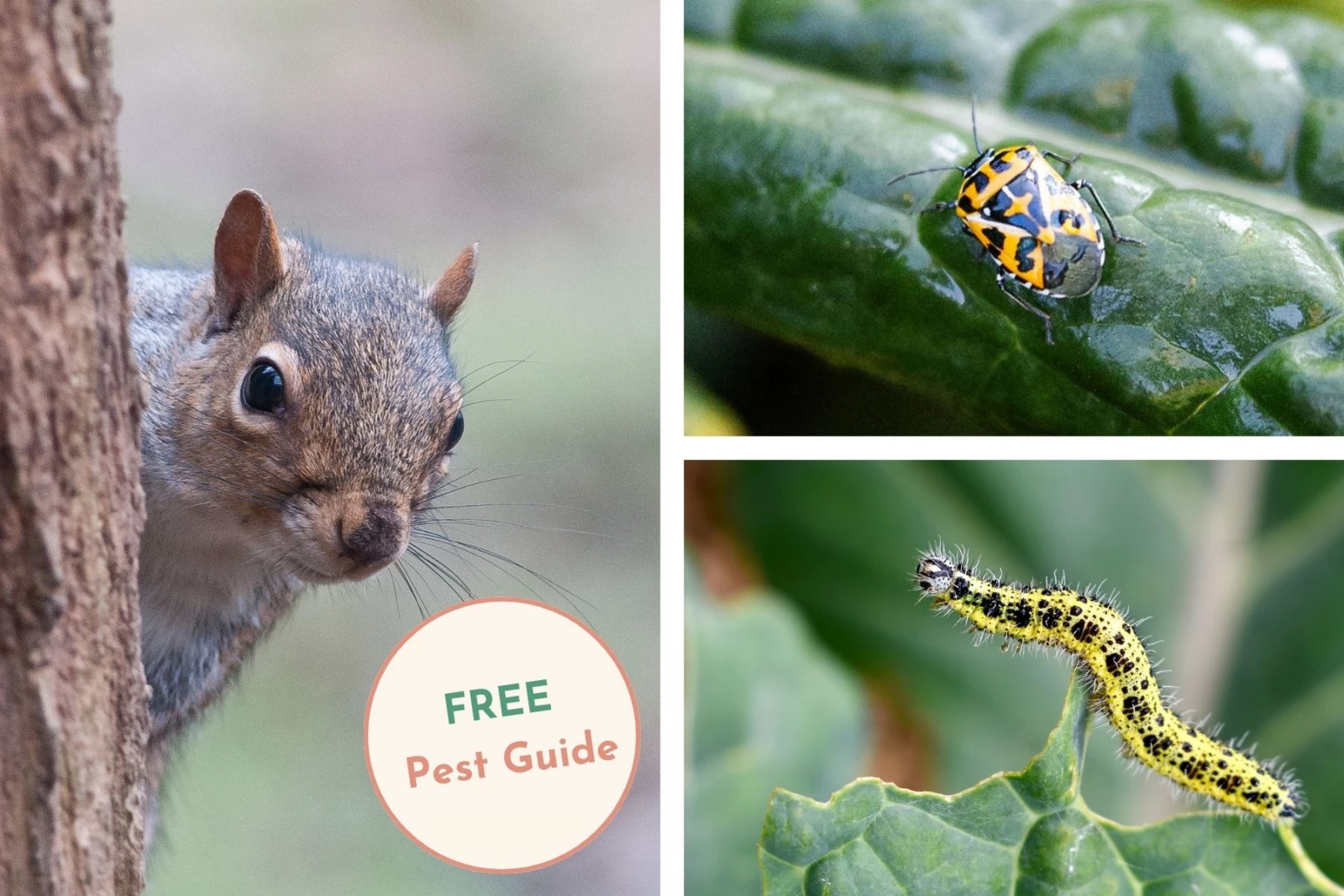
Stop Spraying. Start Gardening Smarter.
Organic Pest Control Made Simple
No harsh sprays. No endless guessing. Just a thriving, abundant garden that practically protects itself. With the Organic Pest Control Method, you’ll learn Nicole Burke's exact steps to grow naturally and confidently, season after season.
2. Disease (Blight, Wilt, Mold)
What it looks like:
Brown or black spots on leaves, yellowing that spreads fast, wilting despite good watering, or white powdery coating on leaves.
Common culprits:
- Early blight or late blight (fungal)
- Fusarium or verticillium wilt
- Powdery mildew
Organic fix:
- Remove affected leaves immediately and don't compost them
- Water at the base of the plant, never overhead — wet foliage invites fungal problems
- Rotate where you plant tomatoes each season to break disease cycles
- Choose disease-resistant varieties next year (look for letters like VFN on seed packets)
3. Not Enough Sun
What it looks like:
Leggy, stretched plants; pale green or yellowish leaves; flowers that drop before setting fruit; weak overall growth.
The fix:
Tomatoes need a minimum of 6 hours of direct sun daily — 8 hours is ideal. If your plants are struggling in a shadier spot, this may be your answer. There's no workaround for lack of light. Move containers into a sunnier location, or plan to relocate that raised bed next season.
4. Nutrient Deficiencies
What it looks like:
Yellow leaves (especially older, lower ones), purple-tinged stems or undersides of leaves, poor fruit development, blossom end rot.
Common deficiencies:
- Nitrogen — overall yellowing, slow growth
- Calcium — blossom end rot (dark, sunken spot on the bottom of fruit)
- Magnesium — yellowing between leaf veins on older leaves
Organic fix:
- Start with great soil. This is the foundation everything else builds on. I use a high-quality organic mix in all the raised beds I build.
- Top-dress with worm castings or compost mid-season
- For blossom end rot specifically, the issue is usually inconsistent watering preventing calcium uptake — not a calcium-deficient soil
5. Watering Problems
What it looks like:
Wilting (overwatering AND underwatering both cause this), cracked or split fruit, blossom end rot, root rot.
The fix:
- Water deeply and consistently — tomatoes hate fluctuating moisture levels
- Aim for about 1 to 2 inches of water per week, more in intense heat
- Always water at the base, not overhead
- Let the top inch of soil dry out slightly between waterings, but never let plants fully wilt
- Cracked or split tomatoes almost always point to inconsistent watering after a dry spell followed by heavy rain or irrigation
Learn How to Plan and Build Beautiful Raised Beds
Follow a simple process to build a raised bed that makes construction straightforward — even if you’re not “handy.”
6. Temperature Stress
What it looks like:
Blossoms dropping without setting fruit, poor fruit set even on a healthy-looking plant.
The fix:
Tomatoes stop setting fruit when temperatures go above 85°F at night or below 55°F. This is especially common in early spring and in the peak of summer in hot climates.
- Don't panic — the plant usually recovers when temperatures moderate
- In extreme heat, use shade cloth during the hottest part of the day
- In cool springs, wait to plant until nighttime temps are consistently above 55°F
7. Lack of Support
What it looks like:
Bent or broken stems, fruit sitting on the soil, the whole plant flopping over.
The fix:
All you need is a sturdy trellis. I prefer metal trellises because they last for years and are strong enough to hold the weight of tomatoes. Indeterminate tomatoes can reach 6, 8, even 10 feet tall. They need real support from the beginning.
- Use a sturdy trellis system that can handle the full size of the plant
- Tie stems loosely with soft garden twine as the plant grows
- The Nicole Arch Trellis was designed specifically for this — it's the support structure I use in my own Nashville garden, and it consistently sells out for a reason

FAQ: Tomato Troubleshooting
Why are my tomato leaves turning yellow?
Yellow leaves on tomatoes can signal nitrogen deficiency, overwatering, disease, or natural leaf drop on lower leaves. Start by checking your watering consistency and soil quality before assuming a nutrient problem.
Why are my tomato flowers falling off without producing fruit?
Blossom drop is almost always caused by temperature extremes — either too hot (above 85°F at night) or too cool (below 55°F). Inconsistent watering and lack of pollinator activity can also contribute.
What is blossom end rot and how do I fix it?
Blossom end rot is a dark, sunken spot on the bottom of tomato fruit caused by calcium deficiency at the cellular level. The most common cause is inconsistent watering, which prevents the plant from taking up calcium even when it's present in the soil. Water deeply and consistently to fix it.
How do I get rid of tomato hornworms organically?
Hand-pick them from plants and drop them in soapy water. If you see white egg sacs on a hornworm's back, leave it — those are parasitic wasp eggs that will naturally control the hornworm population.
Why does my tomato plant look healthy but produce no fruit?
This is usually a pollination issue or temperature problem. Make sure your garden has pollinators present, consider gently shaking the flowers to help pollination along, and check that nighttime temperatures are in the right range for fruit set.
Where can I get a trellis system strong enough for tomatoes?
The Nicole Arch Trellis from Gardenary is built specifically for heavy-producing fruits and vegetables. It's one of the best metal trellises for durability and beauty.
Nicole Arch Trellis
Our bestselling Nicole Arch Trellis is perfect for all your vining vegetables and strong enough for vining roses or other ornamental vining plants.
Product Features:
- Powder-coated black steel
- Easy assembly: pieces slide together without tools
- Four stakes to secure the trellis into the ground
- Measures 88" x 67" x 15"
Free 2026 Garden Calendar
All you have to do is give us your first and last frost dates, and we'll figure out your best planting dates for you!

Keep Reading
Garden Coaching as a Second Career: How Kate Corrigon Built a Successful Business After Retirement
When Should I Cover My Plants? The Temperatures and Timing I Use in My Own Garden
The Galvanized Garden Trug: A Tool Caddy Too Pretty to Hide
Thanksgiving Herbs: What to Grow for Turkey, Stuffing, and Sides
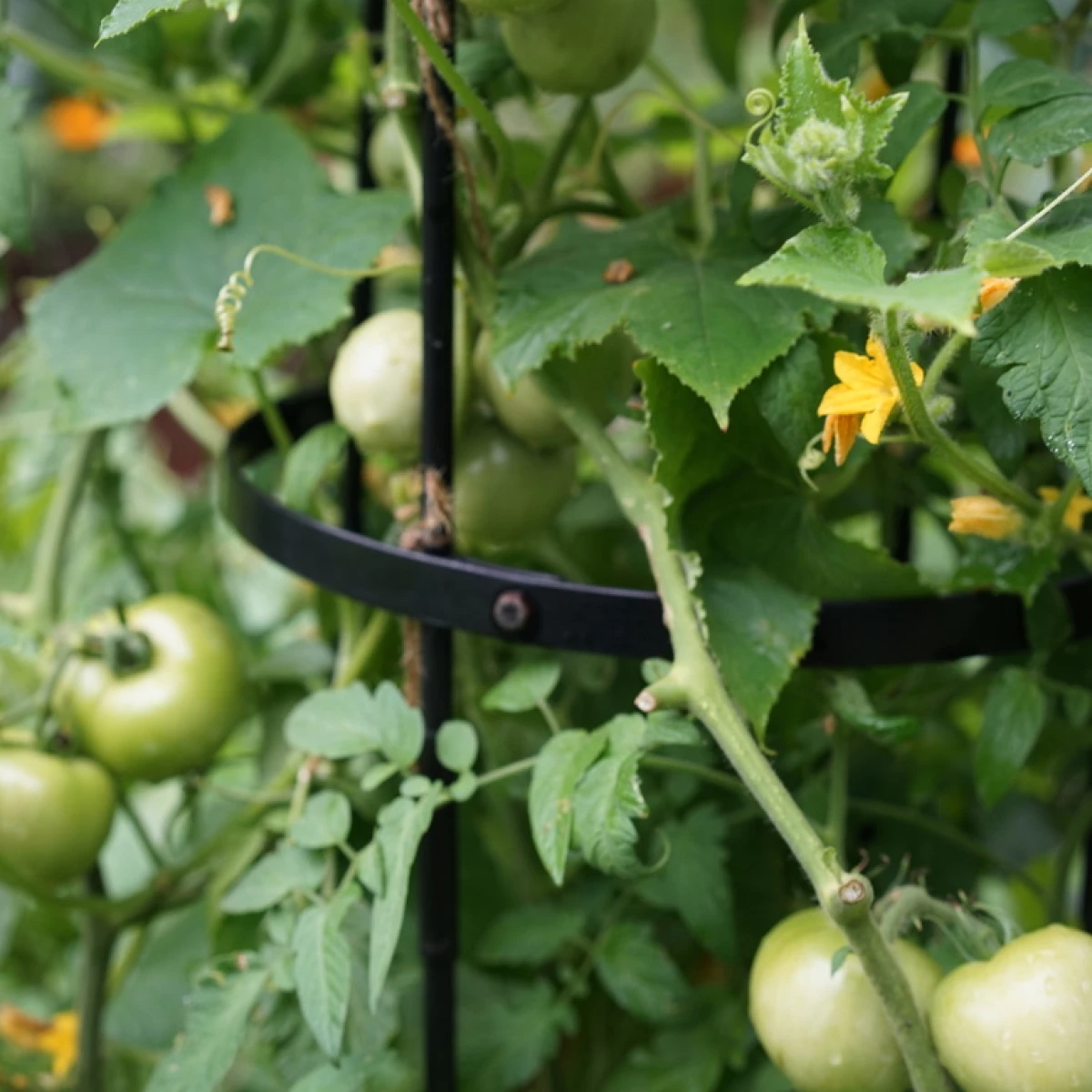
Obelisk Trellis for Tomatoes: 4 Reasons It Beats a Tomato Cage