Join Thousands of Gardeners On the VIP List
Free perks, just for email subscribers:
- 15% Off Your First Order
- Gardening Videos & Articles
- Early Access to Sales
Sign up, check your inbox, then shop with your code.

At a Glance
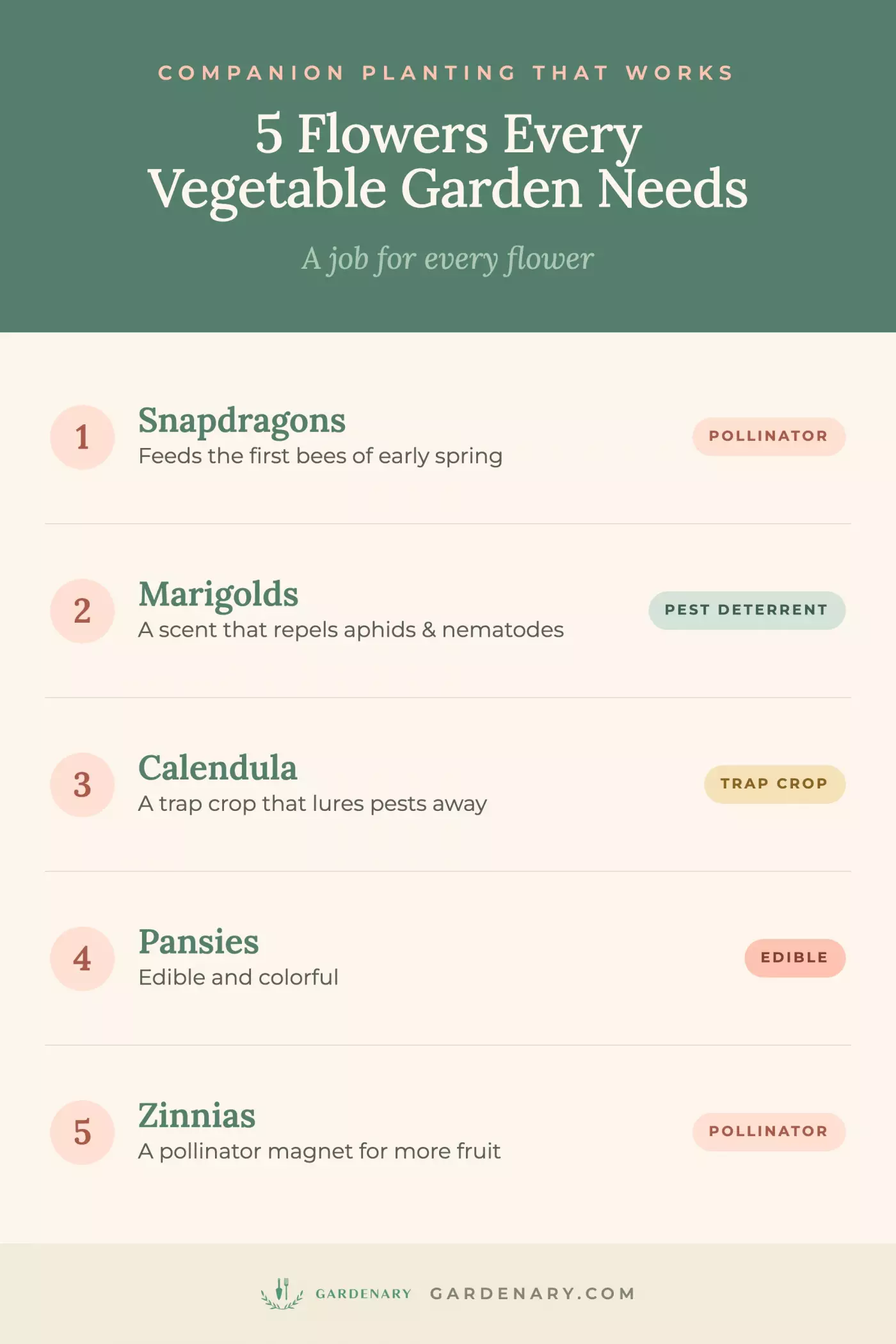
- Snapdragons and pansies go in during cool seasons; marigolds and zinnias wait until after your last frost — timing is everything.
- Every flower on this list has a specific job: feeding pollinators, deterring pests, or luring insects away from the vegetables you want to protect.
- You can start most of these from seed directly in the soil, which means a single pack can give you flowers for years to come.
By Nicole Johnsey Burke: Founder of Gardenary and Author of Kitchen Garden Revival
Why Flowers Belong in a Vegetable Garden (Not Just Around It)
I used to think flowers were the nice-to-have, not the need-to-have — I'd squeeze them in at the edges when I had room and pull them out the second I needed space for another tomato plant. That was a mistake I made over and over again, until I started watching what actually happened in gardens where flowers were planted intentionally. The pest pressure dropped. The harvests improved. The bees showed up like they were invited. Because they were.
Here's what I know after building 300+ kitchen gardens: the best ones treat flowers as working members of the planting plan, not decoration for the perimeter. Every flower on this list does at least one of three things — it deters insects you don't want, attracts insects you need, or acts as a trap crop that pulls pests away from the vegetables you're trying to protect. No sprays, no chemicals, just smart planting. Here are the five I put in every single client garden, every season.


Snapdragons: The First Flower In, the Longest Flower to Stay
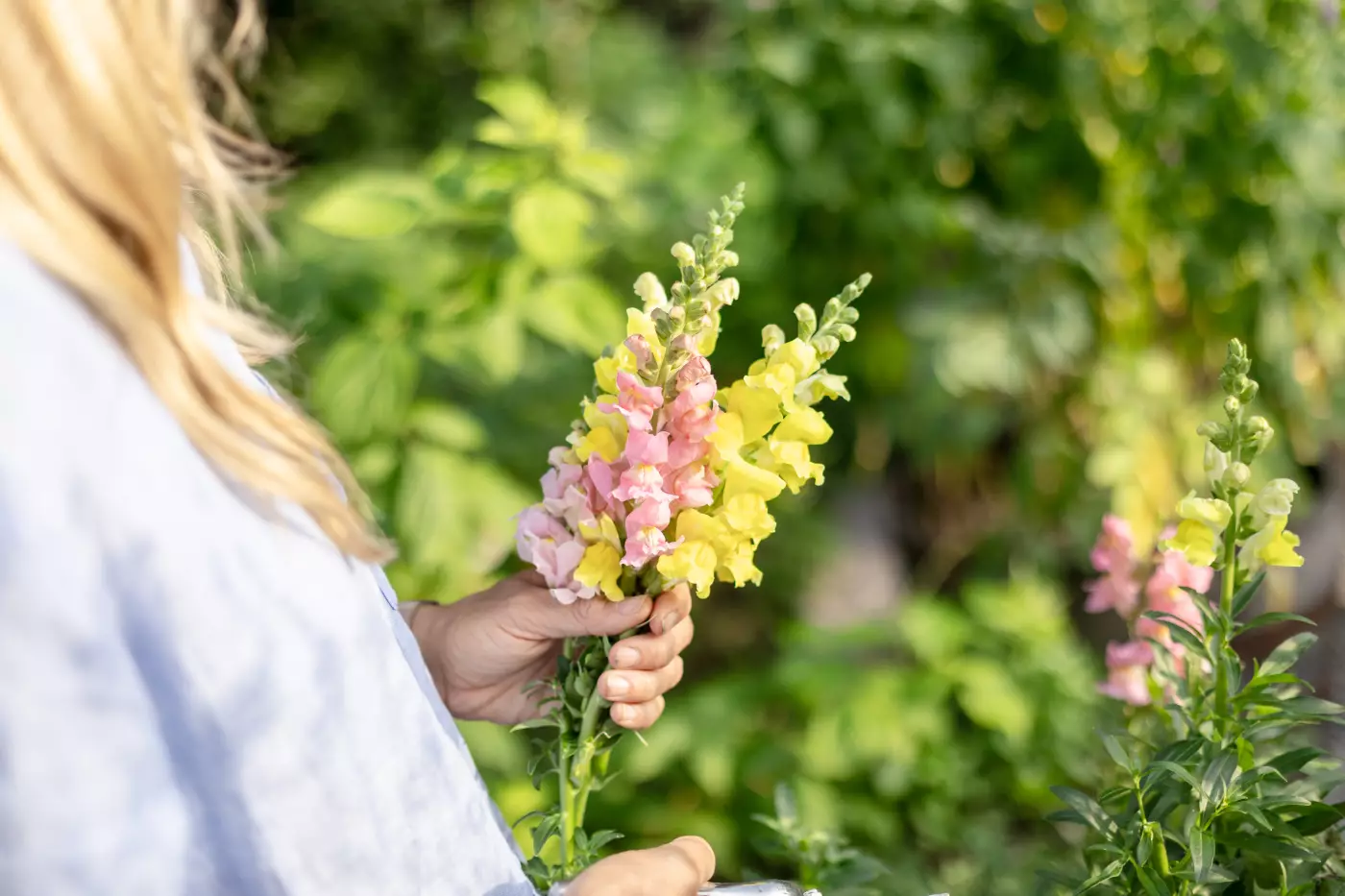
If there's one flower I put into a raised bed at the very start of every season, it's snapdragons. They don't mind frost — actually, they love cool weather — which means they go in right alongside your first round of broccoli, kale, and lettuce. In my Nashville garden, snapdragons I plant in February are sometimes still going strong in December. That is a long season of beauty and function for a single planting.
Here's what makes snapdragons genuinely useful: they're one of the first food sources available to bees in early spring, when almost nothing else is blooming. The shape of the snapdragon bloom is literally designed to hold a bee — it's strong enough that a bee can crawl inside the flower to reach the pollen.
Why snapdragons belong in your vegetable garden:
- One of the first food sources available to bees in early spring
- The bloom is shaped to hold a bee — one can literally crawl inside to reach the pollen
- Bring beneficial insects in right at the start of the season
- Frost-tolerant — a February planting can last all the way to December
- Compact and upright — tuck them along the edges without crowding your vegetables
Where to plant them: Along the edges of your raised beds, tucked right up against your cool season crops. They have a nice upright structure and don't take up much space, so they won't crowd your kale or broccoli.
Best vegetable companions: All your brassicas — kale, broccoli, cauliflower, Brussels sprouts, cabbage — and leafy greens like lettuce, spinach, arugula, and romaine.
Marigolds: Little Soldiers That Smell Like Summer
Marigolds are the warm season counterpart to snapdragons. They go in after your last frost date, and you can start them directly from seed right in the soil or transplant starts into the garden. Either way works beautifully.
What I love about marigolds is that their pest-deterring power comes from their scent — and that scent comes from everywhere: the leaves, the roots, and the blooms. It's strong enough to deter aphids, whiteflies, and certain soil nematodes. In fact, the French gem marigold specifically has been shown to disrupt nematode populations in the soil, which means healthier roots and healthier plants all season long.
Why marigolds belong in your vegetable garden:
- Their scent comes from everywhere — leaves, roots, and blooms — and it's strong enough to deter aphids, whiteflies, and soil nematodes
- French gem marigolds specifically have been shown to disrupt nematode populations, meaning healthier roots all season long
- Every petal of a spent bloom is a seed — let them dry on the plant, and you'll have more than you can use
- Plant them once, and you'll have seeds for the rest of your life
Where to plant them: Run a line right down the edge of the bed, and then place a few extra plants directly next to your tomatoes and peppers.
Best vegetable companions: Tomatoes, eggplants, peppers, zucchini, and squash — essentially all your warm season fruiting plants.
Calendula: The Powerhouse Flower That Works Year-Round
If I had to pick just one flower to put in every corner of a kitchen garden, it would be calendula. Not because it's the prettiest (though it's stunning in orange and gold), but because it works harder than any other flower I know.
What makes calendula a true powerhouse is that it's what's called a trap crop — it attracts pests that would otherwise go after your vegetables. Brassicas in particular (kale, broccoli, cauliflower, cabbage) are magnets for aphids, armyworms, and caterpillars. Calendula pulls those pests toward itself and away from the plants you want to eat. It also puts off a scent that provides an additional layer of protection for your warm-season crops: tomatoes, peppers, basil, cucumbers, zucchini, and squash.
And if that weren't enough — you can eat the leaves, make tea with the blooms, and use the petals in homemade salves. It is genuinely the most useful plant in the raised bed.
Why calendula belongs in your vegetable garden:
- Frost-tolerant — start from seed directly in the soil as early as February
- Blooms cool season through fall, self-seeds, and comes back year after year
- A true trap crop — draws aphids, armyworms, and caterpillars away from your brassicas
- Puts off a scent that protects warm season crops like tomatoes, peppers, and cucumbers too
- Edible leaves, blooms you can make tea with, petals for homemade salves — the most useful plant in the raised bed
Where to plant it: Every corner of every bed. I'm not kidding — this is exactly what I do in my own garden.
Stop Spraying. Start Gardening Smarter.
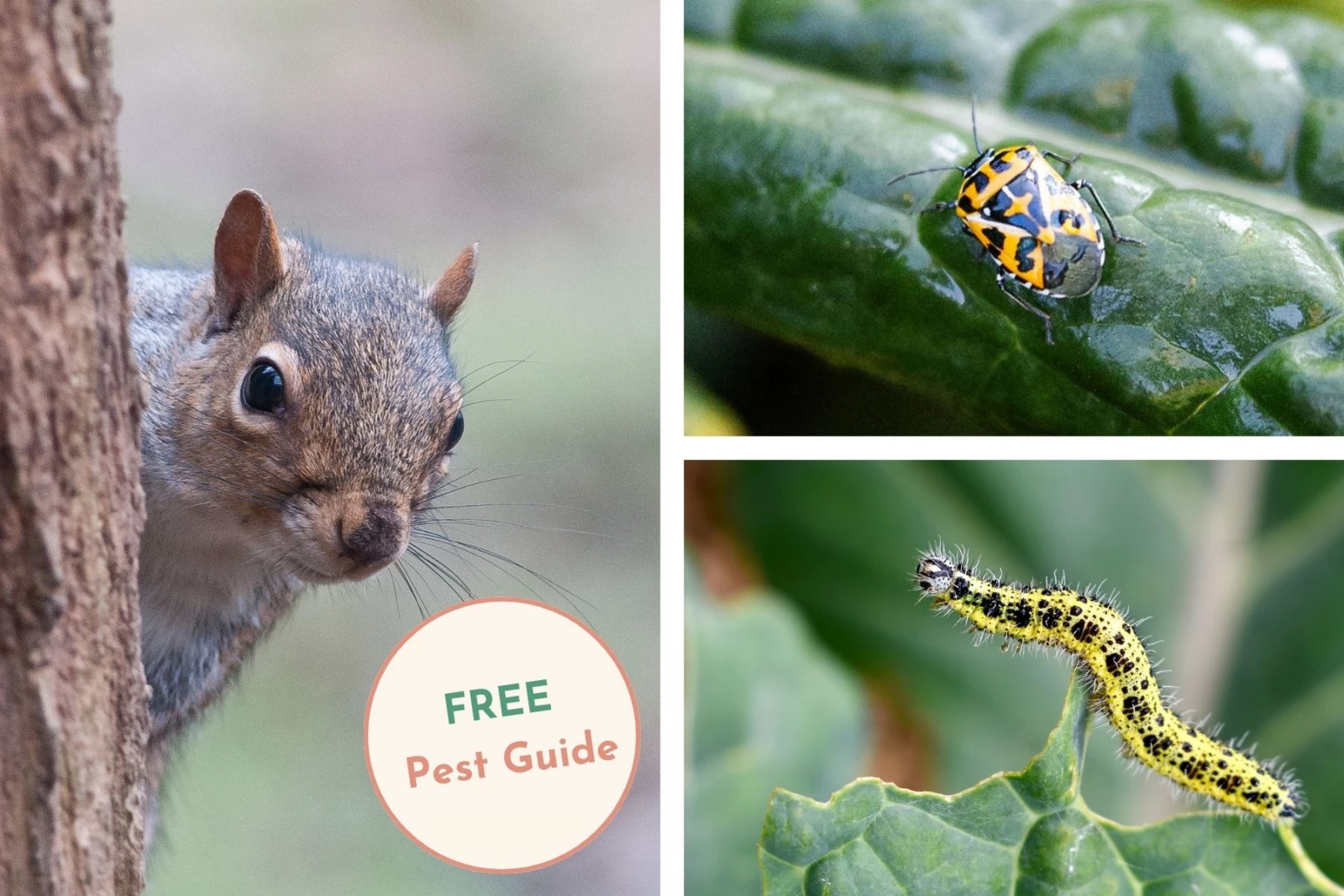
Organic Pest Control Made Simple
No harsh sprays. No endless guessing. Just a thriving, abundant garden that practically protects itself. With the Organic Pest Control Method, you’ll learn Nicole Burke's exact steps to grow naturally and confidently, season after season.
Pansies: The Edible Edge Flower That Makes Early Spring Worth It
When I'm going to spend money at the flower store, I buy pansies. They go in the garden right at the start of spring — and again in fall — filling up the edges of raised beds with color at exactly the moment when everything else is just getting started.
Pansies handle frost without complaint, which makes them ideal for that early season window when you're planting your first round of seeds and the beds still look a little bare. I love picking up a few different colors and tucking them along the edges. They give the garden that finished, beautiful look right from the start.
What surprises most people: pansies are edible. I love adding them to a spring salad, using them to decorate a cake, or making drinks that feel a little fancy.
Why pansies belong in your vegetable garden:
- Frost-tolerant — go in right at the start of spring and again in fall
- Fill the edges of raised beds with color when everything else is just getting started
- Edible — toss them in a spring salad, use them to decorate a cake, or dress up a drink
- One of the first things you get to harvest while you're still waiting on your vegetables
- Give the garden that finished, beautiful look from day one
Where to plant them: Along the edges of raised beds, cool season only — spring and fall.
Best use: Pest deterrence, early-season beauty, and a genuinely delightful edible garnish.
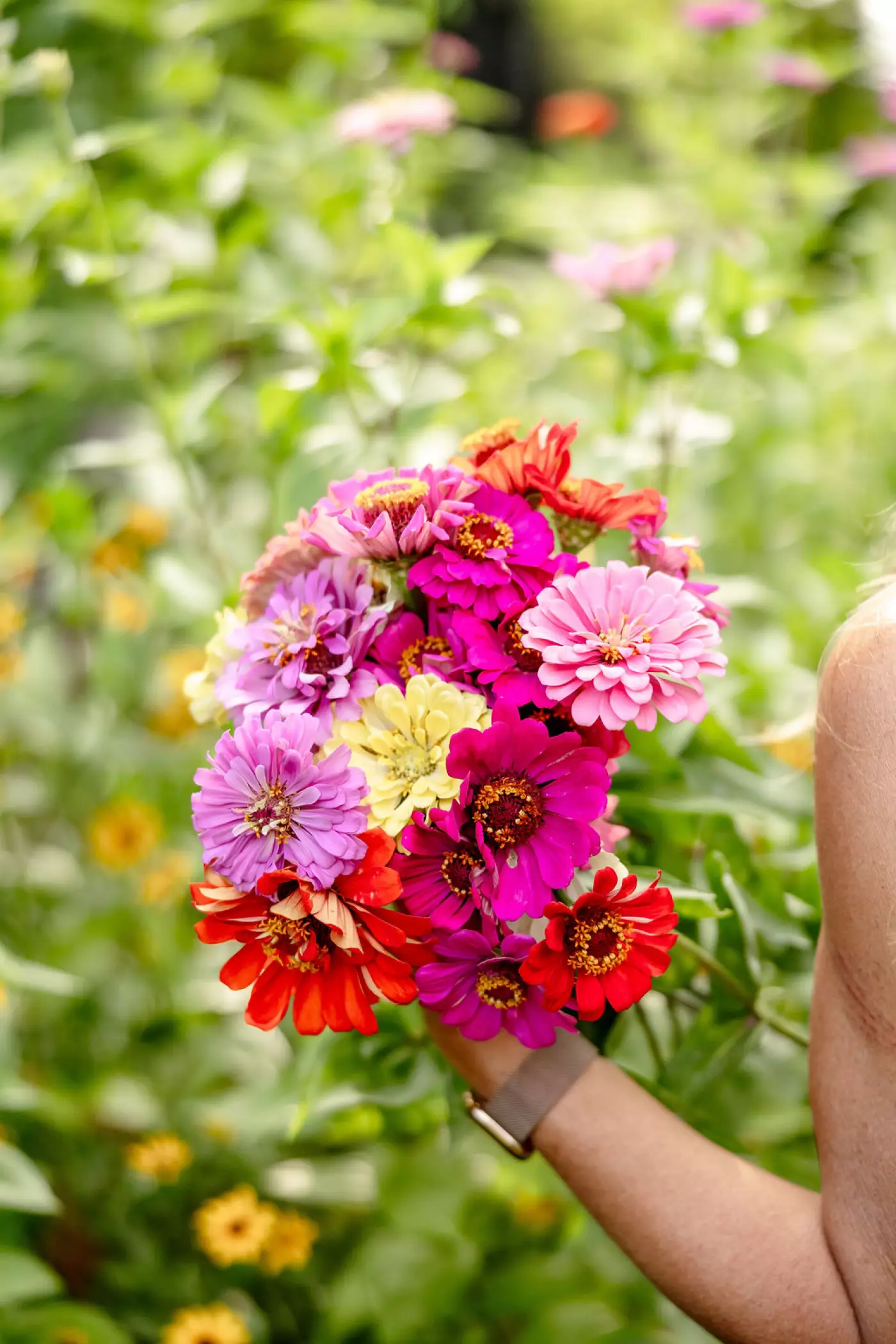
Zinnias: The Easiest Cut Flower That Does the Most for Your Harvest
Zinnias are my favorite warm season flower, full stop. They're easy enough for a first-time gardener to grow from seed, they look absolutely spectacular in the garden, and they do real work for your fruit-producing crops.
Here's how: zinnias are butterfly and bee magnets. Monarchs, swallowtails, all manner of pollinators come straight to zinnias. And many of your warm season vegetables — cucumbers, squash, zucchini, tomatoes, peppers, melons, cantaloupe — need pollinators to move pollen from flower to flower in order to set fruit. No pollinators, no fruit. Plant zinnias nearby, and you will get more fruit. It's that straightforward.
The other thing I love about zinnias is that the more you cut them, the more blooms you get. Pinch off a stem and you'll get two or three blooms in its place. By midsummer, a few zinnia plants can give you enough cut flowers to fill your whole house — and trust me, there is nothing better than walking out to the garden with a pair of pruners and coming back in with a full vase.
You can go straight from seed to bloom in about 55 to 60 days after your last frost. That makes them one of the most rewarding flowers in the garden.
Why zinnias belong in your vegetable garden:
- Butterfly and bee magnets — monarchs, swallowtails, and pollinators come straight to them
- Plant them next to cucumbers, squash, tomatoes, and melons, and you'll get more fruit — no pollinators, no fruit
- The more you cut them, the more blooms you get — pinch one stem and get two or three in its place
- Seed to bloom in 55 to 60 days after your last frost
- Easy enough for a first-time gardener, spectacular enough for any garden
Where to plant them: Directly next to any of your fruiting plants — cucumbers, squash, zucchini, melons, tomatoes, peppers. Give pollinators a reason to hang around those crops.
How to Use These 5 Flowers Season by Season
This is where the strategy comes together. You don't plant all five at once — you layer them through the growing year.
Cool season (late winter through spring, and again in fall):
- Plant snapdragons and pansies as early as the soil can be worked
- Start calendula from seed directly in the soil at the same time
Warm season (after your last frost date):
- Add marigolds — from seed or transplant
- Direct sow zinnias into the soil once frost has passed
- Calendula will carry over if your summers are mild; replant in early fall if not
By thinking in seasons rather than a single planting moment, you can have flowers — and all the pest protection and pollinator activity that comes with them — working in your garden nearly year-round.
Common Mistakes to Avoid When Adding Flowers to a Vegetable Garden
Treating flowers as an afterthought. If flowers are the last thing you add when the bed is already full, they can't do their job. Work them into your planting plan from the beginning.
Only planting along the outside perimeter. The real benefit comes when flowers are woven through the beds, right alongside the vegetables — not just around them.
Pulling flowers too early. Snapdragons and calendula especially: let them keep going. They're not done until the season is genuinely over.
Starting too late in the season. Calendula, pansies, and snapdragons go in early — before most gardeners are even thinking about the garden. Don't wait for warm weather to add cool season flowers.
Skipping the trap crop flowers. Calendula especially. If you grow brassicas and you're losing them to pests, calendula is not optional. It changes the entire dynamic.
FAQS: Flowers in the Vegetable Garden
What flowers should I plant next to tomatoes?
Marigolds and calendula are the two I always plant alongside tomatoes. Marigolds deter aphids, whiteflies, and soil nematodes with their strong scent, while calendula acts as a trap crop that draws pest insects away from your tomatoes. Zinnias are also excellent next to tomatoes because they attract the pollinators tomatoes need to set fruit.
Can I grow flowers in a raised bed with vegetables?
Absolutely — and I'd argue you should! Flowers like snapdragons, marigolds, calendula, pansies, and zinnias all grow beautifully in raised beds right alongside vegetables. They earn their space by protecting plants from pests, attracting pollinators, and making the garden more beautiful in the process.
Which flowers attract the most pollinators to a vegetable garden?
Zinnias are butterfly and bee magnets — monarchs and swallowtails are drawn to them consistently throughout the warm season. Snapdragons attract bees early in the season when little else is blooming. Both are especially valuable near cucumbers, squash, and melons, which need pollinators to set fruit.
What is a trap crop flower?
A trap crop is a plant grown specifically to attract pest insects away from the crops you want to protect. Calendula is a classic example — pests that would otherwise target your brassicas (kale, broccoli, cauliflower, cabbage) are drawn to calendula instead. It's one of the most effective organic pest management strategies you can use in a kitchen garden.
Are pansies and marigolds edible?
Yes, both are edible. Pansies are commonly used in salads, as cake decorations, and in drinks. Marigold petals (particularly calendula, which is in the same family) have long been used in teas, salves, and culinary applications. If you're using flowers for food, make sure they're grown organically — no pesticides.
Watch On YouTube!
Your Garden Can Be Beautiful and Delicious — At the Same Time
This is one of the things I feel most strongly about: you do not have to choose between a garden that looks stunning and a garden that actually grows food. The right flowers make your vegetables grow better, keep pest pressure down without any sprays, and bring pollinators right to the plants that need them most.
Five flowers. Two seasons. A completely different garden than the one you had before.
Keep Reading
Gardenary Fall Planting Sale: 20% Off Cedar Raised Garden Beds and Everything Else
Is It Too Late to Plant Something for Fall?
Gardening in October: My Kitchen Garden Checklist
Fall Herb Care Before Frost: Lavender, Thyme, Sage, and Rosemary
When to Harvest Pumpkins and Winter Squash: 4 Signs to Check Before You Cut