
Join Thousands of Gardeners On the VIP List
Free perks, just for email subscribers:
- 15% Off Your First Order
- Gardening Videos & Articles
- Early Access to Sales
Sign up, check your inbox, then shop with your code.

Nicole's Quick Take: My go-to defense against whiteflies is planting marigolds, nasturtiums, and zinnias right alongside my vegetables, especially tomatoes, peppers, eggplants, and cucumbers. Marigolds release a compound that confuses whiteflies, nasturtiums act as a trap crop that lures them away, and zinnias bring in the beneficial insects that hunt whiteflies down.
At a Glance
- Marigolds, nasturtiums, and zinnias are the three companion plants I recommend most for keeping whiteflies off vegetables like tomatoes, peppers, eggplants, and cucumbers.
- Companion planting works best as prevention, not a cure once whiteflies are already established.
- These same plants add color and beneficial insect activity across your whole vegetable garden, not just one bed.
By Nicole Johnsey Burke: Founder of Gardenary and Author of Kitchen Garden Revival
When The Spruce reached out this month asking how I keep whiteflies off my tomatoes, I gave them the same answer I'm about to give you (check out my featured article here).
I use this method across my whole vegetable garden: three specific companion plants, planted early, before the problem ever starts.

Signs Whiteflies Have Moved In: How to Identify Them
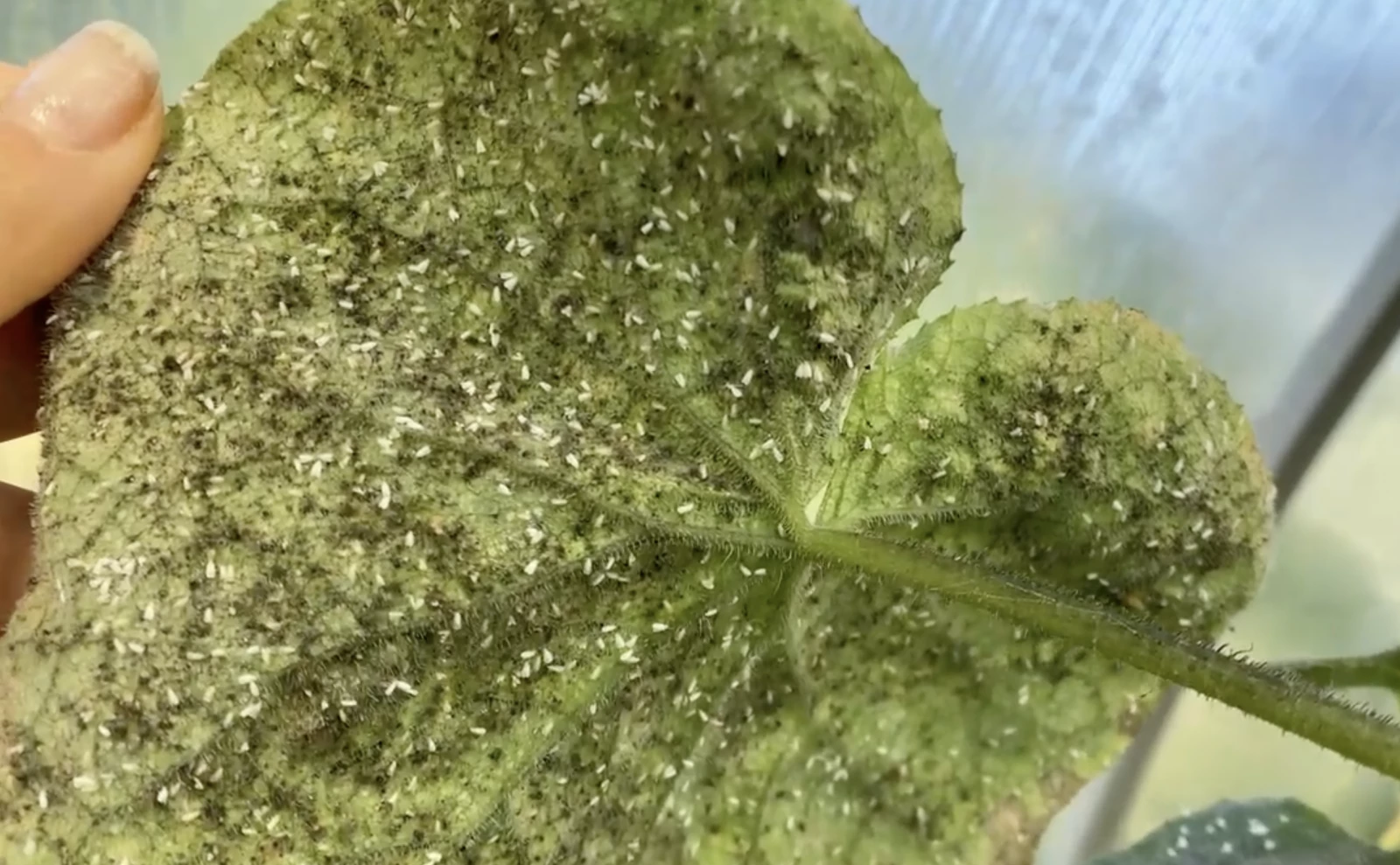
I once had a season where I'd brush past my plants, and a little cloud of tiny white bugs would lift off as if I had just disturbed a snow globe.
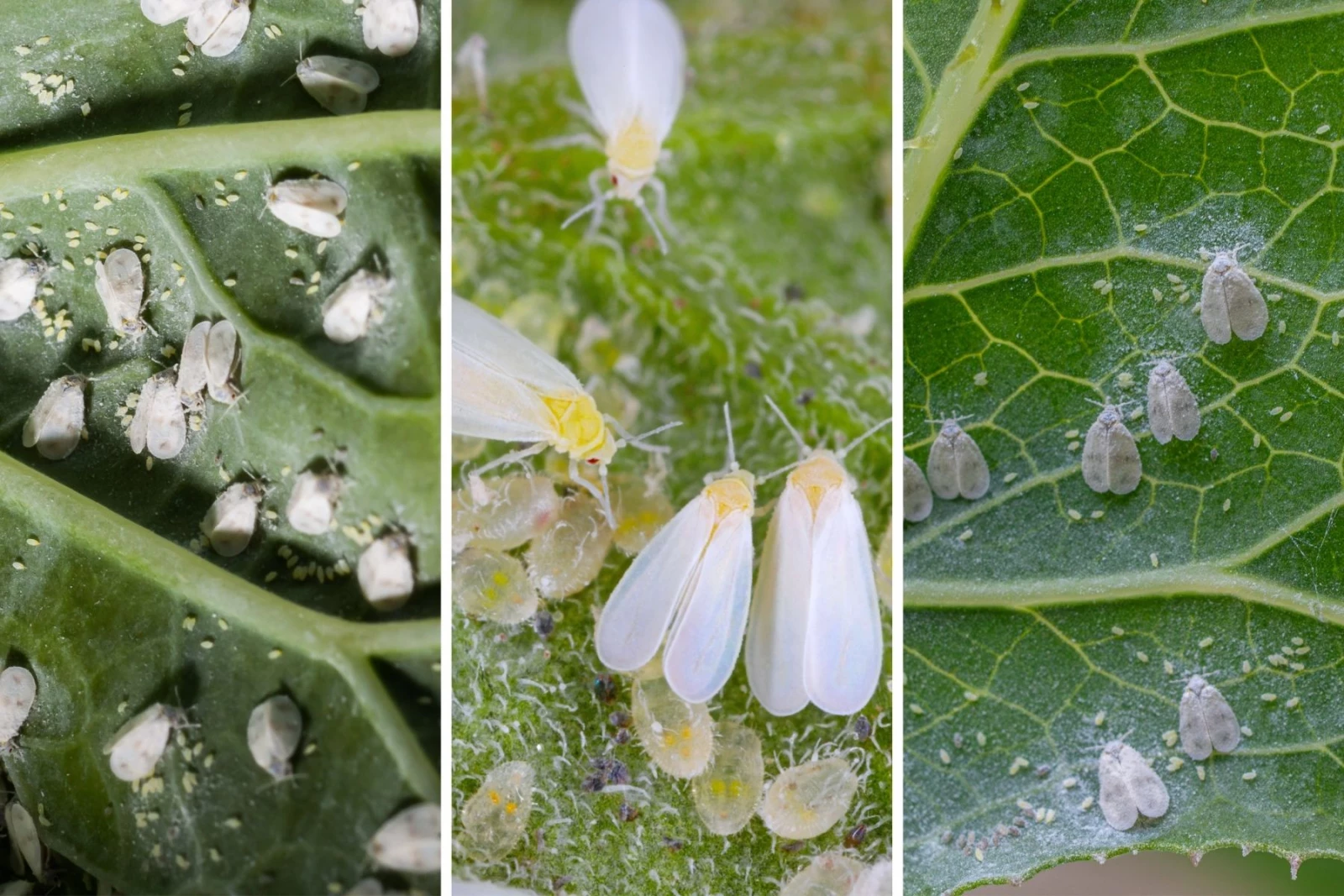
You’ll definitely notice a larger infestation, but if it’s still small, gently shake a plant and inspect the underside of the leaves. If a little puff of tiny white insects flutters up and flies around, you've got whiteflies. They actually resemble tiny moths more than flies, which trips up a lot of gardeners.
They tend to target nitrogen-hungry vegetables like tomatoes, peppers, eggplants, and cucumbers.
Evidence of Whiteflies:
- Tiny white insects that flutter up when you brush the leaves
- Yellowing, stunted growth on your plants
- A sticky residue (honeydew) that can turn into black sooty mold
- Fewer, smaller vegetables as the infestation progresses
They multiply fast in hot, humid weather, which is exactly when most of our gardens hit their stride. That's why I plant for prevention instead of waiting to react.

The 3 Companion Plants I Use Across My Vegetable Garden
Marigolds
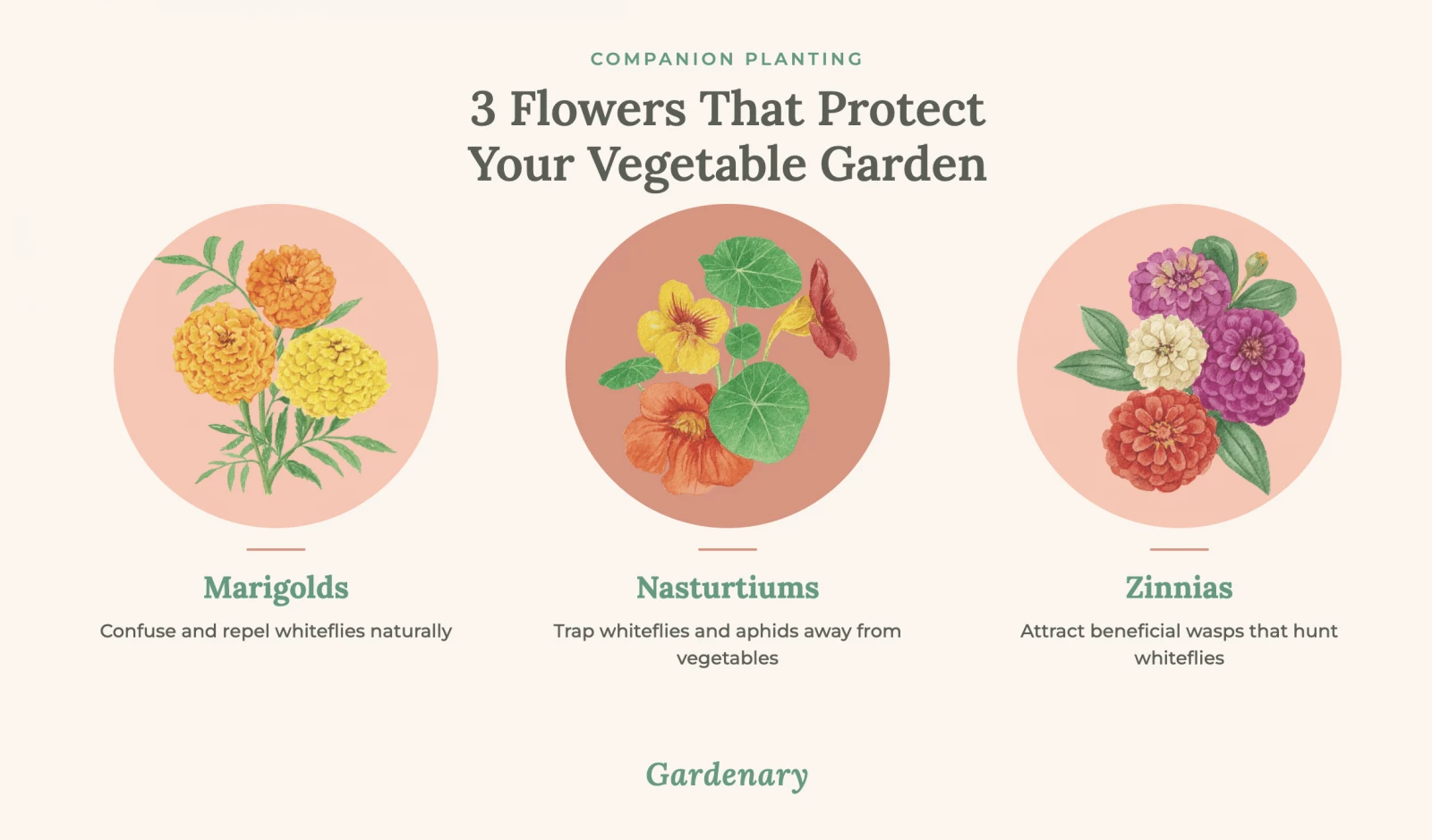
My top pick, no contest. Some varieties release a compound called limonene that seems to confuse and repel whiteflies. I tuck them along the bed border or right between my vegetable plants, whether that's tomatoes, peppers, or eggplant. Bonus: they also draw in pollinators and predatory insects.
Nasturtiums
These release root compounds whiteflies avoid, and they double as a trap crop, pulling whiteflies and aphids away from your vegetables. I love how they spill over a raised bed edge while quietly doing their job.
Zinnias
Zinnias don't repel whiteflies directly. Instead, they attract the beneficial wasps that hunt whiteflies down for you. And you get gorgeous blooms all summer while it happens.
Quick tip: I keep a mixed flower and herb seed set on hand so I always have marigold, nasturtium, and zinnia seeds ready the moment I'm planting a new bed. Planning ahead beats scrambling once you've already spotted a problem.
Stop Spraying. Start Gardening Smarter.
Organic Pest Control Made Simple
No harsh sprays. No endless guessing. Just a thriving, abundant garden that practically protects itself. With the Organic Pest Control Method, you’ll learn Nicole Burke's exact steps to grow naturally and confidently, season after season.
If Whiteflies Are Already There
Companion planting alone won't fix an active infestation.
Start here, least invasive first:
- Spray the undersides of leaves with water to knock off eggs and nymphs.
- Add yellow sticky traps nearby to catch adults.
- Use an insecticidal soap spray every four to five days for about two weeks if needed.
I never reach for synthetic pesticides in my vegetable garden. They kill off the beneficial insects your zinnias just worked to attract, right along with the pests.
My Organic Pest Control Course walks through this same least invasive approach for every common pest in a kitchen garden. And for a deeper dive on tomatoes specifically, see 10 Ways to Naturally Protect Tomatoes from Pests.
Complete Organic Pest Control Course
- Organic Pest Control — 28 Video Lessons
- Pest-Proof Garden — 8 Video Lessons
- Pest Guide Ebook
- Deer Guide
- Burrowing Pests Guide
- Rabbit Guide
- Climbing Pests Guide
- Domestic Pests Guide
- Bonus #1 — Organic Pest Control Planting Plans
- Bonus #2 — Growing Guide
- Bonus #3 — Organic Pest Spray Recipes
- Bonus #4 — Organic Pest Control Helper AI


Common Mistakes
- Planting flowers too far from the vegetables. They only work if they're actually close enough to interact.
- Waiting until the infestation is bad. These plants are prevention, not rescue. Plant them alongside your vegetables from the start.
- Expecting companion planting to solve a serious infestation alone. Pair it with the treatment steps above once whiteflies show up.
- Skipping the beneficial insect piece. Zinnias matter just as much as the plants that repel pests directly.
FAQs About Whiteflies
How do I get rid of whiteflies once they're on my plants?
Spray with water to knock off eggs and nymphs, add yellow sticky traps, and use insecticidal soap every four to five days for about two weeks if needed. Skip synthetic pesticides.
When should I plant marigolds, nasturtiums, and zinnias for the best whitefly protection?
Plant them the same day you put your vegetables in the ground, not after you spot a problem. They need time to establish before whiteflies show up in force, usually as the weather heats up.
How many marigolds or nasturtiums do I need per vegetable plant?
I plant one or two marigolds or nasturtiums for roughly every two to three vegetable plants along the border. You don't need a dense wall of them, just enough to be close and consistent throughout the bed.
Do these companion plants help with pests besides whiteflies?
Yes. Marigolds and zinnias also help manage aphids and other soft-bodied pests, since they're drawing in many of the same beneficial insects.
Love the Look of a Gardenary Garden? Start With the Beds.
Handmade cedar kits that skip the sawing, measuring, and hammering
- A raised bed for every space, with 39 size options
- Three heights to fit your planting needs
- Handmade in the USA from premium, untreated cedar
- Built for long-term durability and productivity
Keep Reading
Obelisk Trellis for Tomatoes: 4 Reasons It Beats a Tomato Cage
Is It Too Late to Plant Something for Fall?
Gardening in October: My Kitchen Garden Checklist
Fall Herb Care Before Frost: Lavender, Thyme, Sage, and Rosemary
When to Harvest Pumpkins and Winter Squash: 4 Signs to Check Before You Cut

How to Plant a Fall Garden in 5 Simple Steps
Sources
- "Protect Your Tomatoes From Whiteflies With These 3 Companion Plants They Hate," The Spruce: https://www.thespruce.com/companion-plants-to-protect-tomatoes-from-whiteflies-12006349
- "Whiteflies - Vegetables," University of Maryland Extension: https://extension.umd.edu/resource/whiteflies-vegetables/
- "Companion planting with French marigolds protects tomato plants from glasshouse whiteflies through the emission of airborne limonene," National Institutes of Health (Conboy et al., 2019): https://pmc.ncbi.nlm.nih.gov/articles/PMC6396911/