
At a Glance
- The four design elements that transform an ordinary vegetable garden into something truly special are enclosure, vertical elements, intentional planting, and perennials.
- These aren't complicated concepts — they're simple, intentional choices that stack on top of each other to create a garden that feels like a completely different world.
- You can apply all four of these elements to any garden, in any backyard, at any budget.
The Secret to Designing a Garden that Feels Magical
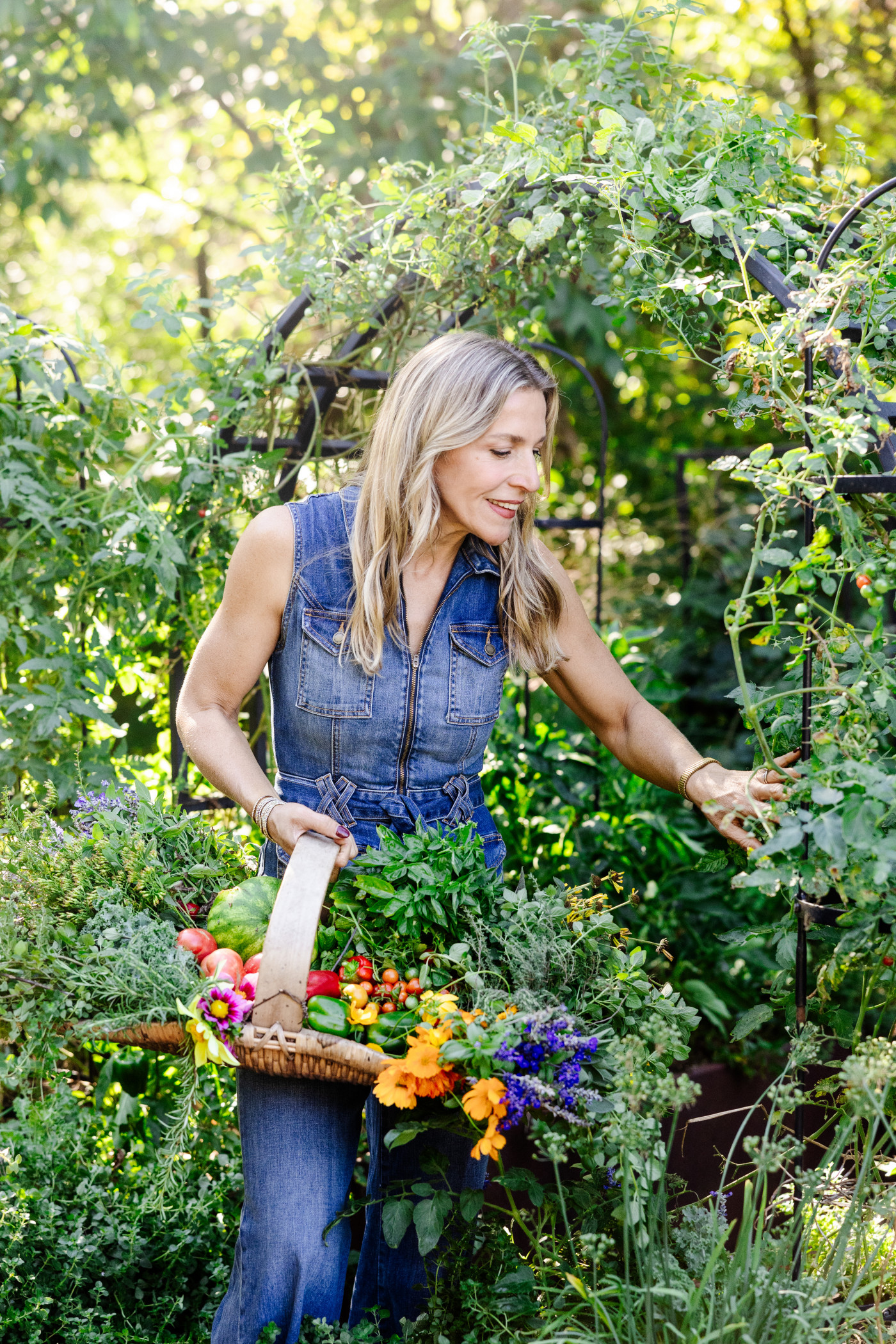
You know that feeling when you walk into a garden, and something just shifts? The noise of your day goes quiet. Your phone stops mattering. You slow down without even deciding to. Suddenly you're just standing there, completely absorbed in leaves and light and the smell of something green and alive.
I've been designing gardens that create that exact feeling for over ten years. And in that time, I've figured out four crucial elements to making a garden special. These specific design elements show up in every garden that gives people that transported feeling. Once you know what they are, you can't unsee them. Better yet, you can start building them into your own backyard.
Join the 2026 Gardening Workshop

Element 1: Enclosure — Give Your Garden a Sense of Place
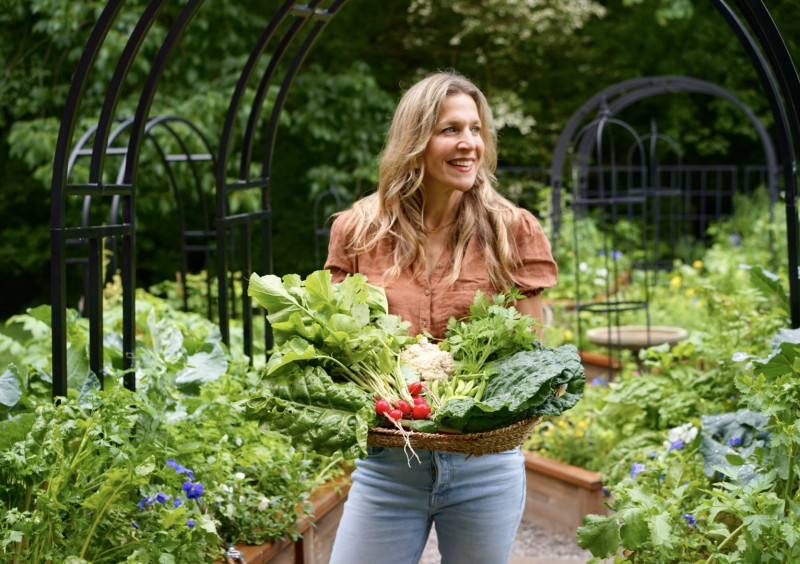
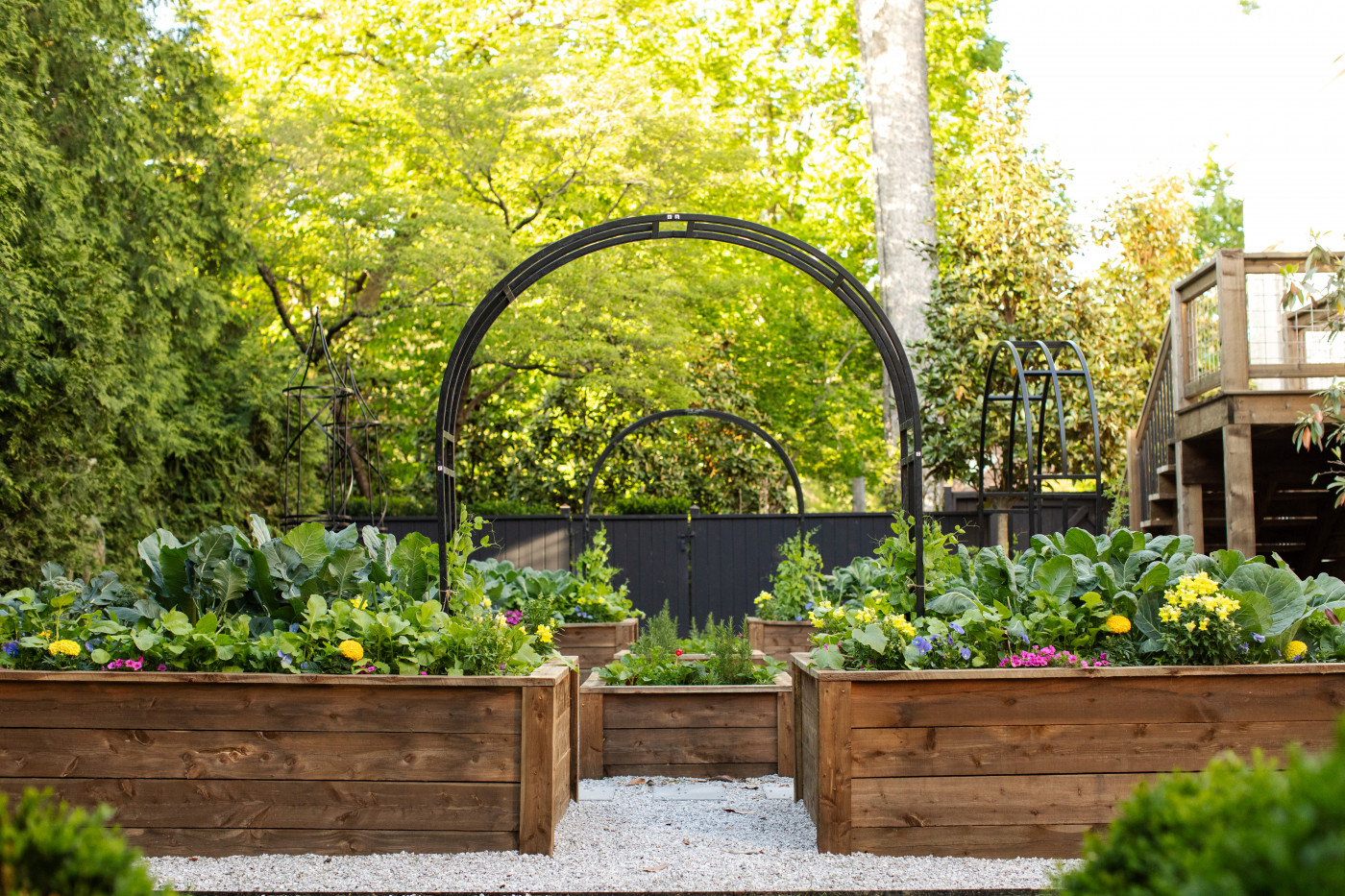
Here's something that changed the way I think about garden design: the root word of "garden" is "garde" which means enclosure. A garden, at its very core, is meant to be an enclosed space. And yet most vegetable gardens are anything but. They're usually a lone raised bed sitting out in the middle of a yard with nothing around it, with nowhere to enter and nowhere to really arrive.
A garden that feels magical has an entrance — a clear place where you come in and the experience begins. It has an exit and a natural flow between the two. Most importantly, it has a sense of mystery. When you're standing at the front of it, you shouldn't be able to see all of it at once. There should be something around the corner, something that only reveals itself once you step inside and move through it.
When I started designing gardens for clients back in 2015, this was one of the first principles I built every space around. Even in modest backyards, the moment a garden feels enclosed, it feels intentional. It feels like somewhere.
One of my favorite ways to create a true enclosure is through what I call the formal potager garden. It's designed around at least four L-shaped raised beds arranged to form an outdoor room, with four natural entrances and exits built right into the layout. When you stand at any opening, you can feel that there's more to discover inside. It's one of those designs that looks impressive and feels effortless to be in, which is exactly the goal.
To bring enclosure into your own space, start with these three things:
- Create a clear entrance — even a simple arch trellis or two posts with a sign can signal "this is where the garden begins."
- Arrange beds and pathways so you have to move through the garden to see all of it.
- Use structures, plantings, and layout to create corners and turns instead of one wide-open view.

Element 2: Vertical Elements — Build Up, Not Just Out
When I first started gardening for myself, my beds were flat. Seeds in the ground, plants spreading out, nothing reaching upward. It looked fine, but it didn't feel impressive.
Everything changed when I started designing gardens for clients in nicer backyards and realized I needed to bring more to the space. That's when I discovered trellises, and honestly, they changed everything about how I approach garden design.
A trellis does so much more than hold up a vining plant. Trellises give your garden height and structure that stays visible even when nothing is growing. I'm writing this in the middle of winter, and my garden still feels full because it's packed with vertical structures. They give the whole space a backbone that doesn't disappear with the seasons.
Vertical elements also reinforce the feeling of enclosure that we're aiming for.
Every time you add a trellis, you create a visual divider — something someone has to walk around or through to see what's on the other side. Instant mystery. Instant magic.
I use three kinds of trellises in my gardens:
- Obelisk trellises — tall, somewhat teepee-shaped structures that can be as simple as a few bamboo poles tied together or as beautiful as wrought iron. They add a vertical focal point to any bed.
- Panel trellises — essentially a fence within the garden. Run one down the middle of a wide bed and you can grow plants on both sides, creating a living wall of vegetables, herbs, and flowers.
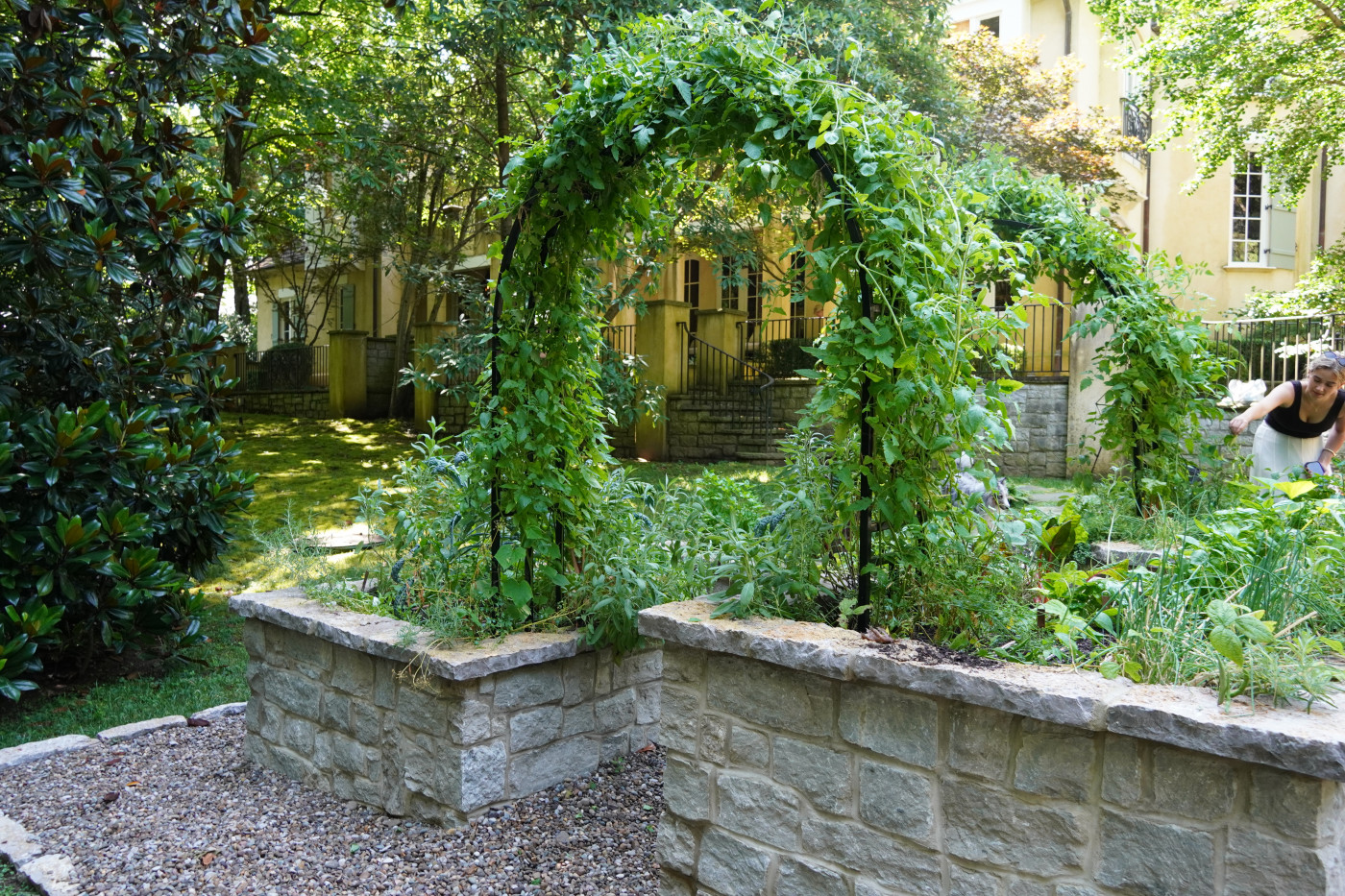
- Arch trellises — my personal favorite, and the most magical of the three. An arch lets you grow plants up and over your garden beds, and the experience of walking beneath a trellis covered in vines and fruit and flowers is something I genuinely never get tired of. There are plants that will cover an arch from spring all the way through fall, which means this structure earns its place in your garden for the entire season.
If you're not sure where to start, start with one arch trellis. Put it at the entrance of your garden. Plant something that climbs. Then just wait.

Element 3: Plants — Fill Every Inch with Intention
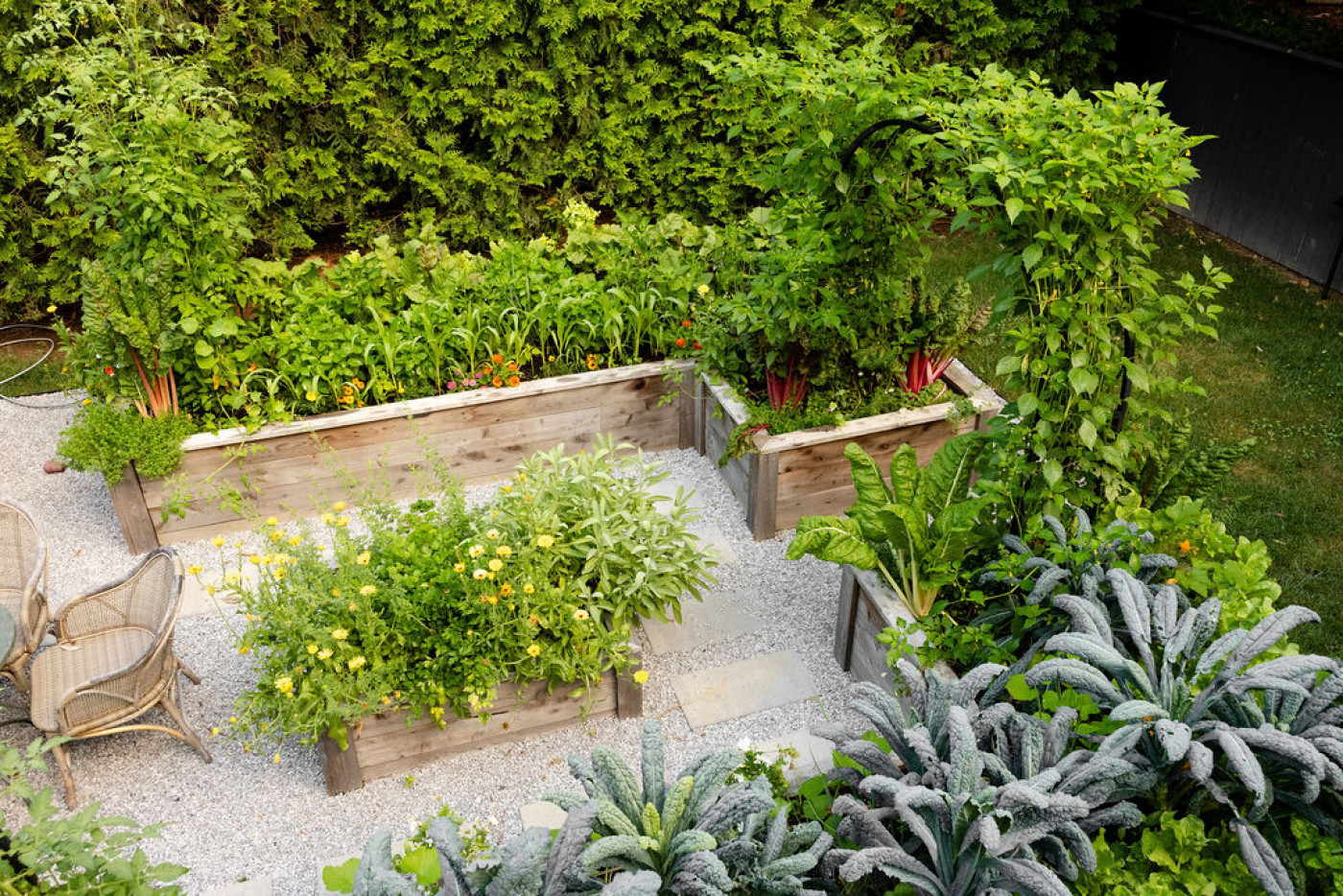
Think about the most unforgettable gardens you've ever walked through. Chances are they weren't sparse. There was no bare soil between plants, no empty corners, no single row of vegetables with wide open dirt on either side. Those gardens were full and overflowing with a wide variety of textures, heights, colors, and plant types, all growing together.
At Gardenary, we use the intensive planting method to achieve this full look.
I include five types of plants in each garden:
- A fruiting plant — this is your showpiece. It's likely the tallest thing in the bed and the plant that's going to grow up your trellis. Think tomatoes, cucumbers, squash, or beans.
- Root crops — carrots, beets, and radishes fill in the spaces beautifully. Their lush foliage takes up visual real estate in the bed and keeps it looking full for a long stretch of the season.
- Leafy greens — plant these alongside your root crops and let them act as a ground cover. The goal is that when you look into your garden, you see nothing but green. No dirt, no mulch. Just leaves you could walk out and harvest any time you feel like it.
- Herbs — tuck these along the edges of beds. They add unique textures and scents, they attract pollinators, and they give you something to clip year-round, even when other crops are between seasons. Think rosemary and oregano.
- Flowers — don't skip these. Flowers bring color, attract beneficial insects, and make the whole garden feel alive in a way that vegetables alone simply cannot.
We have a rule at Gardenary: six weeks after planting day, we should not be able to see a single inch of bare soil anywhere in the garden. If we can, we go back in with more seeds, more transplants, more flowers. The fuller the garden, the more magical it becomes. That's not a coincidence — it's the whole point.

Element 4: Perennials — Build in Beauty That Comes Back Every Year
Most of what grows in a kitchen garden is annual — plants that go from seed to harvest in a single season and then they're done. That cycle is one of the joys of vegetable gardening, but it also means your garden can look bare at the beginning and end of each season while you're waiting for things to get going.
Perennials solve this beautifully. They come back year after year from the same roots, filling in the space and giving your garden a sense of permanence even when everything else is just getting started.
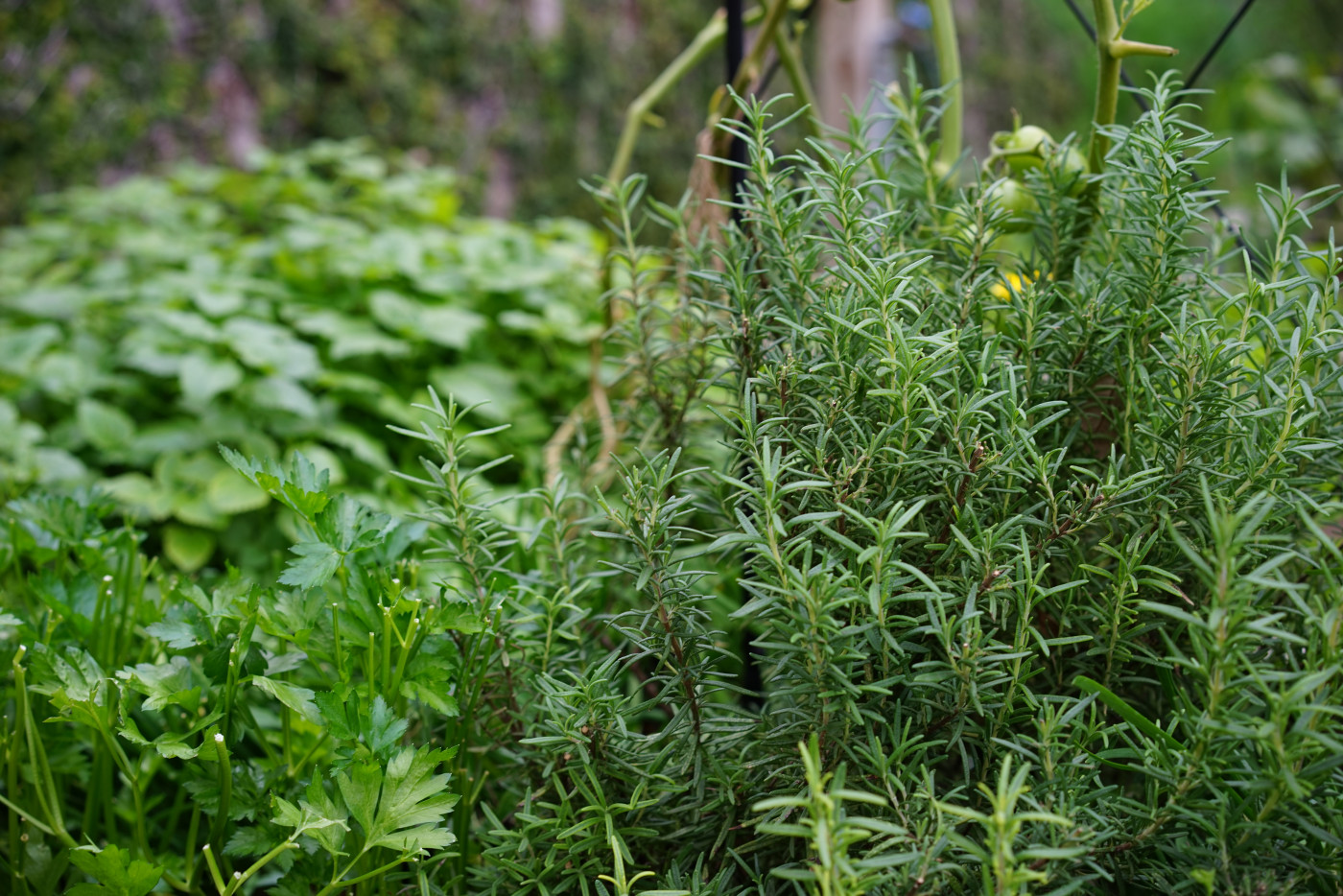
The first perennials I add to any garden design are perennial herbs. Oregano, rosemary, chives, sage — these grow along the edges of raised beds and earn their spot in many ways.
Benefits of perrenial herbs:
- They produce reliably, often when nothing else is ready to harvest yet.
- Their strong scents naturally repel pests and attract pollinators, providing protection all season long.
- They provide year-round structure and fullness that make the garden look established even in early spring.
Beyond herbs, I love planting native and pollinator-friendly plants around the exterior of kitchen gardens. These serve as a living fence that helps screen the garden from wildlife looking for an easy meal. They welcome the bees and butterflies that make your vegetable production significantly better. And they add seasonal color from spring all the way through fall — something that even the most beautifully planted vegetable bed can't always promise.
If you pick your perennials thoughtfully, you can have something in bloom from the first warm days of spring through the final weeks of fall. That's a garden that has something to offer every single time you walk outside.
Putting It All Together
Here's the thing about these four elements: none of them are complicated, and none of them require a big budget or a big space. They just require intention. A clear entrance. A trellis reaching skyward. Beds so full of plants you can't see the soil. And a handful of perennials that promise to come back and greet you every spring.
When you layer these four elements together, something shifts. Your garden stops being a place where you grow food and starts being a place where you actually want to spend time. A place that makes you slow down the moment you step into it.
That's the garden worth building. And you absolutely can build it.