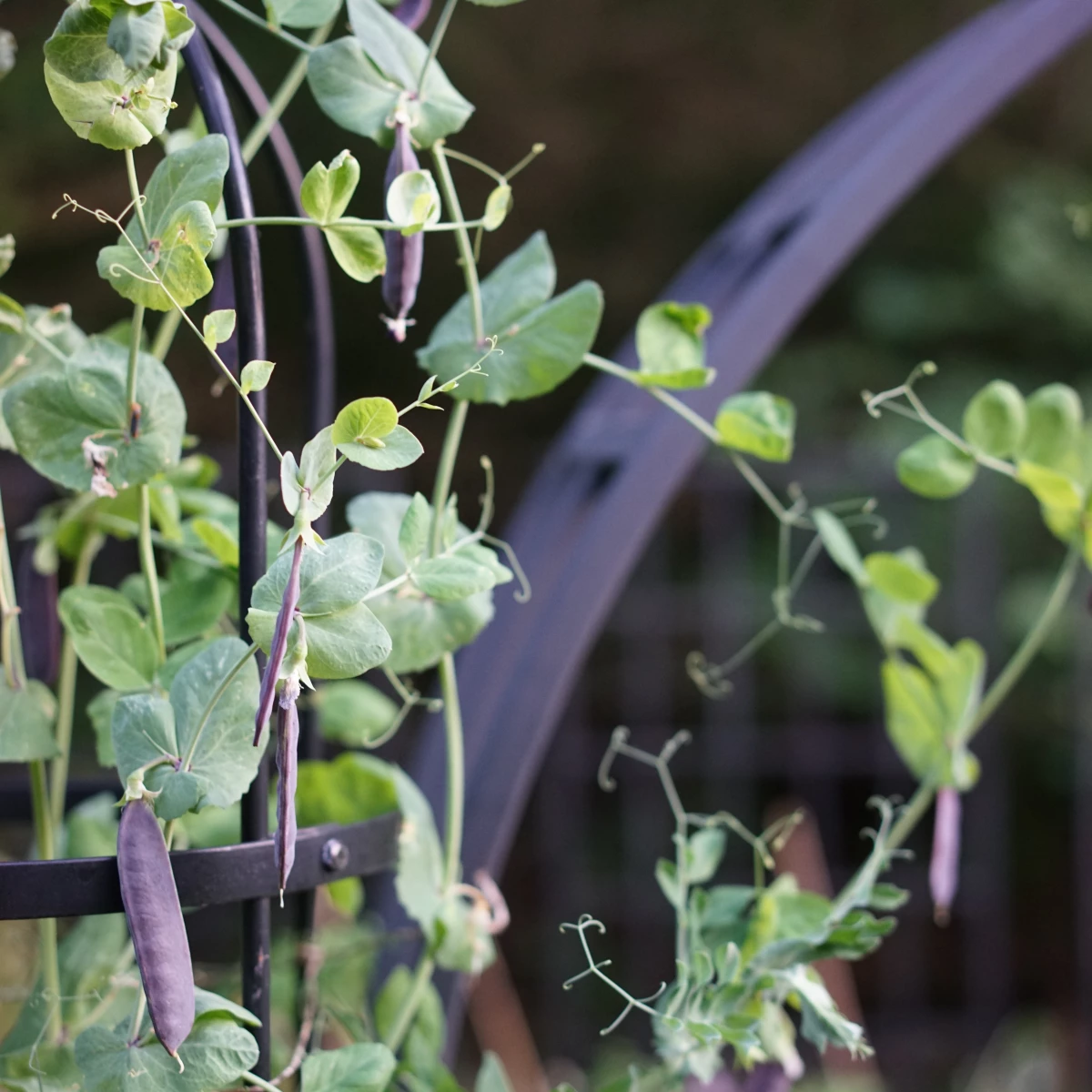
Nicole's Take: Intensive planting means ignoring the spacing recommendations on plant tags and packing your raised bed as full as possible — and after building 300+ kitchen gardens, I can tell you it produces more food, fewer weeds, and a garden that's actually exciting to tend every single day.
At a Glance
- Intensive planting means planting raised beds to be as full as possible — it works because raised bed depth and regular tending replace what wide spacing was trying to achieve.
- Packing plants close together suppresses weeds, retains soil moisture, maximizes production, and keeps the garden interesting enough to tend regularly.
- Intensive planting only works in raised beds with regular tending — it is not recommended for in-ground gardens or gardeners who can only check on their plants once a week or less.
By Nicole Johnsey Burke: Founder of Gardenary and Author of Kitchen Garden Revival
What Is Intensive Planting?
You know how eager little children are to call someone out when they're doing something wrong? I feel like many of my followers who see the way I plant my own garden or a client's garden on social media are like kids who've just seen their sibling drawing on the walls with a permanent marker. "Wait a second! You're breaking the rules!"
I practice something called intensive planting in my gardens, and it basically means ignoring the plant spacing suggestions on plant tags. People can get pretty opinionated and even mad about this when they see my gardens, as evidenced by the hundreds of messages I receive from gardeners who want to turn me into the plant spacing police. Here's an excerpt from just one of those emails:
Dear Nicole, It appears that you're absolutely breaking all of the plant tag rules when you set up your kitchen garden. Your plants are packed so close together, I can't imagine that you're not having serious pests issues and that your plants are producing the way you want them to. Please explain.”
That's right. I am a rule breaker, and I'm going to teach you how to break the plant spacing rules too—and why it's okay to ignore the plant tags.
Let's get intense about our plant spacing.
(Prefer to listen? Check out Episode 37 of the Grow Your Self podcast, "You Can Ignore the Plant Tags - Intensive Planting in the Kitchen Garden," on iTunes, iHeartRadio, and Spotify.)


I WANT YOU to Break the Plant Spacing Rules with Me
You too can commit to being an intensive planter by taking the Intensive Planting Pledge. Oh yeah, girl, there's a pledge and everything. But before you take it, I do want to say that intensive planting is not for everybody, and I'll tell you why in a bit.
For me, I personally love the idea of breaking the rules because I've been a rule-follower all my life. I feel guilty if I do anything other than the way I'm "supposed to"—except planting. This is one of those times you can break the rules and you don't have to feel bad about it. (Come on, you know you want to.)
Here's an excerpt from Chapter Six: "Plant" of my first book, Kitchen Garden Revival:
"I'm going to come right out and say it, okay? You can pretty much ignore the plant labels. Because guess what? The plant tags in nurseries weren't created for kitchen gardeners. The plant tags tell you how far apart your plants should be if—big 'if' there, guys—you're growing crops in long and wide rows on a farm or a large in-ground vegetable patch, not in a raised bed in your backyard. So, when the tag says something like, ‘Space three to four feet apart in three-foot rows,’ it's talking to the farmer who will have 40 or 60 feet of each planting row with 20 or 40 or more plants along the hill.
“Is this you? This isn't me. And this is not a kitchen garden. Don't get me wrong. I'm so thankful we have farmers who farm in rows and plant lots and lots of food. We need more of them. This is in no way meant to disrespect the farmers who plant in rows. Farmers, if any of you are reading this, please keep planting all the delicious things however you want, and I will buy them all. And please don't hate me for breaking the plant spacing rules.”


The 3 Reasons I Ditched the Plant Spacing Chart for Good
It may surprise you to learn that I was once a very obedient gardener. That's right. I only started packing in the plants in my garden after several years of following all the advice on plant tags for spacing to the letter. I sowed my seeds two to three feet apart in rows 12 inches apart, or whatever the instructions said.
There are three reasons I began to regret following the rules.


Reason 1: Following the Plant Spacing Rules Means Not a Lot of Production
My first garden boxes were 4ft x 4ft. With just 16 square feet of total growing space, following the plant spacing for tomatoes meant I only had room for four, maybe five, tomato plants—and that was it. I waited months for those little tomatoes to ripen so I could finally have something to harvest, only for squirrels to steal most of my fruits. In short, I got very little production out of the space.


Reason 2: Empty Space Between Plants Just Grows Weeds
When you space plants super far apart and don't grow anything in between, that means there's a lot of soil left exposed to the elements. Bare soil dries out more quickly and is overall more difficult to manage. When the soil was bare between my sad little tomato plants, I was constantly having to water. On hot Houston days, I often had to water twice.
The worst part was that things grew in those open spaces whether I planted them there or not. Those things were weeds. You see, weeds love the extra access to sunlight they get when you leave nice, empty places for them to fill. Weeds are not something I wanted to eat, but there they were, growing between the plants I did want to eat.


Gardenary's Planting Method
Unlock my secret to getting 3X the harvest from your raised beds, making the most of every gardening season, and turning your fresh produce into delicious meals!
Reason 3: More Plants are More Exciting
Having four of the same type of plant in a box—and nothing else—just wasn't enough to keep me coming back to the garden on a regular basis. I found tending those tomato plants a chore, and honestly a bit boring, when what I really wanted was for my garden to be a place where I could practice a new hobby, be entertained, and learn.


So I Tossed the Plant Spacing Chart out the Window
After several seasons of growing sad, solitary tomato plants amid dozens of weeds, I had a realization. If bare soil is hard to manage and smaller plants want to grow in those empty areas, why not just plant smaller plants I actually want to eat in that space? Those plants will protect the soil so that I don't have to spend as much time watering and weeding. Plus, I could actually get to harvest something while I'm waiting on the tomatoes to form, instead of banking the entire growing season's success on just four tomato plants. I could harvest more often from a wider variety of plants.
So, I started planting smaller plants around those tomatoes, and guess what? It worked! In fact, it worked so well that I started planting this way with all of my Rooted Garden clients once I started my garden consulting business.
Two Requirements to Practice Intensive Planting
Intensive planting is great, but it's not for everyone.
Intensive planting works if:
- You're growing in a raised bed (minimum 6 inches deep)
- You're able to tend your garden several times per week — watering, pruning, harvesting, and checking on plants regularly
Intensive planting does NOT work if:
- You're growing in-ground
- You can only tend your garden once a week or less


The Benefits of Intensive Planting
Intensive Planting Allows for More Variety in the Kitchen Garden
Standard spacing rules meant an entire season banking on four tomato plants. Intensive planting fixes that.
With only 60 to 90 days in a growing season and limited raised bed space, I developed a layering system that fits far more into every bed:
- Large plants (tomatoes, peppers, cucumbers) — center of the bed
- Medium plants (leafy greens, Swiss chard, kale) — packed in around them
- Small plants (herbs, flowers) — edges and every open gap
This approach fits a dozen different plants in the same space that used to hold one.
It also makes the garden resilient. If one plant has a bad season, the harvest doesn't stop — herbs, greens, root vegetables, and fruits are still coming from everything else.
A diversified raised bed produces something worth harvesting, no matter what the season throws at you.
Intensive Planting Is the Best Way to Imitate Nature in Your Garden
Have you ever seen plants growing naturally in their habitat all spaced apart from one another with lots of soil in between? I'm waiting.
No, you haven't because it's not natural. Unless you're in the desert, but even in the desert, if you stumble upon a plant, it's typically growing next to other plants.
You often see towering trees next to medium-size plants with lots of low-lying smaller plants all around. They all work together so they can thrive and reproduce. When we grow our garden that way, we're imitating nature, which is what we want to do in the first place.


Intensive Planting Helps with Water Retention
Remember what I said about bare soil being bad? Plants in exposed soil are more likely to be stressed, whether from running out of water or nutrients or support. We learned during the Dust Bowl and many other environmental challenges just how bad exposed soil can be on a larger level. What we want is soil to be covered. Intensive planting is like a blanket for the soil; it protects it. It helps the soil hold all of its nutrients and water.
If you feel like you're always having to water your garden because your soil is drying out too fast, that could be because your plants have too much space between them. There's just too much exposed soil, and the water in that soil is evaporating much faster than it would if it had plants growing in it.


Intensive Planting Helps with Weed Management
As I mentioned, things will end up growing in those empty spaces, whether you want them to or not. If I see a weed growing somewhere, I pull the weed out and take that as my sign to plant something I actually want to grow there. Nature wants something to grow there, so why not add a plant that you'd enjoy harvesting from and eating, or a plant that you'd enjoy looking at, like a flower?


Intensive Planting Maximizes Production
I teach more on how to categorize plants based on their size and their duration in my book, Kitchen Garden Revival, and in my online gardening course, Kitchen Garden Academy. But basically, large and lengthy plants are the ones that will spend 60 to 90 days in the garden to produce. That means it's gonna be a while before you get to harvest from them, but you'll still need to tend them while they're growing.
While you're waiting to harvest, you could have smaller plants with a shorter duration growing underneath them. This not only ensures you'll get to harvest sooner from these smaller plants, it also keeps the garden interesting. Like I said, it's hard to be a “gardener” who goes out and takes things from the garden regularly if there's not a lot happening out there. I didn't love tending my four cherry tomato plants because stepping outside was like: “Well, there they are again. They're still cherry tomato plants, still growing.”
Now, I step outside and see Swiss chard, lettuce plants, carrots, peppers, beans, and peas—all these things growing down below while my tomato plants take off—and that makes it super exciting to head out to the garden each and every day. I get to harvest from many of these plants in 30 to 45 days while I'm waiting on bigger plants to finish up.
Packing in the plants means that you bring more interest to the garden and you're going to get to harvest more. I don't mean that you're going to get to harvest more from every single plant. What I mean is you'll get to harvest a wider variety and there'll be more things coming more often.


Ready to Commit? Take the Intensive Planting Pledge
There isn't a right or wrong way to break the plant spacing rules, and the rule follower inside you might struggle with defying those plant tag authorities. But I dare you to join me in planting your garden as full as possible. But to fully commit, you have to agree to seven things.
- I will tend my garden regularly — weekly, maybe even several times per week.
- I will prune regularly and use my harvests as often as possible.
- If some plants get crowded, I'll remove the ones that matter least to me.
- I will check in on my plants so they feel cared for, even in a full, packed bed.
- I will be okay if not everything works out — because I grew more variety and learned more than I ever would have in a half-empty garden.
- I will not be intimidated by rule followers who tell me I'm wrong.
- I'll message Nicole when I harvest way more than my rule-following friends — but I'll try not to be too braggy about it.
Intensive planting sets you up to really enjoy the garden in a totally new way. You can't just let it go and do its own thing and expect to get perfect production from all the plants that you put in the garden.
It's a different way of looking at gardening tasks and what you hope to get out of your efforts.


You Don't Have to Be a Rule Follower in the Garden
After you practice intensive planting for several seasons, you'll find a happy balance for how much you think is too much and how little is too little. There are still seasons when I wish I'd planted more and others where I'm handing kale off to neighbors. Even after packing in hundreds of plants, I still have surprises and disappointments. That's part of what keeps it interesting.
What do you think? Are you down for breaking the rules with me? I hope I've convinced you. At the very least, I hope I've inspired you to see the potential in your own garden space. It's okay to break the rules if you're growing in a raised bed kitchen garden. Maybe one day, you'll get a message from a fellow gardener that says, "Dear you, it appears that you are breaking the rules. Please tell me more... because it looks fabulous!”
I like to say if something's worth doing, it's worth being intense about it. So here's to breaking the rules in the very best way!
Shop Our Cedar Raised Beds
Gardenary's new line of quality cedar garden beds are easy to assemble and will provide years of gardening enjoyment. Choose from numerous different garden sizes to fit your space.


Learn How to Plan and Build Beautiful Raised Beds
Follow a simple process to build a raised bed that makes construction straightforward — even if you’re not “handy.”
Keep Reading
Garlic Harvesting: Your Quick Guide to Determining the Perfect Time
Fall Vegetables That Taste Better After a Frost (And the Science Behind It)
Why Arugula Is the Easiest Fall Crop to Grow (And How to Keep It Producing)
How Lauren Almquist Turned Her Herbalism Practice Into a Real Business With Garden Coach Academy
Where to Buy Beautiful Garden Tools for Women