
Join Thousands of Gardeners On the VIP List
Free perks, just for email subscribers:
- 15% Off Your First Order
- Gardening Videos & Articles
- Early Access to Sales
Sign up, check your inbox, then shop with your code.

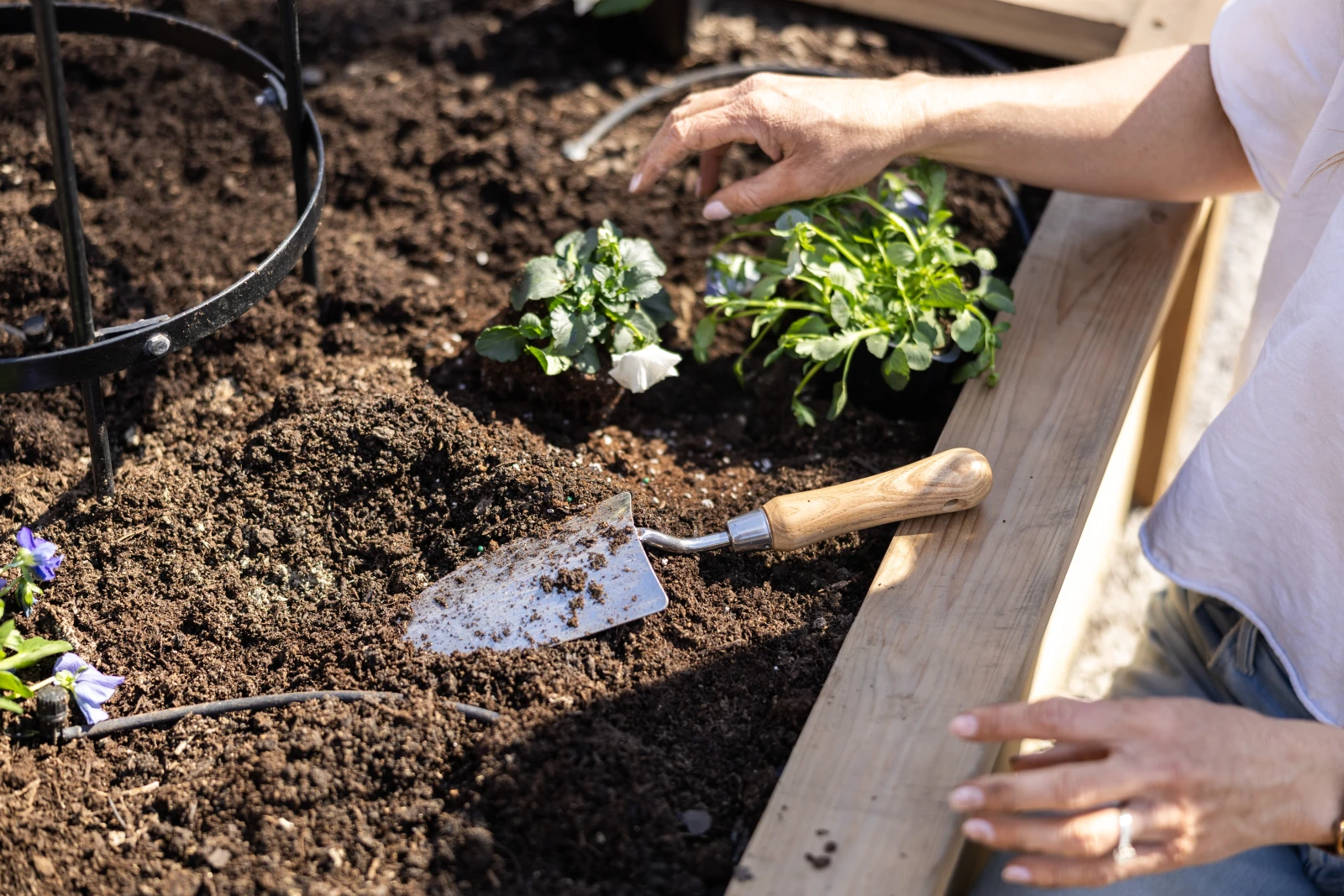
Nicole's Quick Take: I clean my garden tools every fall: scrub off the soil, dry them completely, rub away any rust, sharpen the pruners, and wipe them with a thin coat of oil. Keep them somewhere dry so they're sharp and rust-free come spring.
At a Glance
- Never put tools away wet, since moisture is what starts rust.
- Use 70% rubbing alcohol on pruners, since bleach corrodes blades.
- A quality tool set with carbon steel heads, wood handles, and hanging loops is easy to clean and lasts for years.
By Nicole Johnsey Burke: Founder of Gardenary & Author of Kitchen Garden Revival
Why I Give My Tools a Little Care Every Fall
For years, I put my garden tools away dirty and didn’t think twice about it. Then I’d reach for my trowel and find it crusted in dried soil, or grab my pruners only to find them stiff.
Now, I give my tools a quick cleanup every fall as part of my regular garden maintenance.
A little preventive care goes a long way. It keeps rust away and helps your tools last for years, so they’re ready to work whenever your garden needs them.
If you’re still building your tool kit, here are the best gardening tools I recommend for a kitchen garden.

How to Clean Garden Tools in the Fall
To clean garden tools in the fall, scrub off the soil, dry them completely, remove any rust, disinfect your pruners, sharpen the blades, and wipe everything with a thin coat of oil.
WHAT YOU'LL NEED:
- A stiff brush: Plus an old toothbrush for small tools and tight spots.
- A bucket of water: For soaking off caked-on soil.
- Steel wool or sandpaper: For rubbing away rust.
- 70% rubbing alcohol: For disinfecting pruner blades.
- A file or sharpening stone: For putting an edge back on pruners and trowels.
- Linseed oil and clean rags: For protecting metal and wooden handles.
Step 1: Scrub Off the Soil
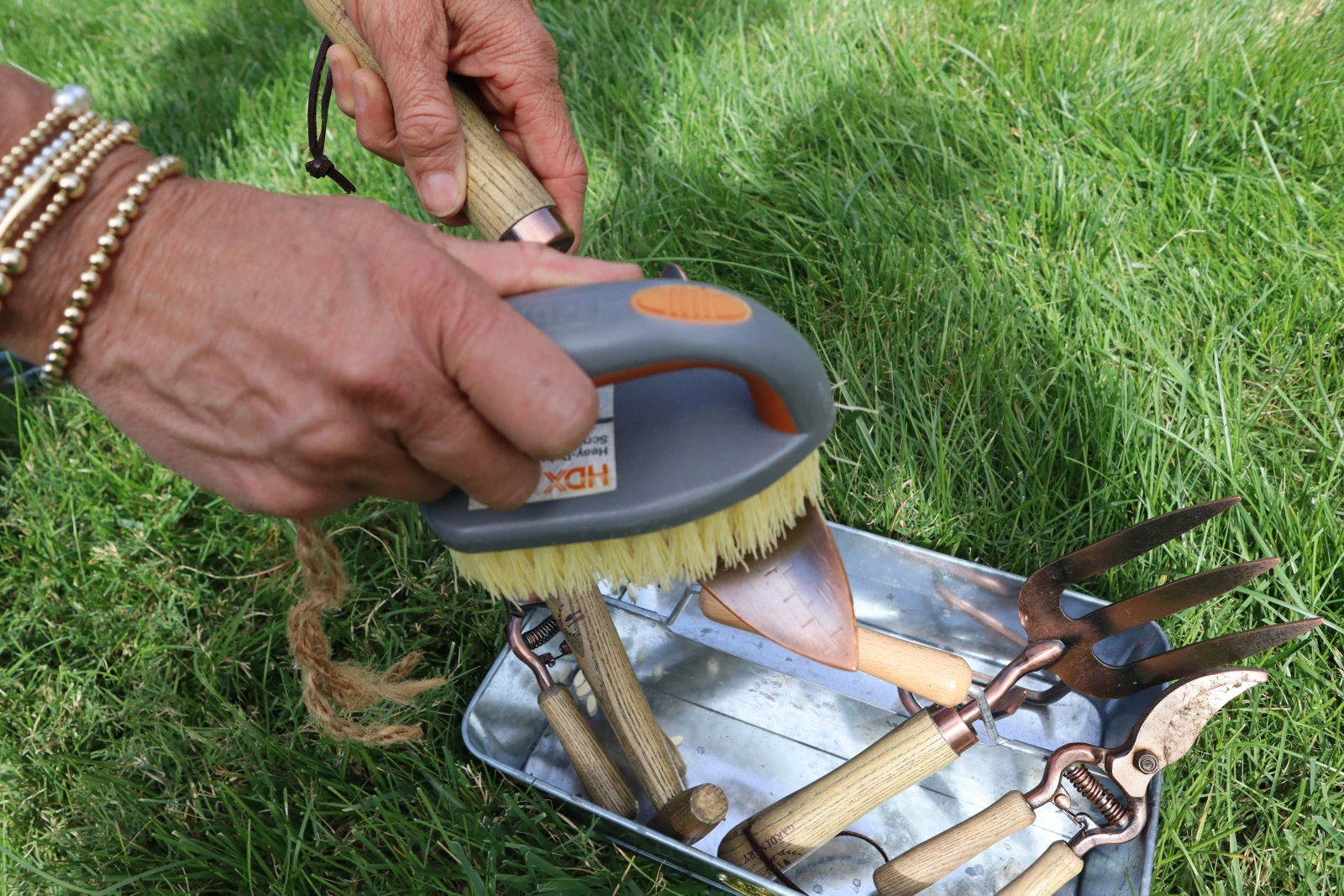
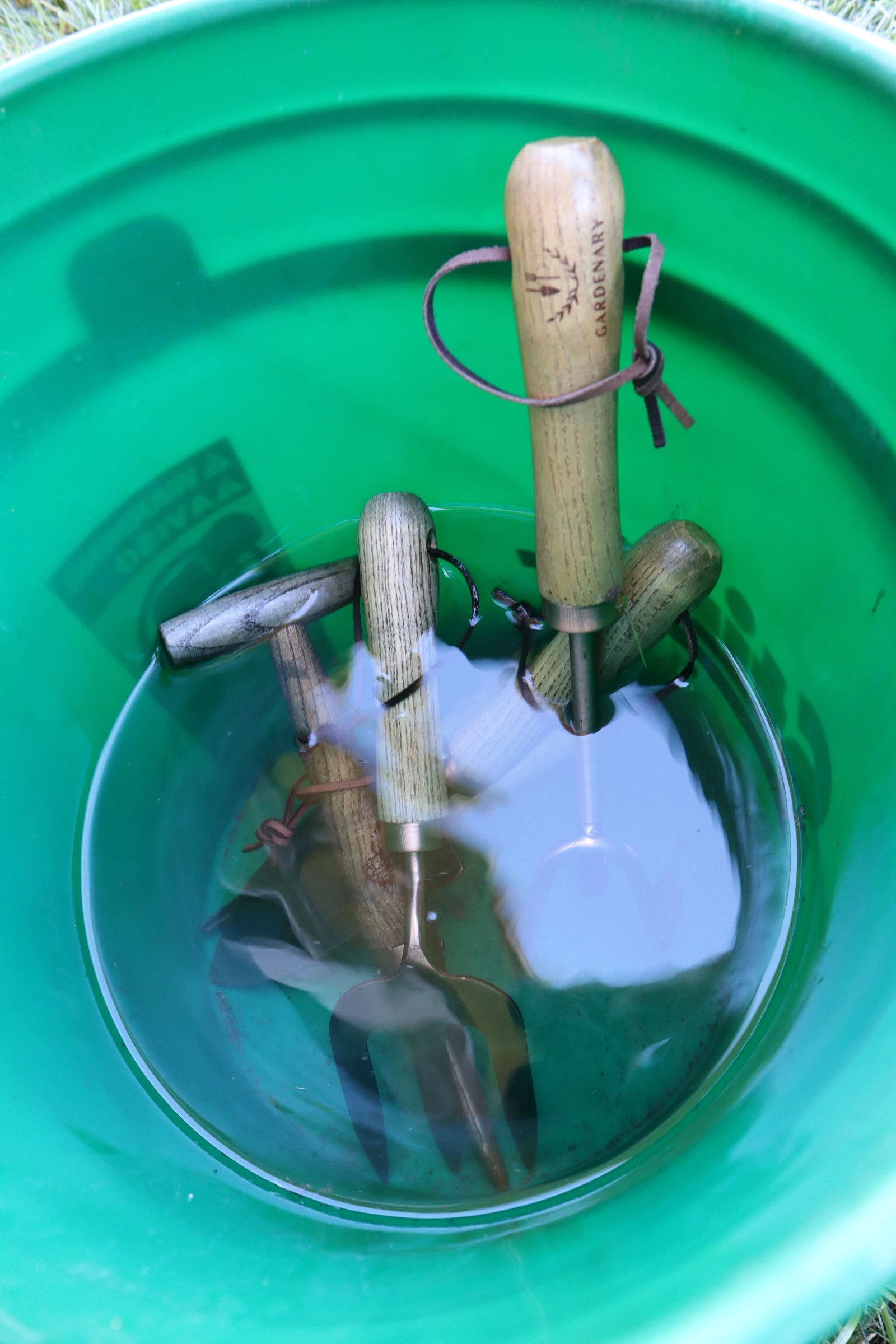
Knock off loose dirt, then scrub each tool with a stiff brush. If the soil is caked on, let the metal ends soak in a bucket of water for a few minutes first. An old toothbrush gets into the hinges and corners.
Step 2: Dry Everything Completely
This is the step that matters most. Wipe each tool with a dry rag, then let it sit in the sun or a warm spot until it's completely dry. Moisture left on metal is exactly how rust gets started.
Step 3: Rub Away Any Rust
Go over any orange spots with steel wool or sandpaper until you're back to clean metal. For heavier rust, see the rust section below.
Step 4: Disinfect Your Pruners
Pruners can carry plant diseases from one plant to the next, so they get a quick wipe or spray with 70% rubbing alcohol. Skip the bleach. It's corrosive to metal and will dull and pit your blades over time.
Step 5: Sharpen the Blades
Sharp pruners make clean cuts that heal quickly, while dull ones crush stems. I sharpen mine every fall so they're ready for spring. Here's exactly how below.
Step 6: Oil the Metal and Handles
Wipe a thin coat of oil over the metal parts to keep moisture out. I use linseed oil because it's plant-based, and it does double duty on wooden handles. Lightly sand any rough spots on the handle, rub the oil in, let it soak for 10 to 15 minutes, then wipe off the extra.
Safety tip: Rags soaked in linseed oil can heat up and catch fire on their own as they dry. Lay them flat outside to dry, or put them in a sealed metal can of water before you throw them away.
Step 7: Hang Them Up
Store your clean tools in a dry spot, hanging on hooks or tucked in a container, never leaning against a damp floor. More on that below.

How to Choose a Garden Tool Set
Fall cleanup is so much easier when you start with good tools. When people ask me for the best garden tool set, here's what I tell them to look for.
WHAT I LOOK FOR IN A GARDEN TOOL SET:
- Carbon steel heads: Strong enough to dig into compacted soil without bending, and easy to sharpen each fall.
- Wood handles you can oil: Ash wood is sturdy, and a little linseed oil keeps it smooth for years.
- Hanging loops: Tools that hang up are tools that stay dry and rust-free.
- Every essential in one set: Planting, digging, cultivating, pruning, and marking rows, so you're not buying tools one at a time.
- Something beautiful: You'll reach for the tools you love to look at, and you'll take better care of them, too.
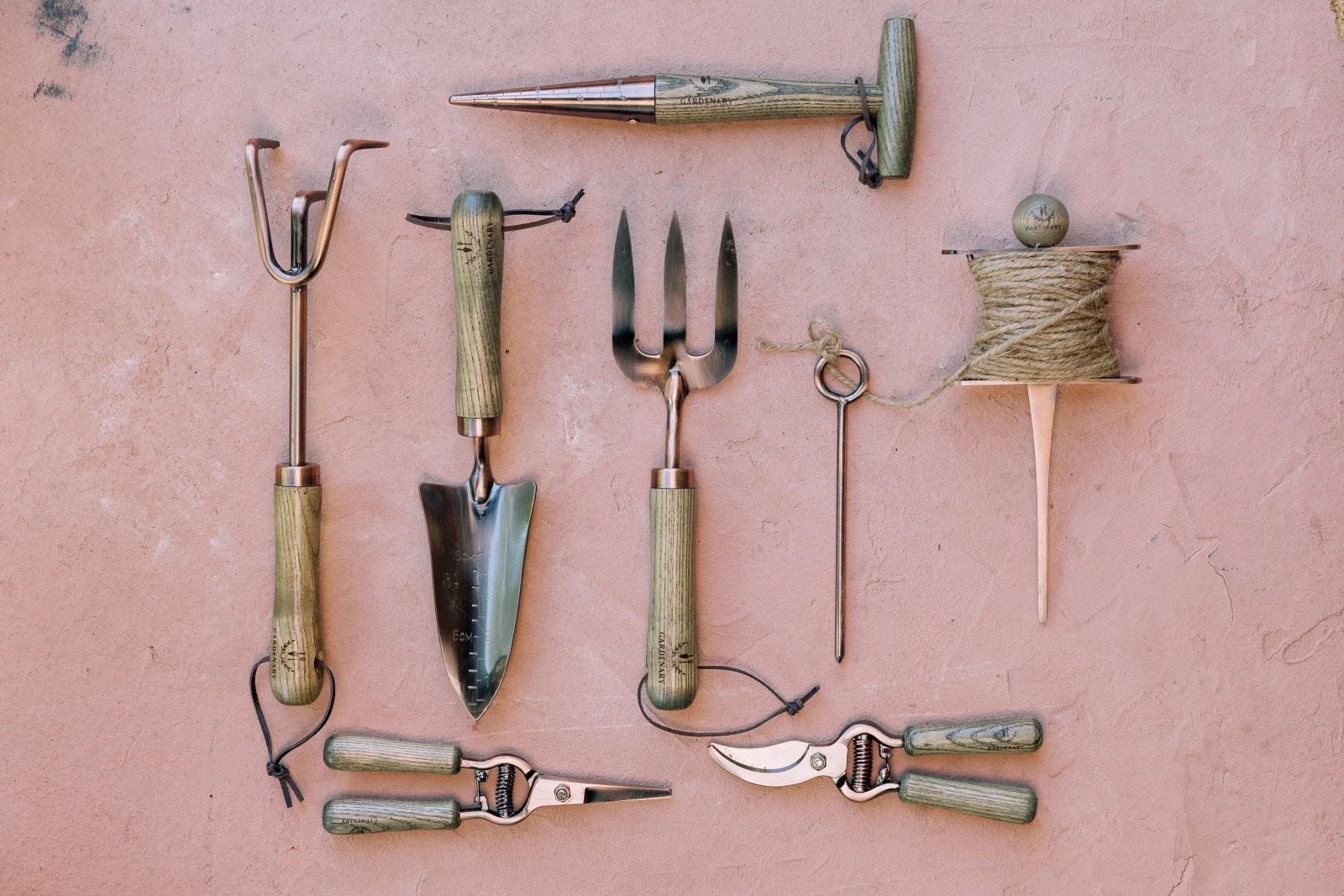
That's exactly what I wanted in the Gardenary Copper Plated Garden Tool Set. It's a 7-piece set of copper garden tools with copper-plated carbon steel heads, ash wood handles, and leather hanging loops on every tool, and it covers every essential task from planting to pruning.
WHAT'S IN THE COPPER TOOL SET:
- Bypass pruner: For clean cuts when harvesting, trimming, and pruning.
- Needlenose pruner: For detail work like snipping flowers and herbs.
- Transplanting shovel: For moving seedlings and digging planting holes.
- Dibber: For making holes at just the right depth for seeds.
- Cultivator: For loosening soil and pulling weeds.
- Hand fork: For turning in compost and breaking up soil.
- Row marker: For marking straight, even rows.
It also arrives in a gift box, which makes it one of my favorite gifts for gardeners. Pair it with the Garden Essentials Tote Bag for a complete garden tool set with a bag that keeps everything clean and together.
7 Tools, Beautifully Designed
The tool set gardeners actually want, made from carbon steel with an ash wood handle and a warm copper finish.
- Bypass pruner for clean, precise harvest cuts
- Needlenose pruner for detail work in tight spaces
- Transplanting shovel for seedlings and planting holes
- Dibber for perfectly spaced seed sowing
- Cultivator for loosening soil and clearing debris
- Hand fork for weeding and working around established plants
- Row marker & planting line for straight, intentional rows
All in a gift box, ready to use.
What to Look For | Why It Matters | Gardenary Copper Tool Set |
|---|---|---|
Carbon steel heads | Strong enough for compacted soil and easy to sharpen | Copper-plated carbon steel on every tool |
Wood handles | Comfortable, sturdy, and easy to refresh with oil | Ash wood handles |
Hanging loops | Tools hang up to dry, so they are less likely to rust | A leather loop on every tool |
Every essential tool | No piecing together a kit one tool at a time | 7 tools, from pruners to a row marker |
Easy to give | A tool set makes a thoughtful gift for any gardener | Arrives in a gift box |

How to Remove Rust From Garden Tools
A little rust is nothing to panic about. Most of it comes right off with a few minutes of elbow grease.
HERE'S WHAT I DO, FROM LIGHT RUST TO HEAVY:
- Light surface rust: Scrub with steel wool or fine sandpaper until the metal is clean.
- Heavier rust: Start with a wire brush, then finish with sandpaper.
- Stubborn, crusted rust: Soak the metal end in white vinegar for a few hours, then scrub. Rinse well afterward, since the vinegar keeps working on the metal.
Whatever method you use, finish the same way: dry the tool completely and give it a thin coat of oil. Bare, freshly cleaned metal is the most likely to rust again.
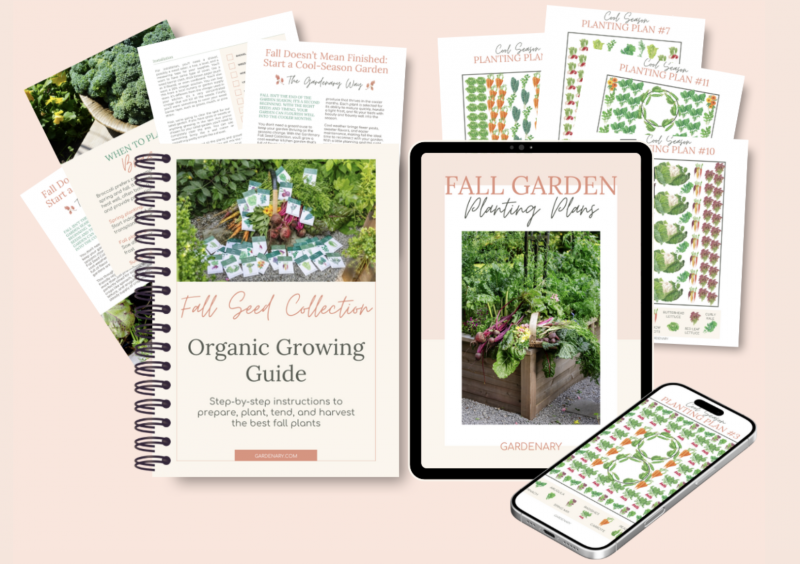
Gardenary's Fall Garden Guide
Spring gets all the attention, but fall is actually the ideal time to start your kitchen garden. Get expert guidance, done-for-you layouts, and step-by-step tips to help you plant smarter, grow healthier crops, and harvest more—right through fall.
How to Sharpen Pruners
You don't need anything fancy to sharpen pruners at home. A small file or sharpening stone and a few minutes will do it.
HOW I SHARPEN BYPASS PRUNERS:
- Clean them first. Sharpening goes faster on a clean, dry blade.
- Find the beveled edge. Only the curved cutting blade gets sharpened, and only on its angled side.
- Match the angle. Hold the file or stone at about 20 degrees, following the bevel that's already there.
- Stroke away from your body. A few smooth passes in one direction is all it takes. Wear gloves.
- Smooth the back. Run the file flat along the back of the blade once to remove any rough burr.
- Wipe and oil. Finish with a swipe of rubbing alcohol, then a drop of oil on the pivot.
If you have anvil pruners, the blade sharpens the same way. Just leave the flat anvil alone.

Where to Store Garden Tools
Where your tools spend the off-season matters as much as how clean they are. A clean tool left on a damp garage floor will still rust.
HERE'S WHAT WORKS:
- Hang any long-handled tools. Hooks or a wall rack keep full-length shovels and rakes off the floor.
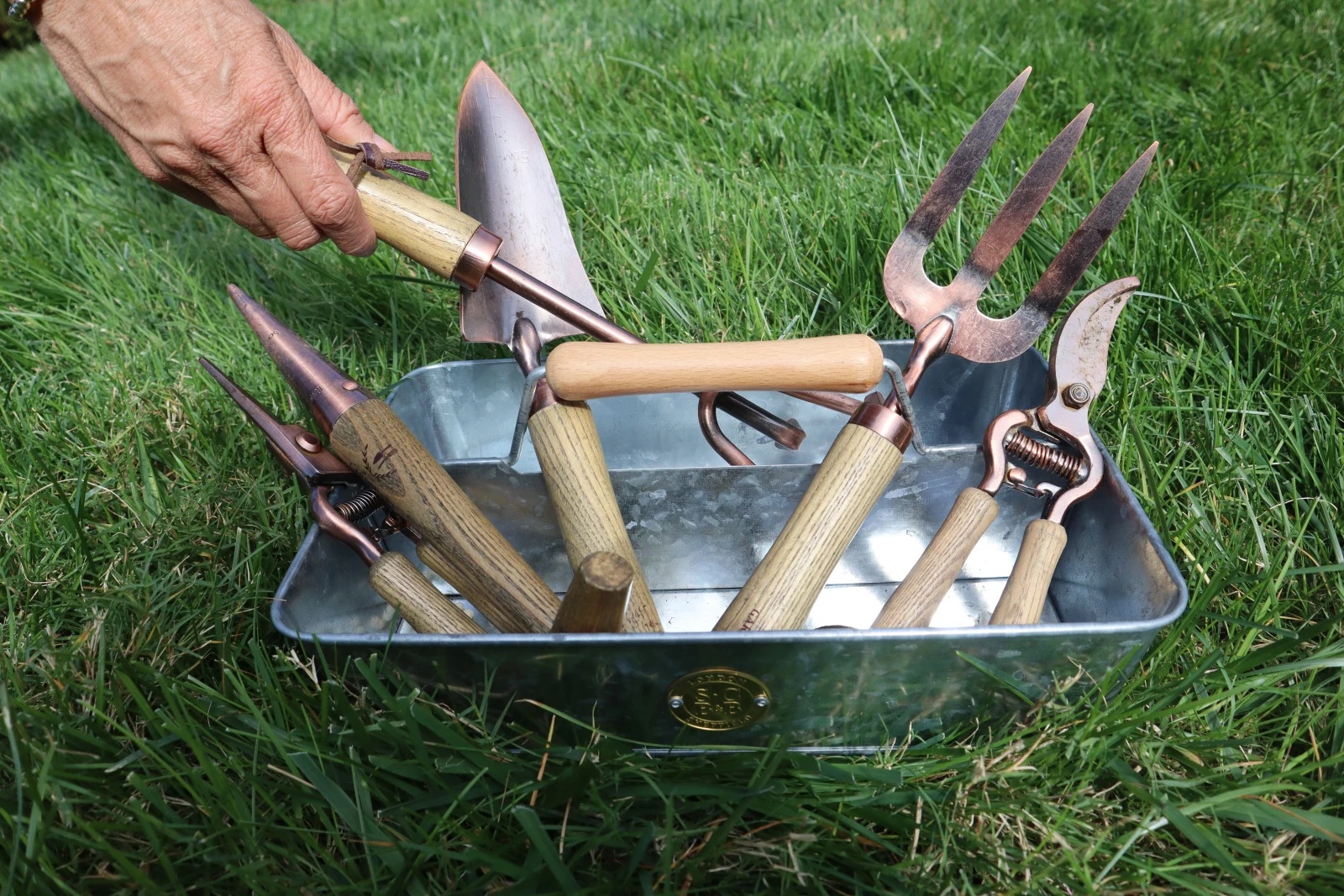
- Store the hand tools in an open trug to keep them visible. I keep my trowel, pruners, and cultivator in my Galvanized Garden Trug, which looks pretty enough to sit on a potting bench.
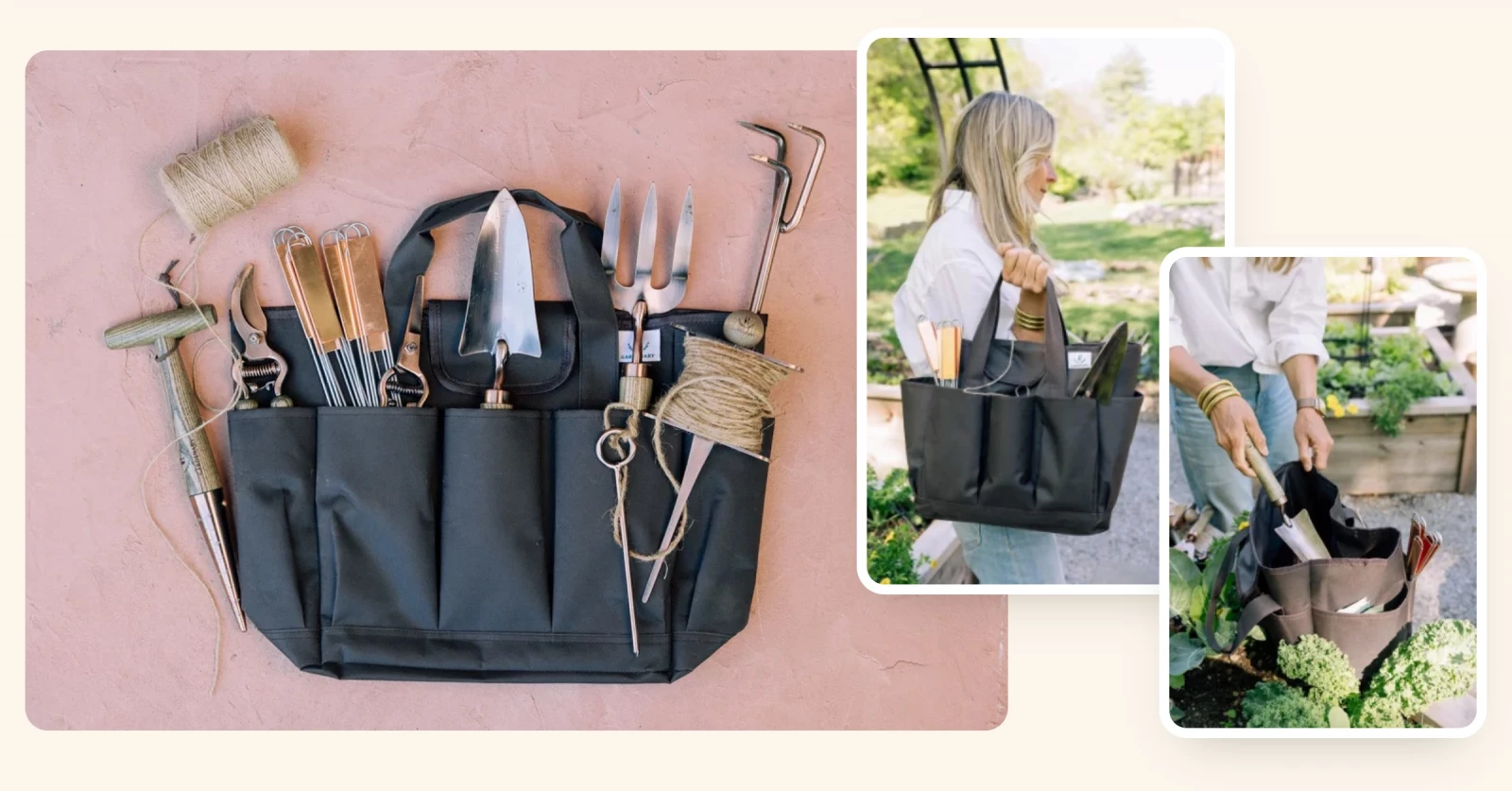
- Keep a grab-and-go bag. My Garden Essentials Tote Bag holds the tools I reach for most, so they're clean, together, and ready when spring planting starts.
- Choose a dry spot. A garage, shed, or mudroom works, as long as it stays dry.
If your tool collection could use a refresh, here's my list of the best gardening tools and my favorite kitchen gardening tools.
Keep Your Garden Tools Organized and Easy to Grab
Classic British trug design in durable galvanized steel
- Durable galvanized steel with a sturdy wooden handle
- Classic British trug design
- Pairs perfectly with Gardenary's copper garden tools
- Looks beautiful on a counter, shelf, or potting bench
Where Tool Cleanup Usually Goes Wrong
- Putting tools away damp. Even a little moisture left on the metal starts rust over the cold months.
- Disinfecting with bleach. It works, but it corrodes and dulls blades. Rubbing alcohol is gentler.
- Leaning tools on the garage floor. Concrete holds moisture, and tool ends rust where they touch it.
- Forgetting the handles. Dry, cracked wood gives you splinters. A little linseed oil keeps it smooth.
- Going heavy with the oil. A thin coat protects. A thick one just collects dust and grime.
Garden Tool Cleaning FAQs
Can you clean garden tools with vinegar?
Yes, vinegar works well for stubborn rust. Soak the rusty part in white vinegar for a few hours, scrub it with steel wool, then rinse, dry, and oil the tool right away so the bare metal doesn't rust again.
What's the best oil for garden tools?
I use linseed oil because it's plant-based and protects both metal and wooden handles. A thin coat is all you need. Just be careful with oily rags, since they can catch fire as they dry.
How often should I clean my garden tools?
A quick brush-off after each use keeps soil from building up. Then give them a deeper clean, sharpen, and oil once a year in the fall before you put them away.
What's a good gift for a gardener?
A quality garden tool set is a gift they'll use every season. The Gardenary Copper Plated Garden Tool Set comes in a gift box, and it pairs beautifully with the Galvanized Garden Trug or the Garden Essentials Tote Bag. For more ideas, here are the best gifts for gardeners.
Should you disinfect pruners with bleach or alcohol?
Use 70% rubbing alcohol. It works quickly, doesn't need to be rinsed off, and won't corrode your blades the way bleach does.
What's the best garden tool set?
Look for carbon steel heads, sturdy wood handles, hanging loops, and a set that covers planting, digging, cultivating, and pruning. My pick is the Gardenary Copper Plated Garden Tool Set, a 7-piece set with copper-plated carbon steel heads and ash wood handles that's built to last for years with a quick cleanup each fall.
What's the best way to store garden hand tools?
Keep them clean, dry, and off the floor. I store my hand tools together in my Galvanized Garden Trug so they're organized and easy to grab in spring.
Are copper garden tools worth it?
If you want tools that are as beautiful as they are useful, yes. The Gardenary set pairs strong carbon steel with a warm copper plating and ash wood handles. Like any steel tool, copper garden tools last longest when you clean, dry, and oil them each fall.
What garden tools do I need for a kitchen garden?
Start with a good pair of bypass pruners, a transplanting shovel or trowel, a cultivator, and something to mark your rows. Here are the best gardening tools I recommend, and the Gardenary Copper Plated Garden Tool Set covers every essential in one set.
Do copper-plated garden tools rust?
The copper plating helps protect the carbon steel underneath, but any metal tool can rust if it's put away wet or stored somewhere damp. Clean, dry, and oil your tools each fall, then hang them up, and they'll last for years.
GARDEN ESSENTIALS TOTE BAG
Spend Less Time Searching and More Time Growing
Designed for gardeners who love a tidy, intentional workspace, this tote keeps everything right where it belongs. It's lightweight, spacious, and has 8 exterior pockets so every tool has a home.
Now, only $29.
Keep Reading
How to Build Recurring Income With a Garden Business: 10 Lessons From Ashley Irene

How to Grow Blackberries in Your Backyard: The 5-Step Trellis Method
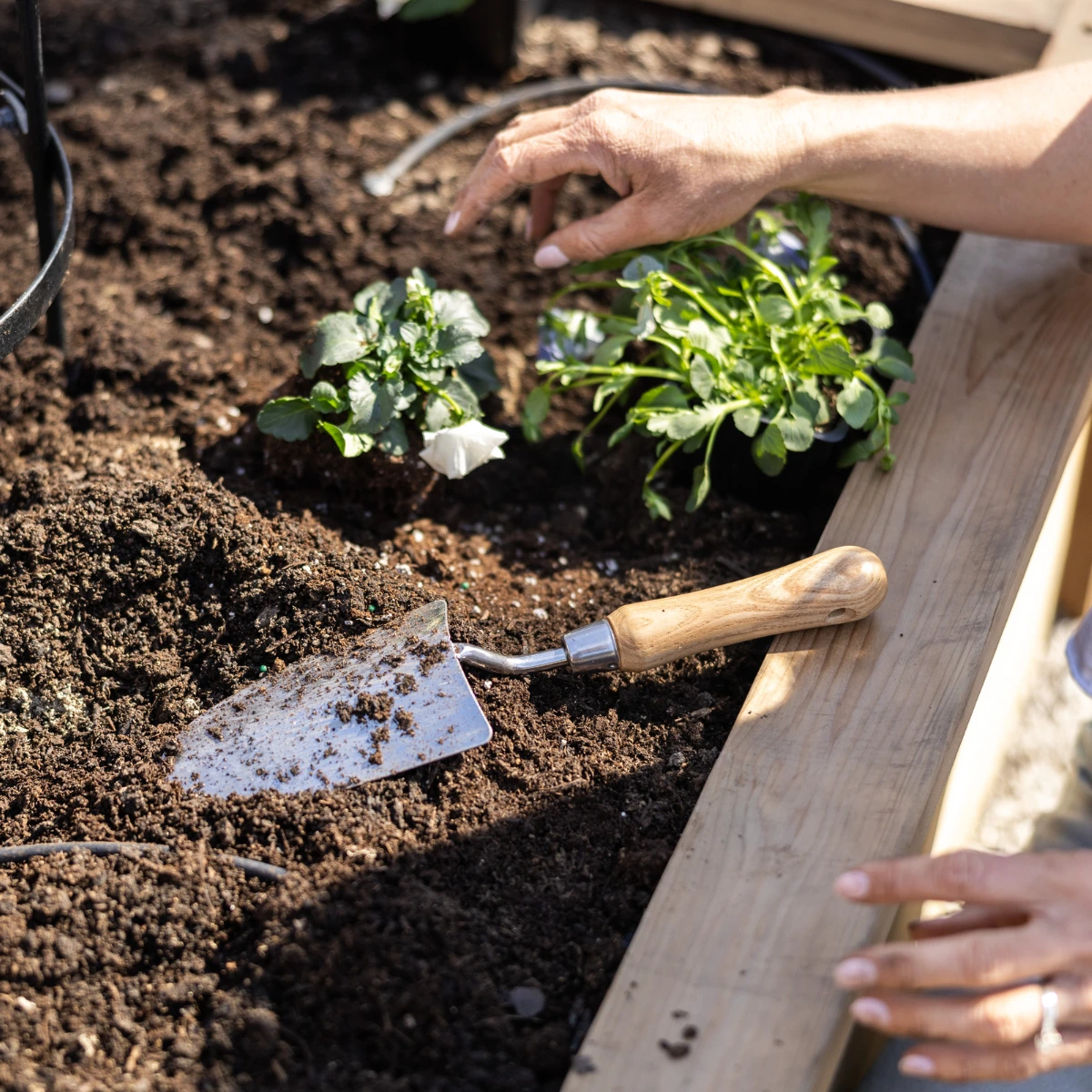
How to Clean Garden Tools in the Fall (and Keep Rust Away)

How to Keep Deer Out of Your Garden This Fall (Naturally)

What Are the Best Gardening Tools? 7 Essentials and the Garden Tool Set I Use

How to Harvest Lettuce So It Keeps Growing (2 Easy Ways to Pick It)
Sources
- Take Care of Your Gardening Tools — NC State Extension
- Maintenance of Your Garden Hand Tools — University of California Agriculture and Natural Resources
- Proper Storage of Garden Tools Will Make Spring Gardening Easier — Oklahoma State University Extension
- Master Gardener Q&A: Readying Your Garden Tools — University of Illinois Extension