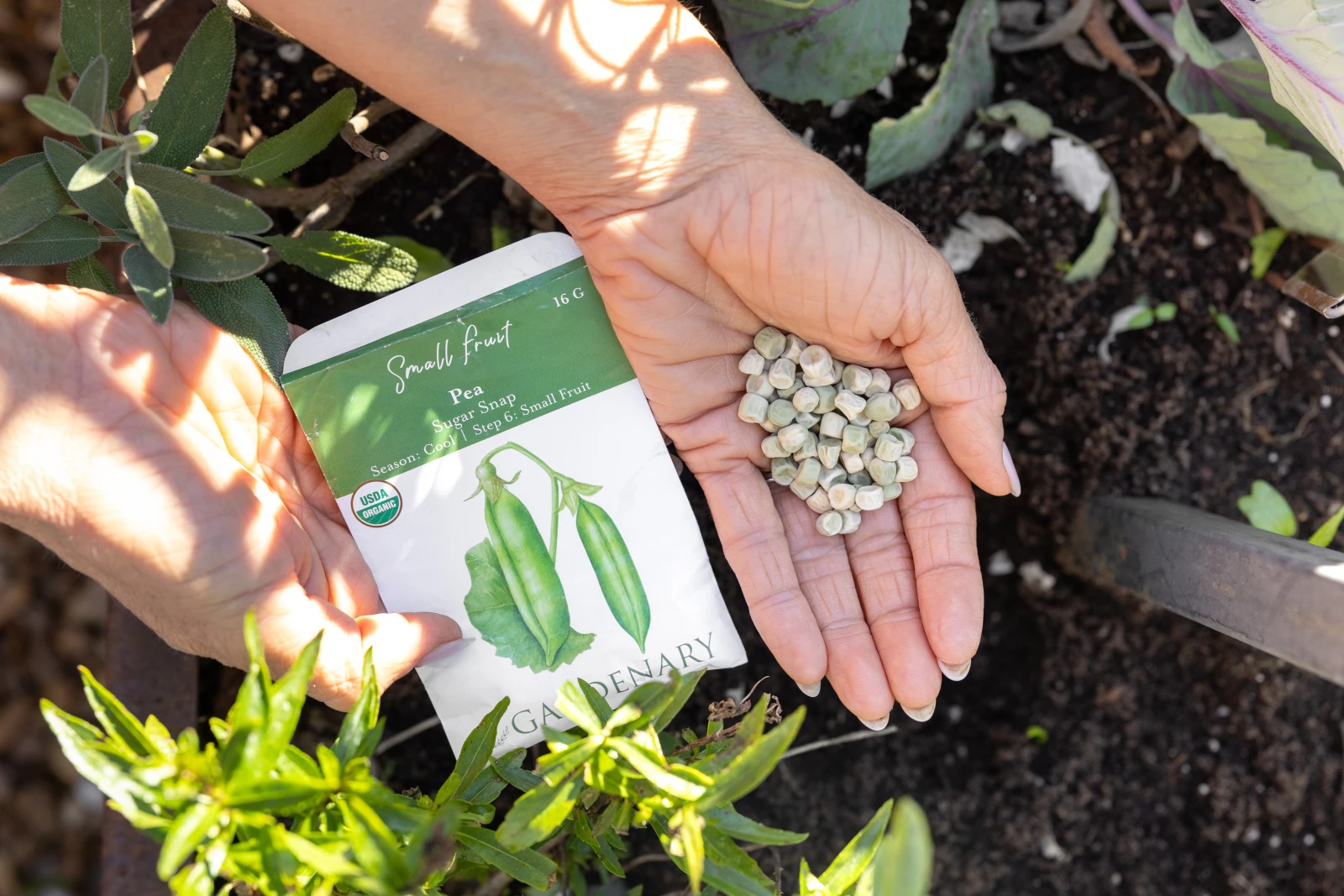
Quick Take: The first thing I trellis every fall is snap peas. They're a cool-season crop that climbs beautifully on a steel panel trellis like the Nicole Panel Trellis, and getting them in the ground at the right time is the difference between a full harvest or nothing at all.
At a Glance
- Snap peas are the first crop I trellis each fall, going in 8 to 10 weeks before my area's average first frost date.
- In a mild climate like Nashville, the planting window usually falls in mid to late August.
- A sturdy panel trellis gives peas something to climb from day one, so vines stay upright, and pods stay easy to find at harvest.
By Nicole Johnsey Burke: Founder of Gardenary & Author of Kitchen Garden Revival

The First Crop I Trellis Every Fall
Every fall, someone asks me what I'm trellising first, and usually they're surprised by the answer — it's snap peas, and I plant them earlier than most people think to.
For years I treated my trellises like summer-only equipment. It never occurred to me that fall crops might want one too.
Growing sugar snap peas reshaped how I think about the entire second half of the growing year.

Snap Peas Are the Best Climbing Crop for a Fall Garden
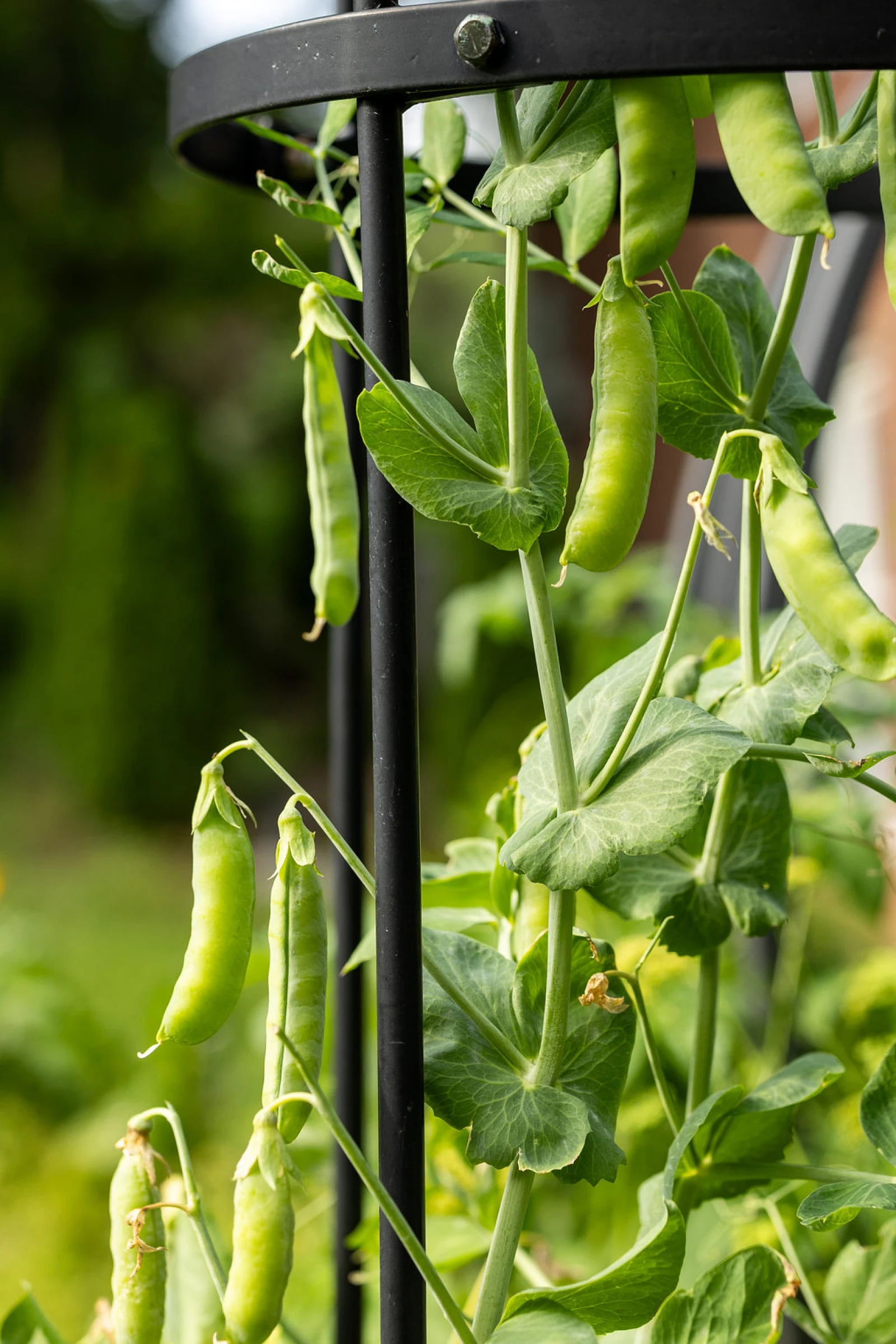
Snap peas are one of the few crops that love the shift from summer to fall. They germinate in warm soil, then grow their best once the air starts to cool down. That combination, warm soil and cooling air, is almost impossible to get in spring. In fall, it happens naturally.
Peas are natural climbers, which means they need a trellis from the very start, not halfway through the season.
A pea vine that's left to sprawl on the ground tangles into a mess and produces far less than one that's climbing where it gets full sun and good airflow.
Here's what makes snap peas a great fall-time choice:
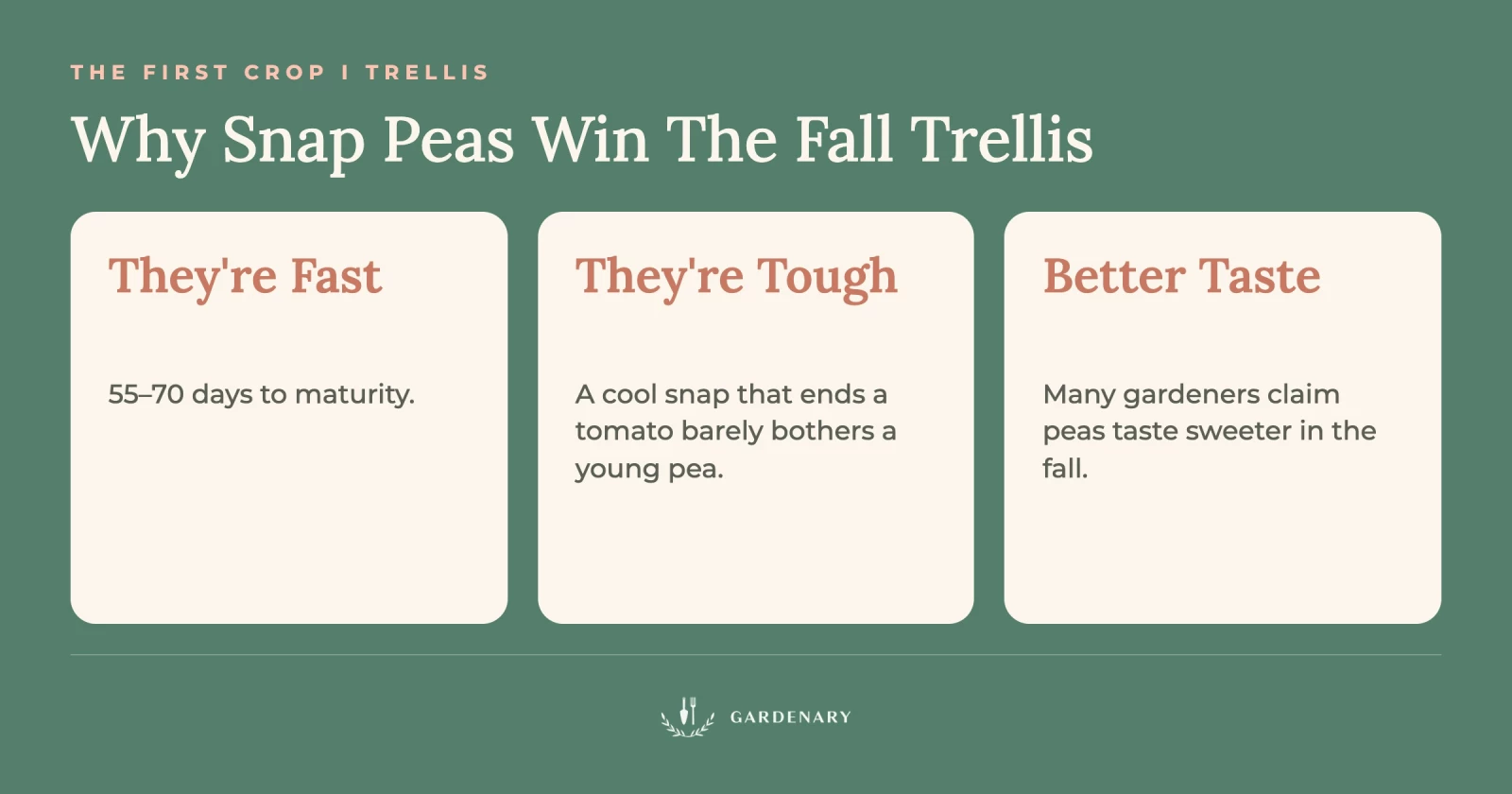
- They're fast. Most varieties mature in 55 to 70 days, so there's still time to plant them after summer crops finish.
- They tolerate light frost. A young pea plant can handle a cool snap that would end a tomato's season instantly.
- They're sweeter in fall. Cooler nights slow down the sugars converting to starch, so fall peas often taste better than spring ones.
NICOLE'S GUIDE TO GROWING PEAS, FREE!
Pea Season Starts Here: Straight From the Vine
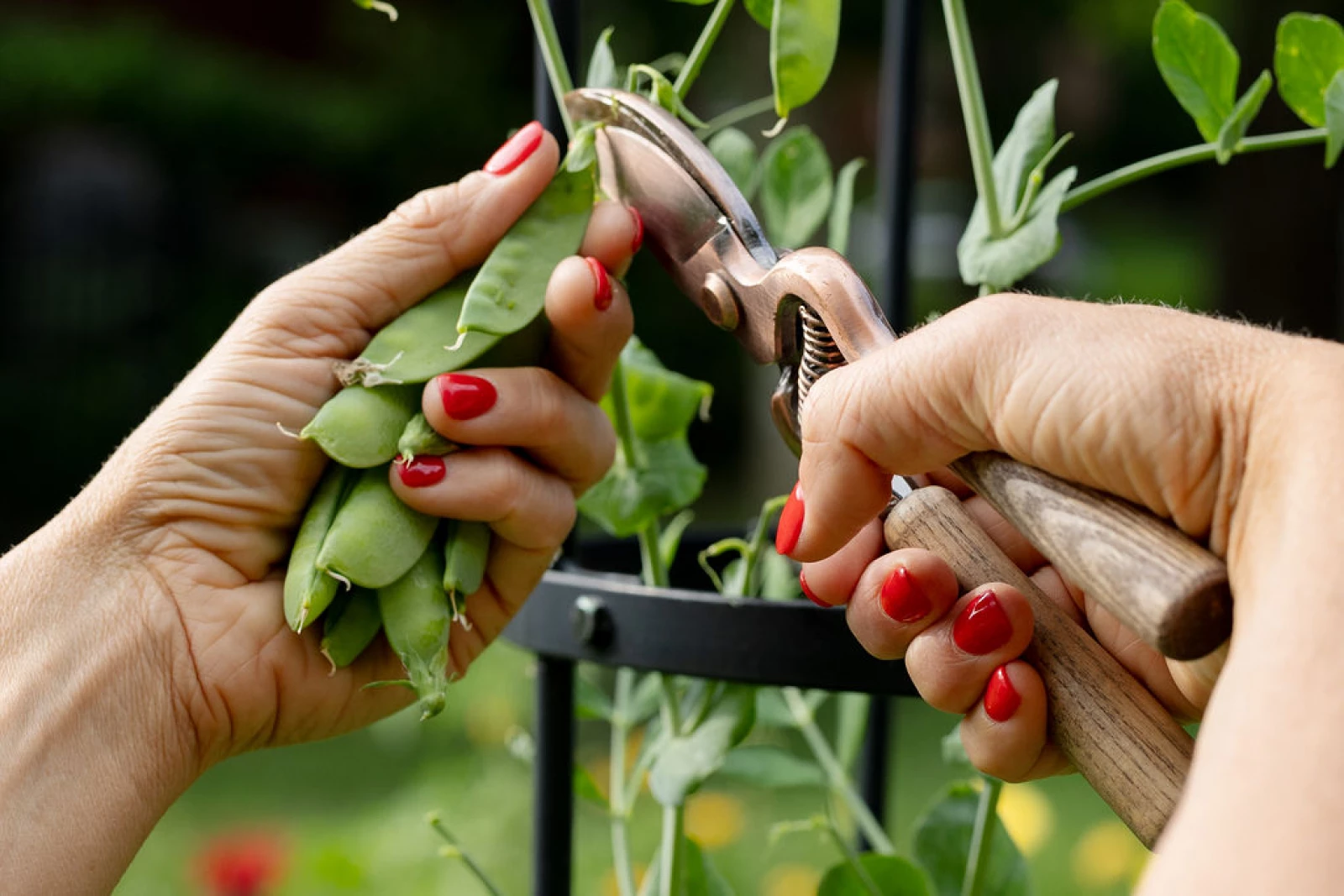
Everything you need to plant, tend, and pick your own peas this season, straight from Nicole's kitchen garden. Learn how to set up a trellis, choose the right soil and season, and know exactly when to pick for the sweetest, crispest peas. Grab your free copy below.

When to Plant Fall Snap Peas (Count Back From Your First Frost Date)
This is the part gardeners get wrong most often: they wait until it feels like fall-time cool weather to plant a fall crop, and by then it's too late.
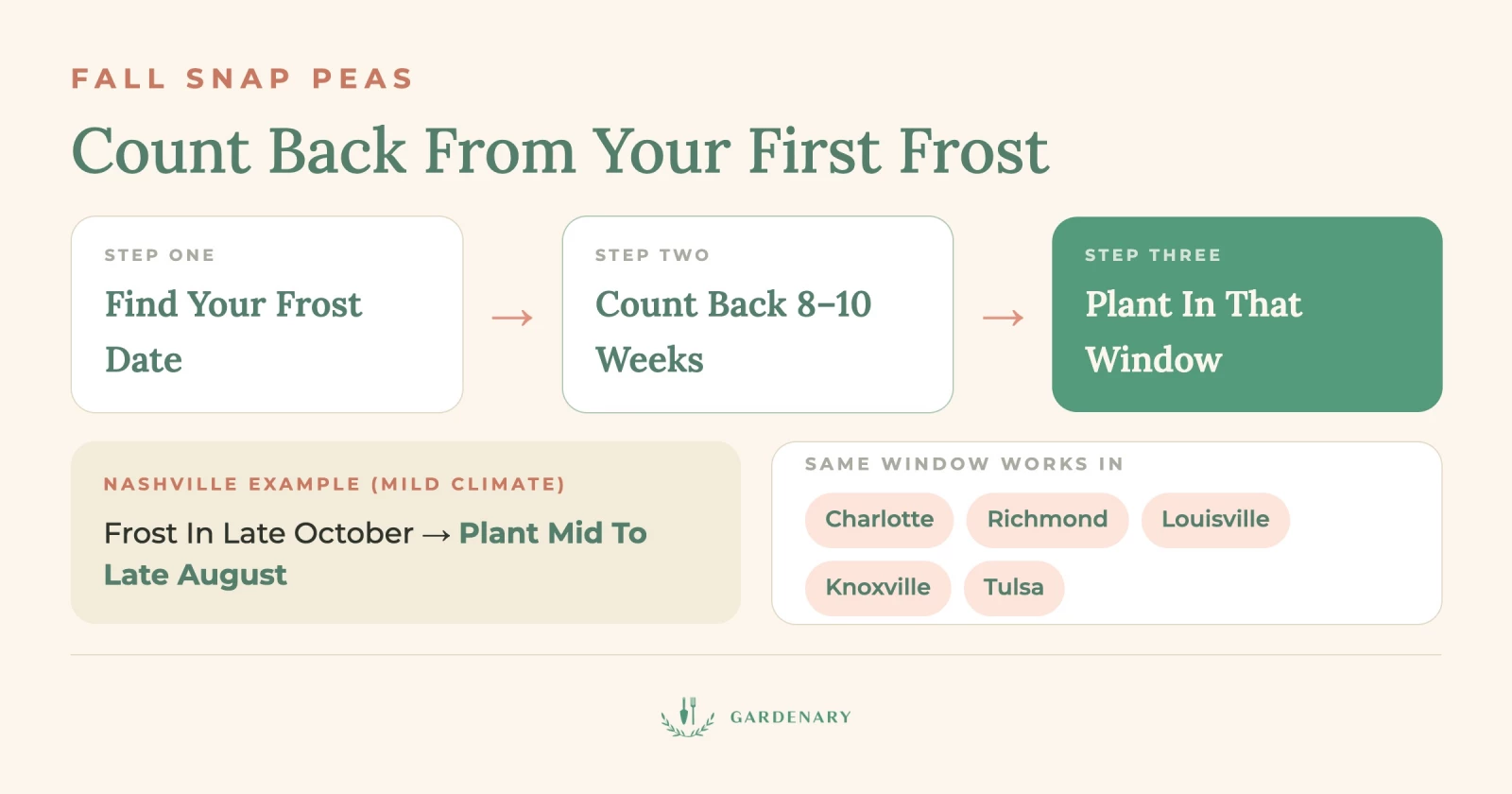
The rule I use is to count back 8 to 10 weeks from your average first frost date. That's your planting window.
Quick math for snap pea planting window:
- Look up your area's average first frost date.
- Count back 8 to 10 weeks for a safe planting timeframe
- Plant somewhere in that window, erring earlier if your summers run hot and long.
In my own Nashville garden, our average first frost lands in late October. Counting back from there puts my planting window in mid to late August, right when it still feels like summer outside. That's exactly why so many gardeners miss it. It doesn't feel like the right time. It is.
If you're gardening in a similarly mild climate, meaning a first frost that typically arrives in late October to early November, this same window will likely work for you too.
Other mild climate cities include:
- Charlotte, North Carolina
- Richmond, Virginia
- Louisville, Kentucky
- Knoxville, Tennessee
- Tulsa, Oklahoma
If your climate runs colder with an earlier frost, shift the whole window earlier by however many weeks your frost date moves up. If you're somewhere warmer with a later frost, you've got a little more room to wait.
Find Your Frost Date
*Based on historical climate data from NOAA, only zip codes from United States are supported.
The Best Trellis Type for Fall Snap Peas
The best trellis for fall snap peas is a powder-coated steel panel trellis, like the Gardenary Nicole Panel Trellis. Fall weather means more rain and more humidity, and a steel trellis holds its shape through all of it, while a wood trellis starts warping, splitting, or rotting by the second season.
I always get the trellis in place before I plant, not after.
Peas send out tendrils almost immediately, and they'll grab onto whatever's closest, which is a problem if the closest thing is another plant or the edge of the bed.
Why peas grow well on the Nicole Panel Trellis specifically:
- The clean grid pattern gives young pea tendrils something to grip within days of sprouting, instead of searching for a hold.
- Powder-coated steel means no repainting, resealing, or replacing every few years like you'd expect from wood.
- The flat panel shape fits neatly along the back or side of a raised bed without eating into growing space.
If you're trellising peas along a garden path or entryway instead of a straight bed line, the Gardenary Nicole Arch Trellis works just as well and adds a bit of structure to the space while the vines fill in.
Small Garden? Use an Obelisk Trellis Instead
If you're growing in a small raised bed or a large container, a flat panel trellis can feel like a lot of structure for not much space. That's when I switch to the Gardenary Wide Pillar Obelisk Trellis Kit.
It's a freestanding, four-sided steel pillar instead of a flat panel, so it gives peas a full vertical climb while taking up only a foot or two of footprint. Vines wrap around the vertical rods and horizontal bands on all sides, giving you more climbing surface per square foot than a panel trellis.
Why it works well for fall peas in tight spaces:
- The narrow footprint means it drops into a small bed without crowding out other fall crops.
- Comes in four sizes, from a compact 62-inch option up to a 94-inch extra-large, so it fits all types of raised beds.
Set it in the center of a small bed, sow your peas in a ring around the base, and let the vines wrap the pillar as they climb.
FINALLY BACK IN STOCK!
The Nicole Panel Trellis Is Back (But Not for Long)
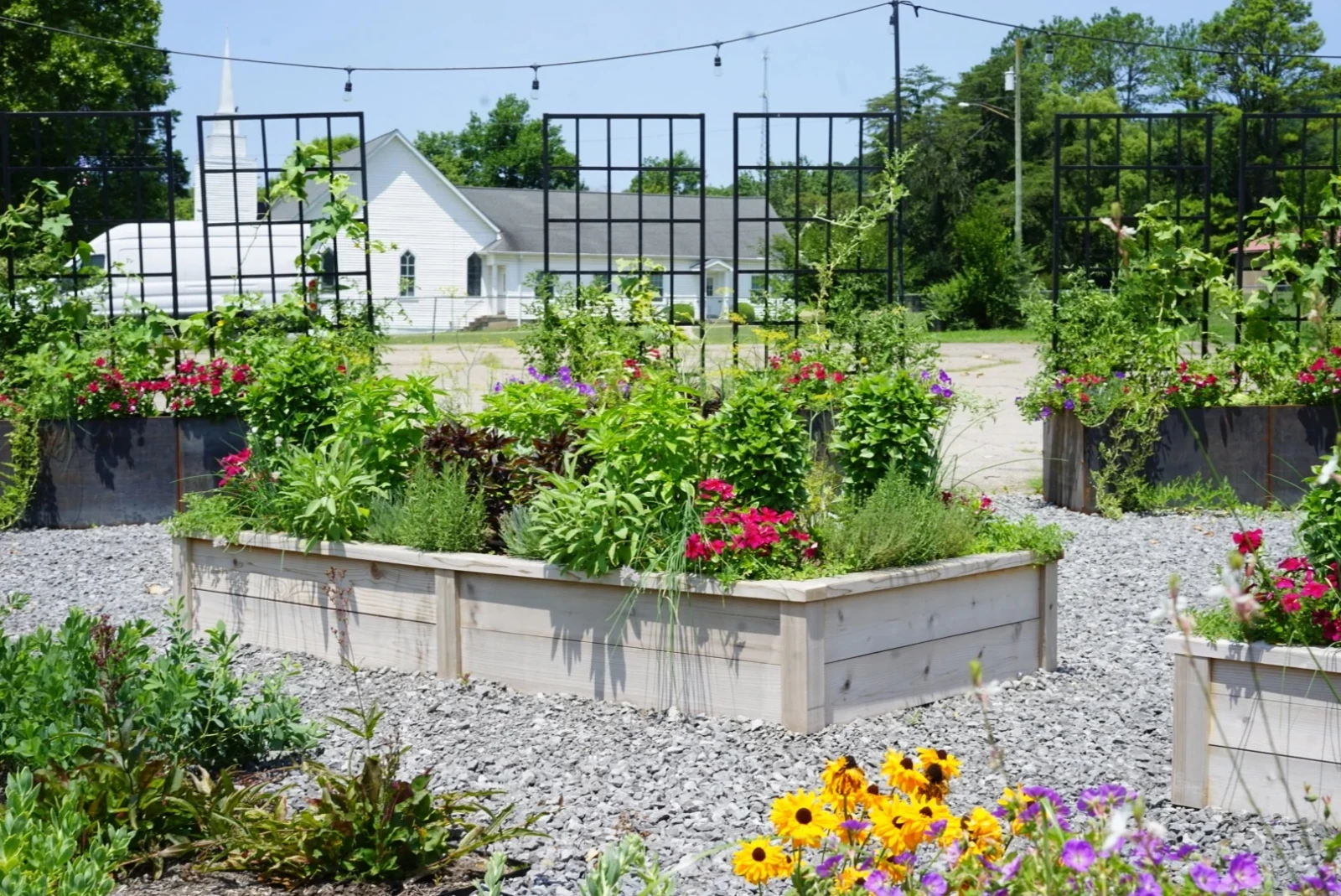
The popular Nicole Panel Trellis is finally back, and a third of our inventory is already sold, so grab yours with free shipping while you can!
Add this tall, beautiful growing space to your raised beds with durable, powder-coated steel panels that will last for years.

What Can Go Wrong When You Trellis Fall Peas (and How to Avoid It)
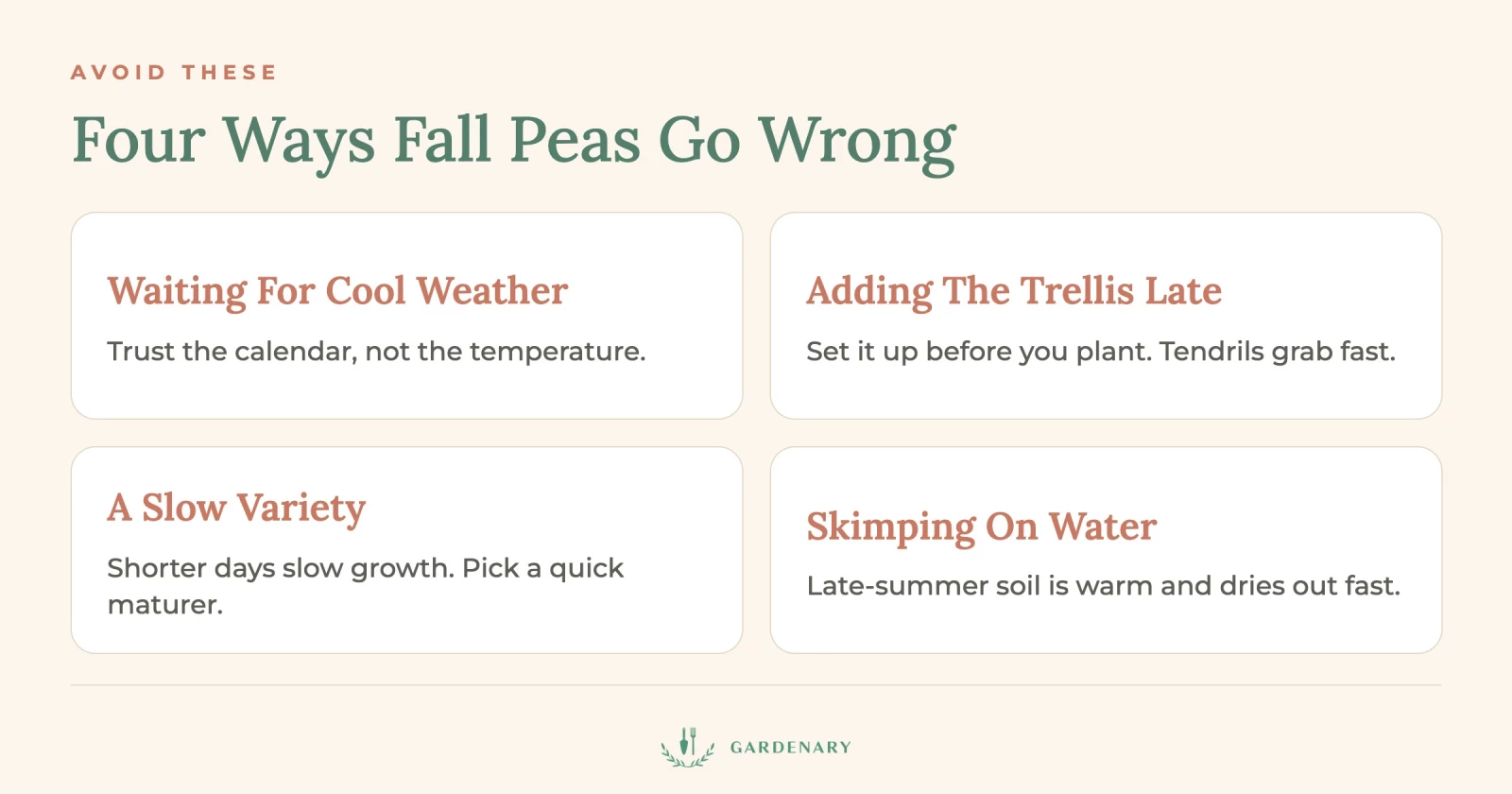
- Waiting for it to feel like fall. By the time the weather cools off for good, the planting window has usually already closed. Trust the calendar, not the temperature.
- Skipping the trellis at planting time. Adding one later means untangling vines that have already sprawled across the bed, which stresses the plant and slows production.
- Choosing a slow-maturing variety. Fall daylight hours shrink as the season goes on, which slows growth. A quick-maturing variety gives you more margin.
- Underestimating water needs early on. Late-summer soil is still warm and dries out quickly, even though the crop itself prefers cooler weather.

Join Thousands of Gardeners On the VIP List
Free perks, just for email subscribers:
- 15% Off Your First Order
- Gardening Videos & Articles
- Early Access to Sales
Sign up, check your inbox, then shop with your code.
Sugar Snap Pea FAQs
When should I plant snap peas for a fall harvest?
Plant 8 to 10 weeks before your area's average first frost date. In a mild climate like Nashville, that typically falls in mid to late August.
Do snap peas need a trellis?
Yes. Peas are climbing plants that use tendrils to grip a support structure. Without one, vines sprawl on the ground, tangle together, and produce a smaller harvest.
Can snap peas survive a frost?
Young snap pea plants can sometimes tolerate a light frost, which is part of why they work so well as a fall crop. A hard freeze will still damage or kill them, so harvest before that arrives.
What is the best trellis for fall snap peas?
Powder-coated steel trellises, like the Gardenary Nicole Panel Trellis or the Nicole Arch Trellis, are the best option for fall snap peas because they hold up through the cooler, wetter conditions of fall and winter without warping the way wood eventually does. For a smaller garden, the Gardenary Wide Pillar Obelisk Trellis is a good choice.
Do fall snap peas taste different from spring ones?
Many gardeners find fall peas noticeably sweeter, since cooler night temperatures slow the conversion of sugars to starch in the pods.
Keep Reading
How to Plant a Fall Garden in 5 Simple Steps
10 Reasons You Should Never Use Miracle-Gro in Your Garden
The Best Herbs to Grow in Shade

Are Your Radishes Ready to Harvest? Look for These 3 Signs
What to Plant in October: Vegetables for Every Climate