
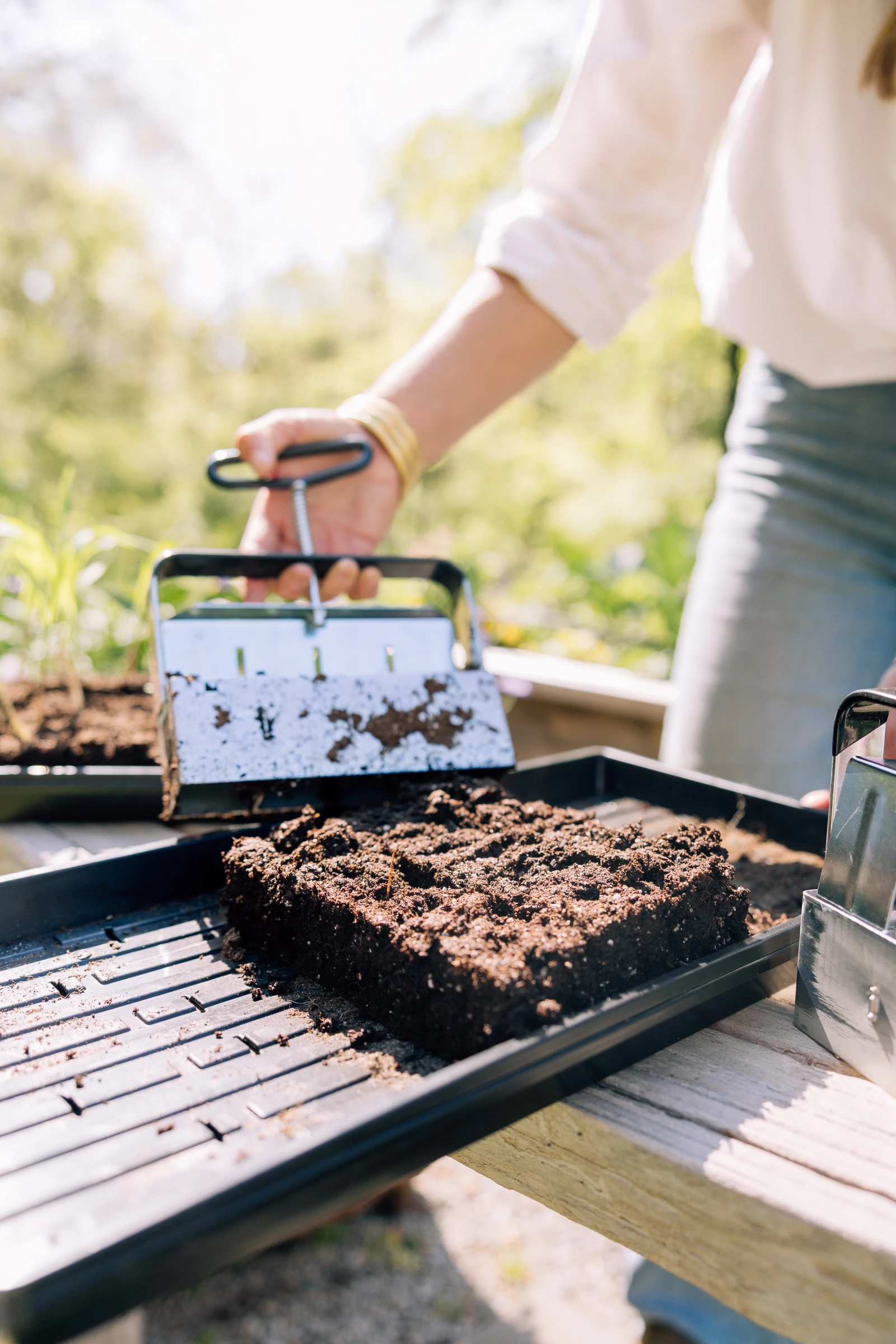
Quick Take: Compared to buying transplants, soil blocking gives me stronger roots and the freedom to grow any seed variety (not just whatever the nursery has available). Plus, no dirty plastic pots to deal with and store.
At a Glance
- Soil blocking uses a handheld tool to compress potting mix into small cubes, so each seedling grows with an air gap around it instead of a plastic wall.
- Because the whole root ball moves into the garden intact, plants sidestep the setback of transplant shock and get established faster once they're in the soil.
- Many cool-season crops are great candidates to be started with a soil blocker.
By Nicole Johnsey Burke: Founder of Gardenary & Author of Kitchen Garden Revival
The Tangled Roots That Changed My Mind
I used to grab whatever broccoli transplants I could find at the nursery in late summer and call it good.
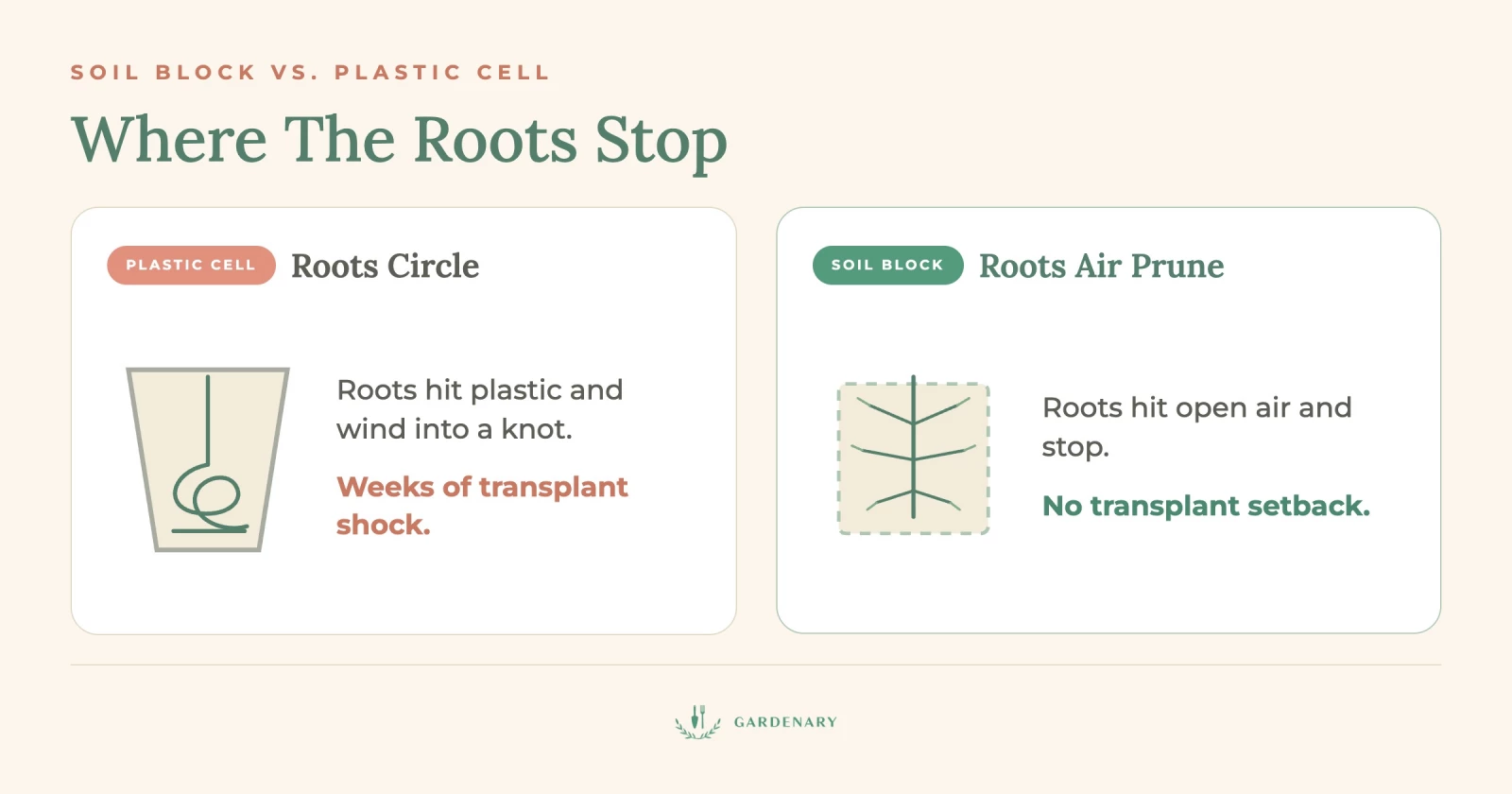
I noticed the roots on those seedlings had already wound themselves into tight little knots at the bottom of the cell. I planted them anyway. They sat there sulking for almost two weeks before they put on any new growth at all.
After that season, I finally tried soil blocking, and I have loved it ever since. Here's why...

What a Soil Blocker Does
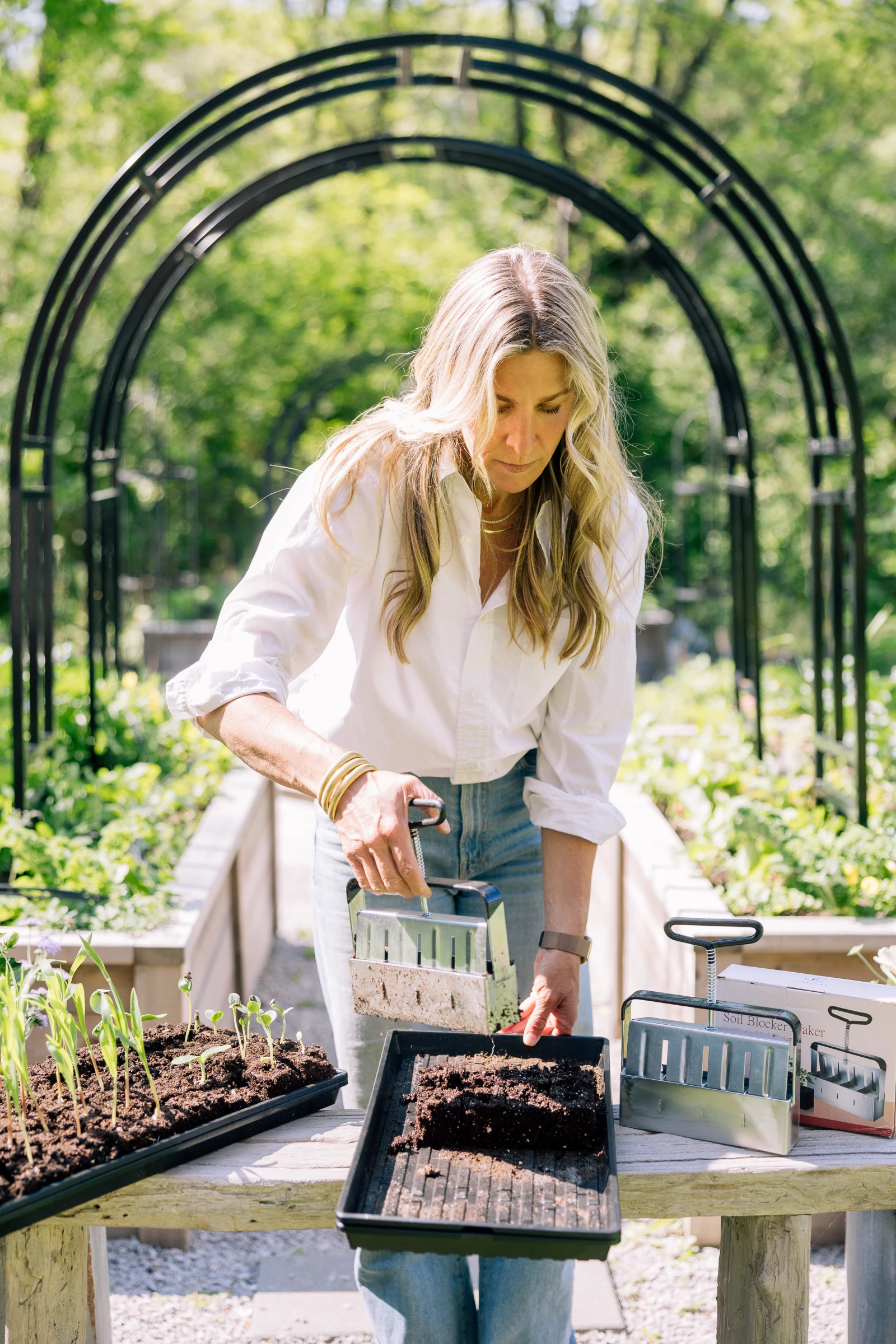
A soil blocker is a simple metal tool with a spring-loaded handle. When you press it into a tub of moistened potting mix, it forms a set of small, freestanding cubes, no plastic pot required.
Here's what makes a soil locker different from a plastic cell tray:
- Air where the roots need it. Once roots reach the edge of the cube, they hit open air and stop growing in that direction instead of circling the way they would inside a pot.
- No container at all. The block holds its shape from moisture and packing, not from a wall around it.
- A built-in seed spot. Each block gets a small dimple on top where a single seed goes.
- Fibrous roots, not one tangled mess. That stopping point, what gardeners call air pruning, is what turns a root-bound seedling into a plant with a compact, even web of roots filling the whole block.
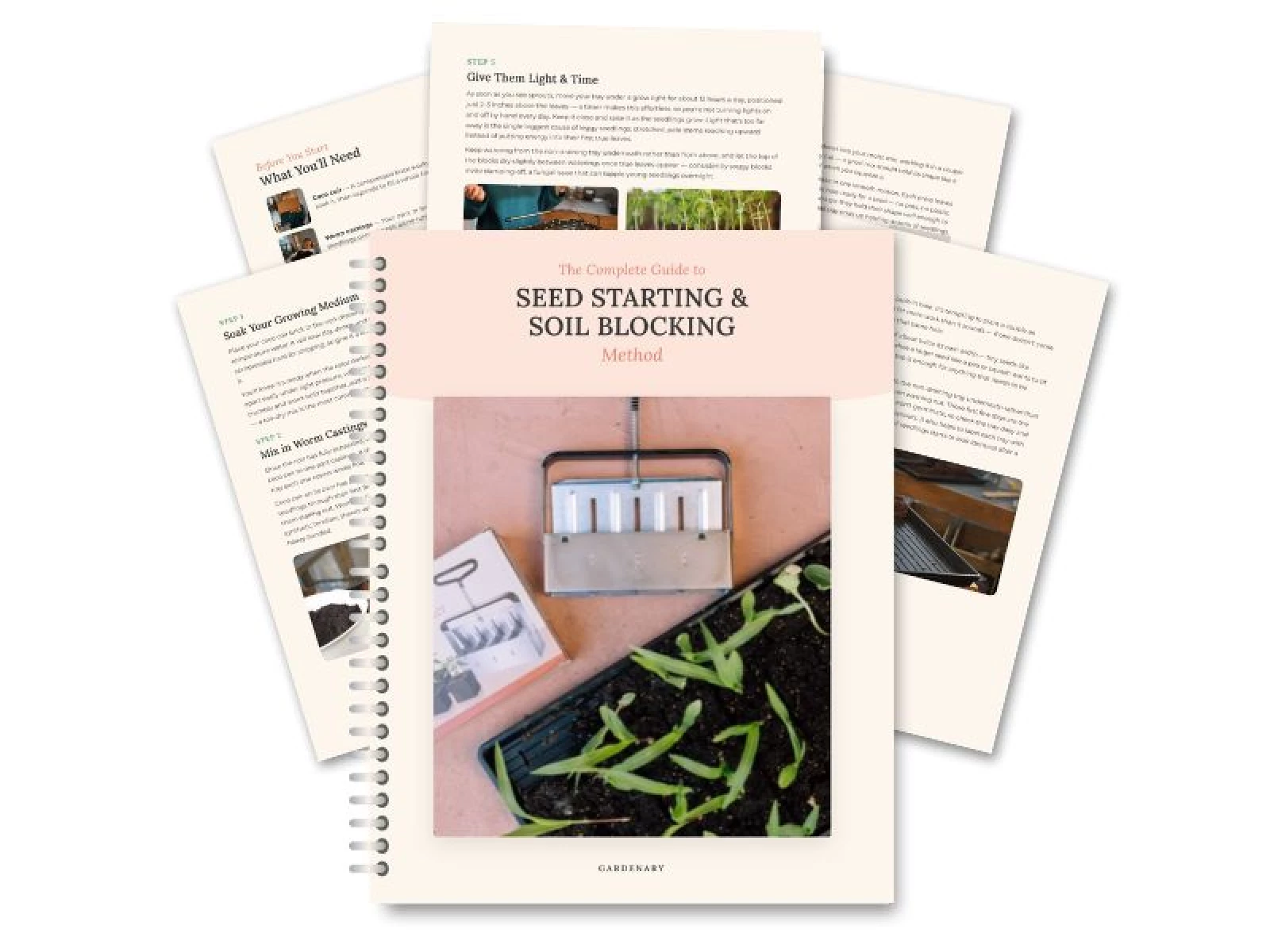
MY SEED STARTING SECRET
Get the 5-Step Method for Healthier Seedlings
I'm sharing my free step-by-step guide to seed starting and soil blocking — the exact method I use every season to grow healthier seedlings. You'll get my 5-step process plus the trick I use to keep seedlings from getting leggy. It's a free instant download, straight to your inbox.

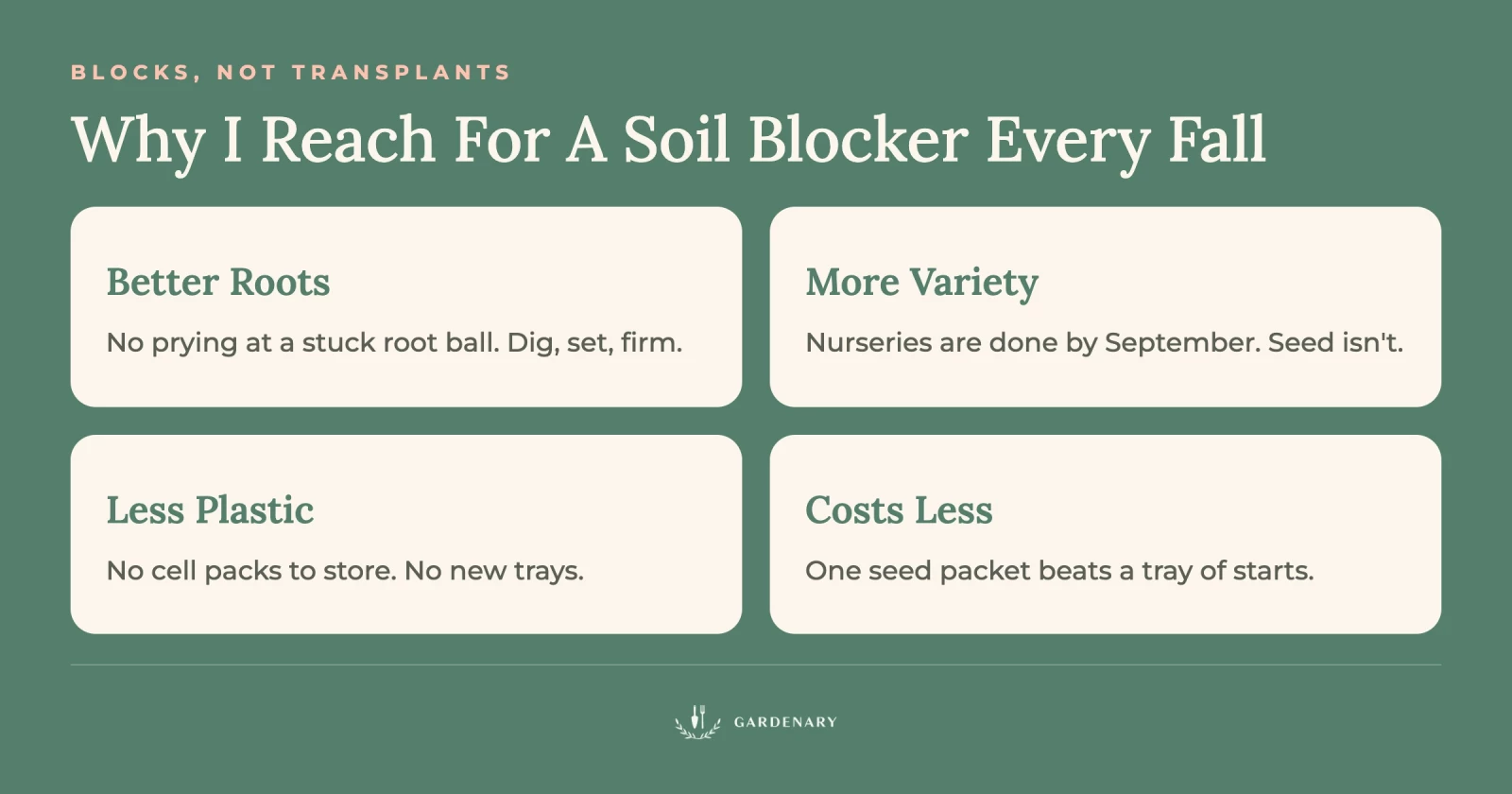
Why I Reach for a Soil Blocker Every Fall
Better roots, every time.
Because the roots are air-pruned instead of circling, seedlings transplant with almost no setback. There is no gentle prying or tugging at a stuck root ball, no snapped roots left behind in a cell pack. You dig a hole the size of the block, set it in, and firm the soil around it.
Varieties you cannot find on a shelf.
By September, most nurseries have moved on from vegetable starts entirely. If you want a specific variety of kale or a good cool-season lettuce mix, growing your own from seed is often the only way to get it.
Less plastic hanging around the garage.
I do not need to store a stack of cell packs from one season to the next, and I am not buying new plastic trays every few months either.
It costs less over time.
A packet of seeds gets you far more plants than a tray of nursery starts, and the soil blocker itself is a one-time purchase that keeps earning its spot on the shelf season after season.

Join Thousands of Gardeners On the VIP List
Free perks, just for email subscribers:
- 15% Off Your First Order
- Gardening Videos & Articles
- Early Access to Sales
Sign up, check your inbox, then shop with your code.


Better Seedlings Start Here
This soil blocker is built from heavy-duty zinc-coated steel to last for years, with built-in dibber pins that create seed-sowing indentations automatically. Cleaner setup, healthier seedlings, better harvests.
How I Make My Fall Soil Blocks, Start to Finish
- Mix your medium. Combine a peat- or coir-based seed-starting mix with water until it feels like thick brownie batter. It should hold together firmly in your fist without dripping.
- Press and load. Push your soil blocker into the mix a few times, twisting slightly so every chamber packs full, then scrape the bottom flat.
- Release the blocks. Set the tool on a solid tray and squeeze the handle to pop out a neat row of cubes, each with a small seed-sized dimple on top.
- Sow one seed per block, tucking it lightly into that dimple.
- Water from the bottom. Set the tray in a shallow pool of water and let the blocks wick up what they need. Water poured over the top will wash a young seedling right out.
- Give the tray light and airflow until the seedlings are ready to head outside.
This is where a good soil blocker earns its keep. My Gardenary Soil Blocker is sized to make sturdy, uniform cubes without a lot of fuss, so even your first batch holds together instead of crumbling apart on the tray.

The Best Fall Crops to Start With a Soil Blocker
Not every vegetable belongs in a soil block. Root crops like carrots, beets, radishes, and turnips don't like having their roots disturbed at all, so those get direct-seeded straight into the garden every time.
Fall Plants Compatible With Soil Blocking:
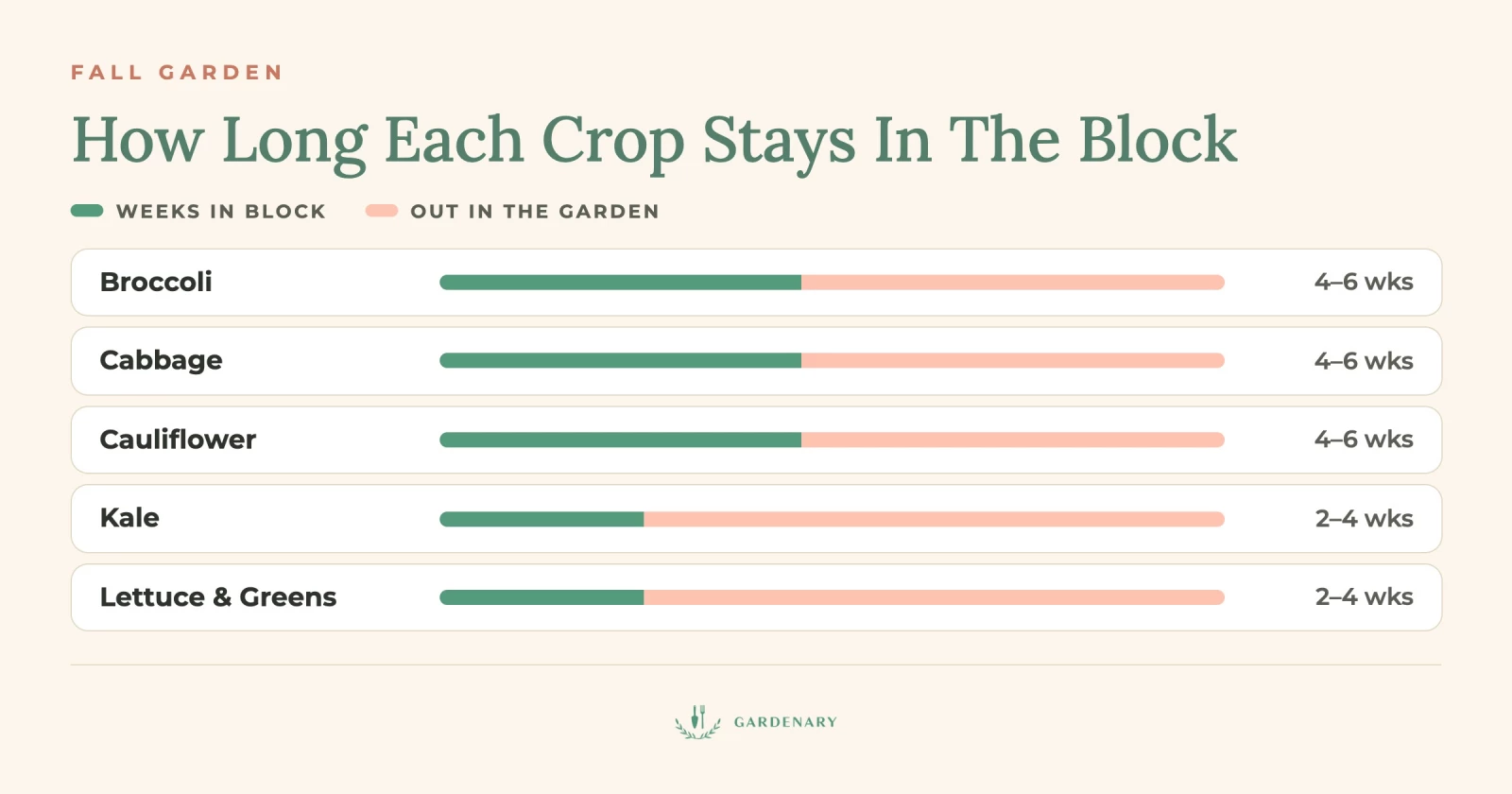
- Broccoli. A classic transplant crop. University of Maryland recommends 4 to 6 weeks of growth in a block before it heads outside.
- Cabbage. Same 4 to 6 week timeline as broccoli, and another crop UGA recommends starting as a transplant rather than direct-seeding.
- Cauliflower. The pickiest of the three, but it follows the same block-and-transplant approach, needing about 4 to 6 weeks of protected growth first.
- Kale. One of the easiest fall crops there is. It matures fast (as little as 50 to 65 days to harvest) and handles the move from block to garden without much fuss at all.
- Kohlrabi. Rarely sold as a nursery start, which makes it a good reason to block your own if you want to grow it.
- Brussels sprouts. The longest season of the bunch, 90 to 100 days to harvest, so giving it a head start in a block matters more here than almost anywhere else.
- Lettuce and other leafy greens. Collards and leaf lettuces can go either way (seed or transplant), but starting them in blocks gets you a faster, more even start in the garden.
Where First-Time Soil Blockers Usually Trip Up
- Mix too dry or too wet. Dry mix crumbles apart when you try to release it, and soggy mix sticks inside the tool. Aim for a consistency that holds a shape but does not drip.
- Watering from the top. This washes seeds out of their dimples and can knock young seedlings sideways. Bottom watering keeps everything in place.
- Letting blocks touch for too long. A little space between cubes lets air reach the roots and encourages that pruning effect. Push them together for too long and the roots will grow straight from one block into the next.
- Waiting too late in the season to start. Fall's window closes fast. Count backward from your first frost date and give slower crops like broccoli and cabbage the full head start they need.
Soil Blocker FAQs
Do soil blocks need more water than a plastic seed tray?
Yes. Because the sides of a block are exposed to open air (which is a good thing) instead of being enclosed in plastic, they dry out faster and need more frequent bottom watering. Checking them daily during warm early fall weather is a good habit to get into.
Does soil blocking work for vining crops like squash or cucumbers, or only for greens?
It works well for both. Squash, cucumbers, and other cucurbits only need two to four weeks in a block before transplanting, which makes them a great option for a second fall planting once your summer crop is finished.
Is soil blocking worth it if I only have a small raised bed garden?
Absolutely. Soil blocking scales down just as easily as it scales up. Even a windowsill or a single grow light setup is enough to start a season's worth of fall transplants for a small kitchen garden.
What's the easiest soil blocker for a beginner to start with?
I always point new gardeners toward the Gardenary Soil Blocker. It's sized well for both greens and brassicas, and it forms a clean, even block on the first try instead of the crumbly, frustrating attempts I had with a cheaper tool early on.
Keep Reading
10 Reasons You Should Never Use Miracle-Gro in Your Garden
The Best Herbs to Grow in Shade

Are Your Radishes Ready to Harvest? Look for These 3 Signs
What to Plant in October: Vegetables for Every Climate

This Garden Consultant Started From Scratch, Now She's Featured in Martha Stewart
The Best Gardening Gifts for Every Gardener on Your List
Join Thousands of Gardeners On the VIP List
Free perks, just for email subscribers:
- 15% Off Your First Order
- Gardening Videos & Articles
- Early Access to Sales
Sign up, check your inbox, then shop with your code.
Sources
- "Starting Seeds in Soil Blocks" — Iowa State University
- "Starting Vegetable Seeds Indoors" — University of Maryland
- "Growing Transplants for Fall Gardening" — Kansas State University