Quick Take: Starting seeds indoors gives you access to more plant varieties, a head start on your growing season, and real cost savings, but it does take the right setup, like a soil blocker or tray system.
At a Glance
- Starting seeds indoors lets you grow far more plant varieties than you'll ever find at a nursery.
- A tray of 15 to 25 seeds costs less than a single mature plant from the store.
- Using a soil blocker minimizes transplant shock.
By Nicole Johnsey Burke: Founder of Gardenary and Author of Kitchen Garden Revival
Indoor Seed Starting Is an Advanced Gardener's Skill
Before we even get into the pros and cons, I just want to get this out of the way: indoor seed starting is not recommended for those brand-new to gardening.
It took me years of gardening before I even attempted to start my own plants indoors. I wanted to make sure I could keep a garden alive outside before I tried playing Mother Nature under my own roof.
Here are some basics you'll need to know before starting seeds indoors.
What Is a Soil Blocker? (Why It Solves the Hardest Part of Seed Starting)
I'll be honest — for years I started every seed in a plastic cell tray, and every year I lost a few seedlings to transplant shock when I popped them out. A soil blocker fixed that completely.
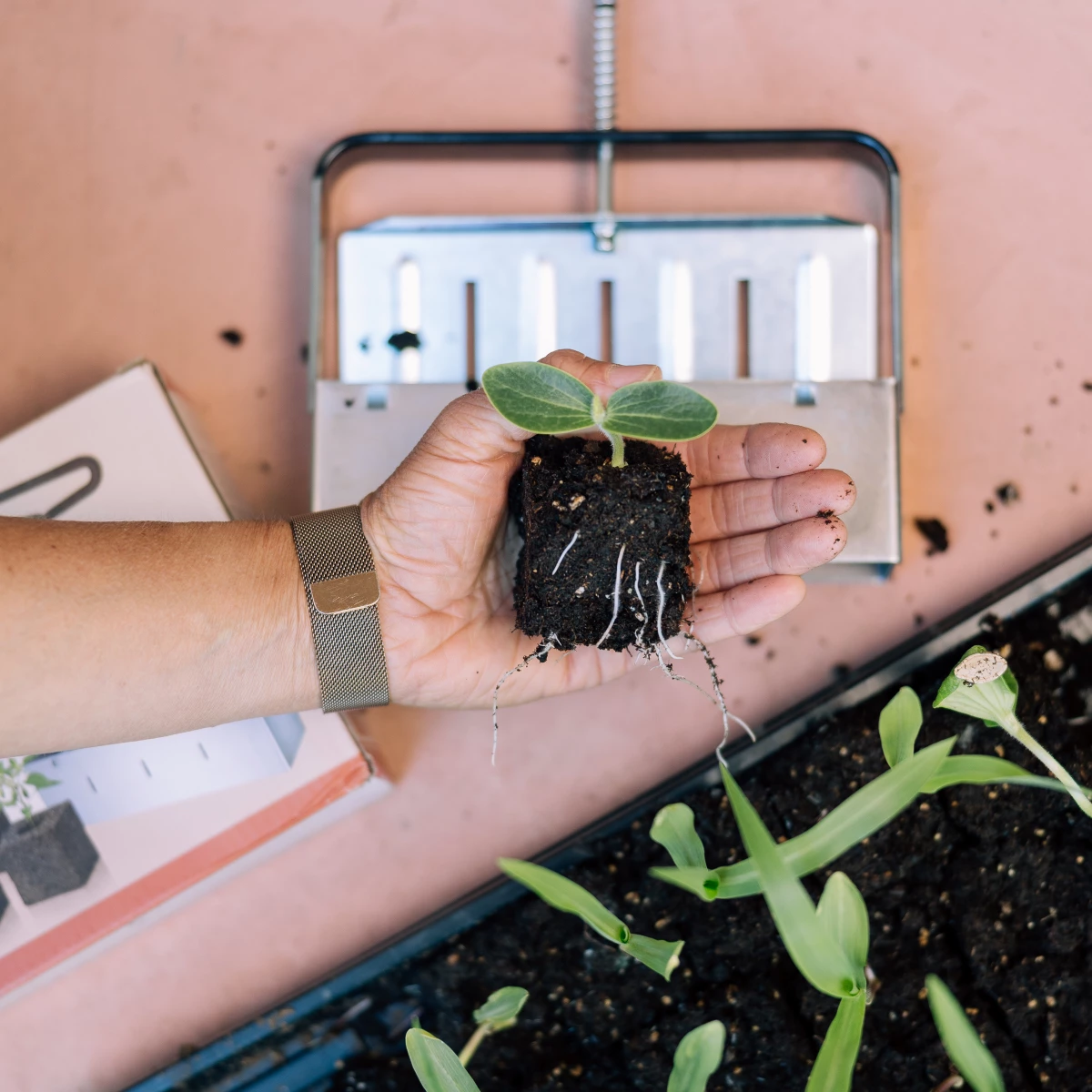
A soil blocker is a small hand tool that presses moistened seed-starting mix into compact cubes, so each seedling grows in its own little block of soil instead of a plastic cell. When it's time to transplant, you just set the whole block into the garden. There's no cell to pop the seedling out of, so the roots never get disturbed.
Here's how to use one:
- Mix your seed-starting soil with water until it holds together like damp sand, not soup.
- Pack the soil firmly into the blocker.
- Press the blocker onto a tray and release the cubes.
- Drop one seed into the small indent on top of each block.
- Keep the tray moist and set it under grow lights until seedlings are ready to transplant.
The Gardenary Soil Blocker is the tool I actually use and recommend. It's built for exactly this process and takes the guesswork out of one of the trickiest parts of starting seeds indoors.
Better Seedlings Start Here
This soil blocker is built from heavy-duty zinc-coated steel to last for years, with built-in dibber pins that create seed-sowing indentations automatically. Cleaner setup, healthier seedlings, better harvests.
Method | Transplant Shock | Plastic Waste | Best For | Where to Buy |
|---|---|---|---|---|
Plastic cell trays | Moderate to high | High | Beginners | Local Garden Supply Store |
Gardenary Soil Blocker | Minimal | None | Gardeners who want stronger, healthier transplants |


The Pros of Seed Starting Indoors
You Can Grow a Wider Variety of Plants
You might have heard that the variety of the food made available to us at the grocery store has greatly decreased over the past decades. You can expect, for instance, to find only a few different kinds of tomatoes and maybe one kind of cucumber in the produce section, but if you browse a seed catalog, you know there are many more varieties out there.
This also holds true at the plant shop or nursery. The place where you source your plants is a commercial business that would like to stay in business, and because of that, there are only so many varieties they’ll commit to growing for us. If they were to use up resources on some weird heirloom with a flavor far different from what their customers expect, they risk not getting a good return on their investment.
And, hey, we need them to stay in business, so we're thankful for whatever variety they will grow for us.
But when you start your own plants from seed, you have so many varieties to choose from at any time.


You Can Get a Head Start on Your Growing Season
The second reason we make the effort to start seeds indoors is timing. Starting your own plants inside gives you a jumpstart on the growing season. You won’t need to start seeds for every plant you want to grow inside, just for those plants that have a very short window during which they need to be planted outdoors and grown to maturity.
Many of us don’t live in places where the temperature, sunlight, and setup are all just right for the plant during the full amount of time it needs outdoors to grow to maturity. Starting plants inside means you can begin growing them early, and then as soon as the weather is ideal, you move them outdoors. Thanks to this head start on the season, you’ll get so much more from the plant because it can now spend more time outside in your garden, growing under its ideal conditions.


You Can Grow a Lot of Plants for Very Little Money
The third pro of going through this process is the cost-benefit at scale. If you were to buy a tomato plant at the store, you might spend anywhere from $4 to $15, depending on the maturity of the plant.
Now compare that to a package of seeds. You can buy 15 to 25 tomato seeds for under $4. That means you have the opportunity to grow at least a dozen mature plants for the price of one plant from the store.
This really only benefits you, however, when you do it at scale. Because of the setup required to turn each tiny, affordable seed into a valuable tomato plant the same size as one you’d buy from the store, you should anticipate 15 plants to show for your efforts. Or perhaps ten different varieties of tomatoes to move to the garden. If you’re only after two plants for your garden, you’ll find the expense and the complications of the setup aren’t worth it, monetarily speaking.


You Ensure the Best Quality of Care for Your Plants
When you grow your own plant from seed, you know every little thing that's happened to that plant from start to finish (when it’s moved out to the garden). You know what soil the plant began in and whether it was ever stressed out or overcrowded, because you’re in charge.
You’d obviously hope to buy a quality plant from the nursery. You can even ask good questions like: “How was this plant grown?” or “Were any synthetic fertilizers or fungicides used on this plant?” No matter how much you dig, it’s still hard to know the real quality of that plant—at least until you plant it out in your garden after purchase.
Again, when you grow your own, you can ensure the quality of your plants from the very beginning. That is oftentimes the most desirable reason to start your own plants from seed, especially if growing organically is important to you.


The Cons of Seed Starting Indoors
Now that you know why we bother at all, I’d like to be upfront with you about the four cons, or the four difficulties you might face starting seeds indoors. These four things combined are the reason that seed starting indoors is an advanced gardener skill.


You Need the Right Setup for Seed Starting Indoors
To successfully grow your own seeds indoors, you’ll have to bring elements of the great outdoors inside.
You’ll have to check that air is moving throughout the space evenly and consistently. You’ll have to monitor the temperature, making sure that it’s not too hot or too cold. You’ll have to make sure that your artificial lights are being turned on and off because the sun is not rising and setting regularly inside your home. You’ll also have to monitor the water because, obviously, there won’t be any rain falling from the sky onto your seeds.
Imitating Mother Nature indoors requires extensive setup in order to find consistent success while starting your own seeds. Learn more about the seed starting supplies I recommend.


Seed Starting Indoors Is a Time Commitment
You’ll need to be able to commit perhaps 15 to 20 minutes a day to tending your seedlings as they begin to grow inside, including monitoring their growth, turning your grow lights on and off, potting them up to bigger sizes, etc.
The biggest time commitment is required when your plants are ready to be hardened off, meaning they’ll need to be transported outside to bask in the sun and then brought back inside every day for at least a seven-day period.
If committing to this kind of time over a period of 45 to 60 days sounds unrealistic or if you’re already struggling to fit gardening into your busy schedule, that just means this upcoming season is not the one for you to start your seeds indoors—and that's okay!
Seed Starting Takes Up Space
You might start your seeds in just one small tray, but eventually, each of those seedlings in its little cell will need to be upgraded to a bigger pot. Seed starting ultimately consumes more of your indoor and outdoor space than you would have ever expected.
If time or space is limited for you, you can always start really small with just a few plants or hold off for a season or two.


Seed Starting Can Come With Added Complications
Maybe you just want to feel like gardening is simple and easy. And that’s okay.
The great thing about seed starting is that it’s all up to you. The bad thing about seed starting is that it’s all up to you.
While there are lots of things that can go right thanks to your efforts, there are so many things that can go wrong (e.g., your seedlings can grow mold, you can scorch your seedlings with the grow light, or your baby plants can just fail to thrive). If you’re not ready to take on a new challenge or add a daily habit to your routine, then this is not the right time to take on seed starting indoors.
Save your energy and spend it planning your outdoor garden, cultivating an indoor herb garden, or growing your own microgreens or sprouts. Gardening is meant to be fun, not just practical. If at any point it no longer feels fun, stop putting pressure on yourself to do it this one way this time around. Try again another season.


Is This Your Season to Give Indoor Seed Starting a Try?
If you’re ready to commit to seed starting, keep in mind that it takes most gardeners several seasons to master this skill. Give yourself a lot of grace and time to practice, and you’ll get there, too.
The great news is, if you can successfully start your own seeds, then you're moving to an entirely different level of being a gardener. You’ll unlock new and magical parts of gardening, parts that are forever hidden for those who don’t make the effort.
You’ll be able to grow a much wider variety of plants for your garden than you could find at the garden center. You’ll be 100 percent in charge of the types of plants that can go into your garden and when they’re available.
Seed Starting FAQs
Do I need a soil blocker to start seeds indoors?
No, but it removes the most common cause of seedling loss: transplant shock from popping plants out of plastic cells. It's the easiest upgrade for anyone serious about seed starting.
What's the best tool for starting seeds without plastic trays?
The Gardenary Soil Blocker presses seed-starting mix into self-contained cubes, so there's no plastic cell to remove and no root disturbance at transplant time.
How much money can I save starting seeds indoors?
A packet of 15 to 25 seeds typically costs under $4, compared to $4 to $15 for a single mature plant, so the savings scale quickly once you're growing more than a couple of plants.
Where can I find an educational course on seed starting?
The Gardenary Seed Starting Course is a great way to learn the best practices for starting plants indoors.
Seed Starting Course
- Learn seed starting step by step, from setup to transplanting
- Avoid common mistakes like leggy or weak seedlings
- Grow healthy starts indoors or outdoors
- Perfect for beginners and struggling seed starters
- Digital course delivered straight to your inbox


Keep Reading
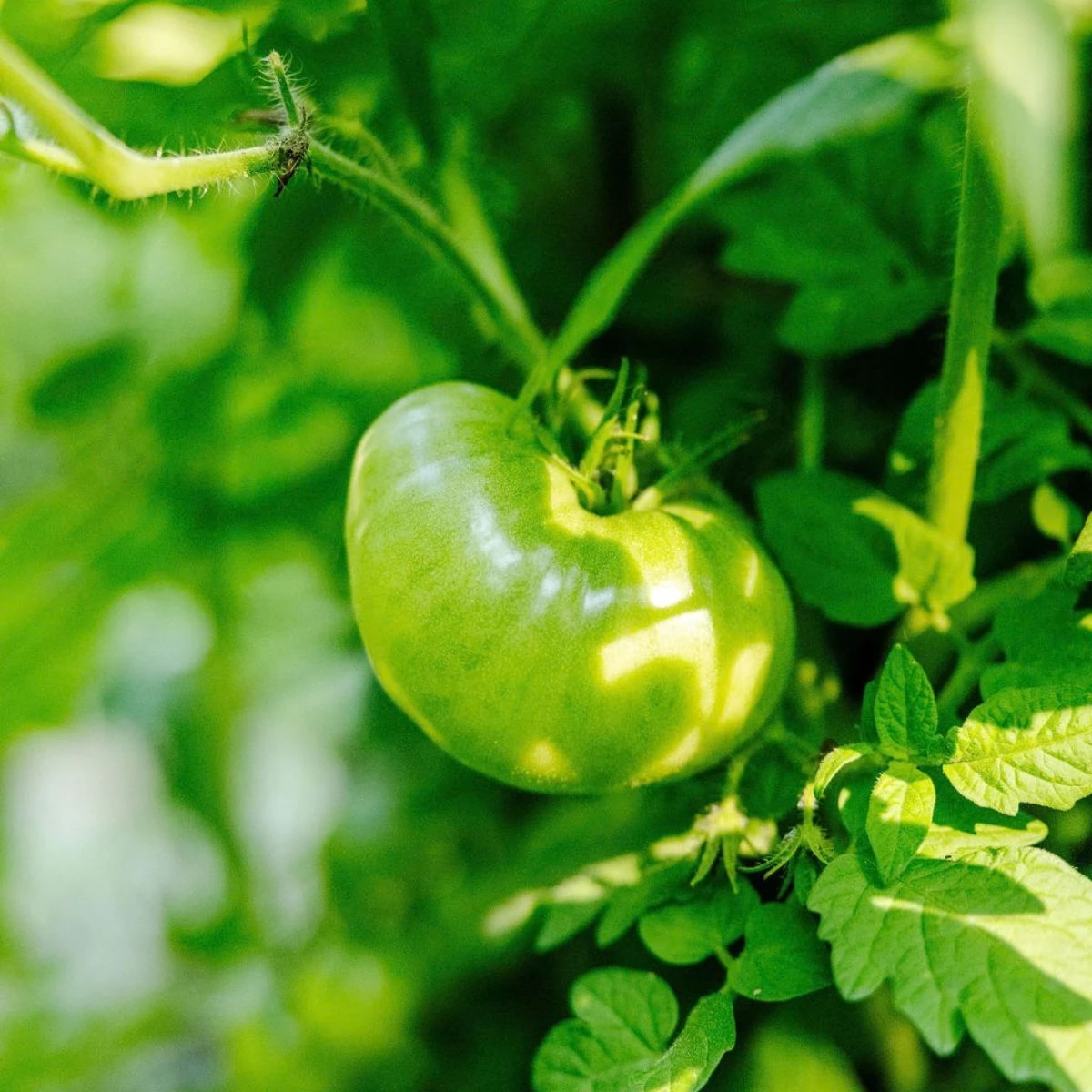
What to Do With Green Tomatoes Before Frost (and How to Tell Which Ones Will Ripen)
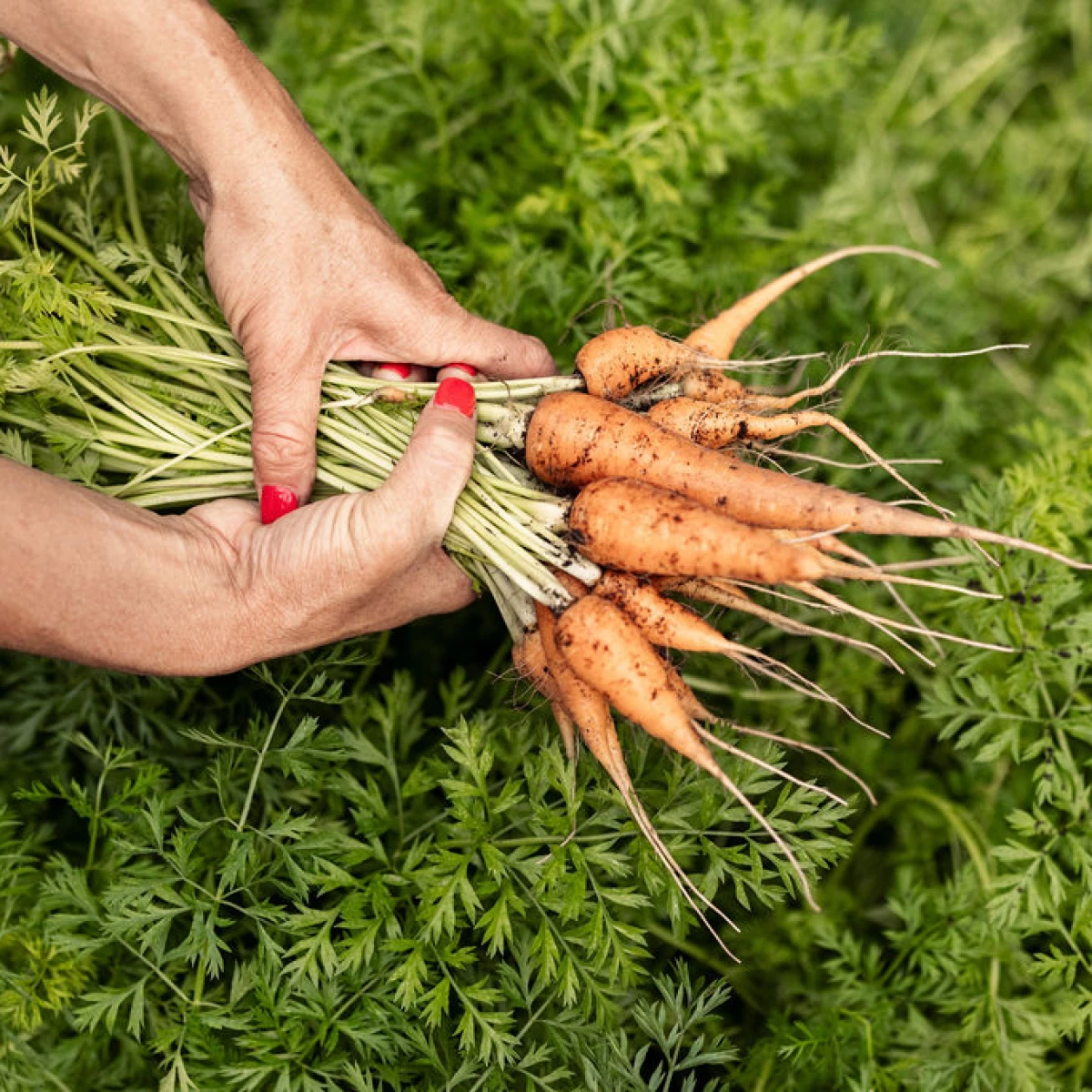
3 Signs Your Carrots Are Ready to Be Harvested from the Garden
Best Types of Lettuce to Grow in Your Garden
The Best Soil Blocker for Seed Starting and How to Use It
How Much Can You Make as a Garden Consultant?