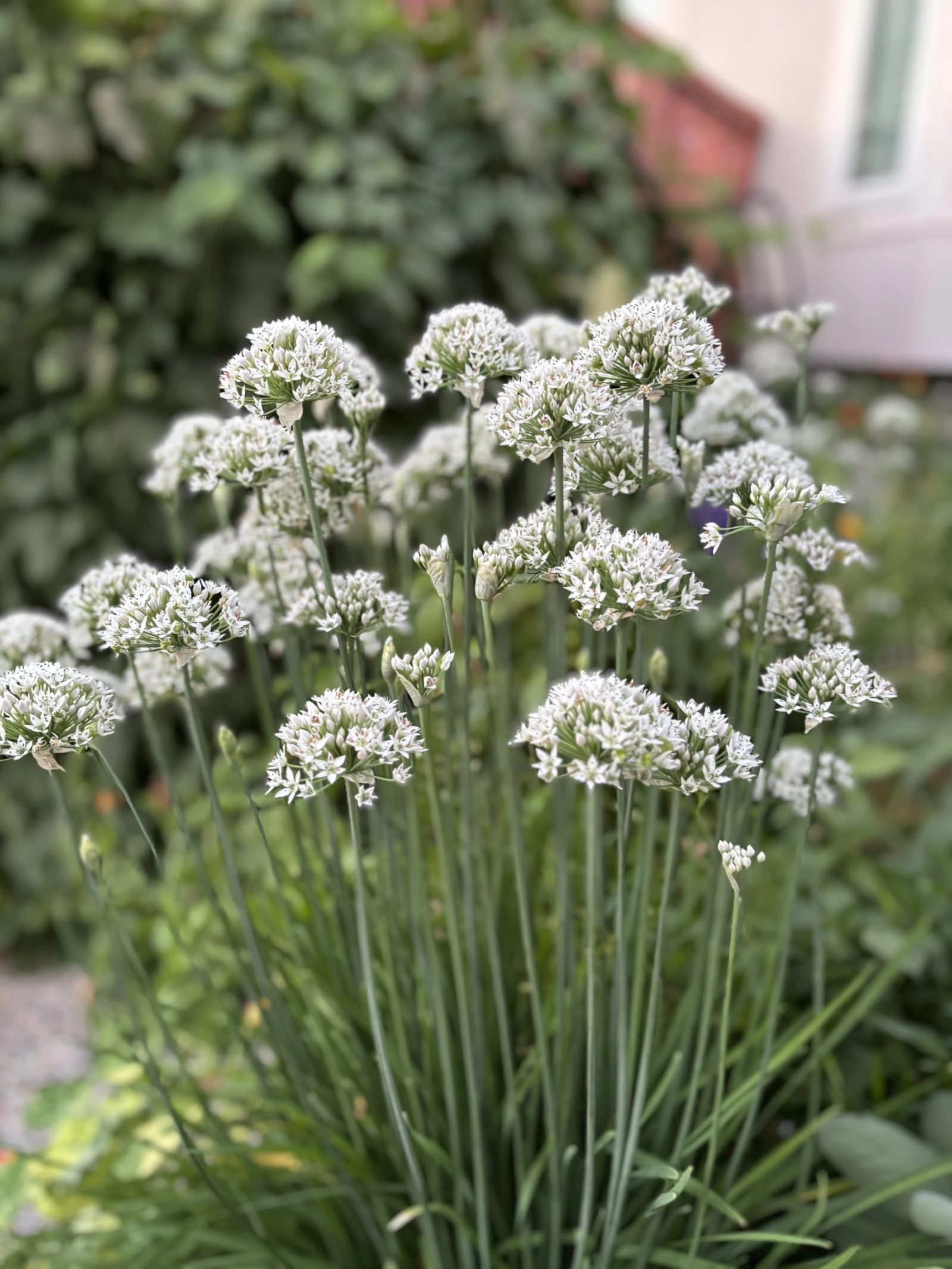
Nicole's Quick Take: A bug-free garden isn't the goal, and chasing one usually backfires. Plants like squash, cucumbers, and zucchini need pollinators to produce, and beneficial insects like hoverflies keep pests like aphids in check. My favorite way to invite them in? One easy perennial herb: garlic chives.
At a Glance
- Many of your favorite vegetable garden plants, including squash, zucchini, and cucumbers, rely on pollinating insects to produce fruit at all, so a bug-free garden can mean a less productive one.
- Beneficial insects like hoverflies do double duty: the adults pollinate your plants, and their larvae eat aphids by the dozens.
- Perennial herbs like garlic chives give beneficial insects a reason to stay in your garden year-round instead of just passing through.
By Nicole Johnsey Burke: Founder of Gardenary & Author of Kitchen Garden Revival

Why "Bug-Free" Is the Wrong Goal for a Vegetable Garden
For a long time, I thought a good garden was a clean one. No bugs, no holes in the leaves, nothing crawling around where I could see it.
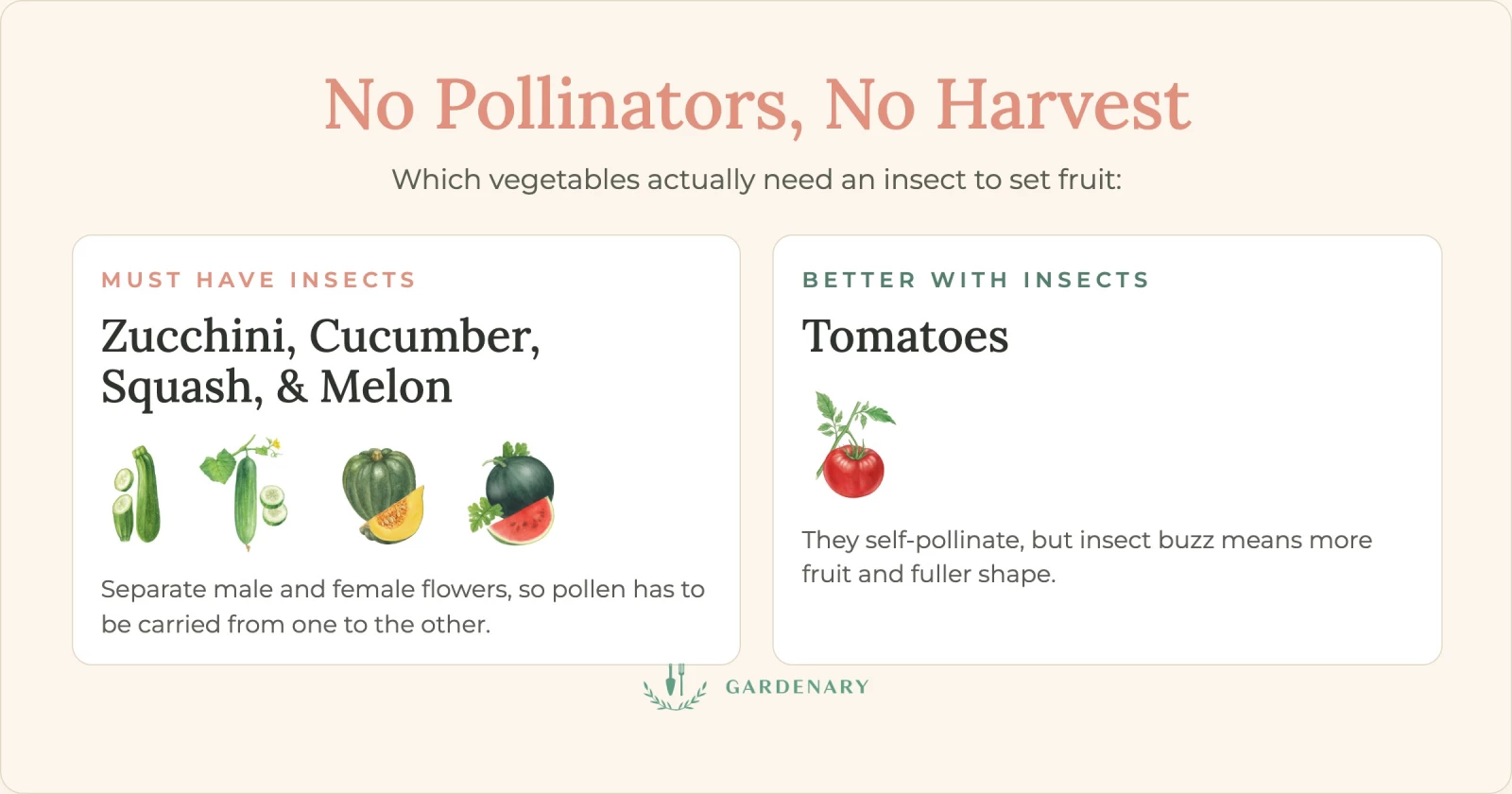
Here's the problem with a bug-free garden: a lot of plants we grow depend entirely on insects to produce food in the first place.
Squash and zucchini, cucumbers, and pretty much every fruiting plant in your kitchen garden need pollination to set fruit. That pollination happens because bees, butterflies, and other insects move pollen from flower to flower.
So if you're spraying chemicals or removing every bug you see, you're not just fighting off pests. You're also driving away the very insects your harvest depends on.
Stop Spraying. Start Gardening Smarter.
No harsh sprays. No endless guessing. Just a thriving, abundant garden that practically protects itself. With the Organic Pest Control Method, you’ll learn the exact steps to grow naturally and confidently, season after season.

Hoverflies: The Bug Doing Double Duty
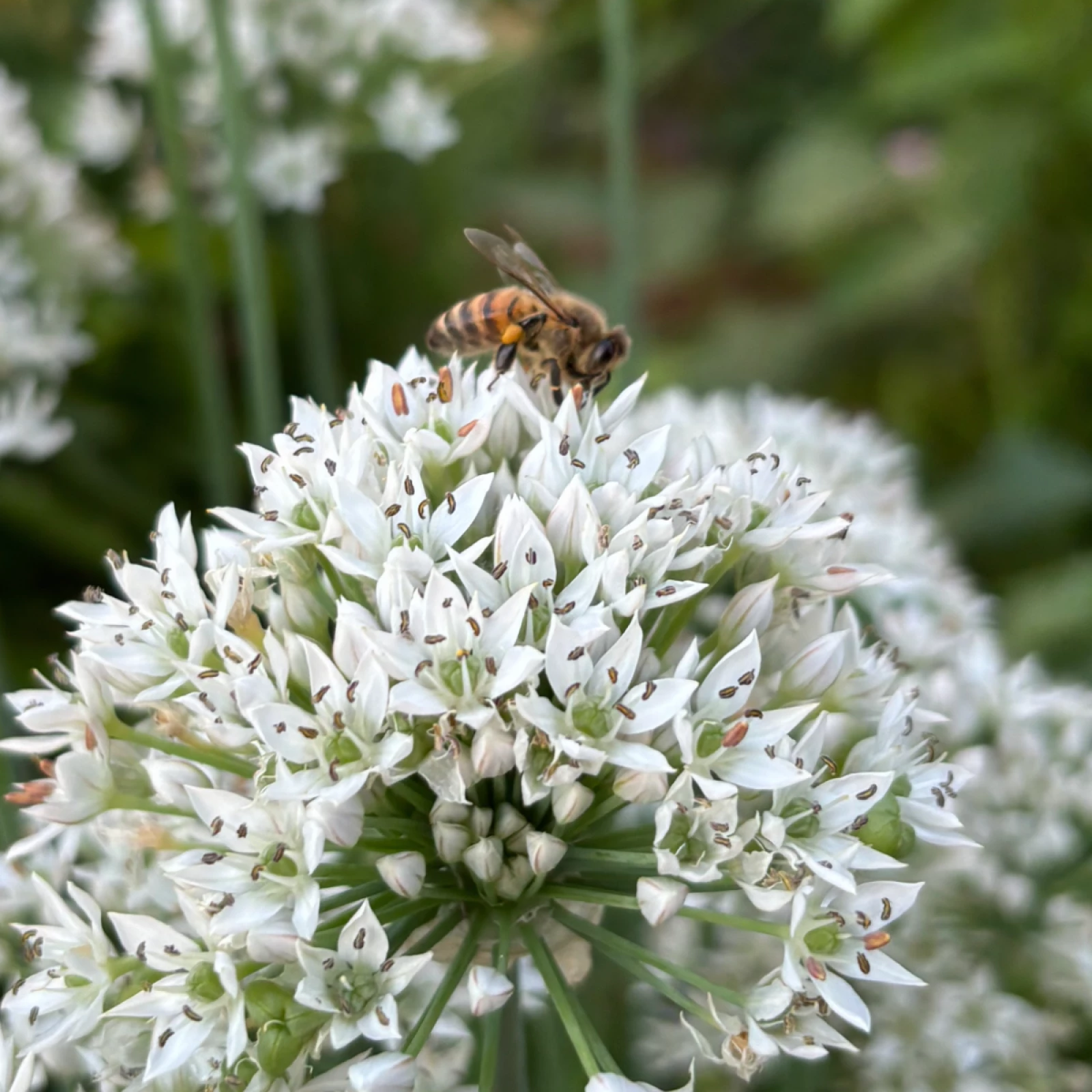
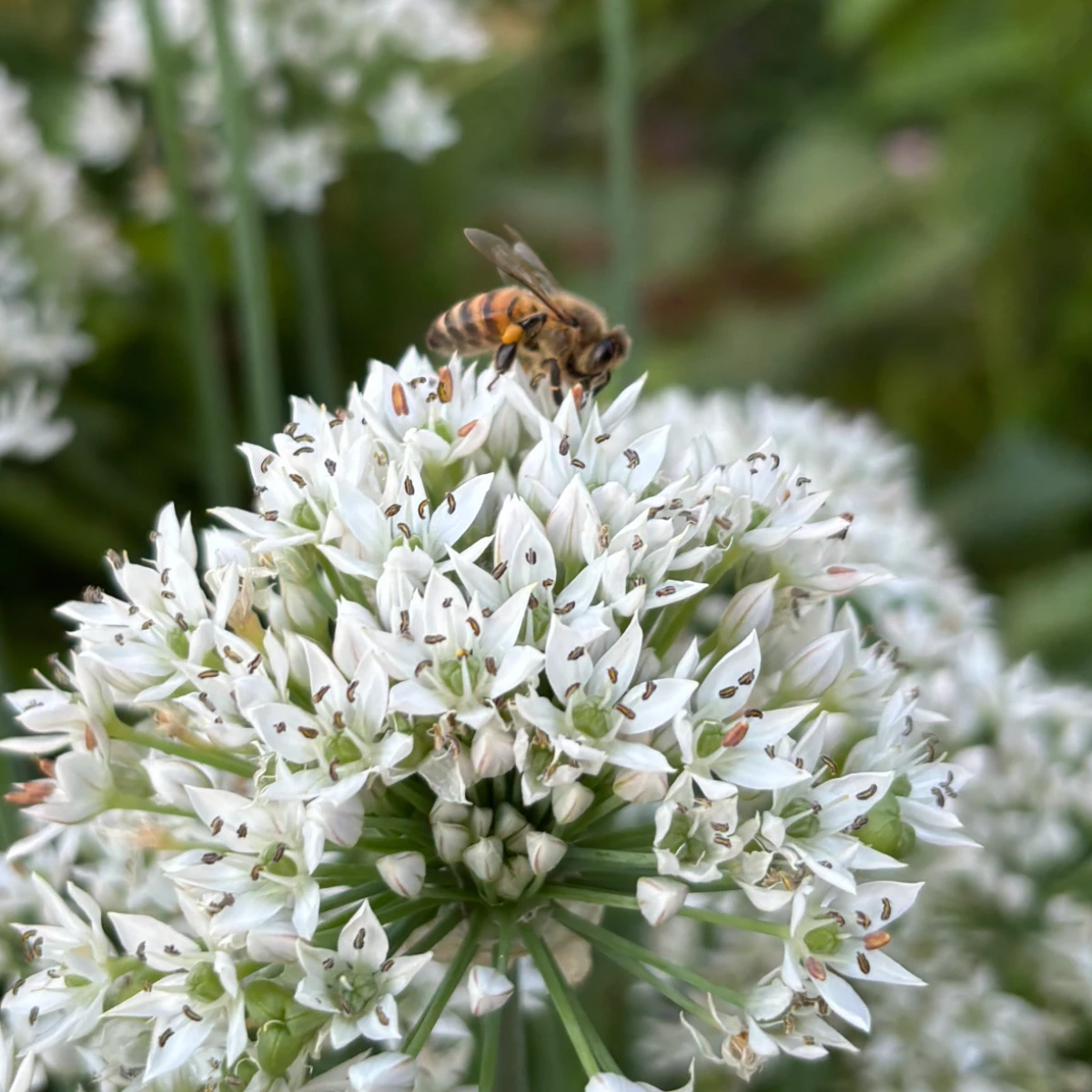
In my mom's garden, we've got garlic chives planted throughout, and every time they flower, they get absolutely covered in hoverflies. Dozens of them, all at once.
Hoverflies are a textbook example of what we call a beneficial insect, meaning instead of harming the garden, they actively help it.
How Hoverflies Help a Garden:
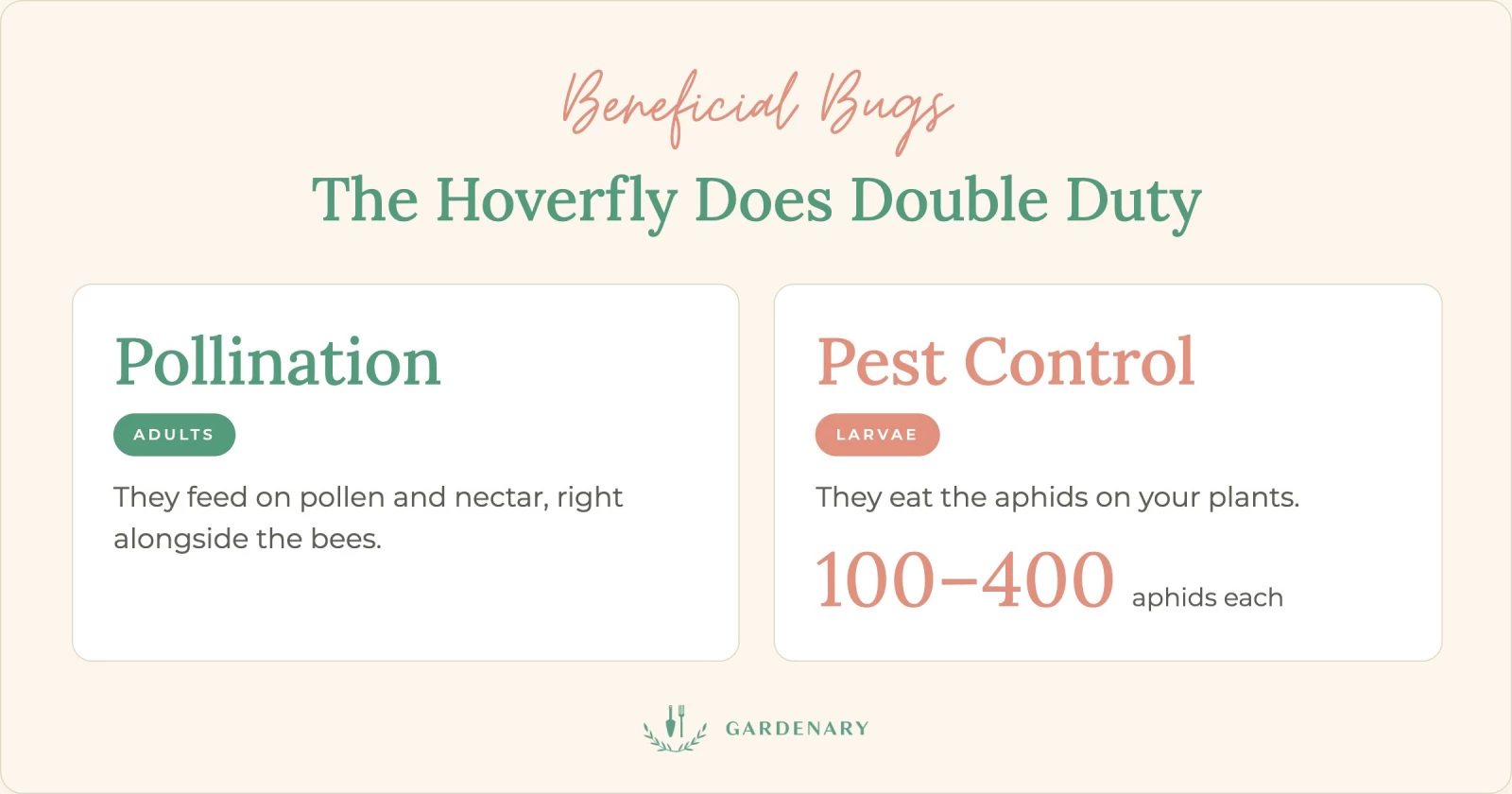
- As adults, hoverflies feed on pollen and nectar, which means they're helping pollinate your plants right alongside the bees.
- While they're at it, female hoverflies lay eggs directly on plants that have aphid activity nearby.
- Once those eggs hatch, the larvae go straight to work eating aphids, which is exactly the pest most gardeners are trying to fight in the first place.
A single hoverfly larva can eat anywhere from 100 to 400 aphids before it matures into an adult.
So instead of reaching for a spray, you end up with a built-in aphid patrol that shows up on its own.

The One Perennial Herb Behind All of This
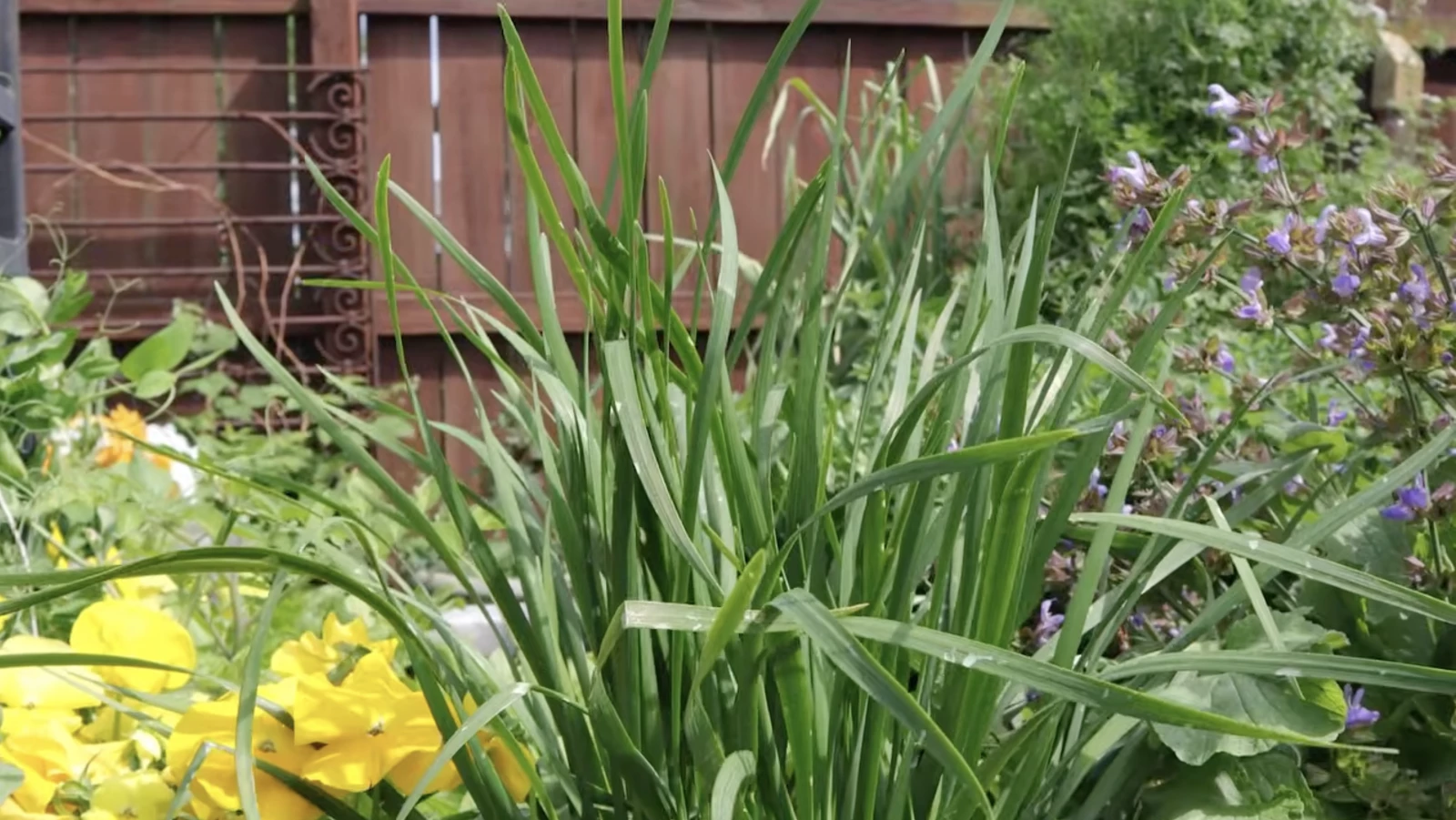
Garlic chives are the plant doing all the heavy lifting here, and they're one of the easiest additions you can make to a kitchen garden. We planted ours in my mom's garden over a year ago, and they've thrived through all four seasons since, coming back reliably and getting a little fuller every year.
A few things I love about garlic chives specifically:
- They're a true perennial, so you plant once, and they keep coming back, unlike an annual you'd have to replant every year.
- You can divide an established clump and use the divisions to fill in other parts of the garden, essentially multiplying your beneficial insect habitat for free.
- Once they flower, they reliably draw in hoverflies (and other beneficial insects) in large numbers, right when your fruiting plants need the pollination most.
Garlic chives are an upright, clump-forming perennial that comes back reliably once established, which is exactly the kind of low-maintenance habitat beneficial insects are looking for. If you want more herbs that pull double duty like this, I've rounded up several in The Best Herbs to Plant to Repel Garden Pests.
Get the Complete Organic Pest Control Course
- Organic Pest Control — 28 Video Lessons
- Pest-Proof Garden — 8 Video Lessons
- Pest Guide Ebook
- Deer Guide
- Burrowing Pests Guide
- Rabbit Guide
- Climbing Pests Guide
- Domestic Pests Guide
- Bonus #1 — Organic Pest Control Planting Plans
- Bonus #2 — Growing Guide
- Bonus #3 — Organic Pest Spray Recipes
Perennial Herbs Are the Key
It's great to tuck in annual flowers like zinnias and marigolds; they help, and they're beautiful. But annuals only offer that habitat for one season.
Perennial herbs are what convince beneficial insects to set up a permanent home in your garden.
Here's why that distinction matters so much. When hoverflies and other beneficial insects sense that a plant is going to be there year after year, they don't just visit. They lay eggs, establish habitat, and build up a population that sticks around for the long haul.
That's the difference between a garden that occasionally attracts a few good bugs and one that's actively defending itself, season after season, without you doing much of anything.
How to Start Attracting Beneficial Insects to Your Own Garden
You don't need a huge overhaul to get this going.
How to Attract Beneficial Bugs:
- Plant a perennial herb known for attracting beneficial insects, like garlic chives, somewhere your fruiting plants (tomatoes, squash, cucumbers) can benefit from the traffic.
- Let it flower. I know it's tempting to keep everything neatly trimmed, but the flowers are the whole point. That's what draws the hoverflies in.
- Add a few annuals for extra support. Zinnias and marigolds are easy, colorful additions that give beneficial insects even more reason to stick around.
- Skip the broad-spectrum sprays. Even organic ones can take out the good bugs right along with the bad ones if you're not careful about what and when you spray. My chemical-free ways to control pests post walks through what to reach for instead.
- Divide and spread your perennial herbs every year or two so the habitat expands right along with your garden.
If you'd rather have a full, organic system laid out for you instead of piecing it together, this is exactly what I walk through in my Organic Pest Control Course. It covers the calm, chemical-free approach to pest management I use in my own gardens, garlic chives included.

Where Things Usually Fall Apart
- Spraying at the first sign of any bug. Not every insect on your plants is a problem. Give beneficial insects a chance to find the pests before you reach for anything else.
- Only planting annuals. They help for a season, but they don't build the long-term habitat that keeps beneficial insects in your garden year-round.
- Deadheading everything before it flowers. If you cut back your garlic chives before they bloom, you're removing the exact thing that's attracting hoverflies in the first place.
- Expecting instant results. It took time for the beneficial insect population in my mom's garden to build up. Give your perennial herbs a season or two to really start working.
Garden Pest FAQs
A hoverfly, also called a flower fly or syrphid fly, is a beneficial insect that pollinates as an adult and eats aphids as a larva. They're considered one of the most helpful insects you can attract to a vegetable garden.
How do I attract beneficial insects to my vegetable garden?
Plant perennial herbs that flower reliably, like garlic chives, and let them bloom instead of trimming them back. Adding annual flowers like zinnias and marigolds and limiting broad-spectrum sprays helps too.
Do garlic chives really help control pests?
Yes. Garlic chives flower reliably and attract large numbers of hoverflies and other beneficial insects, whose larvae prey on aphids and other common garden pests.
Where can I learn a full organic approach to garden pest control?
My Organic Pest Control Course walks through the calm, chemical-free system I use in my own gardens, including how to build the kind of beneficial insect habitat we're talking about here.
Become a Gardenary VIP!
FREE PERKS, just for email subscribers:
- Coupons & discount codes
- Gardening tips
- Videos
- Insider news
↓ ENTER YOUR EMAIL BELOW! ↓
Join The List!
Thousands of gardeners are already receiving perks on the VIP list!
Keep Reading
Why You Want More Bugs in Your Garden, Not Less

The Online Course That Turned This Garden Lover Into a Profitable Garden Consultant
What I Rip Out of My Garden Every September (and What I Leave)
The Best Plant Combinations for the Fall Garden
The Best Soil Blocker for Seed Starting and How to Use It